Chris Carter Unleashes His True Vision: A Deep Dive into The X-Files: I Want to Believe – Vrach Frankenshteyn
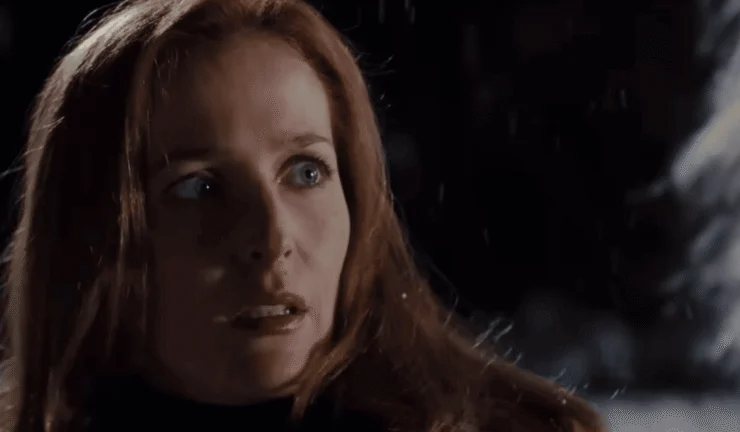
Los Angeles, CA – After years of fervent anticipation within the X-Files fan community, Chris Carter’s long-prophesied director’s cut of the 2008 film, The X-Files: I Want to Believe, officially titled The X-Files: I Want to Believe – Vrach Frankenshteyn, made its debut on Hulu today. This release marks the culmination of a nearly two-decade-long journey, during which Carter consistently hinted that the theatrical version of the film deviated significantly from his original creative intentions, a vision reportedly stifled by studio demands. Fans, eager to uncover the "lost" horror elements and a more uncompromising narrative, had hoped this new iteration would finally present the definitive version of a movie that, since its initial release, has often divided audiences and critics alike.
However, the unveiling of Vrach Frankenshteyn has immediately sparked fresh debate, proving to be just as, if not more, contentious than its predecessor. Paradoxically, despite the widespread belief that a director’s cut would inherently be longer, restoring previously excised material, this new version clocks in at approximately 98 minutes – a notable six minutes shorter than the original 104-minute theatrical release. This unexpected brevity, coupled with the subtle nature of many alterations, has left some viewers grappling to identify precisely what has been added versus what has been conspicuously removed. Regardless of one’s ultimate stance on this revised narrative, it undeniably offers a distinct and often jarring departure from the familiar, prompting a re-evaluation of I Want to Believe‘s core themes and its place within the broader X-Files mythology.
The Genesis of a Director’s Vision: A Chronology of Creative Compromise
To fully grasp the significance of Vrach Frankenshteyn, one must first understand the tumultuous production history and the creative battles waged during the making of the original 2008 film. The X-Files: I Want to Believe arrived a decade after the highly successful 1998 big-screen adaptation, which intertwined seamlessly with the series’ intricate alien mythology. By contrast, Carter envisioned the 2008 sequel as a standalone "monster-of-the-week" style story, a deliberate shift intended to broaden its appeal and explore new thematic territory.
2007-2008: The Studio Mandate and Initial Cuts
From the outset, Chris Carter’s blueprint for I Want to Believe leaned heavily into the horror genre, aiming for a far "scarier and more intense" experience than what eventually reached cinemas. As Carter recounted in an interview with Space.com, his initial cut was met with strong resistance from executives at 20th Century Fox. One executive reportedly dismissed it as "torture porn," a label indicative of the studio’s discomfort with the film’s darker, more graphic elements.
The primary directive from the studio was clear: secure a PG-13 rating to maximize box office potential. This mandate initiated a painful process of creative compromise. Carter and his team were compelled to undertake not one, but two rounds of extensive cuts to dilute the film’s intensity. The resulting theatrical cut, therefore, was not merely a refined version of Carter’s original vision but a significantly altered product, one that he openly stated was "filled with things [he] didn’t want in the movie." The necessity of achieving a PG-13 rating meant not only trimming violent or disturbing scenes but also, crucially, shifting the emphasis onto other aspects of the narrative, inadvertently magnifying elements that Carter considered secondary.
2008-2024: Years of Anticipation and Unfulfilled Promises
Following the film’s release and its somewhat underwhelming critical and commercial performance, Carter never shied away from discussing the compromises he had been forced to make. Over the subsequent years, whispers and rumors circulated within fan circles about a mythical "director’s cut" – a version that would finally reveal the unadulterated narrative and horror elements that the studio deemed too extreme. This anticipation simmered for over fifteen years, fueled by Carter’s intermittent comments and the enduring loyalty of X-Files aficionados who longed to see the film as its creator truly intended. The exact nature of these suppressed scenes, and the extent of their impact on the story, remained a tantalizing mystery, transforming the unreleased cut into an almost legendary artifact.
2024: The Hulu Debut of Vrach Frankenshteyn
The recent announcement of Vrach Frankenshteyn‘s debut on Hulu thus represented a significant moment, promising to finally lift the veil on Carter’s authentic vision. Fans geared up for a longer, grittier experience, expecting an abundance of restored footage. However, the immediate revelation of its shorter runtime immediately complicated these expectations, suggesting that this "director’s cut" might be less about restoration and more about fundamental re-sculpting.
Deconstructing the ‘Frankenstein’ Cut: Supporting Data and Key Changes
The official title, The X-Files: I Want to Believe – Vrach Frankenshteyn, provides the first crucial clue to Carter’s restored vision. This unusual moniker, translating roughly to "Physician Frankenstein" from Russian, directly reflects the film’s thematic core, a concept heavily influenced by a real-life medical experiment.
Embracing the Vrach Frankenshteyn Identity
Carter revealed that his initial inspiration for the film stemmed from reading about Dr. Robert J. White, a neurosurgeon who, in the 1970s, achieved the controversial feat of successfully transplanting the head of one monkey onto the body of another. This groundbreaking, albeit ethically dubious, medical advancement deeply resonated with Carter, sparking his desire to craft a modern, brutal take on Mary Shelley’s classic Frankenstein narrative. The Vrach Frankenshteyn cut, therefore, is an explicit attempt to re-center the film around this macabre scientific exploration and its moral implications, restoring the visceral, body-horror elements that were reportedly diluted in the theatrical release. The title itself serves as a bold declaration of intent, signaling to audiences that this is a different beast entirely.
A Shorter, Sharper Vision: The Paradox of the Director’s Cut
The most striking and, for many, perplexing aspect of Vrach Frankenshteyn is its reduced runtime. At 98 minutes, it is six minutes shorter than the original 104-minute theatrical cut. This runs counter to the common perception of director’s cuts, which are often synonymous with extended runtimes and the reinsertion of deleted scenes. Carter’s explanation clarifies this apparent contradiction: the aim was not simply to add footage but to re-balance the film’s narrative emphasis. In his view, the original PG-13 cuts had placed "weight on the wrong thing," transforming it "almost like a Mulder and Scully relationship movie than it was the Frankenstein movie we originally intended." Thus, the shorter runtime is a consequence of "addition by subtraction," strategically excising elements that detracted from the core horror narrative and streamlining the overall pace.
Reimagining the Core Duo: The Stripping of Romance
Perhaps the most significant and immediately noticeable changes in Vrach Frankenshteyn revolve around the iconic relationship between Fox Mulder (David Duchovny) and Dana Scully (Gillian Anderson). The director’s cut drastically curtails, or entirely removes, several key scenes that underscored their romantic connection in the theatrical release.
- The Kiss: The climactic kiss between Mulder and Scully is notably trimmed, or re-edited to be less explicit. Carter justified this alteration, suggesting to Men’s Journal that by minimizing the overt display of affection, the scene’s emotional power is paradoxically amplified.
- The "Scratchy Beard" Scene: A tender bedroom scene where Scully playfully complains about Mulder’s "scratchy beard" has been either heavily trimmed or removed, diminishing the intimacy between the characters.
- Scully’s "Two People Who Come Home" Line: A poignant line from Scully about "two people who come home to a home," which emphasized their domesticity, is also reportedly cut or recontextualized.
These substantial edits serve a dual purpose. Firstly, Carter believes that the subsequent tenth and eleventh seasons of The X-Files, which aired long after I Want to Believe and further explored the Mulder and Scully romance, had given audiences "their fill." He suggested that what felt fresh in 2008 might now feel overly familiar. More importantly, these cuts align with Carter’s overarching goal to pivot the film away from being perceived as primarily a "relationship movie" and back towards its intended brutal, scientific horror roots. By downplaying the romantic subplot, the focus shifts squarely onto the central mystery and the disturbing ethical dilemmas at its heart.
Severing Ties: Mythology and Standalone Ambitions
Another significant departure in Vrach Frankenshteyn is the removal of references to key figures from the larger X-Files mythology: Mulder’s sister, Samantha, and Mulder and Scully’s son, William. While the omission of William might initially seem consistent with the trimming of romantic elements, Carter clarified that this decision was made to enhance the film’s standalone quality.
Speaking with Inverse, Carter likened his vision for this film to a classic "monster-of-the-week" episode, explicitly desiring to detach it from the deeper, often convoluted, continuity of the series. This creative choice is particularly interesting when contrasted with the highly successful 1998 X-Files film, which was deeply entrenched in the alien mythology. By stripping away these canonical anchors, Carter aimed to craft a more accessible narrative, one that could be appreciated without extensive prior knowledge of the show’s intricate lore, and potentially pave the way for future standalone cinematic adventures.
The Restored Horrors: What Was Added (and Uncut)
Despite its shorter runtime, Vrach Frankenshteyn does indeed feature new and extended sequences, primarily in the realm of horror and explicit content, which were reportedly deemed too graphic for the original theatrical release.
- Agent Dakota Whitney’s Explicit Death: In this version, the death of Agent Dakota Whitney is depicted with far greater explicitness and brutality than in the original cut. This is a clear example of a scene that a studio aiming for a soft PG-13 rating would likely insist on toning down.
- The "Frankenstein Laboratory" Sequence: The most significant restorations occur within the film’s central "Frankenstein laboratory" sequence. Audiences now witness extended and more visceral depictions, including the reanimation of a disembodied head and the disturbing sight of a headless corpse being dragged through a hallway. These scenes are not only more brutal than much of the surrounding film but also serve as direct callbacks to Carter’s original inspiration from Dr. Robert J. White’s experiments. These additions are the clearest manifestations of the "too brutal" content that executives reportedly mandated be cut, and they effectively re-establish the film’s intended body-horror aesthetic.
These restored moments, though few in number, significantly alter the film’s tone, pushing it closer to the intense, unsettling horror that Carter initially envisioned.
Sonic Shifts and Unexplained Absences
Beyond the visual edits, Vrach Frankenshteyn introduces subtle but impactful auditory changes. The film now opens with Patsy Cline’s melancholic classic, "I Fall to Pieces." Carter attributed this decision to the film’s editor, Eleanor Infante, expressing his appreciation for the ironic contrast between the seemingly upbeat song and the dark, unsettling narrative that follows. Reports also suggest other minor musical swaps throughout the movie, though their precise nature and origin (whether editor or director-driven) remain less clear.
Finally, one peculiar and unexplained cut is the removal of a scene featuring Mulder and Scully observing a photograph of former U.S. President George W. Bush in a government building, set to the iconic X-Files theme song. While Carter has not offered a direct explanation for this specific deletion, theories abound. Given his stated desire to streamline the film’s tone and focus, it’s plausible he felt the brief, somewhat comedic, political gag no longer aligned with the re-emphasized horror aesthetic. Alternatively, the decision might have been a subtle move to remove a potentially controversial political reference, especially one that drew a slightly confusing comparison to J. Edgar Hoover. Regardless, the "Bush photo" is now conspicuously absent.
Implications: The Definitive Cut, or a Continued Divide?
The release of The X-Files: I Want to Believe – Vrach Frankenshteyn arrives at a time when director’s cuts and re-edits of previously compromised films are gaining traction, largely facilitated by streaming platforms. This trend offers creators a unique opportunity to revisit and rectify past creative battles, presenting their original artistic intent to a global audience without the same theatrical pressures.
For X-Files fans, this new cut represents a long-awaited peek behind the curtain, offering insight into the creative process and the inevitable compromises involved in studio filmmaking. For some, Vrach Frankenshteyn may indeed prove to be the definitive version, a tighter, more thematically coherent, and genuinely unsettling horror film that finally aligns with their expectations for the franchise. The emphasis on the "Frankenstein" narrative, the explicit gore, and the detachment from the overarching mythology could be seen as a bold, refreshing direction for a series often criticized for its intricate, sometimes convoluted, alien plotlines.
However, the initial reception suggests that the film will remain as divisive as its theatrical predecessor. The removal of beloved romantic elements between Mulder and Scully, a relationship that has always been the emotional anchor of the series, may alienate a significant portion of the fanbase. For many, the romantic tension and eventual partnership of the agents are integral to the X-Files experience, and their diminution in Vrach Frankenshteyn could feel like a betrayal of character development forged over eleven seasons and two films. The shorter runtime, too, despite Carter’s explanations, might continue to puzzle those who equate director’s cuts with maximalist additions.
Ultimately, Vrach Frankenshteyn serves as a powerful testament to Chris Carter’s enduring vision and his determination to reclaim creative control over a project he felt was compromised. It may not universally satisfy all X-Files devotees, nor will it likely erase the mixed legacy of I Want to Believe. However, it undeniably offers a fascinating and distinct alternative, inviting viewers to engage with a familiar story from a fresh, and perhaps more unsettling, perspective. In an era of constant content re-evaluation, this director’s cut stands as a significant case study in artistic reclamation, challenging audiences to reconsider not just the film itself, but the very nature of cinematic storytelling under studio scrutiny.