Corporate Warfare via Inbox: An In-Depth Look at ‘Reply All,’ the Roguelike Deckbuilder of Office Politics
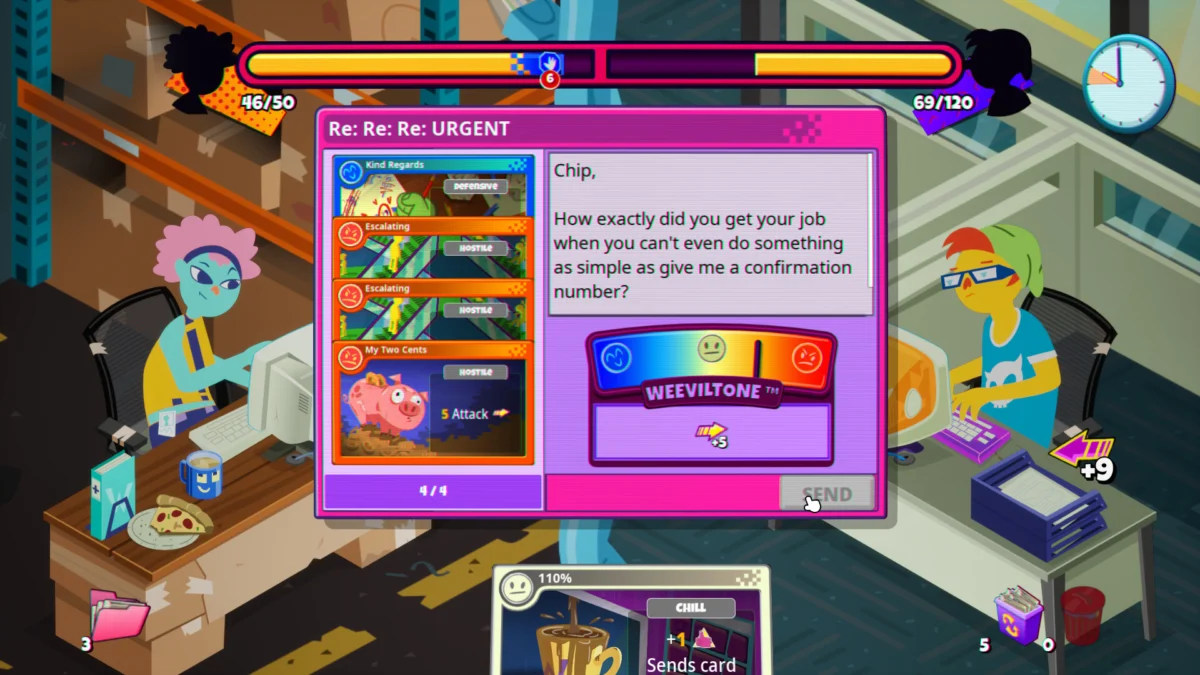
The modern workplace is often described as a battlefield, but rarely is that metaphor taken as literally as it is in Reply All, an upcoming single-player roguelike deckbuilder that transforms the mundane task of digital correspondence into a high-stakes tactical struggle. Recently showcased at Gamescom, the title aims to satirize the grueling nature of corporate life, challenging players to navigate a sea of passive-aggressive CCs, demanding clients, and internal office friction using nothing but a deck of curated responses.
While the genre of roguelike deckbuilders has seen a massive surge in popularity following the success of titles like Slay the Spire and Balatro, Reply All seeks to carve out a niche by swapping fireballs and shields for "per my last email" and "hope this helps." However, as early previews suggest, the road from a clever concept to a polished gameplay experience is paved with technical challenges, particularly regarding narrative cohesion.
Main Facts: The Premise of Digital Attrition
Reply All places players in the role of a corporate drone tasked with managing an overflowing inbox. The game’s core loop revolves around "email battles," where the player must respond to messages from various "enemies," including irate customers, micromanaging supervisors, and unhelpful colleagues.
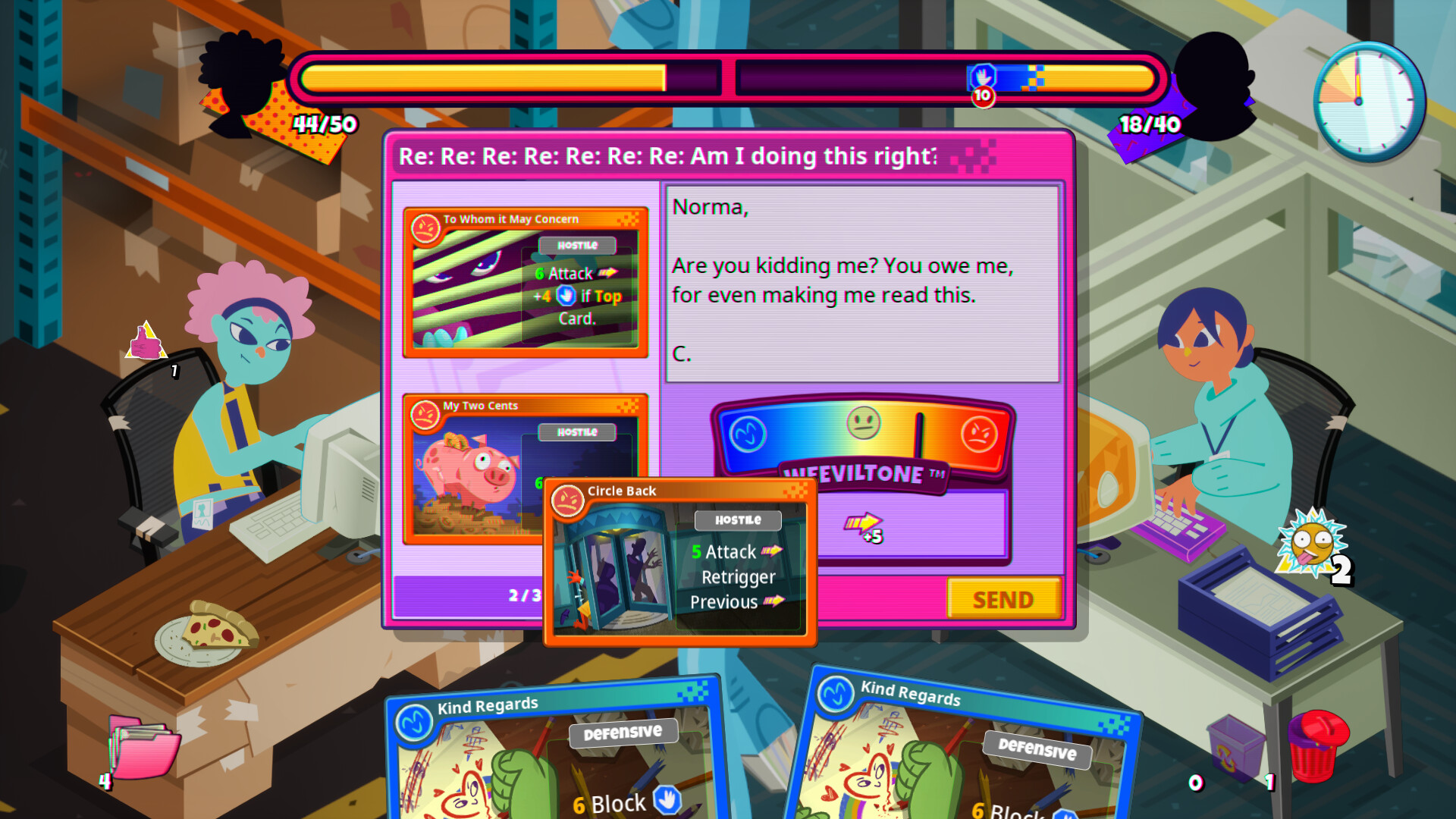
The game utilizes a card-based combat system where players can play up to three cards per email exchange. These cards are categorized by their "tone," ranging from overly polite and subservient to overtly aggressive and confrontational. Mechanically, these cards function similarly to traditional RPG stats: polite cards may build up "professionalism" (defense/health), while aggressive cards deal "reputation damage" to the sender (attacks).
A key feature of the game is the Aggression Dial. This meter tracks the player’s current standing within the office hierarchy. Leaning too heavily into aggression might "defeat" an annoying coworker, but it risks drawing the ire of HR or management, leading to a "Game Over" equivalent to being fired. Conversely, being too neutral or passive may leave the player’s "mental health" (HP) vulnerable to the soul-crushing demands of the job.
Chronology: From Concept to Gamescom 2024
The development of Reply All follows a trajectory common among ambitious indie titles looking to disrupt established genres with unconventional themes.
- Inception and Prototyping: The developers sought to create a "job simulator" that felt more like a tactical RPG than a sandbox. The concept of the "passive-aggressive email" was identified as a universal experience that could serve as a relatable combat mechanic.
- The Rise of the "Office-Sim" Subgenre: Following the success of titles like Papers, Please and Say No! More, the team refined Reply All to focus on the psychological toll of corporate communication.
- The Gamescom Reveal: In August, the developers officially unveiled the game to the public and press. The announcement trailer showcased the UI—a stylized, retro-modern OS interface—and the basic card mechanics.
- Initial Hands-On Feedback: Journalists and attendees at Gamescom were given access to a limited demo. While the aesthetic and concept were praised for their originality, early critiques pointed toward a significant "narrative dissonance" where the cards played did not always align logically with the text of the email being sent.
- Future Roadmap: With a release window set for approximately one year from now (late 2025 to early 2026), the developers are currently in the "polishing" phase, focusing on expanding the card pool and refining the procedural text generation.
Supporting Data: The Mechanics of Professional Survival
To understand the depth of Reply All, one must look at the synergy between its roguelike elements and its satirical setting.
The Roguelike Loop
Unlike traditional RPGs where health might regenerate after a battle, Reply All maintains a "persistent fatigue" system. Your mental health (HP) does not automatically reset between email threads. This forces players to make difficult choices: do you use a "Polite" card to mitigate damage now, or do you save your "CC the Manager" power card for a more difficult boss encounter later in the work week?
Deck Customization and Progression
As players successfully navigate "conversations," they earn new cards and "endorsements." These rewards allow for specialized builds. A player might build a "People Pleaser" deck, which focuses on high defense and healing through self-deprecation, or a "Corporate Shark" deck, designed to end conversations quickly through devastatingly cold logic and bureaucracy.
The Problem of Contextual Logic
A major point of discussion during the Gamescom showcase was the disconnect between the intent of the card and the result of the text. In many deckbuilders, the "flavor text" is secondary to the math. In a game about communication, however, the text is the game. Early testers noted that playing a series of cards often resulted in a "word salad" response that, while mechanically sound, made little sense in a real-world context. For example, responding to a customer’s complaint about a broken product with a mix of "Deepest Apologies," "Actually…", and "Sent from my iPhone" can result in a nonsensical paragraph that breaks the immersion of being a corporate worker.
Official Responses and Developer Vision
In response to the feedback regarding the nonsensical nature of some email chains, the development team has emphasized that the game is still in an early state. The developers have stated that their primary goal is to capture the feeling of a frantic workday rather than a perfect 1:1 simulation of writing.
"The absurdity is, in some ways, part of the point," one developer noted during a post-demo interview. "In a real office, how often do we send replies that are just a collection of buzzwords meant to satisfy a metric? We want to lean into that, but we also recognize that for the player to feel truly clever, the ‘burns’ need to land."
The team has committed to a year of "textual refinement." This includes implementing a more robust "context engine" that ensures the cards played generate a response that feels like a coherent—if bizarre—piece of corporate communication. They are also looking into adding "Branching Threads," where the player’s choices in one email chain can come back to haunt them in another, simulating the long-term consequences of office politics.
Implications: The Future of Satirical Gaming
Reply All represents a growing trend in the indie gaming industry: the "gamification of the mundane." By taking the stresses of the 9-to-5 life and turning them into a roguelike, the developers are tapping into a collective catharsis. For many players, "defeating" a toxic boss in a card game offers a form of escapism that traditional fantasy settings cannot provide.
However, the game’s success will likely hinge on its ability to bridge the gap between its mechanics and its narrative. In the competitive landscape of Steam’s roguelike offerings, a "hook" is enough to get wishlists, but "polish" is what secures long-term engagement. If the developers can solve the "word salad" issue and make the email exchanges feel as sharp as a real-life witty retort, Reply All could become a staple of the genre.
The "Job-Sim" Evolution
The game also signals an evolution in the "Job-Sim" genre. We are moving away from the purely silly (like Goat Simulator) or the purely grim (like Papers, Please) toward "Systemic Satire." These games use complex systems—like deckbuilding and resource management—to comment on modern societal structures. Reply All isn’t just about sending emails; it’s about the depletion of the self in the face of infinite digital demands.
Market Positioning
Currently available for wishlisting on Steam, Reply All is positioning itself for a mid-tier indie release. Its success will be measured not just in sales, but in its ability to generate "viral" moments—screenshots of particularly absurd or relatable email chains that resonate on social media platforms like LinkedIn and X (formerly Twitter).
Conclusion: A Year of Polishing the Inbox
Reply All is a high-concept gamble that proves the roguelike formula is infinitely adaptable. By shifting the focus from dungeons to cubicles, it offers a fresh perspective on tactical gameplay. However, the Gamescom demo served as a reminder that when language is the weapon, the writing must be as sharp as a blade.
As the developers head back into the "office" for another year of production, the gaming community will be watching to see if they can turn this promising prototype into a masterpiece of corporate satire. For now, the game remains a fascinating curiosity—a digital mirror held up to our own exhausted, "reply-all" obsessed culture.
Players interested in the intersection of strategy and satire can currently find Reply All on Steam, where its progress will be tracked through devlogs and community updates leading into its 2025/2026 launch. In the meantime, the advice for prospective players remains the same as it is for real-world employees: read the thread carefully before you hit "send."