Nicholas Meyer Reflects on How a Royal Navy Captain Saved Star Trek and Defined Its Legacy
Six Decades of Boldly Going: A Franchise Endures
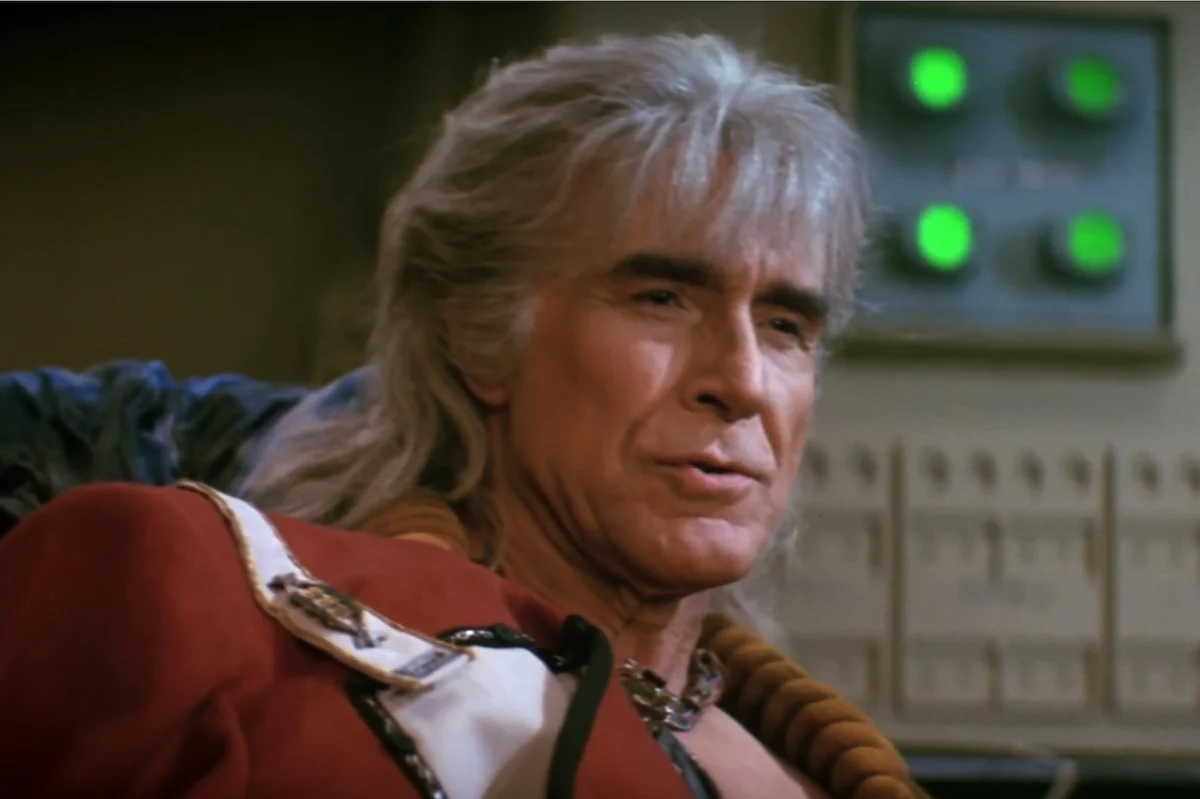
As the iconic Star Trek franchise embarks on its momentous 60th anniversary celebration this year, the air is thick with anticipation for commemorative events, retrospectives, and insightful interviews charting six decades of "boldly going where no one has gone before." Amidst this celebratory fervor, a particularly illuminating conversation recently took place with Nicholas Meyer, the visionary director credited with revitalizing the cinematic arm of the franchise. In the lead-up to the Italian Global Series Festival’s dedicated Star Trek events, Variety had the privilege of speaking with Meyer, offering a rare glimpse into the pivotal creation of Star Trek II: The Wrath of Khan—a film widely regarded as a masterpiece and a lifeline for the nascent movie series.
Meyer, who stepped into the director’s chair for The Wrath of Khan following the commercially successful, yet financially exorbitant, first film, Star Trek: The Motion Picture, recounted a tale of creative constraint and inspired ingenuity. His insights underscore the precarious position the franchise found itself in after its ambitious but costly debut, and how a director with a fresh, even initially skeptical, perspective ultimately forged its enduring path.
The Genesis of a Phenomenon: Star Trek’s Early Voyages
To fully appreciate Meyer’s transformative role, it’s essential to contextualize the state of Star Trek leading up to The Wrath of Khan. The original Star Trek television series, created by Gene Roddenberry, aired for just three seasons from 1966 to 1969. Despite its short run, it garnered a passionate cult following thanks to its groundbreaking themes of diversity, diplomacy, and exploration, set against a backdrop of compelling science fiction. The show tackled complex social issues, often through allegory, reflecting the optimism and anxieties of its time. However, its ratings were never stellar, leading to its premature cancellation.
Yet, the show refused to die. Decades of syndicated reruns cultivated a loyal fanbase, who famously campaigned for its return. This fervent dedication eventually convinced Paramount Pictures that there was still life—and profit—in the USS Enterprise. Initial plans for a new television series, Star Trek: Phase II, eventually morphed into a feature film, riding the wave of renewed interest in science fiction sparked by Star Wars.
The Expensive Debut: Star Trek: The Motion Picture
Star Trek: The Motion Picture (ST:TMP), released in 1979, was an ambitious undertaking. It reunited the original cast and aimed to deliver a grand, cerebral science fiction epic worthy of the big screen. Directed by Robert Wise, it explored themes of artificial intelligence and humanity’s place in the cosmos, echoing the intellectual spirit of the original series.
Commercially, ST:TMP was a success, grossing over $139 million worldwide against a budget reported to be around $46 million (including marketing). However, its production was plagued by delays, ballooning costs, and last-minute special effects work, leading to a critical reception that was lukewarm at best. While many appreciated its visual splendor and the return of the beloved characters, critics and some fans found its pacing slow, its plot convoluted, and its overall tone overly serious and detached. The film felt less like the vibrant, character-driven adventures of the TV show and more like a ponderous meditation.
This expensive "hit" left Paramount in a quandary. They had a viable franchise, but the financial outlay and the mixed critical response suggested that the formula needed a drastic overhaul. The studio wanted to continue capitalizing on Star Trek’s popularity but without repeating the budgetary excesses of the first film.
The Paramount Directive: Half the Money, Better Movie
This brings us to the crucial directive that would shape The Wrath of Khan. Meyer vividly recalled Paramount’s unambiguous mandate: they needed a film "better than the first movie for half the money." It was a seemingly impossible challenge, demanding both creative brilliance and stringent fiscal discipline.
To achieve this, Paramount brought in television producer Harve Bennett, a seasoned professional known for his ability to deliver high-quality content efficiently. Bennett, a pragmatist with a keen eye for storytelling, confidently asserted that he could make not just one, but "five movies for less money." This bold claim set the stage for a dramatic shift in the franchise’s cinematic approach. The budget for Star Trek II: The Wrath of Khan was ultimately fixed at a remarkably lean $11.2 million, a stark contrast to its predecessor. This financial constraint, far from being a hindrance, would prove to be a catalyst for innovation and a return to the character-driven drama that had defined the original series.
Nicholas Meyer: An Unlikely Captain
Meyer’s involvement in The Wrath of Khan was, by his own admission, an unexpected turn. A respected screenwriter and director known for films like The Seven-Per-Cent Solution and Time After Time, he was not, surprisingly, a Trekkie. "I had seen Star Trek on TV, and I didn’t get it at all," he confessed to Variety. He elaborated on his initial disconnect: "I missed everything that was interesting about the show, the idea that people of different races and genders and cultures could come together to do something good that blew right by me." This candid admission highlights Meyer’s outsider status, a perspective that many argue was crucial to the film’s success. He wasn’t beholden to existing canon or fan expectations in the same way an ardent fan might have been, allowing him to approach the material with a fresh, critical eye.
Despite his unfamiliarity with the franchise, Meyer was drawn to the project primarily because of Harve Bennett. "But Meyer liked Harve Bennett, so he apparently said yes to the job," the article notes. This personal connection proved more influential than any prior devotion to Star Trek, demonstrating the importance of collaborative synergy in creative endeavors.
Finding Kirk’s Soul: Hornblower in Space
The breakthrough for Meyer came a few weeks into the project, when he found his "way in" to the Star Trek universe. His inspiration was rooted in his childhood love for C.S. Forester’s novels about Captain Horatio Hornblower. Forester’s series, set during the Napoleonic Wars, chronicles the adventures of a Royal Navy officer, a brilliant but often melancholic leader facing complex moral and strategic dilemmas.
Meyer drew a direct parallel: "It’s obviously supposed to be Lord Nelson, but it’s a captain in the Royal Navy during the Napoleonic Wars, and he has many adventures, and he has a girl in every port," Meyer explained. "When you’re 13, this sounded pretty good, and I thought, ‘wait a minute, Kirk is Hornblower in outer space. I know how to do that.’"
This revelation was profound. By viewing Captain James T. Kirk through the lens of a classic naval hero, Meyer unlocked a more grounded, character-centric approach. It allowed him to strip away some of the more esoteric science fiction elements and focus on themes of command, duty, friendship, aging, and mortality—universal human experiences that resonated far beyond the confines of genre. The "Hornblower in space" analogy provided a relatable framework for understanding Kirk’s leadership, his relationships with his crew, and the challenges he faced, making the character and his world accessible even to non-fans. This perspective grounded Kirk, allowing him to be a more vulnerable and complex figure, rather than just a stoic explorer.
Crafting the Narrative: Uncredited but Integral
Meyer was not only the director but also a significant contributor to the film’s screenplay, though he ultimately went uncredited. By the time he joined the project, the script had undergone numerous rewrites, a common occurrence in Hollywood productions, especially those with a troubled pre-production history. Several writers had taken a pass at the story, including Harve Bennett himself, Jack B. Sowards, and Samuel A. Peeples. Meyer’s arrival injected a cohesive vision, streamlining the narrative and sharpening the character arcs.
His contributions were instrumental in refining the central conflict between Kirk and Khan Noonien Singh, a genetically engineered superhuman villain first introduced in the original series episode "Space Seed." Meyer understood the dramatic potential of Khan’s single-minded quest for revenge and elevated it to an epic confrontation. He also emphasized the themes of aging and legacy, as Kirk grappled with his past and the responsibilities of command. The script’s focus on the bond between the Enterprise crew, particularly the profound friendship between Kirk, Spock, and McCoy, was also heavily influenced by Meyer’s character-first approach. He brought a literary sensibility to the dialogue, infusing it with a gravitas and emotional depth that was often lacking in ST:TMP.
The Infamous Ceti Alpha V Scene
One of the most memorable and terrifying sequences in The Wrath of Khan is the introduction of the Ceti Alpha V eel-worms, a species of parasitic organism that enters the ear canal and wraps itself around the cerebral cortex, rendering its victims susceptible to suggestion and causing intense pain. This scene, involving Captain Terrell and Chekov, is a masterclass in psychological horror within a science fiction context.
The Variety article’s writer humorously quips, "It is not entirely clear to this writer if he or one of the other screenwriters is to blame for my lifelong fear of ear bugs." This lighthearted personal touch underscores the scene’s visceral impact, a testament to its effective execution. The creature effects, achieved on a limited budget, were nonetheless chilling, utilizing practical effects to create a truly unsettling visual. The scene cemented Khan’s ruthlessness and provided a tangible, horrifying threat that elevated the film’s stakes beyond mere spaceship battles. It showcased Meyer’s willingness to introduce darker, more intense elements, pushing the boundaries of what a Star Trek film could be.
Impact and Legacy: Boldly Saving the Franchise
Star Trek II: The Wrath of Khan premiered in 1982 to widespread critical acclaim and immense commercial success. Critics lauded its gripping storyline, tight pacing, strong performances, and emotional depth. It was praised for returning to the spirit of the original series while maturing its themes. The film went on to gross over $97 million worldwide, a significant return on its modest $11.2 million budget, proving Paramount’s directive could indeed be met.
Critical Acclaim and Box Office Triumph
The film’s success was a resounding endorsement of Meyer’s vision and Bennett’s production strategy. It proved that Star Trek could thrive as a film franchise, not by chasing blockbuster spectacle, but by focusing on compelling characters, dramatic tension, and thoughtful storytelling. The film currently holds a 90% approval rating on Rotten Tomatoes, with an average rating of 8.1/10, a testament to its enduring critical appreciation. Reviewers often highlight Ricardo Montalbán’s iconic portrayal of Khan, William Shatner’s nuanced performance as an aging Kirk, and Leonard Nimoy’s poignant depiction of Spock.
Shaping the Future of Star Trek
The implications of The Wrath of Khan‘s success were profound. It fundamentally reshaped the cinematic trajectory of Star Trek, establishing a template for subsequent films that balanced action, character development, and philosophical inquiry. The film’s darker tone and emphasis on personal stakes resonated deeply with audiences, proving that the franchise could evolve without losing its core identity.
Meyer’s influence extended beyond Khan. He returned to co-write Star Trek IV: The Voyage Home (1986) and direct Star Trek VI: The Undiscovered Country (1991), both of which were also critical and commercial successes. His vision helped define what a Star Trek movie could be: not just a space adventure, but a character drama exploring universal themes of life, death, and friendship.
The film’s exploration of mortality, particularly Spock’s heroic sacrifice, delivered an emotional punch that had been largely absent from the first film. This willingness to embrace genuine loss and consequence made the characters more human and their struggles more resonant. The raw emotion evoked by Spock’s death cemented the film’s place in cinematic history and profoundly impacted the franchise’s future narrative arcs. It also demonstrated that the audience’s emotional investment in these characters was strong enough to endure even the most heartbreaking of plot twists.
Furthermore, The Wrath of Khan provided a blueprint for how to craft compelling villains within the Star Trek universe. Khan was not merely an antagonist; he was a mirror reflecting Kirk’s own past and a formidable intellectual and physical adversary whose motivations were deeply personal. This elevated the stakes and provided a more satisfying conflict than the abstract threats faced in The Motion Picture.
Conclusion: A Timeless Voyage
Nicholas Meyer’s journey from Star Trek skeptic to its cinematic savior is a remarkable narrative in itself. His ability to distill the essence of Captain Kirk into a "Hornblower in outer space" allowed him to craft a film that was both deeply rooted in character and thrillingly dramatic. Faced with severe budget constraints, Meyer, Harve Bennett, and the entire team delivered a masterpiece that not only salvaged the fledgling film franchise but also redefined its potential.
As Star Trek celebrates its 60th anniversary, The Wrath of Khan stands as a towering achievement, a testament to the power of creative vision under pressure. It reminds us that sometimes, the most enduring legacies are forged not by unlimited resources, but by inspired individuals who boldly find new ways to go, even when they’re not quite sure where they’re going at first. The film’s enduring popularity and critical reverence speak volumes about its timeless appeal and its crucial role in ensuring Star Trek would continue its five-year mission on the big screen and beyond. Meyer’s unique perspective, initially an obstacle, ultimately became the franchise’s greatest strength, proving that an outsider’s fresh gaze can sometimes see the clearest path forward.