Critical Lens on a Cult Classic: Re-examining the 2002 English Debut of Kazushi Hagiwara’s "Bastard!!"
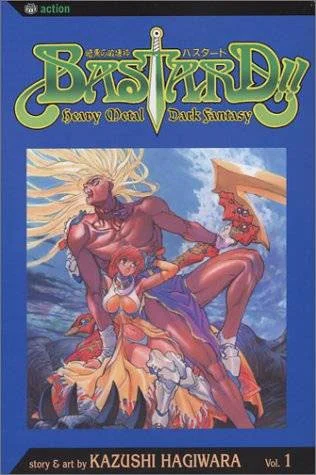
February 5, 2002 – The early 2000s marked a significant period for manga’s burgeoning presence in the Western market. As Japanese comics transitioned from niche imports to mainstream entertainment, the quality of localization became paramount. It was against this backdrop that Viz Comics released the English translation of Bastard!! Complete Edition, the retouched and redrawn iteration of Kazushi Hagiwara’s long-running "Heavy Metal Dark Fantasy" manga. An early critical assessment from February 2002, originally published on RPGNet, offers a fascinating glimpse into the initial reception of this ambitious title, highlighting both its inherent artistic promise and the significant hurdles faced in its translation to a new audience.
The review, penned shortly after the release of the first English volume, characterized Bastard!! as a series that "didn’t manage to distinguish itself in my eyes" at that early stage. While acknowledging the undeniable talent of its creator, Kazushi Hagiwara, particularly in his artwork, the critic pointed to inconsistent pacing, crowded compositions, and — most notably — a "sub-par translation" that severely hampered the narrative and comedic impact. This early critique serves as a valuable historical document, shedding light on the challenges and expectations surrounding manga localization at the turn of the millennium, and offering an early barometer for a series that would eventually garner a dedicated global fanbase.
Main Facts: An Early Look at a Genre-Bending Epic
Kazushi Hagiwara’s Bastard!! burst onto the Japanese manga scene in 1988 within the pages of Shonen Jump, quickly carving out a reputation for its distinctive blend of high fantasy, heavy metal aesthetics, and often irreverent humor. The series, which continued publication for decades, cultivated a fervent following, making its eventual English translation a highly anticipated event for Western enthusiasts.
In 2000, Hagiwara embarked on the Bastard!! Complete Edition in Japan, a comprehensive re-release of the original manga. Much like the "Special Edition" treatments of the Star Wars films, this Complete Edition featured extensive retouching, redrawing, and various artistic improvements, aiming to present the series in its most polished form. It was this enhanced version that Viz Comics brought to English-speaking audiences in the early 2000s, with the first volume reviewed in February 2002.
The manga proudly bears the subtitle "Heavy Metal Dark Fantasy" in its English iteration. However, the initial review found this descriptor somewhat premature for the first volume, noting a tone "more comical than dark" and suggesting that Hagiwara’s heavy metal influences became more pronounced in later stages of the series.
At its core, Bastard!! centers on the legendary evil sorcerer Dark Schneider, who, after being imprisoned by the high priest of the kingdom of Metallicana, has his formidable personality sealed away. His body is transformed into that of a young boy named Lucien, adopted and raised by the benevolent priest alongside his own daughter, Tia Noto Yoko. Dark Schneider’s release is contingent upon a specific spell, activated by the kiss of a virgin innocent – a spell known only to Tia.
The first English issue plunges readers directly into crisis: Metallicana faces an imminent threat from an invading sorcerer army. Desperate, the kingdom is forced to unleash Dark Schneider. The narrative immediately introduces a core comedic and romantic tension: Tia Noto Yoko, despite knowing Dark Schneider’s inherently evil nature, finds herself instantly attracted to the "breathtakingly gorgeous" sorcerer. A key magical twist adds to the dynamic: each kiss from Tia causes Dark Schneider to transform, leading to a series of often comical situations.
The reviewer praised Hagiwara’s artwork, even in its earlier manifestations, as demonstrating the "seed of an immense talent." The art was frequently described as "gorgeous," with Hagiwara adept at adapting his style to serve the story and characters. Humor was also cited as a high point, with particular appreciation for the "tongue-in-cheek satire" evident in early dialogue, such as the Metallicana soldiers’ lament about an attack occurring when all key leadership figures are absent. The "somewhat strange, mystically tainted love triangle of Tia, Lucien, and Dark Schneider" also contributed positively to the comedic elements.
However, the review did not shy away from significant criticisms. Early issues were noted for "dizzying and inconsistent" pacing, "too crowded" compositions, and instances where panels appeared "rushed." More fundamentally, the reviewer felt Hagiwara sometimes "drops the ball when it comes to telling the story he’s apparently trying to tell."
A major point of contention was the English translation, attributed to Kaori Kawakubo with an "English adaptation" by Fred Burke – a credit structure the reviewer found unusual. The translation was deemed "sub-par," resulting in characters speaking with "the exact same voice" and dialogue that often made the reader "wince." Crucially, many intended jokes were lost due to poor translation, rendering potential humor flat. A specific example highlighted the stilted exchange between Tia and Lucien, where Tia’s frustration about Lucien’s lack of emotion is met with Lucien’s retort: "Y-you’ve got more than enough for BOTH of us!" The reviewer noted that while the "potential humor" was evident, the dialogue "doesn’t ring true," likening it to a poorly written sitcom. This issue extended to dramatic scenes, where dialogue failed to match the gravity of the action, further flattening the overall narrative experience.
The initial assessment concluded that Bastard!! failed to effectively combine elements found in superior genre titles. It was considered less effective than Slayers for RPG parody, Record of the Lodoss War for RPG-inspired plot, and Rumiko Takahashi’s works for bizarre magical love triangles, ultimately presenting an "uninspiring mishmash." Despite this, the reviewer expressed a cautious optimism that the series might improve with a better translation and as Hagiwara’s talent matured, suggesting it might still appeal to fans of the aforementioned titles. The initial volume received a "Style" rating of 4 and "Substance" rating of 2.
Chronology: The Journey of a Manga from Japan to the West
The trajectory of Bastard!! from its Japanese origins to its early 2000s English debut is a testament to its enduring appeal and the evolving landscape of international manga publishing.
- 1988: Kazushi Hagiwara’s Bastard!! Ankoku no Hakaishin (Bastard!! The God of Destruction in the Dark) begins serialization in Shueisha’s Weekly Shonen Jump magazine in Japan. Its unique blend of fantasy, heavy metal influences, and explicit content quickly sets it apart.
- Late 1980s – 1990s: Bastard!! continues its run in Shonen Jump, cultivating a strong and dedicated fanbase in Japan. Its art style and intricate world-building gain significant recognition.
- 2000: Kazushi Hagiwara initiates the release of the Bastard!! Complete Edition in Japan. This ambitious project involved extensive re-drawing, retouching, and improvements to the original artwork, aiming to refine the series visually and perhaps address earlier artistic inconsistencies. This move signals Hagiwara’s commitment to presenting the series in its definitive form.
- Early 2000s (circa 2001-2002): Viz Communications (later Viz Media) acquires the rights to publish the Bastard!! Complete Edition in English. This decision reflects the growing confidence in the Western market for mature, action-oriented manga.
- February 5, 2002: The RPGNet review of the first English volume of Bastard!! Complete Edition is originally published. This marks one of the earliest public critical assessments of the localized series, offering a contemporary perspective on its strengths and weaknesses for an English-speaking audience.
- Post-2002: The series continues its sporadic publication in Japan, eventually moving to Ultra Jump magazine. Viz Comics continues to release subsequent volumes of the English translation, building a library for Western readers.
- 2020s: Bastard!! experiences a resurgence in international popularity with anime adaptations, notably Bastard!! -Heavy Metal, Dark Fantasy- on Netflix, bringing the series to a new generation of global viewers and cementing its cult status.
The 2002 review thus captures a pivotal moment: the initial foray of a complex, long-running Japanese series into a still-maturing English-language market, highlighting the immediate challenges of cultural and linguistic transfer.
Supporting Data: Details of the Early English Release
The specifics of Viz Comics’ initial English release of Bastard!! Complete Edition provide crucial context for understanding the 2002 review.
- Original Author: Kazushi Hagiwara
- English Translator: Kaori Kawakubo
- English Adaptor: Fred Burke
- Note on Credits: The reviewer specifically highlighted the unusual dual credit for translation and adaptation, suggesting a potential source of the stylistic inconsistencies observed in the dialogue. This structure often indicates a multi-stage process where a direct translation is then modified for cultural relevance or flow in the target language.
- Publisher: Viz Comics (Viz Communications at the time)
- Line: Viz Comics
- Price (per volume): $3.95 (for the first volume, 72 pages)
- Note on Price and Page Count: This pricing for a 72-page volume was relatively standard for serialized manga releases in the early 2000s, aimed at making the series accessible while maintaining a regular release schedule.
- Review Ratings:
- Style: 4/10
- Substance: 2/10
- Interpretation: These low scores reflect the reviewer’s profound disappointment, particularly with the execution of the narrative and dialogue, despite acknowledging the underlying artistic potential.
- Comparisons Made by Reviewer:
- Slayers: Cited as superior for RPG parody. Slayers (Light novels, manga, anime) is well-known for its comedic deconstruction of fantasy tropes.
- Record of the Lodoss War: Cited as superior for RPG-inspired plot. Record of the Lodoss War (anime, manga, novels) is a quintessential example of high fantasy heavily influenced by Dungeons & Dragons.
- Rumiko Takahashi’s Works: Cited as superior for bizarre love triangles complicated by strange magic (e.g., Ranma ½, Urusei Yatsura). Takahashi is a master of romantic comedy with fantastical elements.
- Relevance: These comparisons underscore the reviewer’s expectation for Bastard!! to excel in combining these elements, an expectation that the first English volume, in their view, failed to meet.
- Specific Dialogue Example (Critiqued Translation):
- Tia Noto Yoko: "I swear … you little ant! Don’t you have any feelings of frustration – of being pissed off, or of wanting to pulverize someone?! How can you be totally VOID of those kinds of emotions?"
- Lucien: "Y-you’ve got more than enough for BOTH of us!"
- Reviewer’s Analysis: The humor was lost because Tia’s dialogue "doesn’t ring true," feeling artificial and "like watching one of those bad sitcoms where you can tell the joke is being set up." This highlights a critical failure in conveying character voice and comedic timing through translation.
This data paints a picture of a well-intentioned but flawed initial localization, struggling to capture the nuances of Hagiwara’s original work for a new linguistic and cultural context.
Official Responses: Industry Perspectives on Localization and Artistic Evolution
While the original review predates any direct "official response" from Viz Comics or Kazushi Hagiwara to this specific critique, the very existence of the Bastard!! Complete Edition and Viz’s subsequent efforts to localize it speak volumes about industry practices and artistic intent.
Hagiwara’s Artistic Vision and the "Complete Edition"
Kazushi Hagiwara’s decision to undertake the Bastard!! Complete Edition in 2000 serves as his primary "official response" to his earlier work. This comprehensive re-drawing and retouching effort was a monumental undertaking, signaling a desire to refine and elevate his artistic vision. It reflects a common practice among seasoned manga artists who, over years of serialization, may feel their early work doesn’t fully represent their evolved skill or initial creative intent. The comparison to Star Wars "Special Editions" is apt; it allowed Hagiwara to present Bastard!! in a definitive, enhanced form, addressing potential artistic inconsistencies or limitations of his earlier serialization. This commitment to artistic improvement suggests a creator highly invested in the quality and legacy of his work, even if the execution of the English translation of this polished version faced challenges.
Viz Comics’ Role and the Challenges of Localization
Viz Comics’ decision to publish Bastard!! Complete Edition in English was a strategic move, reflecting the growing demand for Japanese manga in the West. As a leading publisher, Viz’s "official response" to market demand is to bring popular and critically acclaimed Japanese series to English-speaking audiences. However, the reviewer’s critique of the translation quality highlights a perennial challenge in the manga localization industry: achieving a balance between literal accuracy and cultural/comedic adaptation.
The dual credit for "translation" (Kaori Kawakubo) and "English adaptation" (Fred Burke) suggests a multi-layered localization process. This approach is often employed to ensure that while the core meaning is preserved, the dialogue and cultural references are adjusted to resonate with a Western audience. However, as the review indicates, this process can sometimes fall short, leading to a loss of original voice, humor, or dramatic impact. The "official response" from the industry, in general, has been a continuous refinement of these processes, with greater emphasis placed on finding translators and adaptors who can deeply understand and convey the nuances of genre-specific humor, character voices, and cultural contexts. The issues raised in the 2002 review were not unique to Bastard!! but were part of a broader learning curve for the burgeoning manga localization industry. Publishers like Viz have, over time, refined their editorial oversight and sought out talent capable of delivering more authentic and engaging localized experiences.
The Evolution of Critical Standards and Disclosure
The meta-commentary accompanying the original review, discussing the receipt of a "review copy," also touches upon an "official response" from the journalistic community regarding ethics and transparency. The reviewer’s assertion that "it’s important to disclose when you’ve received a review copy" reflects a widely accepted journalistic standard. This practice is an "official response" to potential conflicts of interest, aiming to maintain reader trust by being transparent about how a product was acquired. While the reviewer humorously dismisses the common refrain that "you won’t review something honestly because then you won’t get more free stuff," acknowledging that professional reviewers are often "inundated with more review copies than we know what to do with," it underscores the industry’s official stance on maintaining integrity. This transparency is a fundamental pillar of credible media criticism.
In essence, while no direct "official response" to this specific 2002 review exists, the actions and evolving practices of Hagiwara, Viz Comics, and the broader journalistic community represent a continuous "response" to the challenges and standards highlighted by such early critiques.
Implications: Lasting Impact on Manga, Localization, and Journalism
The early 2002 review of Bastard!! Complete Edition carries significant implications across several domains, from the specific manga series itself to the broader industries of localization and media criticism.
Implications for Bastard!! and its Western Reception
The initial critique of Bastard!!‘s English debut likely impacted its early traction in the Western market. A sub-par translation, especially one that dilutes humor and character voice, can be a significant barrier for new readers. While Bastard!! had a pre-existing cult following in Japan, its English release needed to stand on its own merits to attract a wider audience. The lukewarm early reception, despite acknowledging Hagiwara’s artistic talent, could have slowed its initial adoption compared to other contemporary manga titles that benefited from stronger localizations. However, the series’ enduring popularity and subsequent anime adaptations (such as the Netflix series in the 2020s) demonstrate that its core appeal eventually transcended these early localization hurdles, solidifying its status as a cult classic. The review’s suggestion that the series might improve as Hagiwara’s talent matured and with better translation proved prescient, as the manga indeed continued to evolve and its English releases eventually gained more polished presentations.
Implications for the Manga Localization Industry
The review serves as a powerful illustration of the delicate and complex art of manga localization. The criticism leveled at the translation highlights several key challenges:
- Preserving Voice and Humor: The struggle to translate genre-specific humor and maintain distinct character voices across linguistic and cultural divides remains a core challenge. The "English adaptation" credit suggests an attempt to bridge this, but the reviewer’s experience indicates it wasn’t fully successful in this instance.
- Pacing and Narrative Clarity: Beyond dialogue, ensuring that the visual storytelling, pacing, and overall narrative flow are effectively conveyed in translation is crucial. The critique of "dizzying and inconsistent pacing" and instances where Hagiwara "drops the ball" in storytelling, even if primarily attributed to the original work’s early stages, underscores the translator’s role in mitigating such issues through clear text.
- Setting Expectations: The "Heavy Metal Dark Fantasy" subtitle, and the reviewer’s observation that it didn’t fully apply to the first volume, points to the importance of accurate genre marketing and managing reader expectations in new markets.
The lessons learned from early localization efforts, including those for Bastard!!, contributed to the maturation of the industry. Publishers now invest more heavily in experienced translation teams, cultural consultants, and rigorous editorial processes to ensure higher quality and more authentic adaptations, recognizing that a good translation is paramount to a series’ international success.
Implications for Media Reviewing and Journalistic Ethics
The extensive meta-commentary on receiving review copies offers profound implications for media reviewing and journalistic integrity, particularly in the context of the internet’s evolution:
- Transparency and Disclosure: The reviewer’s firm belief in disclosing review copies underscores a fundamental principle of ethical journalism. This transparency builds trust with the audience, allowing them to contextualize the review. This principle has only become more critical in the age of influencer marketing and sponsored content.
- Integrity vs. Perceived Influence: The discussion directly addresses the common accusation that free products compromise honesty. The reviewer’s retort that professional reviewers are often "inundated" with review copies, making one more or less irrelevant to their integrity, is a crucial insight. True integrity stems from professional ethics, not from the transactional nature of acquiring a product. This distinction is vital in an environment where content creators are constantly offered incentives.
- Evolution of Review Practices: The shift from feeling "honor-bound to review everything I received" in 2002 to a highly selective process due to "inundation" reflects the dramatic increase in media content and the professionalization of reviewing. This evolution means that reviews, especially of niche products like manga, become more discerning and critical, as reviewers have less incentive to praise mediocre products simply for access.
- Impact on Perceived Value: The observation that "receiving a book for free can have an impact on perceived value" – subconsciously expecting less from a free item – is a subtle but important psychological insight. Professional reviewers must actively counteract this bias to provide an objective assessment, a challenge often overlooked by casual critics.
In conclusion, the 2002 review of Bastard!! Complete Edition is more than just a critique of a single manga volume. It is a historical snapshot, revealing the nascent stages of manga’s Western expansion, the inherent difficulties of cross-cultural adaptation, and the evolving ethical landscape of media criticism in the digital age. Its insights remain relevant, informing how we understand the journey of global media and the standards by which it is evaluated.