Culinary Exploration Meets Virtual Reality: A Comprehensive Analysis of ‘Isle of Food’

The landscape of virtual reality (VR) simulation gaming has undergone a significant transformation in recent years. While early titles focused primarily on the novelty of 3D environments, contemporary releases are increasingly prioritizing "tactile immersion"—the idea that the physical effort required to perform a task in VR lends it a weight and meaning that traditional "point-and-click" interfaces cannot replicate. This evolution is perfectly encapsulated in Isle of Food, a title that recently transitioned from a period of SteamVR Early Access to a full release on the Meta Quest platform.
Developed by Svaiy Art Industries and published by Istifa Games, Isle of Food attempts to bridge the gap between two popular sub-genres: the high-stress restaurant management simulator and the tranquil open-world survival-lite gatherer. By combining these elements on a mysterious tropical island, the game offers a unique, albeit technically unpolished, addition to the VR library.
Main Facts: The Scope of the Tropical Kitchen
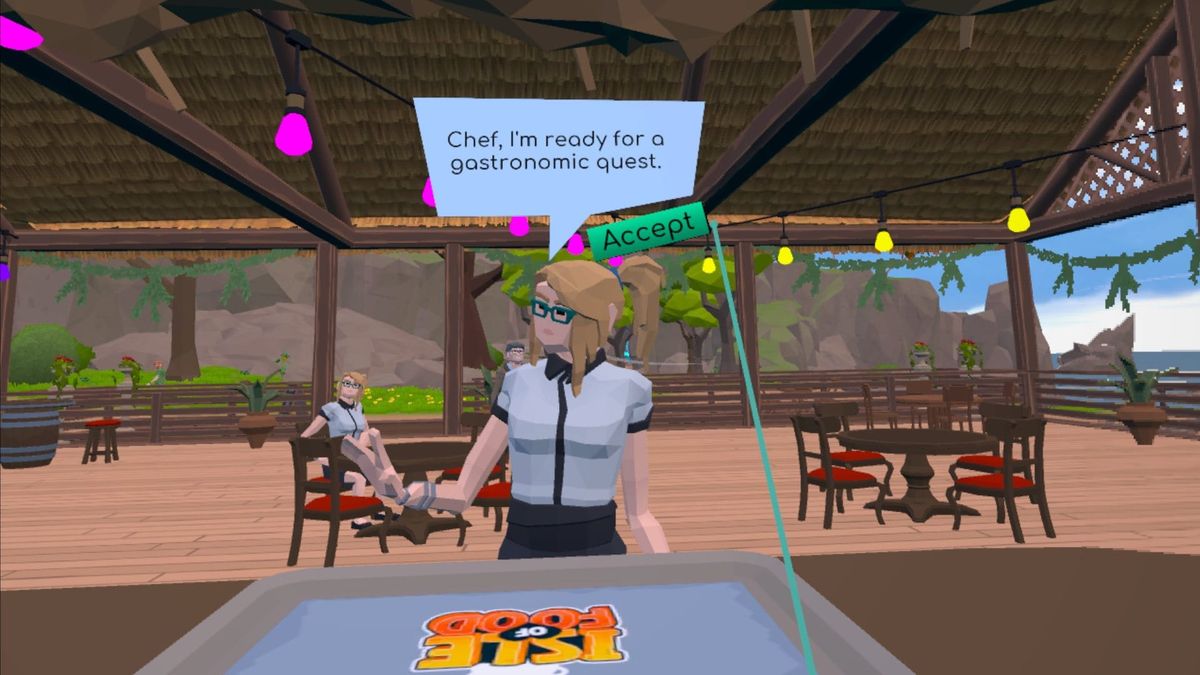
Isle of Food is positioned as a hybrid simulation title that tasks players with running a bustling "tiki hut" restaurant. Unlike traditional cooking games where ingredients are provided via a bottomless pantry, this title requires players to actively forage, hunt, and farm their own supplies across a densely packed island ecosystem.
Core Specifications
- Isle of Food
- Developer: Svaiy Art Industries
- Publisher: Istifa Games
- Platforms: Meta Quest (Full Release), SteamVR (Early Access)
- Price Point: $19.99 USD
- Genre: Cooking Simulation / Exploration / Survival-lite
- Key Features: Physicalized cooking mechanics, ingredient gathering (hunting, fishing, farming), 3D printing economy, and environmental storytelling.
The game’s primary loop is divided into two distinct phases. The first is the Culinary Phase, where players must manage orders from a rotating cast of hungry tourists. This involves using a variety of kitchen tools—grills, ovens, blenders, and knives—to prepare recipes found in a tiered cookbook. The second is the Procurement Phase, where the player leaves the safety of the kitchen to explore the island, gathering everything from tomatoes and potatoes to proteins obtained through hunting and fishing.
Chronology: From Steam Early Access to Meta Quest
The journey of Isle of Food reflects a common trajectory for ambitious VR projects. The game initially launched on SteamVR in an Early Access state, allowing the developers at Svaiy Art Industries to gather player feedback and refine the core mechanics of the island’s ecology and the kitchen’s physics.
The Development Timeline
- SteamVR Early Access Launch: The game was introduced to PCVR audiences first, establishing the "forage-to-table" gameplay loop. During this phase, the developers focused on the "physicality" of the game—ensuring that actions like pulling seeds from a backpack or harvesting crops felt grounded in the VR space.
- The Meta Quest Transition: Recognizing the larger market share of standalone VR, the developers optimized the title for the Meta Quest 2 and 3. This transition involved streamlining certain assets while maintaining the "dense" feel of the tropical island.
- Full Release Status: While the game remains in Early Access on Steam to allow for further PC-specific optimizations, it has been billed as a full release on the Meta Quest store. This move signals the developers’ confidence in the core loop, though, as noted by early adopters, the "full release" tag may be slightly premature given the remaining technical hurdles.
Supporting Data: The Mechanics of a Virtual Island Economy
To understand why Isle of Food stands out in a crowded market of cooking simulators, one must look at the data governing its gameplay systems. The game eschews pure realism in favor of "gamey" convenience, which paradoxically enhances the fun factor.
The Two-Fold Gameplay Loop
The game is split into a roughly 50/50 balance between management and exploration:
- The Kitchen Economy: Players earn experience points (XP) and currency for completing dishes accurately and within time limits. Leveling up unlocks up to seven tiers of increasingly complex recipes.
- The Gathering Ecology: Ingredients are not static. The island operates on a day/night cycle and a weather system (rain vs. sun). Certain animals, like deer or specific fish, only appear during certain times or under specific weather conditions.
The 3D Printing and Customization System
A standout feature is the "futuristic 3D printer" located near the kitchen. This serves as the game’s primary gold sink. Players can spend their hard-earned profits to:
- Purchase rare ingredients not found on the island.
- Craft tools such as shovels, fishing rods, and bows.
- Buy furniture and aesthetic upgrades for the restaurant.
- Unlock new customer types, which in turn provide more XP and higher-tier rewards.
Physicality vs. Realism
The developer’s design philosophy prioritizes the feeling of an action over its real-world consequence. For example, while the game provides a spatula for plating, players often find it more efficient to simply grab a boiling hot vegetable with their virtual hands. The removal of fall damage and stamina bars allows the player to focus entirely on the "hectic but fun" loop of gathering and cooking without the frustration of traditional survival mechanics.
Official Responses and Technical Evaluation
While Svaiy Art Industries has not issued a formal press release regarding the "Full Release" bugs, the community response has highlighted several areas where the game requires further "time in the oven."

Technical Performance on Standalone VR
As of the current build on Meta Quest, players have reported several performance issues that are typical of ambitious porting efforts:
- Peripheral Pop-in: There is noticeable asset pop-in at the edges of the field of view, a common side effect of aggressive foveated rendering or optimization techniques used to maintain frame rates on mobile chipsets.
- Collision and Physics Bugs: Some ingredients occasionally fail to register when placed on a plate, resulting in "floating" objects that can break the immersion of the cooking process.
- Navigation Issues: The lack of an "unstuck" button has been noted as a significant oversight. In an open-world VR game where players can climb and jump, getting wedged into geometry currently requires a full game reboot.
Comfort and Accessibility Features
To the developer’s credit, Isle of Food includes a robust suite of VR comfort settings, which is essential for a game involving significant movement:
- Locomotion: Options for snap or smooth turning with adjustable speeds and angles.
- Vignetting: A customizable tunneling vignette to reduce motion sickness during movement.
- Seated Mode: A dedicated mode for players who prefer or require a seated experience.
- Handedness: The ability to toggle the movement hand between left and right.
Implications: The Future of ‘Isle of Food’ and the Genre
The release of Isle of Food carries several implications for the VR industry and the simulation genre at large.
The Evolution of the "Work-Sim"
For years, titles like Job Simulator set the standard for VR interaction by making mundane tasks funny. Isle of Food represents the next step: making mundane tasks rewarding. By tying the cooking mechanic to a larger exploration and gathering system, the game creates a sense of "earned" success. When you serve a dish, you aren’t just reacting to a prompt; you are the hunter, the farmer, and the chef.
Environmental Storytelling in Non-Narrative Games
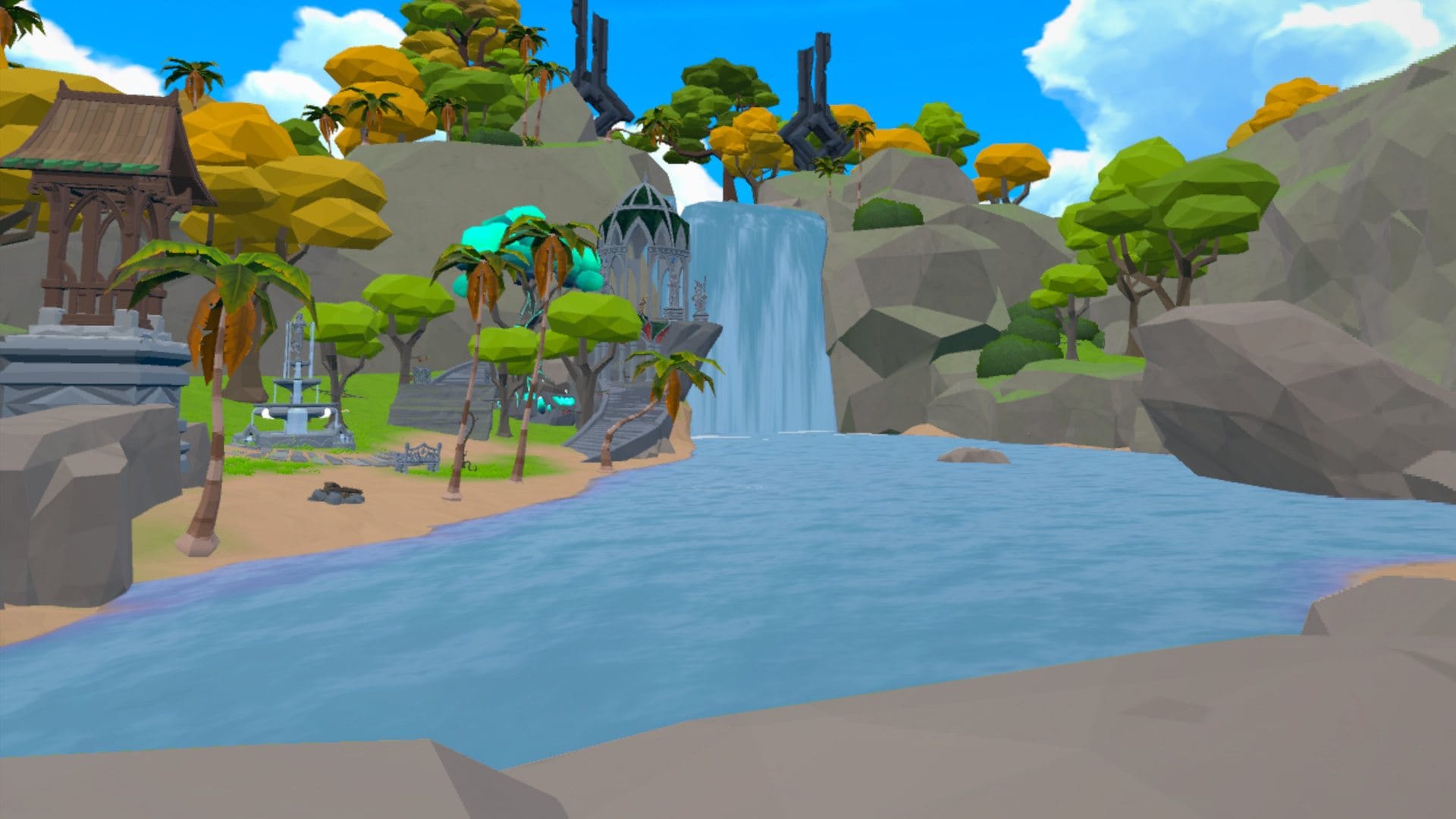
One of the most intriguing aspects of Isle of Food is the presence of "mysterious structures." The inclusion of giant glowing crystals, an ancient throne, and a sword stuck in a stone (reminiscent of Excalibur) suggests that the developers have plans to expand the game’s lore. This adds a layer of intrigue that is usually absent from cooking simulators, potentially attracting players who would otherwise find the genre too repetitive.
The "Early Access" Dilemma
The game’s current state on Meta Quest—labeled as a full release despite technical glitches—highlights a growing trend in the VR market. As developers rush to fill the demand for content on standalone headsets, the line between "Beta" and "1.0" continues to blur. However, the core gameplay of Isle of Food is strong enough that most players appear willing to overlook these flaws in exchange for the unique loop it provides.
Conclusion
Isle of Food is a testament to the power of tactile interactivity in VR. While it suffers from some technical "under-cooking," its combination of frantic kitchen management and serene island exploration creates a compelling experience. At $19.99, it offers a substantial amount of content for players looking for a simulation game that demands more than just standing behind a counter. If Svaiy Art Industries continues to provide post-launch support and addresses the navigation and physics bugs, Isle of Food could become a staple of the VR simulation genre. For now, it remains a "delicious dish" that could benefit from a few more minutes on the grill.