
Decoding the Cosmos: "City of Six Moons" Set to Revolutionize Board Gaming with an Alien Rulebook
Main Facts: A Cryptic Dawn in Board Gaming
A paradigm-shifting entry into the world of tabletop gaming is on the horizon, promising an experience unlike any before it. "City of Six Moons," an upcoming single-player board game from acclaimed designer Amabel Holland and published by Hollandspiele, is poised to redefine the very concept of a rulebook. Eschewing conventional linguistic instruction, the game will present its entire operational guide in an alien language, composed solely of icons, glyphs, and symbols. This audacious design choice immediately places an unprecedented burden of interpretation squarely on the player, challenging them not just to play a game, but first to decipher its foundational principles.
The core conceit is deceptively simple yet profoundly complex: players must translate an entirely unknown symbolic language before they can even begin to understand how to play "City of Six Moons." The game is described by Holland as a dual exploration – both a narrative journey guiding the fortunes of an alien civilization and, critically, a game designed as if it were genuinely created by an extraterrestrial culture. This radical commitment to thematic immersion extends to every facet of the player’s initial encounter with the game.
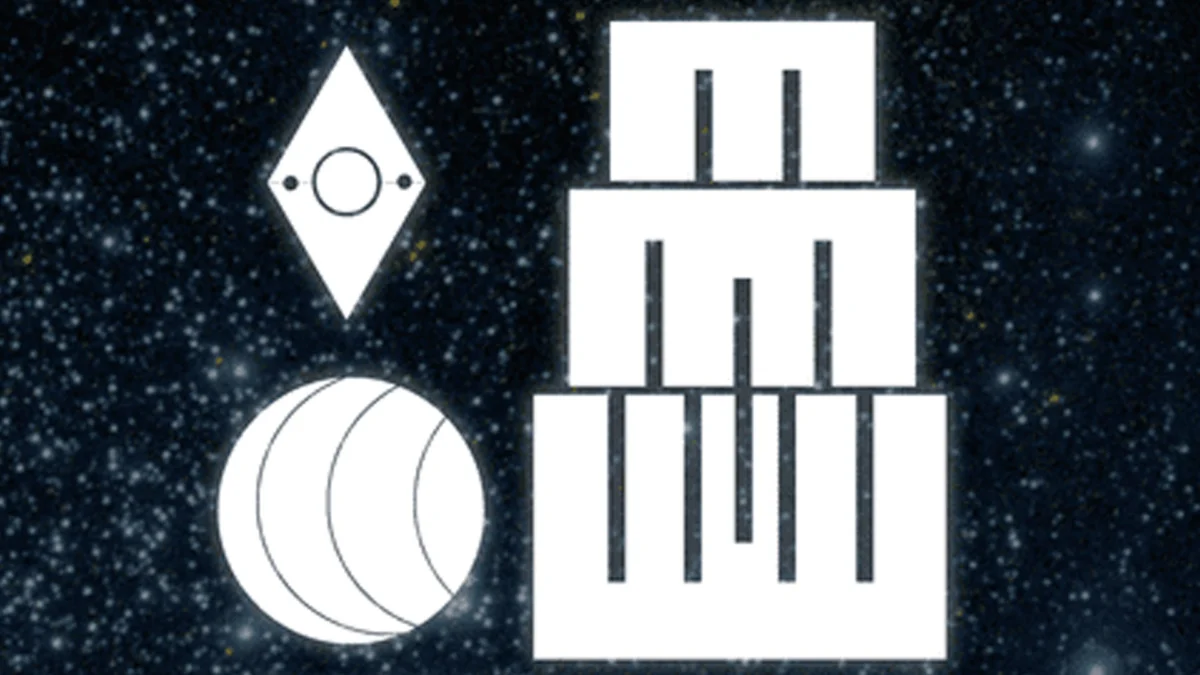
However, the most intriguing and perhaps daunting aspect of this challenge lies in its inherent ambiguity: players will never receive official confirmation of the correctness of their translations. Adding another layer of unyielding artistic integrity, Amabel Holland has explicitly stated that she will refuse to answer any questions regarding the game’s rules. This radical stance transforms the act of learning into a continuous process of hypothesis, testing, and ultimately, a personal acceptance of one’s own interpretation. The initial glimpse of the game’s cover artwork, featuring intricate, otherworldly designs, is perhaps the first and only overt clue players will receive in their impending linguistic quest.
Chronology of a Radical Concept
The announcement of "City of Six Moons" quickly circulated within dedicated board gaming communities, generating a buzz of both excitement and trepidation. Hollandspiele, known for its unique and often challenging designs, unveiled the project with a distinct preview, highlighting its singular approach to player engagement. Designer Amabel Holland subsequently elaborated on her vision through various channels, including a notable post on the social media platform Bluesky, further solidifying the game’s unconventional premise.
The initial news, spotted by BoardGameGeek, quickly spread, sparking discussions across forums about the feasibility and appeal of such a design. Holland’s statements, particularly her unwavering commitment to non-intervention in players’ decipherment efforts, have positioned "City of Six Moons" as a true artistic statement rather than merely a commercial product. The game is slated for release next month, a relatively swift turnaround from its initial reveal, building anticipation for what promises to be one of the most talked-about and potentially divisive titles of the year. This rapid approach to launch underscores Hollandspiele’s confidence in the game’s readiness and its distinct appeal to a niche, yet dedicated, audience eager for novel experiences.
Supporting Data: The Anatomy of an Alien Encounter
The conceptual underpinning of "City of Six Moons" goes far beyond a mere gimmick; it delves into deep philosophical and cognitive territories, challenging players to engage with a game on a meta-level before the actual gameplay even begins.
The Design Philosophy: Beyond Conventional Play
Amabel Holland’s vision for "City of Six Moons" is rooted in a profound commitment to immersive storytelling and a deconstruction of traditional game design. By crafting a rulebook in an alien language, she aims to simulate the genuine experience of encountering an extraterrestrial artifact. This isn’t just a game about an alien civilization; it is designed as if it were a product of one. This distinction is crucial. Players aren’t simply reading a translated manual; they are becoming linguistic archaeologists, piecing together meaning from unfamiliar glyphs and symbols.
This approach requires players to shed their preconceived notions of how games operate. Instead of clear, concise instructions, they are presented with a puzzle that demands intuition, pattern recognition, and a willingness to embrace uncertainty. The rulebook itself becomes the first, and perhaps most significant, component of the game. It transforms a usually utilitarian element into an integral part of the narrative and challenge.
Cognitive and Linguistic Challenges: A Rosetta Stone of Gameplay
The task of deciphering "City of Six Moons" will draw heavily on principles found in cryptology, semiotics, and even comparative linguistics. Players will naturally attempt to identify recurring symbols, infer meaning from context, and hypothesize grammatical structures within the alien "language." The game description explicitly mentions the need to "draw on both your own existing cultural assumptions and the acceptance that the culture of the alien civilisation who made it is very different to humanity." This highlights a fascinating tension: players must use their inherent human cognitive biases and frameworks to interpret an alien system, while simultaneously acknowledging that those biases might lead them astray.
This challenge mirrors real-world historical efforts, such as the decipherment of Egyptian hieroglyphs using the Rosetta Stone, or the ongoing attempts to understand Linear B. However, unlike those historical feats, "City of Six Moons" offers no known parallel texts, no explicit keys, and critically, no authoritative confirmation. Players are left to their own devices, relying on internal consistency and collaborative community efforts to validate their interpretations. This process taps into the human drive to find patterns, construct narratives, and impose order on chaos, making the act of translation inherently rewarding, regardless of its ultimate "correctness."
The Solo Gaming Landscape: Introspection and Isolation
"City of Six Moons" is designed as a single-player experience, a trend that has seen a significant boom in recent years. However, it radically subverts many conventions of solo board gaming. While many solo titles offer clear objectives, narrative guidance, or puzzles with definitive solutions, "City of Six Moons" introduces an unprecedented layer of personal interpretation and potential isolation. The journey of decipherment becomes a deeply introspective one, where the player grapples not only with game mechanics but also with their own understanding and cognitive limits.
The absence of a definitive answer means that each player’s experience of "City of Six Moons" could be uniquely their own, shaped by their individual interpretation of the rules. This personal journey is further amplified by the designer’s refusal to provide answers, forcing players to trust their own judgment. It transforms the typical solo challenge into a profound philosophical quest for meaning.
Hollandspiele’s Legacy of Innovation: Pushing Boundaries
Hollandspiele, co-owned by Amabel Holland and Mary Holland, has cultivated a reputation for publishing games that are often challenging, thought-provoking, and unapologetically niche. Their catalog frequently features wargames and strategy titles that eschew mainstream accessibility in favor of deep thematic immersion and innovative mechanics. "City of Six Moons" stands as a bold, yet logical, extension of this publishing ethos.
The company has a history of supporting designers who experiment with game structures, player interaction, and the very nature of what a board game can be. "City of Six Moons" fits perfectly within this tradition, pushing the boundaries of player engagement and rulebook conventions to an extreme. It demonstrates Hollandspiele’s commitment to artistic vision over commercial expediency, solidifying their position as a publisher for those seeking truly novel tabletop experiences.
Anticipated Components: Clues from the Void
While specific details about the game’s components remain scarce, the design philosophy offers some educated speculation. Given that the rulebook is written in an alien language, it is highly probable that any in-game components – cards, tokens, boards, or other pieces – will either be entirely devoid of human language or feature the same enigmatic alien code. This would maintain thematic consistency and prevent players from bypassing the core decipherment challenge by simply reading labels.
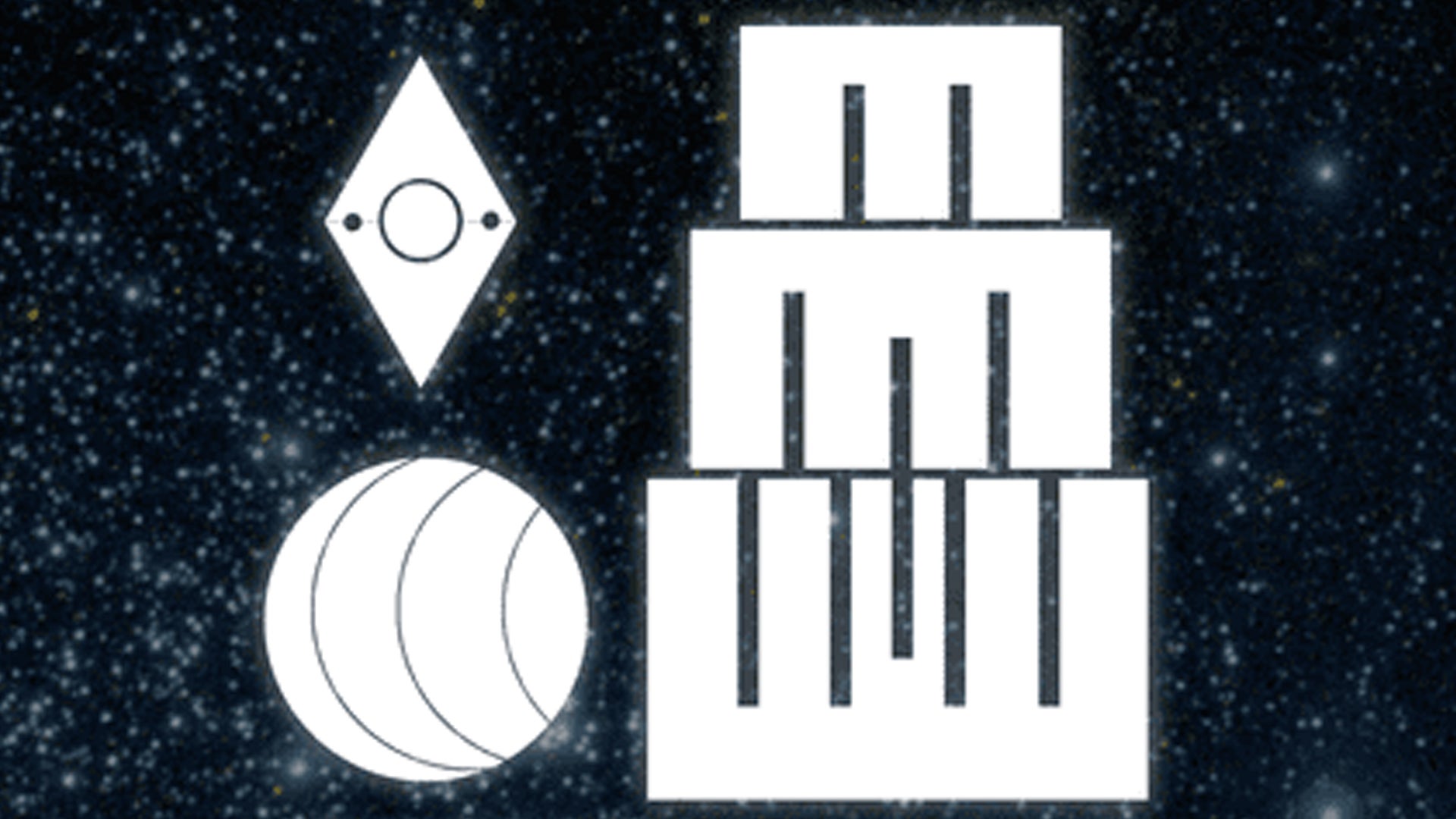
The cover artwork, the only visual clue revealed thus far, likely serves as more than just aesthetic dressing. It could contain subtle hints, recurring motifs, or even a foundational symbol that acts as a partial "Rosetta Stone" for the alien script. Players will undoubtedly scrutinize every detail, searching for patterns that could unlock the game’s secrets. The abstract nature of the "City of Six Moons" title itself suggests a world of cosmic wonder and intricate, perhaps non-Euclidean, structures, further hinting at the visual language that might permeate the game’s physical elements.
Official Responses: The Designer’s Unyielding Stance
Amabel Holland’s explicit and unwavering refusal to answer any questions about the game’s rules is not merely a provocative marketing ploy; it is a fundamental pillar of "City of Six Moons’" artistic integrity. This radical decision is central to her vision, ensuring that the experience of decipherment remains pure and unadulterated by external validation.
The Rationale: Preserving the Alien Experience
Holland’s rationale is rooted in the very premise of the game: if it is designed as if by an alien civilization, then humanity would naturally lack a direct interpreter or guide. Providing answers would undermine this core immersive concept, transforming the encounter from a genuine exploration of the unknown into a mere puzzle with a predetermined solution. Her refusal creates a hermetically sealed environment for discovery, forcing players to grapple with the game on its own terms, free from authorial interference. This artistic stance emphasizes the player’s agency and intellectual fortitude as the primary tools for engagement.
Confirming Functionality, Embracing Loss
Despite the ambiguity surrounding the rules, Holland did confirm on Bluesky that "City of Six Moons" will be a "functional, replayable game" for those who successfully figure out its rules (or enough to play, that is). This assurance is crucial, as it validates the player’s effort, ensuring that the decipherment leads to a tangible, playable experience. It distinguishes the game from a purely conceptual art piece, affirming its status as a playable board game.
However, Holland also articulated a profound and somewhat melancholic aspect of the player’s journey: the deliberate "loss" of discovery. She stated, "That loss is a thing I want you to feel; I want it to linger." This refers to the unique, unrepeatable experience of struggling to understand something entirely new. Once the code is "cracked," or a working interpretation is formed, that initial thrill of pure, unguided discovery is gone. This "loss" is not a failure, but a natural consequence of understanding, and Holland intends for players to reflect on this transition. It highlights her belief that the process of decipherment is as vital, if not more so, than the game’s ultimate gameplay loop. The game is the decipherment, and the emotional resonance of that journey is a key component of the overall package.
Implications: Reshaping the Gaming Frontier
"City of Six Moons" stands to have significant implications across various facets of the board gaming world, from player communities to the very philosophy of game design.
Impact on Player Community: Collaborative Cryptography
The most immediate impact will likely be on player communities. Given the immense challenge of deciphering an entire rulebook without official guidance, it is highly probable that online forums, Discord servers, and dedicated subreddits will become hubs for collaborative cryptanalysis. Players will share their interpretations, discuss symbolic meanings, and collectively attempt to construct a working understanding of the game. This could lead to the emergence of "Rosetta Stone" projects, where a community pool of knowledge slowly builds a comprehensive lexicon of the alien language.
However, the designer’s refusal to confirm interpretations introduces a fascinating dynamic: even with collaborative efforts, there may never be a universally accepted "official" translation. This could lead to multiple "correct" interpretations, diverse "house rules" based on different understandings, and ongoing debates over what constitutes "winning" or "playing correctly." The community engagement itself becomes a meta-game, a social experiment in consensus building in the absence of authoritative truth.
Implications for Game Design & Publishing: A Bold New Frontier
"City of Six Moons" challenges fundamental assumptions about game design and publishing. It questions the industry’s pervasive emphasis on clarity, accessibility, and streamlined onboarding. By deliberately making its rules opaque, it pushes the boundaries of player engagement, forcing a level of intellectual investment rarely seen outside of academic pursuits.
This radical approach could inspire other experimental titles, encouraging designers to explore unconventional methods of instruction, narrative delivery, and player interaction. Alternatively, it might remain an outlier, a unique artistic statement that few other publishers dare to emulate due to its inherent market risks. Regardless, it firmly establishes the board game as an evolving art form, capable of profound conceptual exploration beyond mere entertainment. It also redefines the role of the designer, shifting from an instructor to an artist who presents a complete, uninterpreted work.
Critical Reception and Review Challenges: Beyond the Score
Reviewing "City of Six Moons" will present an unprecedented challenge for critics. How does one evaluate a game whose rules are, by design, unknown or unconfirmed? Traditional review metrics focusing on mechanics, balance, and replayability become problematic. The focus will necessarily shift from the quality of the gameplay itself to the experience of decipherment – the intellectual journey, the emotional highs and lows, and the philosophical implications.
Reviewers might have to acknowledge their own subjective interpretations, detailing their process of understanding rather than simply summarizing the rules. This could lead to a new form of critical analysis, one that embraces ambiguity and highlights the reviewer’s personal interaction with the game’s core puzzle. Ethical considerations might also arise: should a reviewer attempt to "solve" the game before reviewing, or should the review itself document the struggle? The very act of reviewing becomes a part of the game’s narrative.
The Nature of Play and Understanding: A Philosophical Inquiry
At its deepest level, "City of Six Moons" is a profound inquiry into the nature of play, understanding, and communication. It posits that the act of playing is the understanding – the two are inextricably linked. By stripping away the comfort of clear rules, it forces players to confront the limits of human-alien communication, even within a fictional construct.
The game explores the philosophical implications of accepting ambiguity within a system traditionally defined by strict rules. It highlights the joy of discovery, the frustration of confusion, and ultimately, the acceptance that absolute certainty might be an unattainable ideal. The "loss" that Holland wants players to feel after decipherment becomes a powerful metaphor for the human condition – the constant negotiation between the thrill of the unknown and the bittersweet reality of knowledge. It leaves a lasting impact, prompting players to reflect not just on the game, but on their own processes of learning and interpretation.
Conclusion: A Bold New Epoch for Board Games
"City of Six Moons" is poised to be more than just a board game; it is an intellectual gauntlet, an artistic statement, and a profound experiment in player engagement. Amabel Holland and Hollandspiele are not merely offering a product; they are inviting players on an unprecedented journey of linguistic archaeology and self-discovery. This revolutionary title challenges the very conventions of tabletop gaming, redefining the relationship between designer, player, and the game itself.
As its release date approaches, anticipation mounts for the unique challenges it will present. "City of Six Moons" stands as a testament to the evolving art form of board gaming, demonstrating its capacity for profound conceptual exploration and its willingness to embrace the unknown. For those brave enough to tackle its cryptic puzzle, it promises an unforgettable experience – one where the courage to embrace ambiguity and the drive to decipher the cosmos are the ultimate keys to unlocking its secrets. Good luck to all who embark on this bold new epoch for board games.



Leave a Comment