
The Designer’s Dilemma: Navigating Creativity in an Age of Global Crisis
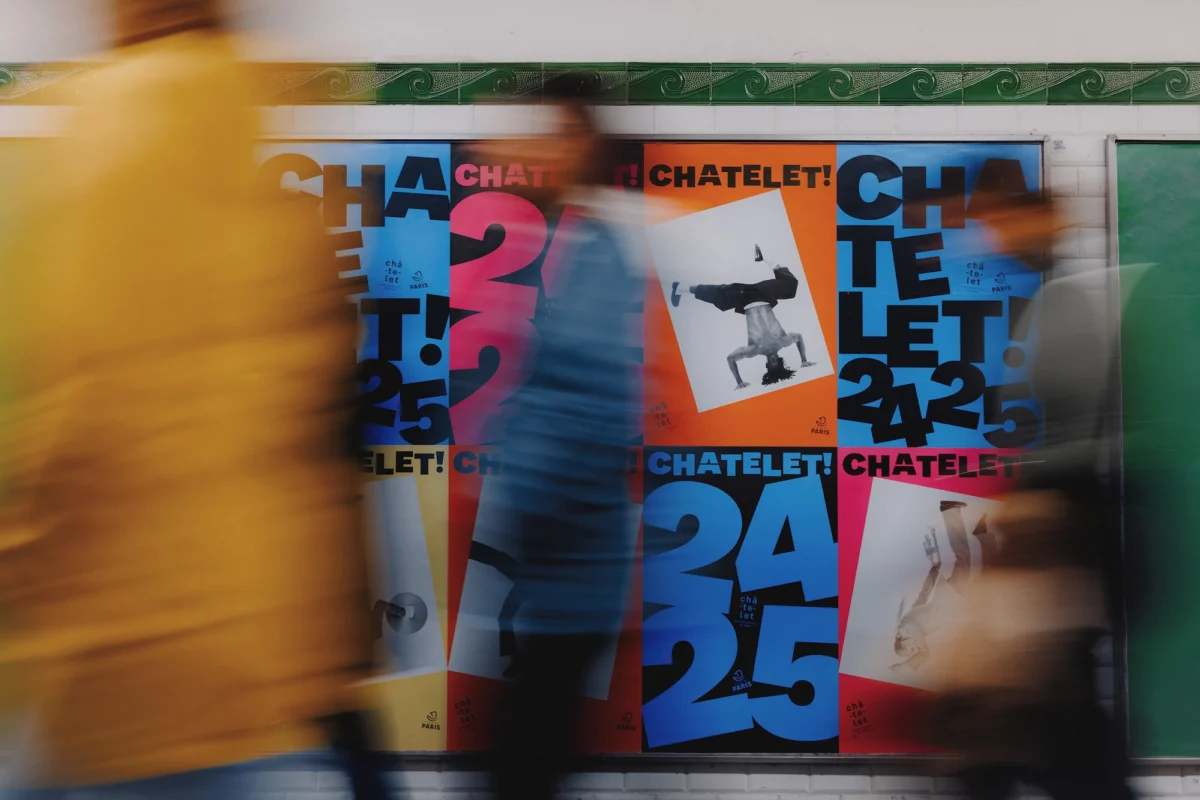
At the recent Offf festival in Barcelona, a city synonymous with the intersection of historical art and modern innovation, a singular provocation echoed through the halls of the Disseny Hub. Aurélia de Azambuja, a senior designer at the renowned agency Base in Brussels, stood before an audience of international creatives and delivered a talk with a title that felt like a bucket of cold water to the face: “How to make the logo bigger when the world is burning.”
The title is more than a witty jab at the most cliché of client requests; it is a profound existential inquiry. It addresses the growing tension within the commercial creative industries—a sector often accused of being the engine of overconsumption—and asks whether the skills of a designer are currently exacerbating the world’s problems or if they can, in fact, be harnessed to solve them.
For de Azambuja, this isn’t just a philosophical exercise; it is the cornerstone of her professional practice. As the creative industry grapples with its role in the climate crisis and social inequality, her voice has become a focal point for a generation of designers looking for a way to align their paychecks with their principles.
Main Facts: The Intersection of Branding and Responsibility
The core of de Azambuja’s argument lies in the inherent friction between the "commercial" and the "conscientious." For decades, the metric of success for a designer was how effectively they could move products, build brand equity, and, yes, make the logo prominent enough to command attention in a crowded marketplace. However, as global temperatures rise and social divides widen, that metric is being challenged.
Aurélia de Azambuja, through her work at Base, argues that design cannot exist in a vacuum. Base, a global branding agency with offices in Brussels, New York, Geneva, and Melbourne, is known for its "minimalist but human" approach. De Azambuja’s role involves navigating the high-pressure demands of major commercial clients while maintaining a commitment to personal values.
The "burning world" metaphor she employs refers to the dual crises of our time: the environmental collapse and the social upheavals that define the 2020s. Her talk suggests that the "logo"—a symbol of corporate identity and consumption—must be recontextualized. If the world is indeed burning, the role of the designer must evolve from a decorator of capitalism to an architect of meaningful communication.
Chronology: The Evolution of a Provocation
The development of de Azambuja’s philosophy did not happen overnight. It is the result of a career spent observing the machinery of the creative industry from the inside.
- The Early Years: Throughout her early career, de Azambuja noted a recurring pattern. Young designers entered the industry with a desire to "change the world," only to find themselves tasked with selling luxury goods or optimizing "buy now" buttons. She describes herself as having always been "quite committed on the personal side," but found a disconnect between her private activism and her professional output.
- The Transition to Base: Joining Base Design provided a platform where the "Base way"—focused on personality and cultural relevance—allowed for more nuanced conversations about a brand’s role in society. Here, she began to explore how design could be used for cultural institutions and social causes, such as the Théâtre du Châtelet or Le Refuge.
- The Offf Festival Debut: The talk “How to make the logo bigger when the world is burning” was first conceptualized as a response to the "creative burnout" and "moral injury" she observed in her peers. Since its debut, she has delivered the presentation multiple times, each time refining the message based on the feedback of a hungry, often disillusioned, audience of young creatives.
- The Current Moment: Today, de Azambuja is a leading voice in the "Brussels school" of design, which emphasizes clarity, social responsibility, and a refusal to indulge in unnecessary artifice.
Supporting Data: The Creative Industry’s Footprint
To understand why de Azambuja’s message resonates, one must look at the data surrounding the creative and advertising industries.
- The Carbon Cost of Advertising: Recent studies by organizations like Purpose Disruptors suggest that "advertised emissions"—the greenhouse gas emissions resulting from the uplift in sales generated by advertising—account for a significant percentage of the UK’s total carbon footprint. This puts designers directly in the supply chain of environmental impact.
- The Talent Drain: A 2023 industry survey revealed that nearly 60% of Gen Z and Millennial creatives have considered leaving their jobs because of a lack of alignment with their company’s environmental or social values.
- The Economic Reality: Despite the desire for change, the creative industry remains a multi-billion dollar sector. In the UK alone, the creative industries contribute over £115 billion to the economy annually. This "economic context" is what de Azambuja refers to when she speaks about the difficulty of translating values into a commercial setting without being "idealistic."
De Azambuja’s work acknowledges these figures not as a reason to quit, but as a reason to reform. She argues that because designers hold the keys to how information is consumed, they possess a unique, albeit heavy, lever for systemic change.
Official Responses: Insights from the Front Lines
In her discussions, de Azambuja is remarkably candid about the difficulty of her position. She does not claim to have all the answers, but she offers a framework for survival and impact.
“I’ve done this talk quite a few times now, and each time I have a lot of people coming over sharing concerns—mostly younger people,” de Azambuja notes. “I hope that the next generation as well are going to be more and more attuned to these kinds of issues and trying to find something within that allows us to still exist and still like our jobs and still push things forward.”

Her approach at Base Design is reflected in projects like the branding for Le Refuge, an organization that provides shelter and support for LGBTQ+ youth. In this project, the "logo" wasn’t just a mark of ownership; it was a beacon of safety. By applying the same high-level strategic thinking to a non-profit as she would to a luxury brand, she demonstrates that professional skills are transferable to the "solution" side of the global equation.
Similarly, her work for the Théâtre du Châtelet in Paris showcases how design can revitalize cultural institutions, ensuring they remain relevant in a digital age. For de Azambuja, cultural preservation is a form of social sustainability.
She often speaks of the "middle ground." She avoids the "idealistic" trap where one refuses to work for any commercial entity—a stance that is often financially impossible for most—and instead advocates for "subversive" design. This involves pushing clients toward more sustainable materials, more inclusive imagery, and more honest messaging from within the boardroom.
Implications: The Future of the Creative Professional
The implications of de Azambuja’s provocation are far-reaching for the future of the design industry. If the "world is burning," the traditional role of the designer as a passive service provider is no longer tenable.
1. The Rise of the "Designer-Citizen"
We are seeing a shift from the "Designer-Stylist" to the "Designer-Citizen." This new archetype views every brief through an ethical lens. It requires a high level of "literacy" in areas previously ignored by design schools, such as supply chain ethics, carbon accounting, and cognitive psychology.
2. Client-Agency Dynamics
Agencies like Base are increasingly finding that their commitment to values is becoming a competitive advantage. As major corporations face pressure from ESG (Environmental, Social, and Governance) mandates, they are seeking creative partners who can help them navigate these complexities authentically rather than just "greenwashing" their image.
3. The "Small Wins" Strategy
De Azambuja’s philosophy suggests that making a difference doesn’t always require a revolution; sometimes it’s about the incremental changes. It’s about choosing a sustainable printer, advocating for a diverse casting in a photoshoot, or convincing a client that they don’t need a massive, energy-draining digital billboard when a more clever, low-impact solution exists.
4. Educational Reform
The reaction to de Azambuja’s talks at festivals like Offf highlights a gap in design education. Students are being taught how to design, but not necessarily why or for whom in the context of a global crisis. Her work serves as a call to action for universities to integrate ethics and sustainability into the core of their creative curricula.
Conclusion: Finding Meaning in the Smoke
Aurélia de Azambuja’s "direct provocation" is not an indictment of the design profession, but a lifeline for it. By acknowledging the absurdity of obsessing over a logo’s size while the planet faces unprecedented challenges, she strips away the industry’s pretenses and gets to the heart of what matters: communication.
Her journey at Base Design proves that it is possible to exist within the "economic context" without losing one’s soul. It requires a difficult, often uncomfortable, balance between pragmatism and passion. As she continues to inspire the next generation of designers, the message is clear: the world may be burning, but that is exactly why the world needs designers who are willing to do more than just watch it glow. They must be the ones to design the way out.




Leave a Comment