The Voyage to Oblivion: The Disastrous Legacy of ‘Christopher Columbus: The Discovery’
In the annals of Hollywood history, certain projects are remembered not for their artistic merit, but for the sheer scale of their failure. These are the "vortexes of misfortune"—productions where every creative decision, financial gamble, and interpersonal conflict converges into a perfect storm of calamity. At the epicenter of this phenomenon sits the 1992 historical epic Christopher Columbus: The Discovery.
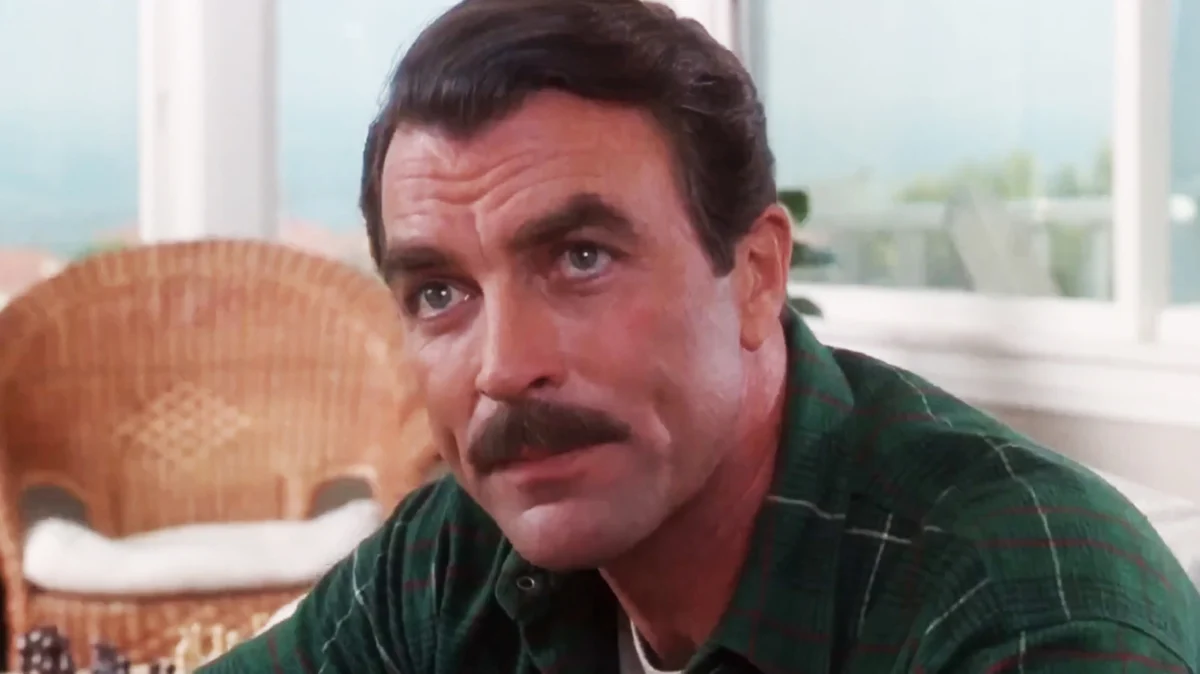
Intended to be a prestige blockbuster celebrating the 500th anniversary of the explorer’s arrival in the Americas, the film instead became a case study in cinematic dysfunction. Boasting a cast that included television icon Tom Selleck and the legendary Marlon Brando, the film was expected to dominate the global box office. Instead, it became a critical punchline, a financial ruin, and the catalyst for a major star’s multi-year hiatus from the industry.
Main Facts: A Project Doomed from the Horizon
Christopher Columbus: The Discovery was one of two major competing projects released in 1992 to commemorate the quincentenary of Columbus’s voyage, the other being Ridley Scott’s 1492: Conquest of Paradise. While Scott’s film was a somber, visually lush meditation on the explorer, The Discovery—produced by the father-son duo Alexander and Ilya Salkind—was a more traditional, swashbuckling adventure that failed to find its footing.
The statistics surrounding the film remain staggering:
- Budget: Approximately $40 million (a massive sum for 1992).
- Box Office: A dismal $8.2 million domestic return.
- Critical Reception: A 7% "Rotten" rating on Rotten Tomatoes.
- Legal Fallout: Multiple lawsuits involving the original director and lead actors.
- Career Impact: Tom Selleck, disillusioned by the experience, took a three-year break from acting.
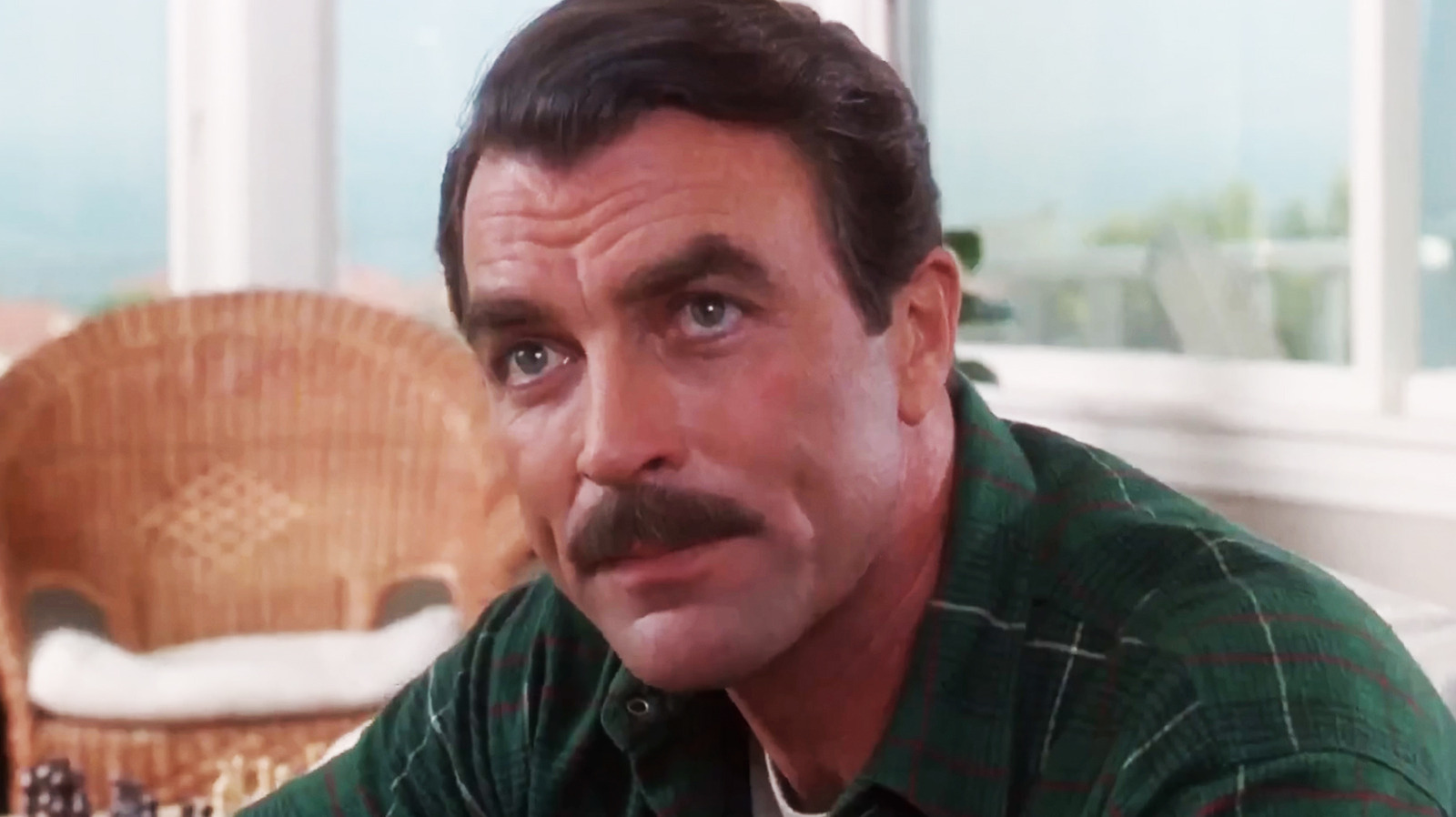
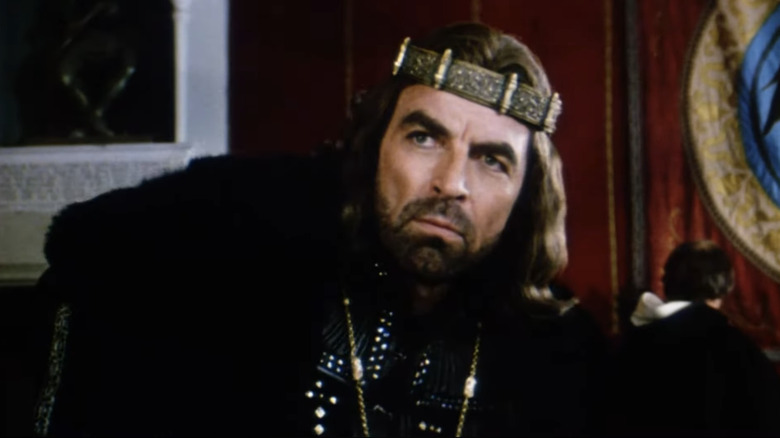
The film followed George Corraface as Columbus, with Tom Selleck as King Ferdinand V, Rachel Ward as Queen Isabella, and Marlon Brando in a brief but highly paid role as the Grand Inquisitor, Tomás de Torquemada. Despite the star power, the film was criticized for its wooden acting, historical inaccuracies, and a script that felt dated even by 1990s standards.
Chronology: From Superman to Shipwreck
To understand how The Discovery fell apart, one must look at the producing pedigree of the Salkinds. Alexander and Ilya Salkind were the architects of the modern superhero movie, having produced the 1978 Superman starring Christopher Reeve. However, their reputation was built on high-stakes gambles and tumultuous sets. They famously fired director Richard Donner midway through the production of the first two Superman films, leading to years of industry friction.
The 1991 Inception
As the 500th anniversary approached, the Salkinds rushed into production to beat Ridley Scott to the screen. The project was initially set to be directed by George P. Cosmatos (Rambo: First Blood Part II), with Timothy Dalton—then the reigning James Bond—slated to play Columbus and Isabella Rossellini as Queen Isabella.
The Great Exodus
Before cameras could even roll, the production began to hemorrhage talent. Cosmatos walked away due to creative differences, followed quickly by Dalton and Rossellini. The departures were not amicable; all three filed lawsuits against the Salkinds for breach of contract. Desperate to keep the ship afloat, the producers hired John Glen, a veteran director of five Bond films, to take the helm. George Corraface, a relatively unknown French actor, was cast as the lead, while Tom Selleck was brought in to provide American star power.
A Troubled Shoot
Filming began in Madrid and the Caribbean, but the atmosphere was heavy. For Tom Selleck, the professional chaos was compounded by personal tragedy. Just as he was set to depart for Spain, his daughter contracted viral pneumonia. In a 2021 interview on The Drew Barrymore Show, Selleck recalled the mental toll: "I stayed as many days as I could… She was out of the hospital the day I left, but it really bothered me."
By the time Selleck arrived on set, he realized the script—which he had already found lacking—was not being improved by the chaotic production environment. The allure of working with Marlon Brando, his acting idol, was the only thing keeping him engaged, but even that would prove to be a hollow victory.
Supporting Data: The Brando Factor and Financial Ruin
The involvement of Marlon Brando is perhaps the most infamous aspect of the film’s production. By 1992, Brando had entered a phase of his career where he was more interested in high-paycheck cameos and political activism than the craft of acting.
The $5 Million Paycheck
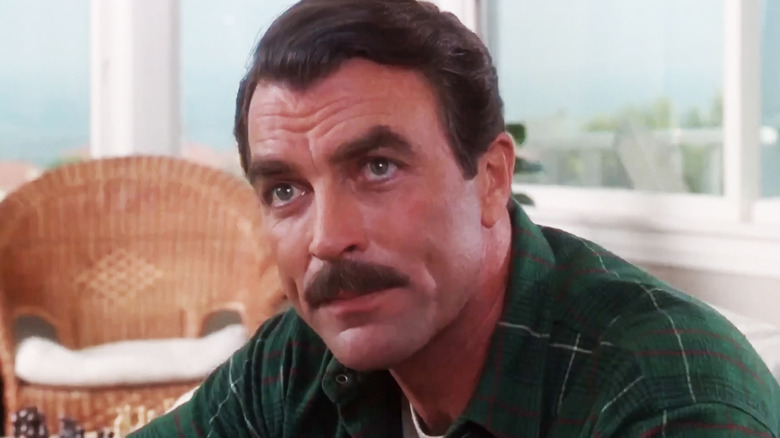
Brando was paid a staggering $5 million for just two weeks of work, playing the menacing Grand Inquisitor. For the Salkinds, Brando’s name on the poster was worth the price, but the reality on set was different. Brando was reportedly aloof and uninvested. Selleck later remarked that it was clear Brando was there only for the money, which deeply disappointed the Magnum, P.I. star.
The Name Removal Request
In a bizarre twist, Brando eventually demanded that his name be removed from the film’s credits. His reasoning was political: he felt the script ignored the genocide of Native Americans perpetrated by Columbus and his successors. When the Salkinds refused to incorporate Brando’s suggested rewrites regarding the explorer’s culpability, Brando attempted to disown the project. The producers, having paid $5 million for his name, ignored his request and kept him in the billing.
Critical Lashing
When the film finally reached theaters in August 1992, the response was vitriolic. The legendary Roger Ebert did not mince words, stating the film took "one of history’s great stories and treats it in such a lackluster manner that Columbus’s voyage seems as endless to us as it did to his crew." He went on to describe Brando’s performance as the "worst… in memory," noting that the actor seemed to be reading his lines from off-camera cue cards with zero emotional inflection.
Official Responses: The Producers’ Retreat
The fallout from The Discovery was so severe that it effectively ended the producing partnership of the Salkinds. In the wake of the film’s release, the industry looked at the $32 million loss as a sign that the Salkinds’ brand of "chaos-producing" was no longer viable in a corporate-driven Hollywood.
Alexander Salkind, in a rare moment of public defeat, told the Los Angeles Times in 1993, "I know, after this, that I’ll never make movies again." It was a somber end for a man who had once helped make a man fly in Superman. While Ilya Salkind continued in the industry, the "Salkind touch" had lost its luster.
Critics like Peter Rainer of the Los Angeles Times summarized the industry’s consensus, writing that the film was "not politically correct… not cinematically correct, humanly correct or historically correct." The movie was nominated for six Golden Raspberry (Razzie) Awards, including Worst Picture, Worst Director, and Worst Supporting Actor for Tom Selleck. Selleck actually "won" the Razzie for Worst Supporting Actor, a low point in a career otherwise defined by charm and reliability.
Implications: Selleck’s Sabbatical and the Legacy of the "Discovery"
The failure of Christopher Columbus: The Discovery had a profound effect on Tom Selleck. At the time, Selleck was a household name, but he had struggled to transition his television success into a definitive movie stardom. Quigley Down Under (1990) had shown his potential as a leading man in Westerns, but the Columbus debacle stalled his momentum.
The Three-Year Hiatus
Disillusioned by the experience of working with a checked-out Brando and a dysfunctional production, Selleck stepped away from the limelight. "The movie wasn’t really worth doing, frankly," he told Drew Barrymore. "So, I took a year off, and a year off turned into three." This sabbatical allowed Selleck to recalibrate his career, eventually leading to his celebrated guest arc on Friends and his long-running success on Blue Bloods.
A Lesson for Modern Studios
Today, Christopher Columbus: The Discovery serves as a cautionary tale about the dangers of "event-based" filmmaking. The Salkinds were so focused on hitting a specific historical date (October 1992) and securing big-name stars that they neglected the foundation of any successful film: a coherent script and a stable production environment.
The movie also serves as a precursor to Brando’s even more disastrous turn in The Island of Dr. Moreau (1996). The signs of his detachment and his willingness to sabotage productions for the sake of a paycheck were all present during the filming of The Discovery.
In the end, Christopher Columbus: The Discovery remains a fascinating relic of early 90s excess. It is a film where the behind-the-scenes drama—the lawsuits, the parental anxiety, the $5 million cameos, and the producer meltdowns—is far more compelling than the story on the screen. It stands as a reminder that in Hollywood, even the most legendary stars and the most famous historical figures can be sunk by a leaky production.