Unveiling the Shamanic Roots of European Witchcraft: A Paradigm Shift in Historical Understanding
FOR IMMEDIATE RELEASE
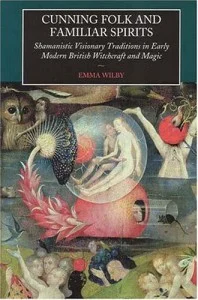
[CITY, STATE] – [DATE] – A groundbreaking work of historical scholarship, Emma Wilby’s Cunning Folk and Familiar Spirits: Shamanistic Visionary Traditions in Early Modern British Witchcraft and Magic, is compelling academics and enthusiasts alike to fundamentally re-evaluate the nature of witchcraft in early modern Europe. Far from being mere mass hysteria or elite fabrications, Wilby meticulously argues that the accounts from the infamous Witch Trials reveal a pervasive, genuine, and deeply rooted shamanistic tradition that persisted within European peasant communities well into the 17th century. This seminal publication challenges long-held assumptions and offers a profoundly humanizing perspective on a period often shrouded in misinterpretation and fear.
Main Facts: A Revolutionary Reappraisal of European Witchcraft
Emma Wilby’s Cunning Folk and Familiar Spirits stands as a pivotal intervention in the study of early modern European history, witchcraft, and comparative religion. The book’s central thesis dismantles two prevailing historical assumptions: first, that "European shamanism" is an anachronistic oxymoron, suggesting such practices were confined to a few isolated, non-European cultures; and second, that the witchcraft accusations of the 16th and 17th centuries were largely baseless fabrications or symptoms of mass delusion.
Wilby, through rigorous analysis of primary source material—primarily the court records and testimonies from British Witch Trials—demonstrates that genuine, experiential magical practices were indeed widespread among the peasantry. These practices, she asserts, bear striking resemblances to shamanistic traditions found globally, particularly in Siberia and Native North America. Rather than dismissing the accounts of witches’ activities as pure fantasy, Wilby proposes that the "demons" and "pacts" described in elite legal and theological documents were, from the practitioners’ perspective, interactions with familiar spirits often rooted in older, indigenous European folkloric traditions, such as fairies or nature spirits.
The book’s profound significance lies in its ability to bridge the gap between academic history, anthropology, and folklore, offering a rich, nuanced understanding of popular belief systems that were tragically misunderstood and persecuted by the dominant religious and secular authorities of the era. It paints a picture of a spiritual landscape far more complex and enduring than previously acknowledged, suggesting a vibrant undercurrent of pre-Christian practices that adapted and survived, albeit often in a demonized form.
Chronology: From Folk Beliefs to Demonological Persecution
The period between the 15th and 18th centuries witnessed one of the most terrifying episodes in European history: the Great Witch Hunt. Estimates suggest tens of thousands of individuals, predominantly women, were accused, tortured, and executed across the continent and in colonial America. For centuries, historians have grappled with the origins and motivations behind this widespread persecution.
Traditional Interpretations: Prior to Wilby’s work, prevailing academic theories often attributed the Witch Trials to a confluence of socio-economic, political, and psychological factors. These included:
- Mass Hysteria and Social Panic: The idea that fear, superstition, and communal anxieties led to widespread accusations without a basis in reality.
- Elite Manipulation and Social Control: Arguments that the Church and secular authorities used witchcraft accusations to enforce religious conformity, suppress dissent, or consolidate power.
- Economic Stress and Gender Bias: Theories linking accusations to periods of famine, plague, and social upheaval, often targeting vulnerable women (widows, healers, the elderly).
- Psychological Projections: Interpretations suggesting that accusers projected their own anxieties, guilt, or sexual repression onto alleged witches.
While these factors undoubtedly played a role in the mechanics of the trials and the intensity of the persecution, Wilby argues they fail to adequately explain the content of the accusations. If witchcraft was purely a fabrication, why did the testimonies, often extracted under duress, consistently describe specific types of magical practices, familiar spirits, and visionary experiences that show cross-cultural consistency?
Wilby’s Departure and New Paradigm: Emma Wilby’s research, first published in 2000, marks a significant departure from these established views. Her methodology involves a meticulous re-examination of thousands of trial transcripts, confessions, and interrogations. Instead of dismissing the accused’s testimonies as deluded ramblings or forced admissions, Wilby approaches them as ethnographic data, seeking to understand the worldview of the accused from their own perspective.
She traces the historical evolution of these beliefs, demonstrating that what the Church and government interpreted through the lens of Christian demonology was, in many cases, a remnant of far older, indigenous European spiritual traditions. These traditions, she posits, pre-date Christianity and align closely with what anthropologists define as shamanism. Her work thus offers a critical corrective, moving the focus from the persecutors’ ideology to the lived religious and magical experiences of the persecuted, thereby enriching our understanding of popular religion and folk practices during a pivotal historical era.
Supporting Data: Deconstructing Witchcraft through a Shamanic Lens
Wilby’s most compelling contributions lie in her detailed presentation of supporting data, which systematically dismantles previous assumptions and builds a robust case for the shamanistic underpinnings of early modern British witchcraft.
Reclaiming European Shamanism: An Overlooked Legacy
The notion that shamanism—typically associated with indigenous cultures of Siberia, the Americas, or parts of Africa—was actively practiced in Europe just a few centuries ago often strikes modern audiences as an "oxymoron." Wilby meticulously debunks this misconception. She argues that shamanism, broadly defined as a set of practices involving altered states of consciousness to interact with a spirit world for healing, divination, or communal well-being, was a pervasive phenomenon across Europe.
Wilby points to historical and folkloric evidence of individuals who engaged in ecstatic journeys, communicated with spirits (often in animal form), performed healing rituals, and offered prophecies. These "cunning folk," "wizards," or "wise women" were integral to their communities, serving as intermediaries between the human and spirit worlds. Their practices, though often localized and diverse, shared fundamental structural and experiential similarities with global shamanic traditions. By drawing on a vast array of historical descriptions, Wilby reveals that the "magical" deeds recounted in court documents were not random acts but often coherent parts of a structured system of belief and practice.
The Experiential Basis of Witchcraft: More Than Just Fabrication
Central to Wilby’s argument is the assertion that "there was a true experiential and folkloric basis behind the deeds recounted in records of the Witch Trials; some form of magic or witchcraft was indeed being practiced." This does not imply that actual "demons" or "pacts with the devil" existed as understood by the Church. Instead, it suggests that individuals genuinely believed they were interacting with supernatural entities, performing rituals, and achieving desired magical effects.
Wilby highlights the critical distinction between the understanding of the elite (the educated clergy, lawyers, and judges) and the peasants who practiced these traditions. The elite, steeped in Christian demonology, interpreted any deviation from orthodox practice as diabolical. A peasant’s familiar spirit, a benevolent or neutral helper from the local spirit world, was instantly re-categorized as a demonic agent of Satan by the authorities. This interpretive chasm led to the horrific miscarriages of justice, where sincere spiritual practices were re-framed as malicious acts of evil.
Familiar Spirits and the Fairy World: Unmasking the "Demons"
One of Wilby’s most insightful contributions is her analysis of "familiar spirits." Accounts from the Witch Trials frequently describe witches interacting with small animal-shaped spirits (cats, dogs, toads, birds) or anthropomorphic entities that assisted them in their magical workings. The Church authorities invariably labeled these as "demons" sent by Satan.
Wilby, however, makes a highly convincing case that these "demons" were understood by the witches themselves as fairy familiars. She draws extensive parallels between the descriptions of these familiars in trial records and the rich tapestry of European fairy folklore. Fairies, in traditional belief, were not always benign sprites; they could be capricious, helpful, or malevolent, inhabiting a parallel world and often interacting with humans. This connection is crucial: it grounds the "demons" of the trials in a deep-seated, indigenous European cosmology, rather than solely in imported Christian demonology. It suggests a continuity of belief in an animistic, spirit-filled world where interactions with such entities were a natural, albeit sometimes dangerous, part of life.
Cross-Cultural Parallels: A Global Perspective on Local Practices
To buttress her argument, Wilby employs a powerful comparative methodology, drawing parallels between British witchcraft descriptions and well-documented shamanistic traditions in Native North America and Siberia. This cross-cultural lens allows her to identify universal patterns in visionary experiences and interactions with the spirit world.
Specific commonalities she highlights include:
- Animal Familiars: The prevalence of spirit helpers in animal form, which grant power, knowledge, and assistance.
- Ecstatic Journeys/Soul Flight: Descriptions of witches "flying" or traveling to other realms, which align with shamanic soul journeys to retrieve lost souls, gather information, or interact with spirits.
- Healing and Cursing: The dual capacity of shamans to heal and harm, mirroring the often ambiguous role of cunning folk who could cure illness or cast spells.
- Visionary Experiences: The emphasis on dreams, trances, and altered states of consciousness as pathways to spiritual knowledge.
- Initiation Experiences: Accounts of encounters with powerful spirits that grant power, reminiscent of shamanic initiations.
By demonstrating these striking similarities, Wilby moves beyond a purely local or anachronistic interpretation of British witchcraft, placing it within a broader, global framework of human spiritual endeavor. This comparative approach lends significant weight to her argument that what was labeled as "witchcraft" was, in essence, a localized manifestation of shamanistic practices.
"The Experiential Dimension": Empathy for the Accused
The final section of Cunning Folk and Familiar Spirits, "The Experiential Dimension," is particularly profound and empathetic. Here, Wilby attempts to reconstruct the lived reality of the British peasantry during the early modern period. She vividly portrays a world vastly different from our own:
- Harsh Realities: A life marked by endemic disease, high infant mortality, frequent famines, and unpredictable weather.
- Limited Explanations: A lack of scientific understanding for natural phenomena, illness, or misfortune.
- Interconnectedness: A deeply interconnected world where human agency, natural forces, and spiritual powers were not clearly delineated.
In such a world, belief in magic and spirits was not absurd; it was a rational and necessary coping mechanism. When a child fell ill, a crop failed, or a loved one died, spiritual explanations and magical interventions offered solace, a sense of agency, or at least a framework for understanding. Wilby shows how these circumstances were "especially conducive to encounters with phenomena that were believed to be spirits, as well as a belief in the efficacy of magic."
This section is vital because it imbues the historical narrative with a "very human, sensitive, and sympathetic element." It moves beyond abstract academic analysis to allow the reader to glimpse the world through the eyes of those who practiced these traditions, fostering an understanding that transcends modern skepticism and judgment. It transforms the "witch" from a monstrous figure of historical condemnation into a human being responding to their world in ways that made sense to them.
Official Responses: Shaping Academic Discourse and Public Understanding
Wilby’s Cunning Folk and Familiar Spirits has been met with significant acclaim within academic circles, particularly among historians of witchcraft, religious studies scholars, and anthropologists. It has been lauded for its meticulous research, innovative methodology, and courageous challenge to established orthodoxies.
Scholarly Reception:
- Originality and Rigor: Scholars have praised Wilby for her thorough engagement with primary sources and her ability to weave together disparate fields of study (history, folklore, anthropology) into a cohesive and compelling argument.
- Paradigm Shift: Many recognize the book as a "paradigm shifter" that necessitates a re-evaluation of how early modern witchcraft is understood. It has encouraged historians to look beyond the persecutors’ narratives and to seriously consider the experiential aspects of folk magic.
- Fostering Debate: While widely praised, the book has also sparked healthy academic debate. Some scholars may question the extent to which all early modern witchcraft can be categorized as shamanistic, or debate the precise definition of shamanism itself. However, even these discussions acknowledge the profound impact of Wilby’s work in opening new avenues of inquiry.
- Integration of Disciplines: The book’s interdisciplinary nature has been particularly influential, demonstrating the value of applying anthropological and folkloric insights to historical documents.
Broader Impact: Beyond academia, Cunning Folk and Familiar Spirits has resonated with a broader public interested in folklore, paganism, alternative spirituality, and the hidden histories of Europe. Its accessible yet scholarly approach makes complex historical and anthropological concepts understandable to a wide audience, offering a fresh perspective on a topic often sensationalized or oversimplified. It has contributed to a more nuanced public understanding of historical witchcraft, moving away from purely negative or demonized portrayals.
Implications: Re-evaluating History and Human Experience
The implications of Emma Wilby’s research extend far beyond the specific study of early modern British witchcraft. Her work offers profound insights into the nature of history, belief, and human experience.
Re-evaluation of European History
Wilby’s book forces a critical re-evaluation of early modern European history, particularly concerning popular religion and belief systems. It demonstrates that the Christianization of Europe was not a monolithic or instantaneous process. Pockets of older, indigenous spiritual practices, albeit often syncretized or disguised, persisted for centuries after official conversion. This challenges the notion of a purely Christian Europe and highlights the enduring resilience of folk traditions. It urges historians to look for these hidden continuities and to appreciate the rich, complex tapestry of pre-industrial European spirituality.
Understanding the Universality of Shamanism
By identifying shamanistic elements in early modern British witchcraft, Wilby contributes significantly to our understanding of shamanism as a global phenomenon. Her work suggests that shamanic practices are not confined to geographically remote or culturally distinct populations but represent a fundamental human capacity for spiritual engagement, interaction with non-ordinary reality, and meaning-making in the face of uncertainty. It underscores the adaptability and persistence of these practices across diverse cultural and historical contexts.
Challenging Modern Assumptions
Wilby’s empathetic approach challenges modern, often reductionist, views of pre-scientific societies. It encourages us to move beyond dismissing historical beliefs as mere superstition or irrationality. Instead, it prompts us to understand these belief systems within their own contexts, acknowledging their internal logic and functional significance for the people who held them. This fosters intellectual humility and a deeper appreciation for the diversity of human experience and epistemology.
The Enduring Power of Folk Culture
The book underscores the enduring power of folk culture and oral traditions. Even under intense pressure from dominant religious and political institutions, these beliefs and practices found ways to persist, often underground or in subtly altered forms. This speaks to the deep-seated human need for connection to the sacred, for healing, and for explanations of the inexplicable, which official doctrines could not always fully satisfy.
A Call for Empathy
Ultimately, Cunning Folk and Familiar Spirits is a powerful call for empathy in historical inquiry. By allowing us to understand the world through the eyes of the accused witches—individuals who genuinely believed in their spirit encounters and magical abilities—Wilby humanizes a population historically demonized and victimized. It reminds us that history is not just about power struggles and grand narratives, but also about the lived experiences, beliefs, and struggles of ordinary people.
Emma Wilby’s Cunning Folk and Familiar Spirits is more than just a book; it is a vital lens through which to view a misunderstood past. For anyone interested in European shamanism, the history of witchcraft, or the complex interplay between folk belief and institutional power, this scholarly yet immensely readable work is truly indispensable. It stands as a testament to the enduring power of meticulous research to unearth hidden histories and illuminate the profound depths of human spiritual experience.
Click here to view or buy Cunning Folk and Familiar Spirits at Amazon.com.