Global Architecture in the Palm of Your Hand: A Comprehensive Review of Puzzles of the World
The landscape of virtual reality (VR) gaming has long been dominated by high-octane shooters, rhythm-based fitness apps, and immersive horror experiences. However, a quieter revolution is taking place in the "cozy gaming" sector. As hardware like the Meta Quest 3 and 3S becomes more accessible, developers are increasingly looking toward meditative, low-stress experiences to capture a broader demographic. Enter Puzzles of the World, the latest offering from Astral Shores Games.
Released out of Early Access on August 6, 2026, Puzzles of the World attempts to carve out a niche within the 3D puzzle genre, offering players the chance to assemble intricate wooden miniatures of iconic global landmarks. While the title delivers a polished and aesthetically pleasing environment, it faces the uphill battle of establishing longevity in a market where competitors offer significantly more content for similar price points.
I. Main Facts: The Core Experience
Puzzles of the World is a stationary, 3D puzzle-building simulator designed specifically for the Meta Quest ecosystem. Unlike traditional jigsaw puzzles, this title focuses on the assembly of architectural miniatures, reminiscent of high-end wooden model kits.
Technical Specifications and Availability
- Developer: Astral Shores Games
- Platform: Meta Quest 3 and Meta Quest 3S (Optimized for Quest 3)
- Full Release Date: August 6, 2026
- Price: $14.99 USD
- Input Methods: Hand Tracking and Touch Controllers
- Content Volume: 8 Puzzles across 7 real-world locations
- Complexity Range: 48 to 290 pieces per puzzle
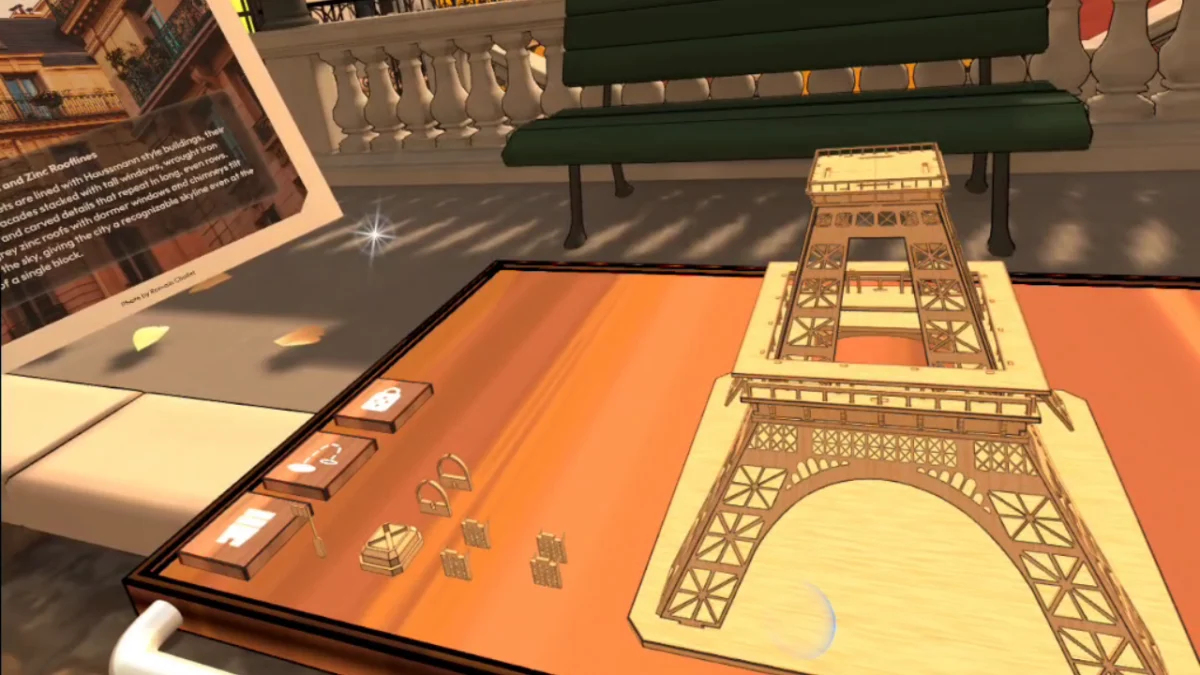
The game’s primary hook is its "vibes-first" approach. Players are transported to stylized, cel-shaded versions of world-famous locations, such as the banks of the Seine in Paris or the canals of Venice. The objective is simple: follow a digital instruction manual to piece together a miniature representation of a local icon—the Eiffel Tower or a Venetian gondola, for example. There are no ticking clocks, no global leaderboards, and no fail states. It is, in every sense, a digital "zen garden" for model builders.
II. Chronology: From Early Access to Full Launch
The journey of Puzzles of the World began as a focused experiment in spatial computing. Developed by Astral Shores Games, the title initially launched in Early Access with a singular focus on hand-tracking technology. This move was strategic, aiming to capitalize on Meta’s push for "controller-less" interactions on the Quest 2 and Quest 3.
The Evolution of Control
In its earliest iterations, the game was a minimalist affair. Players used pinch gestures to grab and rotate pieces. However, feedback from the Early Access community highlighted a divide in user preference. While hand tracking offered a sense of "tactile" immersion, it occasionally lacked the precision and haptic feedback required for more complex assembly.
Responding to this, Astral Shores Games integrated full controller support in the months leading up to the August 2026 launch. This transition transformed the game from a technical showcase for hand tracking into a more robust, versatile title. The full release on August 6 marked the culmination of this polish, introducing refined day/night cycles, a layered audio system, and an expanded roster of locations.
III. Supporting Data: Visuals, Mechanics, and Technical Analysis
To understand where Puzzles of the World sits in the current VR market, one must look at the data regarding its visual performance and gameplay loops.
Visual Fidelity and Art Direction
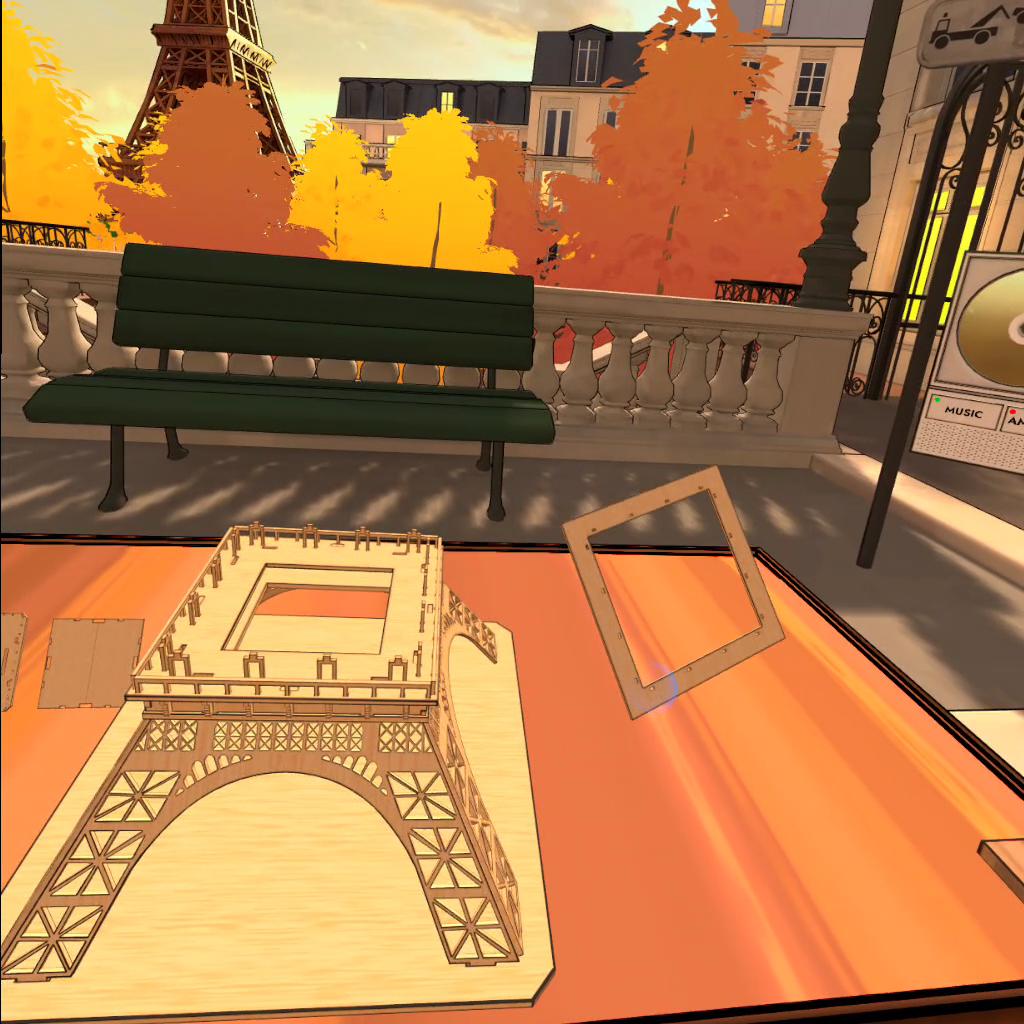
The game utilizes a cel-shaded art style characterized by bold outlines and a vibrant, saturated color palette. This is a pragmatic choice for mobile VR hardware. By avoiding the "uncanny valley" of photorealism, the developers have ensured that the environments look crisp and intentional on the Meta Quest 3’s LCD displays.
Each of the seven locations features a dynamic environment. Upon completing a puzzle, players unlock a "Night Mode" for that specific scene. The lighting shift provides a rewarding visual payoff, transforming a sun-drenched Parisian afternoon into a romantic, moonlit cityscape.
The "Layered" Audio Experience
One of the most innovative features identified during testing is the dynamic background music. Rather than a static loop, the soundtrack is tied to the player’s progress.
- Phase 1: A simple, minimalist melody.
- Mid-Puzzle: New instruments and harmonies are introduced as structural milestones are met.
- Completion: The full orchestral or thematic arrangement plays, providing an auditory sense of accomplishment.
Performance and Comfort
As a stationary experience, Puzzles of the World scores exceptionally high on the comfort scale. The game offers:
- Teleportation: Players can move between three predetermined vantage points in each environment.
- Snap Turning: For those playing in a seated position.
- Zero Artificial Locomotion: This eliminates the primary cause of VR motion sickness, making it a "Highly Accessible" title for newcomers.
IV. Critical Analysis: Areas for Improvement
Despite its charm, Puzzles of the World is not without its technical and structural flaws. For a title priced at $14.99, the "value-to-time" ratio is a point of contention.
The Content Deficit
The most significant hurdle for the game is its brevity. The most complex puzzle currently available consists of 290 pieces. During a standard playthrough, this takes a seasoned player approximately 25 minutes to complete. With only eight puzzles in total, the entire game can be "beaten" in just over two hours.
In comparison, market leader Puzzling Places offers hundreds of puzzles, varying piece counts (up to 1,000 pieces), and years of DLC support. Similarly, Jigsaw Night includes a custom puzzle builder. Without a roadmap for significant content drops, Puzzles of the World feels more like a polished demo than a full-scale commercial release.
Technical Glitches in Instructions
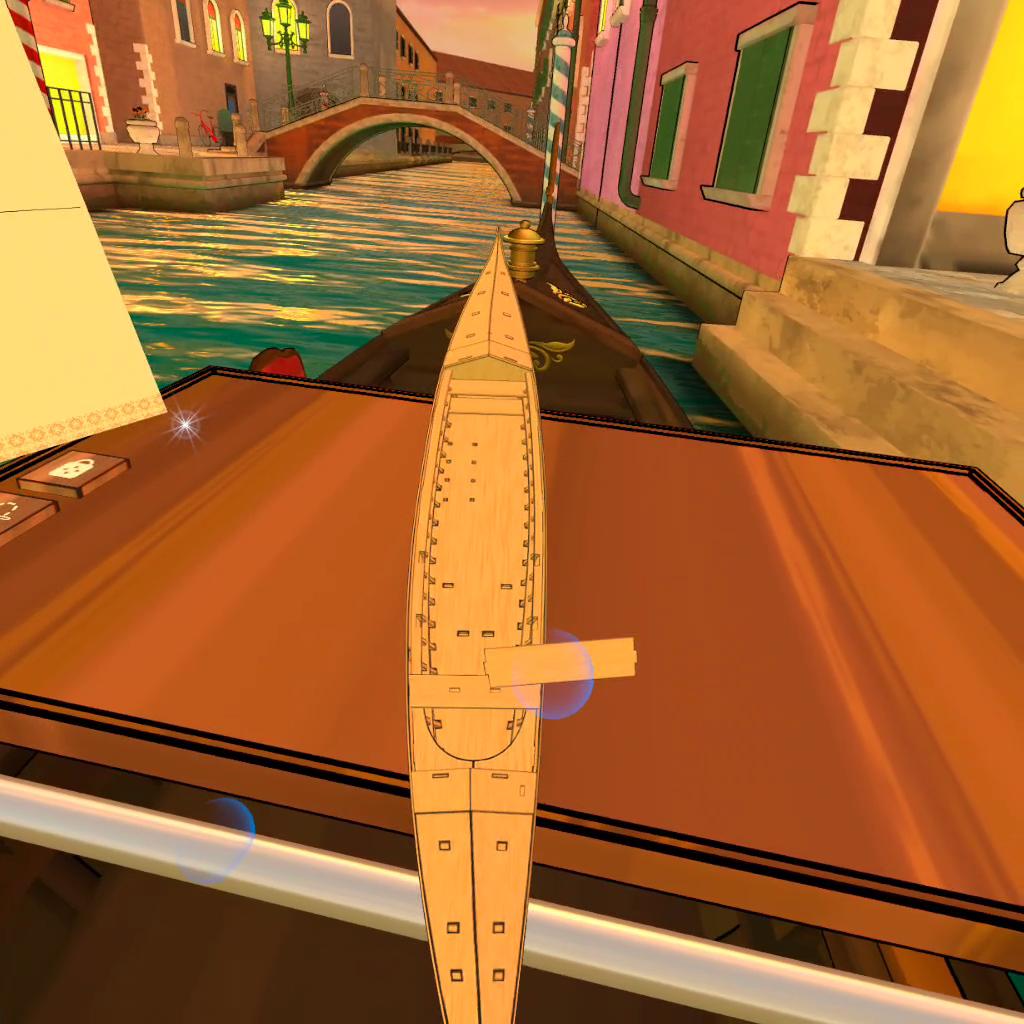
Reviewers noted a discrepancy between the digital instruction manual and the actual puzzle pieces. In the Venice gondola puzzle, for instance, the instructions guide the player to attach ornamental dragons to planks. However, the 3D assets for the dragons are already pre-attached to the planks in the game world. These "phantom steps" occur roughly half a dozen times across the eight puzzles, leading to minor confusion that disrupts the "flow state" the game strives to create.
Hardware Limitations: Text Legibility
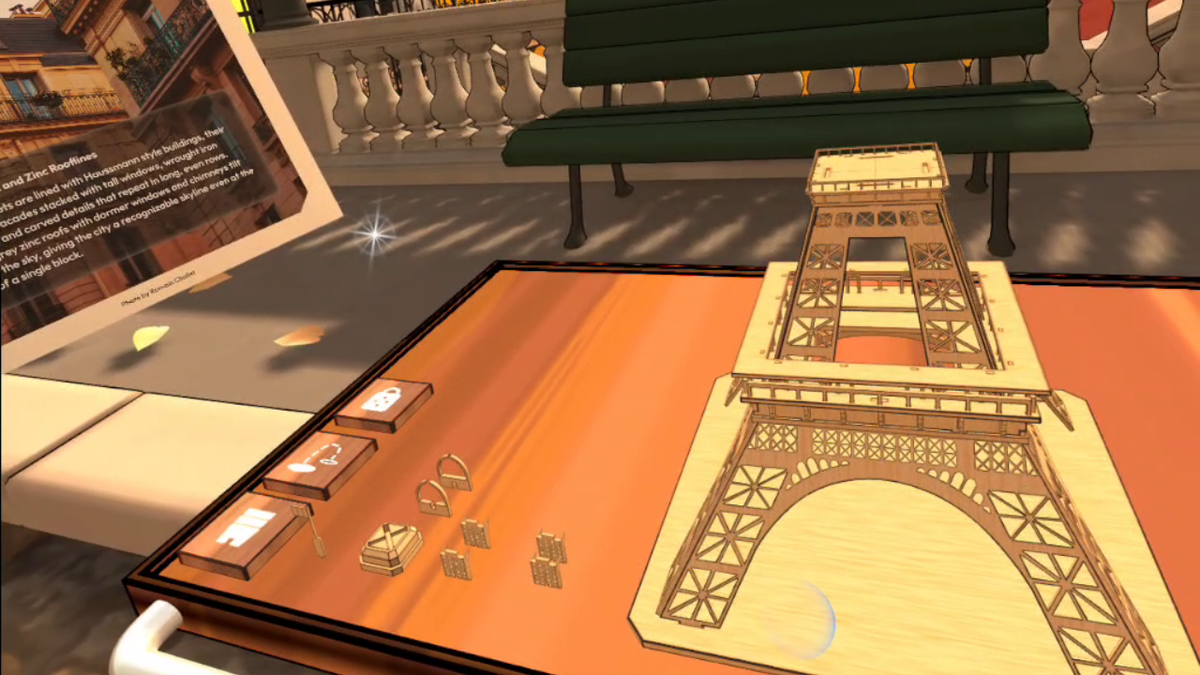
A recurring issue involves the instruction manual’s design. Descriptive text is often overlaid directly onto high-contrast scenic photos. Due to the inherent limitations of the Quest’s LCD panels—specifically regarding black levels and text fringing—this can make reading educational facts about the locations difficult. A simple UI fix, such as a solid-color background for text boxes, is a much-needed quality-of-life update.
V. Implications: The Future of the "Cozy VR" Genre
The release of Puzzles of the World signifies a broader trend in the VR industry: the move toward "snackable" content. While hardcore gamers may balk at a two-hour experience for $15, there is a growing segment of "casual" users who value high-quality, short-form relaxation over endless grinds.
Educational Potential
The inclusion of quick facts in the instruction manual suggests that Astral Shores Games sees a future in "Edutainment." By combining architectural history with spatial puzzles, they have created a template that could easily be expanded into museums or classrooms. Imagine a "History of Flight" pack where users assemble the Wright Flyer or a "Space Exploration" pack featuring the Curiosity Rover on Mars.
The "Investment" Strategy
For the consumer, purchasing Puzzles of the World at launch is less about the current content and more about investing in the developer’s vision. If Astral Shores Games follows the "Games as a Service" model—releasing regular free or paid puzzle packs—the title could eventually rival the giants of the genre.
Final Verdict: A Charming, Yet Limited, Gateway into VR
Puzzles of the World is a beautifully realized experience that captures the tactile joy of model building without the mess of glue and paint. Its art direction is superb, and its accessibility makes it a perfect "first-time" VR experience for friends and family.
However, the lack of depth is an undeniable shadow over the project. To truly compete in the Meta Quest Store, Astral Shores Games must address the content volume and iron out the instructional bugs.
Pros:
- Gorgeous cel-shaded visuals and immersive environments.
- Relaxing, stress-free gameplay with no competitive pressure.
- Innovative layered music system.
- Excellent comfort levels for VR beginners.
Cons:
- Extremely short (approx. 2 hours of total content).
- Instruction manual errors can lead to confusion.
- Text legibility issues on current hardware.
- Lacks the customizability and scale of its direct competitors.
Rating: 3.5 / 5 Stars
As it stands, Puzzles of the World is a delightful weekend diversion. Whether it becomes a staple of the VR puzzle genre depends entirely on what the developers build next.