Unearthing the Mycelial Network of Lore: Zoe Gilbert’s Deep Dive into Herne the Hunter
LONDON, UK – Folklore, much like the intricate, subterranean network of mycelium that sustains a forest, forms a vast, living web beneath the surface of our cultures and societies. It feeds and informs the vibrant stories and traditions that sprout above ground, quietly spreading its influence and putting out countless feelers. This profound analogy forms the cornerstone of author Zoe Gilbert’s latest exploration into the enigmatic figure of Herne the Hunter, a journey that not only inspired her acclaimed novel, Mischief Acts, but also illuminated the boundless, interconnected nature of myth itself.
Gilbert, known for her evocative storytelling steeped in British folklore, posits that while we might admire the majestic "oaks" of our cultural commons – the prominent stories and songs – the true thrill for the dedicated inquirer lies in digging beneath the surface, into the busy earth, to trace the threads of this folkloric mycelium. Her research into Herne the Hunter proved to be just such an excavation, revealing a surprisingly tangled and expansive web of kinships, connections, ancestors, and progeny stretching across centuries and geographies.
The Mycelial Network of Lore: A Groundbreaking Metaphor
At the heart of Gilbert’s insightful perspective is the metaphor of folklore as a "mycorrhizal network." This biological wonder, where fungi form symbiotic relationships with plant roots, exchanging nutrients and information, perfectly mirrors the hidden dynamics of cultural narratives. Just as we walk through a forest largely unaware of the vast fungal network beneath, we often engage with stories and myths without fully grasping their deep, ancient roots and the myriad connections that bind them.
The visible elements – an English oak here, a sessile oak there – are akin to the individual tales and characters that emerge from our collective cultural consciousness. We appreciate their unique forms and the shade they offer, but it is the invisible, pervasive network that gives them life and allows them to thrive. For Gilbert, this understanding transforms the study of folklore from a collection of discrete narratives into an organic, evolving system, where every story, every character, is inextricably linked to a broader, living whole. This perspective not only enriches our appreciation of individual myths but also provides a powerful framework for understanding cultural transmission and evolution.
Herne the Hunter: A Fugitive Figure in the Folkloric Forest
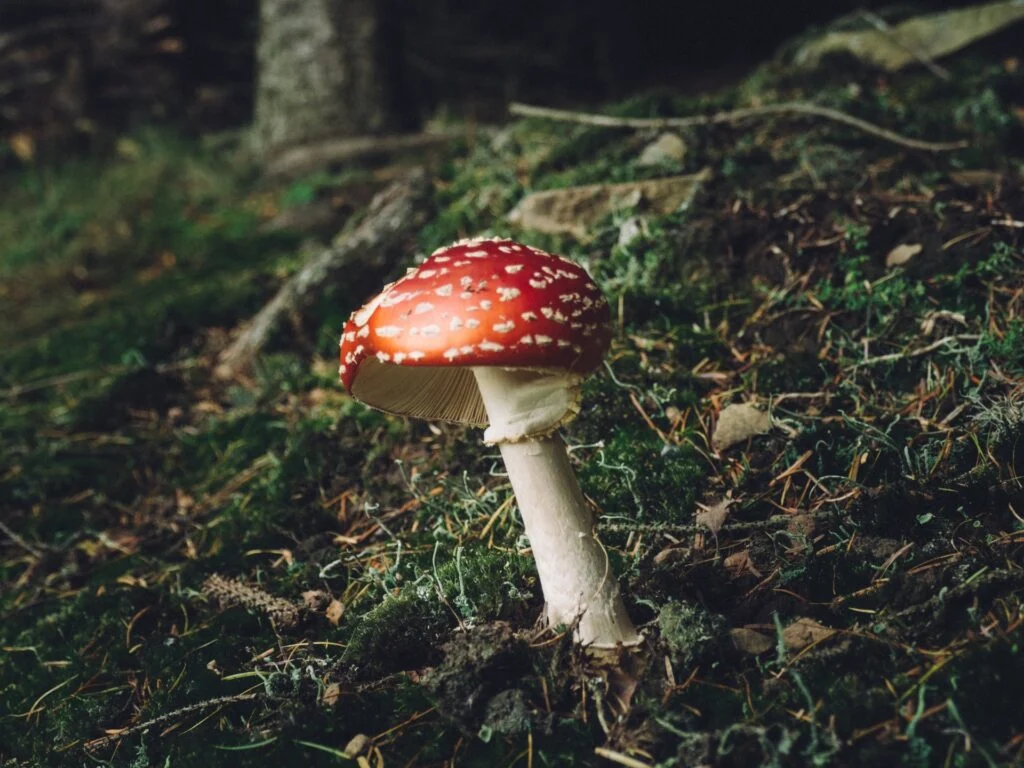
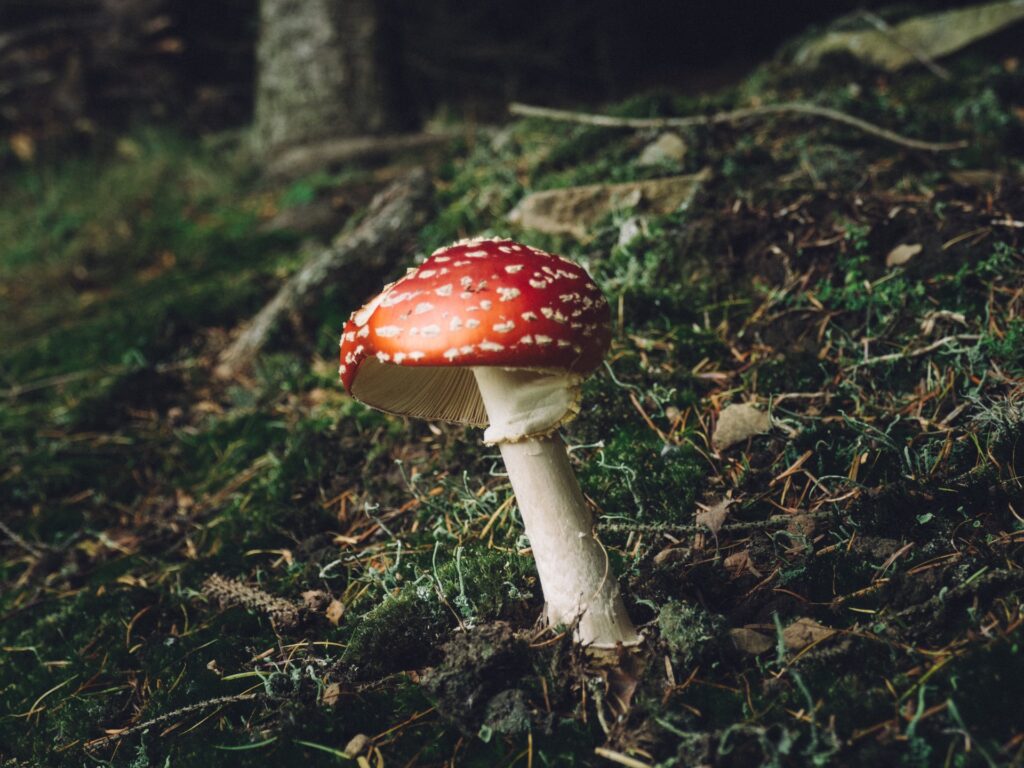
Among the myriad figures within this folkloric forest, Herne the Hunter emerges as a particularly intriguing "mushroomy sort of character," as Gilbert describes him. He is present if one looks closely, yet rarely occupies center stage in the grand woodland diorama. Like the distinctive fly agaric mushroom – arresting when spotted, beautiful and dangerous, often found along human pathways but seldom filling an entire foraging basket – Herne has long lurked on the periphery of folklore vision for many writers and readers, popping up in stories that ostensibly belong to other characters.
Chronology of Herne’s Appearances: A Literary Thread
Herne’s subtle yet persistent presence across centuries of literature provides a compelling timeline of his enduring appeal and adaptability:
-
16th Century – William Shakespeare’s The Merry Wives of Windsor (c. 1597-1602): Herne arguably received his most famous moment here, albeit as a ghostly figure employed in a comedic plot to trick Falstaff. This early appearance cemented his association with Windsor Forest and the legendary horned hunter. Shakespeare’s portrayal, though brief, imprinted Herne onto the cultural imagination, ensuring his survival and subsequent reinterpretation.
-
19th Century – William Harrison Ainsworth’s Windsor Castle (1842): It was Ainsworth who gifted Herne a glorious and influential origin story. In this historical romance, Herne is depicted as a royal huntsman unjustly disgraced, who hangs himself from an oak tree and returns as a spectral, horned hunter. This novel dramatically expanded Herne’s lore, providing a richer backstory and solidifying his identity as a tragic, vengeful spirit tied to a specific, sacred tree within Windsor Forest. Ainsworth’s work became a foundational text for later interpretations.
-
20th Century – Children’s Literature and Fantasy:
- John Masefield’s The Box of Delights (1935): Herne reappears in a more benevolent, albeit mysterious, role as a wise mentor figure to young Kay Harker, guiding him through magical adventures. This portrayal softened Herne’s more menacing aspects, showcasing his potential for wisdom and guidance within the mystical landscape.
- Susan Cooper’s The Dark is Rising (1973): In stark contrast, Cooper’s depiction of Herne is menacing and primal, his "owl eyes" threatening the young protagonist Will Stanton. This iteration taps into the ancient, wild, and potentially dangerous aspects of nature, aligning Herne with the primordial forces of the Old Ones.
-
21st Century – Contemporary Interpretations:
- Nick Hayes’s The Book of Trespass (2020): Here, Herne’s Oak becomes a symbol of contested land rights and the inherent wildness of nature versus human enclosure. Hayes contemplates breaking the law to connect with this legendary tree, demonstrating Herne’s enduring power as a symbol of defiance and connection to the untamed landscape.
Gilbert’s observation that Herne, like the fly agaric, is "arresting when spotted, gorgeous and dangerous, courting the human footways but rarely sought to fill a whole foraging basket," perfectly encapsulates his role. He is not a voluminous source of narratives in himself but a powerful catalyst, a symbolic presence that enriches and complicates any story he touches, a testament to his deeply rooted, yet elusive, nature within the folkloric mycelium.
Unearthing the Wild Hunt: Herne’s Deep Roots and Kinships
Gilbert’s research for Mischief Acts quickly moved beyond Herne’s familiar literary appearances. As she "dug beneath her fly agaric," a fascinating and complex web began to unfold. The initial, expected connection to Odin – both mythic forces linked to sacred trees and leaders of the Wild Hunt – quickly proliferated into a much broader network of interweavings.
The Wild Hunt, a pervasive motif in European folklore, often features a spectral leader pursuing game across the night sky, frequently accompanied by a host of ghostly riders and hounds. Gilbert discovered not just dozens of such leaders, ranging from the legendary King Herla who rode through the Herefordshire sky to the Welsh underworld deity Gwynn ap Nudd, but also characters who had carved out their own distinct "ecosystems of lore."
This expansion revealed an unruly familia herlechini, a lineage of tricksters, wildmen, and liminal figures that defied neat categorization:
-
Harlequin: Turning up in his iconic diamond-patterned finery, Harlequin, or Arlecchino in Italian Commedia dell’arte, represents the mischievous, often anarchic, spirit of performance and transgression. His lineage stretches back to medieval demon figures, showing a direct thread from ancient spirits to theatrical characters.
-
The Erl-king: This shadowy figure, often associated with death and enchantment in German folklore, looms from the darker corners of the wood, a more sinister counterpart to Herne’s wildness.
-
The Green Man: With his leafy grin, the Green Man embodies the spirit of vegetative life, rebirth, and the untamed natural world, a primal force of fertility and wild growth.
Gilbert’s excavation revealed a rich tapestry encompassing not only psychopomps (guides of souls to the afterlife) and cursed ghosts but also entertainers, mischief-makers, spirits of the wood, and figures associated with bacchanalian revelry. Each attempt to isolate a thread and follow it led her deeper into disparate yet connected realms: Fairyland, with its mischievous sprites and ethereal courts; Tudor history, where figures like Robin Goodfellow (Puck) and the Lord of Misrule held sway; and Roman mythology, particularly through figures like Oberon and the enigmatic Woodwose (wild man of the woods).
The unruly nature of this familia herlechini struck Gilbert profoundly. Their widespread presence, from King Herla’s celestial rides to Harlequin’s theatrical stages, suggested that their wildness and mischief seemed to erupt wherever and whenever people needed a release from societal constraints, a connection to the untamed, or a representation of primal forces.
Cernunnos and the Horned Gods: The Heart of the Wood-Wide Web?
In the vast pantheon of horned deities, Cernunnos, the ancient Celtic god of animals, fertility, and the underworld, stands out. Like Herne, Cernunnos holds a special place in contemporary pagan and Wiccan practices, often revered as a primal, horned god of the wild. One might naturally expect to find him at the very center of this sprawling "wood-wide web," with mycelial threads knotted firmly about his antlers.
However, Gilbert’s research suggested that such a simple, singular solution did not align with the complex, often chaotic, nature of Herne and his family of rascally, woodsy hunters and seducers. While Cernunnos certainly shares iconographic and thematic elements with Herne, the sheer breadth of symbolism woven through Herne’s interconnected figures – encompassing life, death, freedom, lust, wildness, and mischief – resisted being neatly channeled through one central deity.
What truly resonated with Gilbert was not a hierarchical structure with Cernunnos at its apex, but the astounding range of forms and territories these figures occupied. Herne’s multitudinous counterparts were not confined to a single forest or culture. King Herla’s Wild Hunt swept across Herefordshire skies, while Harlequin took to the stage as Arlecchino in Italy and beyond. Their enduring presence, their capacity for wildness and mischief, seemed to manifest universally, arising precisely "wherever and whenever people needed it." This realization underscored the fluid, adaptable, and deeply human-centric nature of folklore.
Transplanting Lore: Herne in the Great North Wood
This understanding of a sprawling, interconnected mycorrhizal network of lore, a secret source of countless tales sprouting precisely when and where they were needed, provided Gilbert with the "permission" for a bold act of literary excavation: she transplanted Herne from his traditional haunt of Windsor Forest to the lesser-known, yet equally evocative, Great North Wood in South London.
Supporting Data: The Great North Wood’s Genius Loci
The Great North Wood, though largely fragmented today, once covered a vast expanse of South London. Its remaining fragments, such as Sydenham & Dulwich Woods, provided the backdrop for Gilbert’s creative endeavor. Living across the road from one of these "slender, seductive strip[s] of woodland" during the genesis of Mischief Acts, Gilbert was keenly aware of its enduring genius loci, or protective spirit.
This was a wood with a rich history of human interaction, from ancient charcoal burners and famous Romani communities to eccentric hermits and, more recently, a man named Solomon who ingeniously received mail by hanging an old house number from a tree. The wood, regardless of its size, seemed always to have harbored a unique spirit, a sense of place that resonated with its human inhabitants. The question for Gilbert became: if she – and perhaps others – now needed Herne the Hunter in this urban wood, would he come along for the ride?
Implications: The Tension Between Place and Universal Archetype
This act of transplantation highlights a fascinating tension central to folklore: its deep roots in specific places versus its capacity for universal resonance. Gilbert acknowledges this inherent conflict: folklore is often intrinsically tied to local landscapes, and she strongly believes that local lore can profoundly reconnect and re-enchant us with our environments.
However, she also champions the belief that the human need for mischief, transgression, and wildness – both in landscape and in the soul – is universal. For Gilbert, Herne the Hunter, along with his many likenesses, embodies this fundamental human impulse. Thus, the act of borrowing Herne and asking him to defend a beloved urban wood felt less like an imposition and more like an invocation. He is the archetypal wildman, the spirit of the forest, the hooligan, and the trickster, ever-present where civilization gives way to the wild, a guardian of the liminal spaces between order and chaos. His presence in the Great North Wood symbolizes the enduring power of these universal archetypes to manifest wherever they are needed, regardless of traditional boundaries.
Literary and Cultural Resonance: The Symbiotic Relationship Between Fiction and Folklore
Gilbert’s approach to Herne the Hunter and the broader folkloric web is not merely an academic exercise but a vibrant demonstration of the symbiotic relationship between fiction and folklore. Fiction has always played a crucial role in extending, morphing, and reinterpreting folklore, even as lore itself continually feeds new narratives. This dynamic ensures that the forest of stories perpetually renews itself, existing in a beautiful symbiosis with the underlying web of folklore.
This constant renewal suggests that, much like the real mycorrhizal network beneath our feet, we will never truly discover the ultimate edges of Herne the Hunter’s folkloric web. The connections are too numerous, too fluid, too deeply ingrained in the human psyche. Not far from the striking fly agaric, other folkloric "mushrooms" – perhaps the velvety velvet shank or the elusive amethyst deceiver – wait quietly, ready to reveal their own intricate connections. Beech mast sprouts into new saplings, wood anemones expand their territory, and in parallel, new stories emerge, old myths are retold, and ancient archetypes find fresh resonance in contemporary contexts.
Gilbert’s work stands as a testament to the enduring power of these unseen connections. By embracing the fluidity and interconnectedness of folklore, she not only crafts compelling narratives but also offers a profound model for understanding how cultural memory persists, evolves, and continues to shape our perception of the world. Her Mischief Acts is not just a novel; it is an active participation in the ongoing life of the folkloric mycelium, ensuring its continued growth and vitality.
Zoe Gilbert’s Contribution: Mischief Acts and Folk
Zoe Gilbert’s literary contributions offer readers a unique entry point into this rich, interconnected world of folklore.
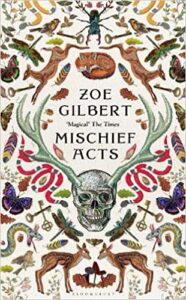
Mischief Acts by Zoe Gilbert
Mischief Acts delves deep into the wild heart of folklore, tracing Herne the Hunter, the ultimate mischief-maker and leader of the wild hunt, across centuries. Pursued by his own creator, Herne is a shapeshifter who adopts countless guises, slipping through time from candlelit Twelfth Night revels to the spectacular burning of the Crystal Palace, and even an acid-laced Sixties party. Wherever he appears, transgression, debauchery, and enchantment invariably follow in his wake.

However, as the ancient forest faces relentless encroachment from urban sprawl and gentrification, and the world teeters on the brink of crisis, Herne is forced to confront his own survival – or seek his revenge. With an intoxicating, chameleonic voice and boundless imagination, Mischief Acts redefines British folklore, presenting it as dangerous, sexy, troubling, daring, and savage. It is an exhilarating race through time and space, masterfully weaving together the ancient and the contemporary into a uniquely powerful narrative.
Mischief Acts, by Zoe Gilbert, is available from Bloomsbury books and can be purchased here.
Folk by Zoe Gilbert
Gilbert’s debut novel, Folk, introduces readers to the remote island village of Neverness, a world seemingly disconnected from our own time and place. Here, the air is thick with the coconut-scent of gorse and the bracing saltiness of the sea, while harsh winds perpetually scour the rocky coastline. The lives of the villagers are intimately intertwined with nature and its potent enchantments.
Within this vivid setting, unique characters emerge: Verlyn Webbe, born with a wing for an arm, defiantly unfurls his feathers; Plum is snatched by a water bull and dragged to its mysterious lair; little Crab Skerry embarks on his first journey through the gorse-maze; and Madden sleepwalks through violent storms, haunted by horses and her father’s unspoken desires. As the tales of this insular community interweave over a generation, their earthy desires, deep-seated resentments, idle gossip, and painful losses coalesce to create a staggeringly original world. Crackling with echoes of ancient folklore, yet entirely and wonderfully her own, Zoe Gilbert’s Folk is a dark, beautiful, and intoxicating debut that firmly established her unique voice in contemporary fiction.
Folk, by Zoe Gilbert, is available from Bloomsbury books, and as a special edition with sprayed edges from Goldsboro books. It can be purchased here.
Zoe Gilbert’s work, particularly her profound engagement with Herne the Hunter, reminds us that folklore is not a static relic of the past but a dynamic, living entity. Through her meticulous research and imaginative storytelling, she invites us to delve beneath the surface, to explore the unseen connections, and to appreciate the vital, ever-renewing mycelial network of stories that continues to feed and inform our shared human experience.