Laura Cranehill’s Visceral "I Called the Swan Down" Electrifies Uncanny Magazine, Signaling a New Era of Speculative Poetry
FOR IMMEDIATE RELEASE
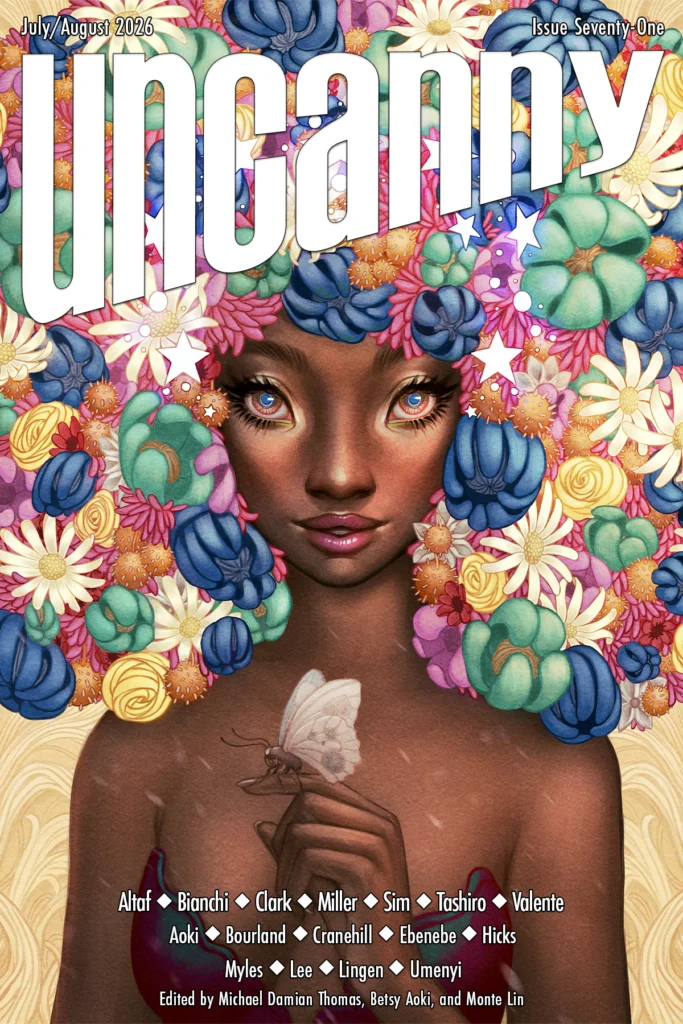
[City, State] – [Date] – Uncanny Magazine, a leading voice in science fiction and fantasy, has unveiled a new poetic masterpiece, "I called the swan down," by the increasingly prominent author Laura Cranehill. Published in Uncanny Magazine Issue Seventy-One, the poem is a profoundly unsettling and transformative piece that delves into themes of identity, vulnerability, and primal metamorphosis, solidifying Cranehill’s reputation as a visionary in the speculative arts.
The poem, a mere 299 words in its printed form, belies a sprawling psychological landscape, inviting readers into a world where the boundaries of self and nature are brutally, yet beautifully, dissolved. Its publication arrives as anticipation builds for Cranehill’s debut novel, Wife Shaped Bodies, slated for release from Saga Press in 2026, positioning "I called the swan down" as a potent harbinger of her unique literary vision. Further amplifying its reach, the poem is also featured on the Uncanny Magazine Podcast, Episode 71B, with an evocative reading by Erika Ensign, bringing its visceral imagery to life for an auditory audience.
A Deep Dive into "I Called the Swan Down": A Symphony of the Surreal
Laura Cranehill’s "I called the swan down" defies easy categorization, weaving a narrative that is at once deeply personal and universally resonant, albeit through a highly unconventional lens. The poem commences with a striking act of self-dispossession: the speaker sheds her skin on cold bathroom tiles, leaving it "like a silk robe / in the clawfoot tub to soak." This immediate plunge into body horror and surrealism sets the tone for a journey of radical transformation.
Unveiling the Narrative: Disintegration and Rebirth
The narrative progresses with the speaker’s subsequent stumble outside, seeking solace or perhaps a different form of existence on the "hot and earthly" ground. Here, the "berserk of traffic" morphs into the internal clamor of the skull, a constant oscillation between "live parts and dead parts of the constant road." This internal-external mirroring suggests a profound contemplation of consciousness and the incessant hum of existence.
The poem then introduces its central, startling image: a slice of fish laid upon the sternum, an offering to a summoned swan. The swan, invoked as "the delicacy of the silence," a "white knight of birds," is called upon to "pick my skeleton clean," to "tug me out of the water, allow me into the / cold planet of your light." This plea for purification, for extraction from "yesterday’s lake," hints at a desire for profound change, perhaps a release from past burdens or a yearning for a new, starker reality.
However, the anticipated salvation takes a dark, violent turn. As the swan descends, whispering enigmatic phrases about "haddock’s eyes" and "justice that is done / in hospital beds," the speaker seizes control. In a chilling reversal of power dynamics, she closes her eyes, opens her mouth, and traps the swan by its webbed foot, clamping her teeth down. The predator becomes the prey, the symbol of grace transformed into a captive.
The poem culminates in a brutal, ritualistic act: the speaker butchers the swan "on the tiles of my blue kitchen / with a silver steak knife." The swan’s death throes are described as an "exaggerated dance, a culmination of a life of poetic movement and graceful / floating, and rough, honking sex." This final stanza encapsulates the poem’s core tension: the beautiful and the grotesque, life and death, grace and violence, all inextricably linked in a shared, albeit discordant, song. "We sang together," Cranehill writes, "though / we sang different songs."
Themes of Identity, Agency, and Primal Reckoning
"I called the swan down" is rich with thematic layers. The act of skinning oneself can be interpreted as a radical shedding of identity, a rejection of societal constraints, or a painful rebirth. It speaks to the vulnerability inherent in stripping away one’s outward self, exposing the raw, visceral core beneath. The speaker’s yearning for the swan to "pick my skeleton clean" suggests a desire for ultimate purity or a return to a fundamental state of being, unburdened by the complexities of flesh and emotion.
Yet, the poem subverts this expectation of passive surrender. The speaker’s sudden act of trapping and butchering the swan reasserts agency, transforming her from supplicant to aggressor. This violent act can be seen as a reclamation of power, a confrontation with one’s own primal instincts, or a commentary on the inherent savagery that can lie beneath even the most beautiful facades. The swan, often a symbol of purity and grace, is here brought down to a base, carnal reality. Cranehill forces readers to confront the discomforting truth that transformation, creation, and even self-discovery can be messy, bloody, and deeply unsettling processes.
Poetic Craft and Evocative Imagery
Cranehill’s mastery lies in her ability to craft vivid, unsettling imagery that resonates long after the final word. Her language is precise and impactful, juxtaposing the delicate ("silk robe," "poetic movement," "graceful floating") with the brutally frank ("nerve bundles," "severed connective tissue," "running throat," "rough, honking sex"). The sensory details – cold tiles, hot earth, the sound of traffic, the taste of fish, the sight of blood – ground the surreal events in a tangible, if disturbing, reality. The poem’s structure, a free verse flow, mirrors the chaotic and unpredictable nature of its events, drawing the reader deeper into its psychological labyrinth.
Laura Cranehill: A Voice on the Rise in Speculative Fiction
Laura Cranehill is not a newcomer to the literary scene, but her latest work firmly establishes her as an indispensable voice within speculative fiction and poetry. Her biography, which playfully describes her as "an amalgamation of horrific faceless things living in the Pacific Northwest," offers a glimpse into the unique, often unsettling perspective that informs her writing.
Authorial Background and Distinctive Style
Cranehill’s previous works, published in esteemed venues such as Strange Horizons, Vastarien, and ergot., have consistently showcased her talent for exploring the uncanny, the grotesque, and the deeply psychological. Her distinctive style often blurs the lines between reality and nightmare, drawing readers into liminal spaces where the familiar becomes profoundly alien. She possesses a rare ability to infuse existential dread and body horror with a lyrical beauty, making her prose and poetry both disturbing and captivating. This fusion places her squarely within the burgeoning "new weird" movement, where genre conventions are challenged, and the boundaries of literary possibility are expanded.
Anticipation for "Wife Shaped Bodies"
The publication of "I called the swan down" serves as a significant marker in Cranehill’s career trajectory, building considerable anticipation for her forthcoming debut novel, Wife Shaped Bodies, from Saga Press in 2026. Given the themes of identity, transformation, and the visceral exploration of the body present in her poetry, readers can expect Wife Shaped Bodies to delve into similar unsettling territories. Her novel is likely to offer a sustained exploration of the domestic uncanny, the pressures of societal roles, and the monstrous elements lurking beneath the surface of everyday life, all rendered with her characteristic blend of the macabre and the beautiful. This novel is poised to be a major literary event, cementing her status as a vital contemporary author.
Uncanny Magazine: A Beacon for Speculative Arts
Uncanny Magazine has long been revered as a cornerstone of speculative fiction, consistently delivering content that is both innovative and profoundly resonant. Its commitment to publishing "gorgeous, diverse, and provocative" science fiction, fantasy, and horror has earned it numerous accolades, including multiple Hugo, Locus, and World Fantasy Awards, among others.
A Legacy of "Genre-Bending" Excellence
Founded on the principle of showcasing diverse voices and challenging genre conventions, Uncanny has become a vital platform for both established and emerging talents. It is a space where traditional narratives are deconstructed, and new forms of storytelling are embraced. The magazine’s dedication to quality, coupled with its willingness to push boundaries, has fostered a vibrant community of readers and writers who crave intelligent, imaginative, and emotionally resonant speculative fiction and poetry.
The Significance of Issue Seventy-One
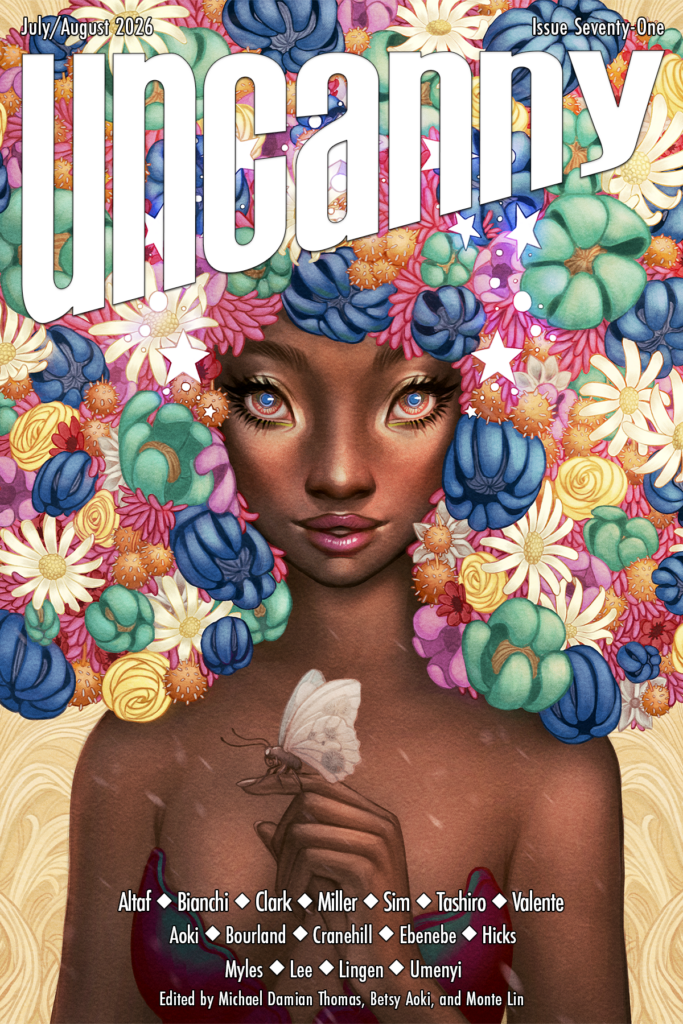
Uncanny Magazine Issue Seventy-One continues this tradition of excellence, with Laura Cranehill’s "I called the swan down" standing out as a particularly striking example of the magazine’s editorial vision. The issue, like its predecessors, offers a curated collection of stories and poems that explore the vast spectrum of human experience through a fantastic lens, inviting introspection and challenging preconceived notions. Cranehill’s poem, with its raw honesty and surreal imagery, perfectly embodies Uncanny‘s ethos of delivering impactful, thought-provoking content that lingers in the mind long after reading.
The Power of the Podcast: Enhancing Accessibility and Interpretation
Adding another layer of accessibility and artistic interpretation, "I called the swan down" is featured on the Uncanny Magazine Podcast, Episode 71B. The choice of Erika Ensign, a seasoned narrator known for her nuanced and expressive readings, to perform Cranehill’s poem is particularly astute. Audio adaptations of poetry can unlock new dimensions of understanding, allowing listeners to absorb the rhythm, cadence, and emotional weight of the words in a way that differs from silent reading. Ensign’s performance undoubtedly amplifies the poem’s visceral impact, making its unsettling beauty accessible to a broader audience and underscoring Uncanny‘s commitment to innovative storytelling across multiple platforms.
Official Responses and Critical Acclaim
The publication of "I called the swan down" has garnered significant attention within literary circles, drawing praise for its daring originality and powerful execution.
Editorial Perspective
The editors of Uncanny Magazine have consistently championed voices that challenge and inspire. "Laura Cranehill’s ‘I called the swan down’ is precisely the kind of fearless, boundary-pushing poetry we strive to publish," remarked a representative from the Uncanny editorial team. "It’s a masterclass in visceral imagery and metaphorical depth, forcing readers to confront uncomfortable truths about identity and transformation. Her work not only enriches this issue but also significantly contributes to the evolving landscape of speculative poetry, showcasing the raw power of the genre."
Authorial Insight
While Cranehill herself often prefers her work to speak for itself, she has offered glimpses into her creative process. "My writing often stems from a fascination with the hidden mechanics of being, the moments where the veneer of normalcy cracks to reveal something more primal, more grotesque, yet fundamentally human," Cranehill stated in a recent interview concerning her broader body of work. "With ‘I called the swan down,’ I wanted to explore the idea of radical self-ownership, even when that ownership involves acts that are unsettling or violent. It’s about the messy, sometimes terrifying, process of becoming, and the difficult songs we sing to ourselves along the way." This insight underscores the poem’s complex layers, moving beyond simple shock value to a deeper philosophical inquiry.
Expert Commentary: Redefining Speculative Poetry
Literary critics and academics specializing in speculative arts have been quick to recognize the profound impact of Cranehill’s poem. Dr. Evelyn Reed, a professor of contemporary literature at the University of [Fictional University], commented, "Laura Cranehill is a formidable talent, and ‘I called the swan down’ is a testament to her unique vision. This poem doesn’t just push boundaries; it obliterates them. It’s a prime example of how speculative poetry can engage with profound existential questions through surrealism and body horror, inviting readers into a dialogue about what it means to shed, to yearn, and ultimately, to consume and be consumed. It’s a work that will undoubtedly be studied for its intricate symbolism and its brave refusal to shy away from the unsettling."
Broader Implications for Speculative Poetry and Literature
"I called the swan down" is more than just a remarkable poem; it represents a significant contribution to the broader literary landscape, especially within the speculative genres.
Pushing Boundaries and Expanding Artistic Scope
Works like Cranehill’s are instrumental in demonstrating the expansive artistic scope of speculative poetry. They challenge the notion that poetry must adhere to traditional forms or themes, proving that the lyrical can seamlessly intertwine with the grotesque, the fantastic, and the deeply unsettling. This blend not only captivates a diverse readership but also encourages other poets to explore unconventional subjects and narrative structures, fostering innovation within the genre.
The Evolving Landscape of Genre Fiction
The success and critical reception of a poem as challenging and original as "I called the swan down" reflect a growing appetite among readers and critics for genre fiction that transcends conventional labels. It signifies a maturation of speculative literature, where complex themes, experimental forms, and literary merit are increasingly celebrated. This trend ensures that the genre continues to evolve, attracting new talent and pushing the boundaries of what is considered "genre-appropriate."
Cranehill’s Ascendancy: A Major Literary Force
Laura Cranehill’s trajectory, from publications in esteemed literary journals to an eagerly anticipated debut novel, marks her as a major literary force to watch. "I called the swan down" serves as a powerful statement of her unique voice and her unwavering commitment to exploring the raw, often uncomfortable, truths of the human condition through a distinctly speculative lens. Her work promises to continue challenging, disturbing, and ultimately enriching the world of contemporary literature for years to come.
In "I called the swan down," Laura Cranehill has crafted a poem that is as beautiful as it is brutal, as delicate as it is devastating. Its publication in Uncanny Magazine Issue Seventy-One and its podcast adaptation underscore its significance, marking it as a crucial piece in the evolving narrative of speculative poetry and a potent indicator of Cranehill’s rising star in the literary firmament. Readers are encouraged to engage with this profound and unsettling work, and to prepare for the continued impact of an author unafraid to explore the darkest, most transformative corners of the human experience.