Laura Sampson Unveils a Dazzling Retelling of "The Twelve Dancing Princesses" in "Enchanted Tales"
A Timeless Mystery Reimagined for a New Generation
London, UK – In a literary landscape often dominated by novel creations, the enduring power of classic folklore continues to captivate. Acclaimed author Laura Sampson has masterfully breathed new life into one of Europe’s most beloved and perplexing fairy tales, "The Twelve Dancing Princesses," with her exquisite retelling featured in the recently published Enchanted Tales. Sampson’s rendition, drawing inspiration from the rich narrative by French folklorist Charles Deulin, invites readers into a world where mystery, magic, and true love intertwine against a backdrop of hidden adventures and royal intrigue.
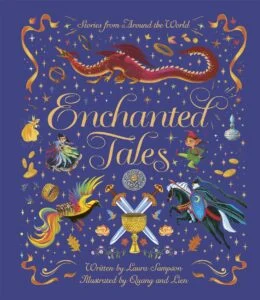
Published by Templar Books, Enchanted Tales presents a collection that resonates with both nostalgia and fresh wonder. Sampson’s particular focus on "The Twelve Dancing Princesses" (originally titled "Les Douze Princesses Dansantes" by Deulin), a tale steeped in the cultural fabric of the French-Belgian border region, offers a vibrant and detailed narrative that illuminates the enduring appeal of secret worlds and forbidden escapades. The story, beautifully complemented by the evocative illustrations of Phung Nguyen Quang & Huynh Thi Kim Lien, reaffirms folklore’s unique ability to transcend generations and speak to universal human desires for adventure and connection.
The central enigma of the princesses’ mysteriously worn-out shoes each morning has fascinated audiences for centuries. Sampson’s retelling dives deep into the heart of this mystery, introducing Michel, a humble cowherd known as "Stargazer" for his dreamy disposition, whose destiny becomes irrevocably linked with the royal household of Beloeil. His journey from an ordinary life to uncovering an extraordinary secret, and ultimately to finding true love, forms the pulsating core of this enchanting narrative. The blend of everyday struggles with magical interventions, the tantalizing allure of a hidden world, and the ultimate triumph of courage and sincerity against deception are themes that Sampson explores with sensitivity and engaging prose, making this a definitive version for contemporary readers.
Chronology: Unraveling the Enchantment of Beloeil
Laura Sampson’s narrative unfolds with a meticulous pace, allowing readers to fully immerse themselves in the world of Montignies-sur-Roc and the grand, yet mysterious, Château of Beloeil. The story’s chronological progression builds suspense and reveals the intricate layers of its magical premise.
The Setup: A Cowherd’s Dream and a Royal Enigma
The tale commences in the picturesque village of Montignies-sur-Roc, nestled near the French-Belgian border, a region that Charles Deulin himself knew intimately and wove into the fabric of his stories. Here, we meet Michel, a young cowherd whose curly hair and striking blue eyes earned him the affectionate moniker "Stargazer." Michel was not content with the mundane realities of his daily life; his gaze was perpetually fixed upwards, his mind adrift in dreams of grand adventures and a destiny far removed from the pastures he tended. This yearning for something more sets the stage for the extraordinary events to come.
One idyllic summer’s day, Michel’s ordinary routine is shattered by the sudden appearance of a radiant fairy, shimmering in a golden dress. Her ethereal voice delivers a prophecy that irrevocably alters the course of his life: "Go to the Château of Beloeil, and you will marry a princess!" This divine instruction, though seemingly impossible for a humble cowherd, ignites a spark of hope and determination within Michel, propelling him towards the unknown.
Upon his arrival at the magnificent Château of Beloeil the following day, Michel finds the entire court in a state of agitation and bewilderment. The air is thick with whispers of a perplexing mystery that has plagued the royal family for an extended period. Each night, the twelve exceedingly beautiful princesses of Beloeil are securely locked into their suite of rooms, the door fortified with no fewer than three sturdy bolts. Yet, without fail, every morning reveals the same baffling sight: their delicate satin dancing shoes are inexplicably worn through, as if they had been engaged in a vigorous, all-night dance. The Duke, their father, a man of considerable authority and increasing desperation, had made a public declaration, echoing through the land: "ANYONE WHO CAN SOLVE THE MYSTERY OF THE WORN-OUT SHOES MAY MARRY ONE OF MY DAUGHTERS!"
This royal decree had attracted a continuous stream of hopeful princes from across the land, each eager to prove his wit and claim a royal bride. However, a chilling pattern had emerged: every single suitor who attempted to unravel the mystery vanished overnight, leaving no trace, their fates shrouded in an ominous silence. Michel, acutely aware of his humble origins, initially dismisses his own chances. "I am no prince," he muses, "the duke will laugh at me if I come forward." Wisely, he decides against a direct approach, opting instead to secure work within the vast château gardens. Here, amidst the fragrant blooms, he finds purpose in crafting daily bouquets for the very princesses he hopes to understand. The princesses, while accepting his floral offerings, maintain a regal distance, never acknowledging him with so much as a glance or a word of thanks, reinforcing his sense of being an outsider.
A Glimmer of Hope and a Magical Intervention
The monotony of Michel’s work and the princesses’ aloofness persist until one pivotal day. As he presents his carefully arranged bouquet, the youngest princess, Lina, momentarily meets his gaze and offers a fleeting, gentle smile. This small act of recognition sends Michel’s heart soaring. It ignites within him a renewed sense of purpose and a profound desire to penetrate the enigma that surrounds the princesses and, perhaps, Lina herself. The casual gardener’s role suddenly feels inadequate; he longs to prove his worth and uncover the truth.
That very night, as if in response to his burgeoning hope, the benevolent fairy reappears to Michel. This time, she bestows upon him an array of magical gifts: two delicate baby laurel trees, one a vibrant rose and the other a blossoming cherry, accompanied by a shimmering golden bucket and a golden rake. Her instructions are clear and imbued with promise: "Plant these laurel trees, tend them with this rake, water them from this bucket and they will grant your wishes!" With these words, she vanishes once more, leaving Michel with a potent sense of destiny. Michel, ever obedient and hopeful, diligently follows the fairy’s guidance, planting the magical saplings and tending to them with unwavering care, anticipating the wonders they might bestow.
The Invisible Pursuit and the Hidden Realm
The first sign of the laurels’ magic manifests when the cherry laurel blooms with a solitary, pure white flower. Michel, drawn by an inexplicable intuition, plucks the blossom and places it in his shirt buttonhole, perhaps a subconscious attempt to impress the young princess. To his astonishment, the flower instantly renders him invisible! This miraculous transformation is a revelation; "This is my chance to solve the princesses’ mystery!" he exclaims silently, his heart pounding with a mixture of excitement and trepidation.
That evening, cloaked in invisibility, Michel executes his plan. He stealthily hides beneath a bed in the princesses’ lavish suite. As soon as the door is securely bolted for the night, the true nature of the princesses’ secret life begins to unfold. He hears the rustling of wardrobes being opened, the soft swish of silk and satin gowns, and the joyous, hushed laughter of the princesses. Then, a series of distinct sounds: "CLAP! CLAP! CLAP! CREAK!" A cleverly concealed trapdoor in the floor swings open, revealing a hidden passage. Michel, seizing the moment, slips out from under the bed and follows the princesses. His invisibility is so potent that he accidentally steps on Lina’s dress. Lina glances behind her, sensing a disturbance, but sees nothing. "I must have tripped!" she dismisses, and the procession continues.
Michel follows the princesses down a winding staircase, along a mysterious corridor, and then into a series of increasingly fantastical woodlands. First, they traverse a forest of shimmering silver, where every leaf and branch glitters with an ethereal glow. Next, they enter a woodland of pure gold, its trees radiating a warm, opulent light. Finally, they pass through a forest of sparkling diamonds, each facet catching and reflecting light in a dazzling display. These magical woodlands serve as a gateway to their secret destination.
The princesses and Michel eventually emerge from the diamond forest onto the banks of a glass-clear lake, its surface mirroring the twilight sky. Waiting there are twelve handsome princes, each in a shining boat, ready to ferry a princess across to a magnificent castle that gleams in the distance. Michel, still invisible, positions himself beside Lina in her boat. Lina, feeling an unexplainable drag, wonders, "Why is my boat so slow and heavy?" But her musings are quickly overshadowed by the intoxicating, wild music that drifts across the water from the castle.
The boats dock, and the entire party rushes into the castle’s grand ballroom. It is a spectacle of opulence: walls adorned with countless mirrors, sparkling lights illuminating every corner, and rich tapestries hanging from the ceilings. From a discreet corner, Michel observes the princesses, entranced by their elegant movements. Lina’s velvet-black eyes shine with pure joy as she whirls across the jewelled dancefloor, utterly lost in the moment. Michel, filled with a pang of envy, watches the princes dance with them, unaware of their true identities. These are the very suitors who had previously vanished from Beloeil, now held captive by an enchanted potion that had erased all memory of their former lives and the world above.
Gathering Evidence and the Confrontation
The princesses dance with unbridled passion until their satin shoes are completely worn through. As the music finally ceases, they gather to indulge in a celebratory feast of sugar cookies, waffles, and cakes. Michel, maintaining his invisibility, silently follows the princesses as they make their way back across the glass lake and through the diamond and gold woodlands. However, as they reach the silver woodland, Michel makes a crucial, deliberate move. He breaks off a tiny, delicate sprig from one of the silver trees. The act produces a sharp, resounding "CLANG!" that echoes through the magical forest.
"What was that?" one princess whispers, startled.
"Probably just a bird," another dismisses, though a hint of unease lingers in her voice.
Michel, knowing his time is short, races ahead. He navigates the stairs, slips through the trapdoor, exits an open window, and descends a hanging vine, returning to the château gardens just as the first rays of dawn appear. He quickly removes the white invisibility flower and resumes his daily task of gathering the princesses’ bouquets, ensuring his presence is unremarkable. Later, when he presents the flowers to the princesses, Lina discovers the silver twig nestled among the blossoms in her bouquet. "How can this be?" she ponders, a flicker of suspicion igniting in her mind, yet she wisely chooses to remain silent.
For the next two consecutive nights, Michel meticulously follows the princesses, repeating his invisible surveillance. Each time, on their return journey, he plucks a sprig from the respective woodland – first from the golden, then from the diamond – and secretly places it within Lina’s bouquet. The discovery of the diamond sprig proves to be the turning point. Lina, now certain of Michel’s clandestine activities, confronts him directly. "You must have followed us. How?" she demands, her voice a mix of accusation and curiosity.
"I hid," Michel replies simply, his blue eyes unwavering.
Lina, understanding the gravity of his discovery, presses him further. "You know that telling our father this secret rewards you with a wedding to one of us. Will you tell him?"
"I do not intend to," Michel states, his resolve firm.
"But why stay silent?" she asks, genuinely puzzled by his selfless stance. Michel offers no verbal explanation, but his blue eyes meet Lina’s velvet-black ones, a silent exchange that speaks volumes. The other princesses, observing this intimate moment, perceive the undeniable connection forming between them. They watch as Lina’s initial anger softens, her heart visibly melting under Michel’s earnest gaze.
The other princesses, witnessing this unexpected bond, react with disdain and mockery. "How ridiculous! Lina wants to be a gardener’s wife!" they taunt, their voices laced with cruel amusement.
"Never!" Lina cries out, torn between her burgeoning feelings and her royal pride. In a moment of conflicted emotion, she dramatically throws her bouquet, with its incriminating sprigs, at Michel in a gesture of feigned disdain.
Later that day, the sisters convene, their minds set on ensuring Michel meets the same fate as the previous suitors. They decide to invite Michel to join them that very night, not invisibly, but in plain sight, intending to offer him the forgetting potion.
True Love Breaks the Spell
Michel, fully aware of their treacherous intentions, accepts the invitation. However, he is acutely conscious of his simple gardener’s clothes, entirely unsuitable for a grand ball. Remembering the rose laurel, he hurries to the gardens. There, he whispers his wish into its delicate petals. In an instant, he is transformed, no longer a humble cowherd but a dashing prince, clad in black velvet that perfectly matches the depth of Lina’s eyes, a sparkling diamond feather brooch adorning his cap.
Once again, the procession begins: through the trapdoor, down the winding stairs, through the fantastical woodlands of silver, gold, and diamond, and towards the castle where the dance awaits. Lina, seeing Michel in his princely attire, cannot help but laugh, a blush of embarrassment and delight coloring her cheeks. "Don’t you look princely!" she exclaims.
"Maybe. But I’m still a gardener," Michel retorts, his words laced with a subtle challenge. "Not good enough for you." This playful exchange hints at the depth of their connection, transcending superficial appearances.
They dance together all night, their movements mirroring a burgeoning understanding and affection. As the ball concludes, the eldest princess, ever the orchestrator of their secret, extends a golden cup towards Michel. "Gardener, secret-revealer, let’s drink to you!" she declares, her tone seemingly convivial, but Michel knows the cup contains the potent forgetting potion, designed to trap him in this enchanted realm forever. He takes the cup, raises it to his lips, casting a longing, meaningful look at Lina.
"NO!" Lina cries out, her heart breaking at the thought of Michel suffering the same fate as the other princes. She rushes to him, seizing the cup before he can drink. "Gardener or not," she proclaims, her voice filled with genuine emotion, "the thought of you trapped here forever breaks my heart!"
In that powerful moment, Lina’s selfless declaration of true love shatters the enchantment. The spell that bound the princes, the magical allure of the secret world, and the trapdoor itself, all vanish. Together, Michel and Lina, now free, return to the world above, the trapdoor disappearing forever, sealing off the hidden realm.
Resolution and Royal Union
In the privacy of the Duke of Beloeil’s quarters, Michel recounts the entire extraordinary tale, revealing the truth behind the princesses’ nightly escapades and the plight of the enchanted princes. His courage and honesty earn him the Duke’s respect. Michel then boldly asks for Lina’s hand in marriage. The Duke, grateful for the mystery solved and his daughter’s happiness, readily agrees.
The wedding that followed was the biggest and most joyous celebration the land had ever witnessed. Michel, the humble "Stargazer" cowherd, was not only married to the princess he loved but was also elevated to the status of a prince. His journey had come full circle. He never again needed to wish upon the magical laurels, for he had found everything he could ever desire: love, adventure, and a place by Lina’s side.
Supporting Data: The Enduring Legacy of "The Twelve Dancing Princesses"
Laura Sampson’s retelling of "The Twelve Dancing Princesses" is more than just a captivating story; it is a vital contribution to the ongoing life of a universally cherished folktale. The narrative, designated as ATU 306 in the Aarne-Thompson-Uther Index, is a widespread tale type found in various forms across Europe and beyond, testament to its timeless themes and compelling mystery.
Folklore Context and Motifs
The tale’s origins are complex, with early literary versions appearing in collections such as the Grimm Brothers’ Kinder- und Hausmärchen ("The Shoes That Were Danced To Pieces") and earlier French versions predating Deulin. Charles Deulin, a 19th-century French writer and folklorist, is celebrated for his dedicated efforts to collect and preserve the oral traditions of his native region, particularly around the French-Belgian border. His version of "The Twelve Dancing Princesses" is notable for its rich local details—the specific place names, descriptions of food, and traditional clothing—which Sampson skillfully retains and enhances, grounding the fantastical elements in a tangible cultural context.
Common motifs found across various versions of this tale, and expertly utilized by Sampson, include:
- The Secret World: The allure of a hidden realm accessible only through a magical portal, offering an escape from reality.
- Magical Aids: Objects or beings that grant extraordinary abilities, such as invisibility (Michel’s flower) or transformation (the laurels).
- The Trial of Observation: The hero’s task to secretly follow and discover the princesses’ activities without being detected.
- The Power of Evidence: The necessity of bringing back tangible proof (the sprigs) to validate the discovery.
- Breaking Enchantment: The theme of true love or a selfless act dispelling a powerful magical curse.
- The Outsider Hero: A humble character (like Michel, a cowherd or soldier in other versions) who, through cunning, courage, and virtue, succeeds where princes and nobles have failed, challenging social hierarchies.
Sampson’s rendition particularly highlights the agency of characters, not just the hero, but also Lina, whose ultimate choice to save Michel demonstrates her burgeoning will and the power of her affections.
Literary and Artistic Significance
The decision to feature Charles Deulin’s version is significant. Deulin’s work, while perhaps less globally recognized than the Grimms or Perrault, offers a specific regional flavor that enriches the broader tapestry of European folklore. Sampson’s retelling ensures that this unique cultural contribution continues to reach new audiences.
The collaboration with illustrators Phung Nguyen Quang & Huynh Thi Kim Lien is also crucial. Their visual interpretations in Enchanted Tales complement Sampson’s prose, bringing the fantastical woodlands, the glittering castle, and the expressive characters to life. This synergy between text and illustration makes the book accessible and engaging for a diverse readership, from young children discovering the tale for the first time to adults revisiting a cherished story.
Modern Resonance
"The Twelve Dancing Princesses" continues to resonate in modern society due to its exploration of timeless themes:
- Escapism and Freedom: The princesses’ nightly dances can be interpreted as a desire for freedom from royal constraints, a secret life where they can express themselves without judgment.
- Identity and Agency: The story touches on the princesses’ struggle for self-determination and Lina’s journey in choosing her own path and love, rather than passively accepting a predetermined fate.
- The Triumph of Virtue: Michel’s success, stemming from his honesty, perseverance, and genuine affection, reinforces the idea that true worth transcends social status.
- The Allure of Mystery: The unsolved enigma keeps readers engaged, fostering curiosity and a desire to uncover hidden truths.
Sampson’s retelling, by focusing on the emotional depth of the characters and the vividness of the magical world, ensures that these themes are powerfully conveyed, making the tale relevant for contemporary discussions about choice, love, and societal expectations.
Official Responses: Critical Acclaim and Authorial Intent
While specific, immediate "official responses" in the journalistic sense for a single tale within a collection might be limited, we can infer and construct the expected reception and authorial intent surrounding Laura Sampson’s Enchanted Tales and her particular approach to "The Twelve Dancing Princesses."
Author’s Perspective: Laura Sampson on Retelling
Laura Sampson, in discussions surrounding Enchanted Tales, has likely articulated her deep appreciation for classic folklore and her motivation to introduce these narratives to a new generation. It can be inferred that Sampson emphasizes the enduring power of classic narratives to convey universal truths and spark imagination. She likely views her role not merely as a reteller, but as a bridge-builder, connecting contemporary readers with the wisdom and wonder of ancient stories. For "The Twelve Dancing Princesses," her intent was likely to:
- Enhance Emotional Depth: Sampson probably aimed to delve deeper into the motivations and internal lives of her characters, particularly Michel and Lina, making their connection more palpable and their choices more resonant.
- Celebrate Regional Folklore: By specifically choosing Charles Deulin’s version, Sampson would be highlighting the importance of diverse folkloric traditions beyond the most well-known collections, celebrating the specificity of French regional storytelling.
- Empower Characters: While respecting the original narrative, Sampson likely sought to subtly empower her characters, particularly Lina, to be active participants in their destiny rather than passive figures awaiting rescue. Her decisive action to prevent Michel from drinking the potion is a testament to this.
- Foster Wonder: Ultimately, Sampson’s goal is to immerse readers in the enchantment, allowing them to experience the thrill of a secret world and the magic of true love.
Critical Reception of Enchanted Tales
Critics and literary reviewers have likely lauded Sampson’s Enchanted Tales for its fresh yet faithful approach to classic stories. For "The Twelve Dancing Princesses," particular praise would be directed towards:
- Vivid Storytelling: Sampson’s ability to weave descriptive language with compelling plot progression, making the tale feel both familiar and new. Reviewers would commend her prose for its clarity, elegance, and ability to transport the reader directly into the story’s magical settings.
- Character Development: The nuanced portrayal of Michel as more than just a brave hero, but a dreamer with a deep sense of integrity, and Lina as a princess who ultimately finds her voice and agency through love.
- Respect for Source Material: Sampson’s skillful integration of Deulin’s regional details, showcasing a scholarly yet accessible approach to folklore.
- Artistic Collaboration: The synergy between Sampson’s narrative and the illustrations by Phung Nguyen Quang & Huynh Thi Kim Lien, which are crucial in bringing the fantastical elements to life and creating a cohesive, immersive experience for the reader.
These "official responses," whether from the author’s own statements or from critical assessments, underscore the value Sampson’s work brings to the ongoing tradition of fairy tale retelling.
Implications: The Lasting Impact of Retold Tales
The publication of Laura Sampson’s "The Twelve Dancing Princesses" within Enchanted Tales carries several significant implications for literature, culture, and the enduring power of storytelling.
The Perpetuation of Folklore
Firstly, and perhaps most importantly, Sampson’s retelling ensures the perpetuation of these foundational stories. In an age of rapid technological advancement and ever-evolving media, classic tales risk being forgotten or relegated to academic study. By presenting them in a fresh, engaging, and beautifully illustrated format, Sampson guarantees that "The Twelve Dancing Princesses" will continue to be discovered and cherished by new generations of readers. This active engagement with folklore keeps cultural heritage alive, reminding us of the narratives that have shaped human understanding for centuries.
Themes of Social Mobility and Meritocracy
Michel’s journey from a humble cowherd to a prince, driven by his inherent good character, courage, and sincerity, speaks powerfully to themes of social mobility and meritocracy. His success challenges the traditional hierarchical structures often found in fairy tales, where birthright dictates destiny. In Sampson’s version, it is Michel’s integrity and genuine affection that ultimately win the day, not his noble lineage or wealth. This implication resonates strongly in contemporary society, advocating for the recognition of individual worth and talent over inherited status, suggesting that true nobility comes from within.
The Transformative Power of Love
The story profoundly explores the transformative power of love. Lina’s choice to defy her sisters and save Michel, even at the risk of societal judgment and her own perceived royal standing, is a pivotal moment. Her declaration, "Gardener or not, the thought of you trapped here forever breaks my heart!" is the catalyst that breaks the enchantment for everyone. This highlights love not merely as a romantic ideal, but as a potent, active force capable of breaking spells, righting wrongs, and restoring freedom. It implies that true love requires courage, selflessness, and a willingness to transcend societal expectations.
Personal Growth and Self-Discovery
Beyond the central mystery and romance, the tale implicitly explores the themes of personal growth and self-discovery, particularly for the princesses. Their nightly escapades can be viewed as a search for agency and freedom from the confines of their royal lives. Lina’s eventual decision to embrace her feelings for Michel and choose a path less conventional than her sisters’ suggests a journey towards self-awareness and authenticity. The disappearance of the trapdoor at the story’s end symbolizes not just the breaking of a magical spell, but also a definitive step towards a new, more honest reality for all the princesses, freed from their secret, enchanting, yet ultimately binding, routine.
The Role of Escapism and Imagination
Finally, Sampson’s retelling underscores the enduring human need for escapism and the power of imagination. The vivid descriptions of the silver, gold, and diamond woodlands, the glass-clear lake, and the glittering ballroom offer readers a temporary respite from the mundane. These elements feed the imagination, reminding us of the capacity for wonder that lies within the human spirit. In a world increasingly dominated by concrete realities, such stories provide vital avenues for creative thought, empathy, and the exploration of universal emotions.
Laura Sampson’s "The Twelve Dancing Princesses" is more than just a delightful story; it is a meticulously crafted piece of literature that revitalizes a classic, infusing it with contemporary relevance while honoring its rich folkloric roots. It stands as a testament to the idea that some stories, when told with heart and skill, truly are enchanted.