
The Archive of Loss: A Twenty-Year Retrospective on Alison Bechdel’s Fun Home
Two decades have passed since the publication of Alison Bechdel’s Fun Home: A Family Tragicomic, a work that effectively recalibrated the boundaries of the graphic memoir and secured a permanent residence in the contemporary literary canon. Looking back from the vantage point of 2026, the book remains a profound meditation on the intersection of personal identity, familial secrecy, and the weight of textual inheritance. What began as an intimate excavation of a daughter’s relationship with her closeted, deceased father has evolved into a foundational text of queer literature and visual storytelling.
The memoir’s enduring power lies in its refusal to offer easy resolutions. Instead, it operates within the "pressure point" of memory—a space where presence and absence are braided so tightly they become indistinguishable. As Bechdel herself noted, the presence of her father, Bruce, was like the phantom pain an amputee feels in a missing limb: "He really was there all those years… smelling of sawdust and sweat and designer cologne. But I ached as if he were already gone."
Main Facts: The Architecture of a Family Tragicomic
Fun Home is structured around the Bechdel family home in Lock Haven, Pennsylvania—a Victorian house that served as both a residence and the town’s funeral parlor (the eponymous "Fun Home"). The narrative is anchored by two parallel trajectories: Alison’s coming of age and realization of her lesbian identity, and her father’s life as a closeted man whose repressed desires eventually culminated in a tragic, ambiguous death.
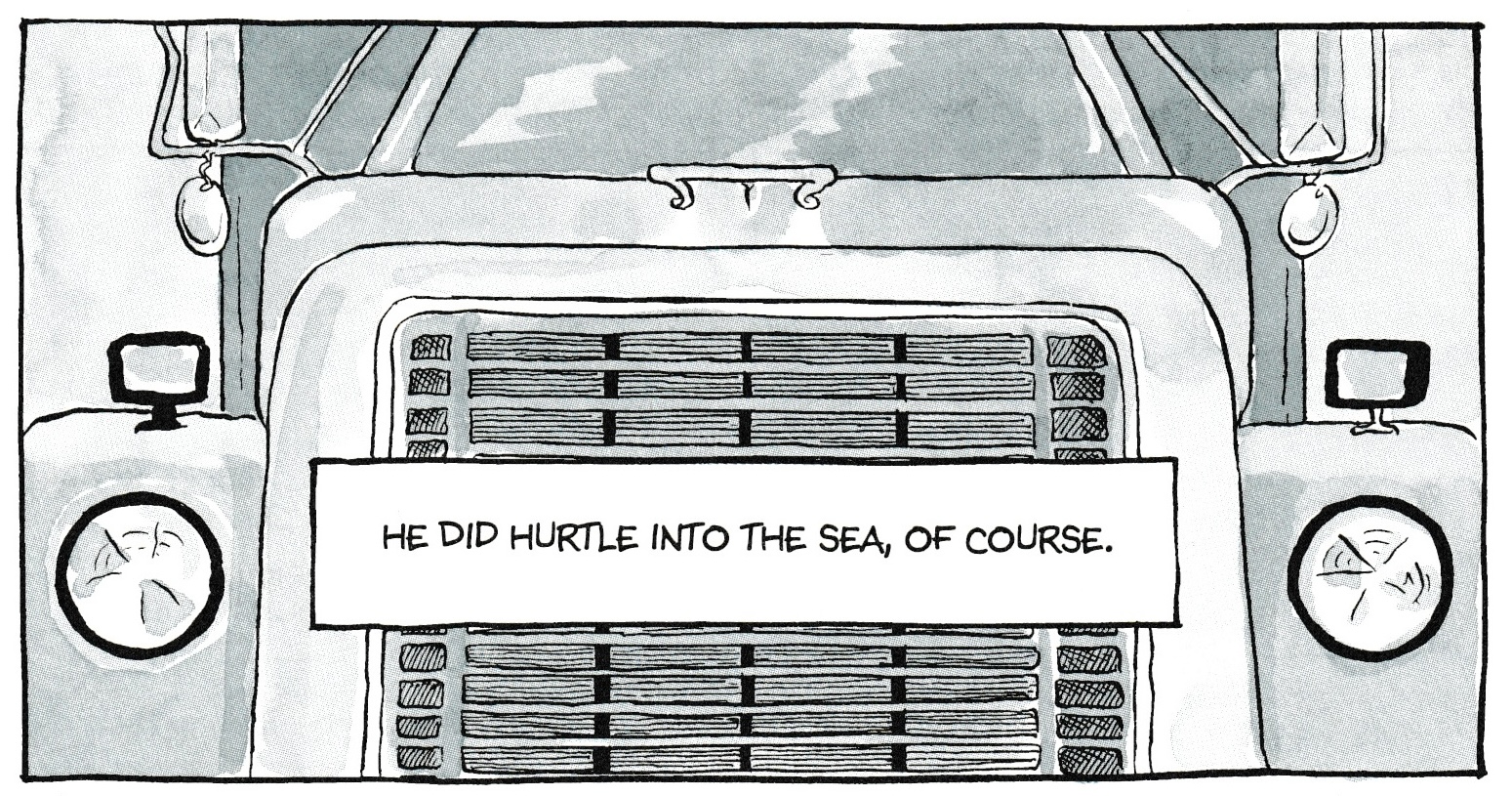
Bruce Bechdel was a man of meticulous craft and hidden depths. An English teacher by trade and a restorer of Victorian architecture by obsession, he poured his creative energy into the ornate moldings and finials of the family home. However, beneath this polished facade lay a life of "sexual shame," which Alison identifies as a "kind of death" in its own right. Shortly after Alison came out to her parents during her college years, Bruce confessed to his own history of relationships with men and teenage boys. Weeks later, he stepped in front of a Sunbeam Bread truck. While officially ruled an accident, the memoir treats the event as a probable suicide—a final, desperate act of "renunciation."
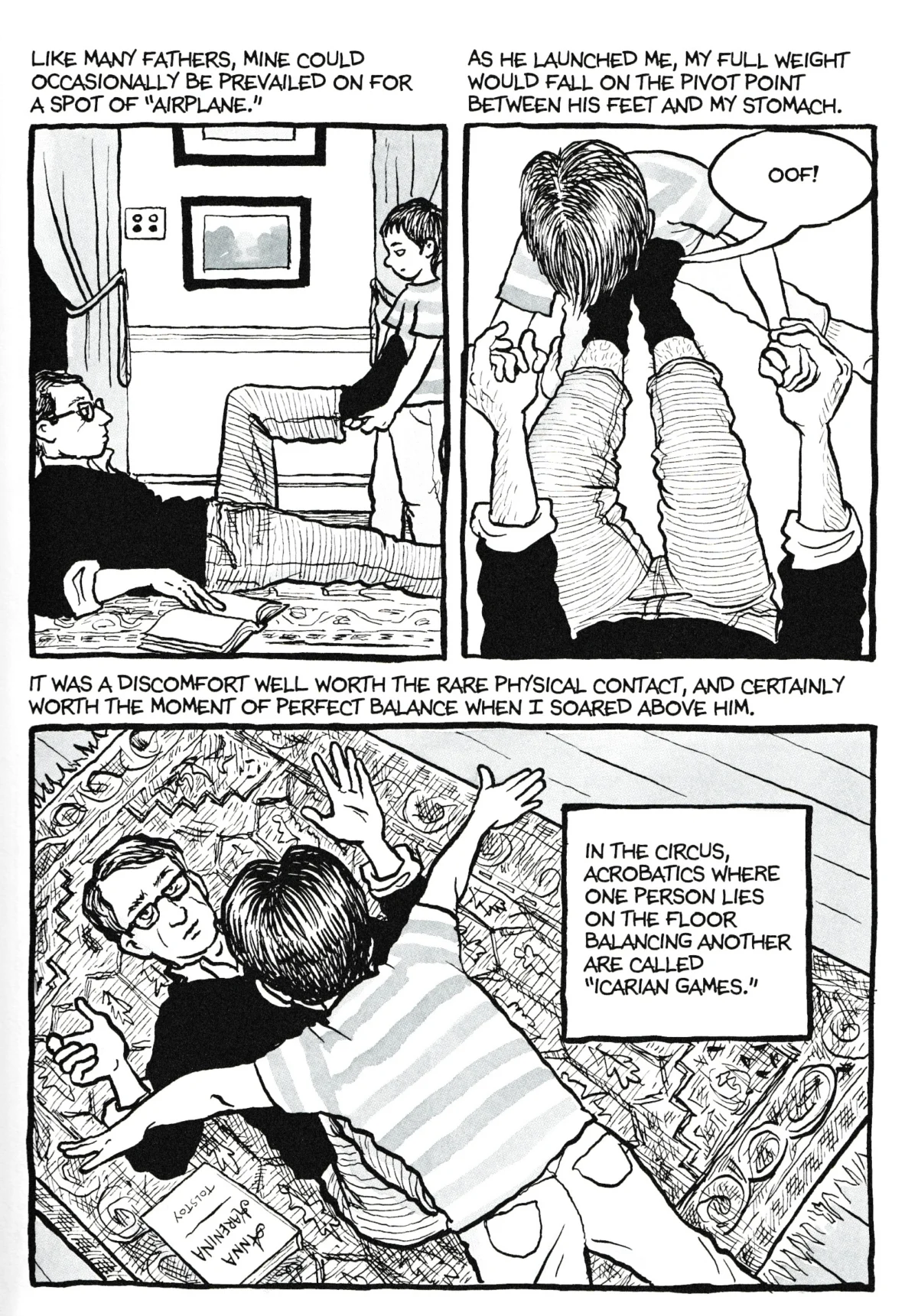
The book is famously dense with literary allusions, framing the father-daughter relationship through the lenses of James Joyce, Marcel Proust, and, most pivotally, the Greek myth of Daedalus and Icarus. It is through these texts that Bechdel attempts to decode her father, suggesting that their bond was forged not through traditional affection, but through a shared "textual inheritance."
Chronology: From Private Memory to National Canon
The timeline of Fun Home spans several decades of personal history and twenty years of public acclaim:
- 1960s–1970s: Alison grows up in the "Fun Home" in Lock Haven, PA. She observes her father’s obsessive restoration of their house and his distant, often volatile temperament.
- Late 1970s: Alison attends college, where she discovers the word "lesbian" in a dictionary and begins to piece together her identity through the works of Colette and Radclyffe Hall.
- 1980: Alison comes out to her parents. Her father subsequently reveals his own homosexuality.
- July 1980: Bruce Bechdel is killed by a truck. Alison begins the lifelong process of interpreting his life and death.
- 2006: Fun Home is published by Houghton Mifflin. It receives near-universal acclaim, being named the Best Book of 2006 by Time magazine and a finalist for the National Book Critics Circle Award.
- 2013–2015: The memoir is adapted into a stage musical by Jeanine Tesori and Lisa Kron. It moves to Broadway and wins five Tony Awards, including Best Musical, further cementing the story’s place in the American consciousness.
- 2026: On its 20th anniversary, Fun Home is recognized as a seminal work of the 21st century, taught in universities worldwide as a masterclass in visual semiotics and memoir.
Supporting Data: The Dissonance of the Final Leap
The academic and critical longevity of Fun Home is often attributed to its formal complexity—specifically the way Bechdel uses the "gutter" (the space between panels) to create meaning. This is most evident in the memoir’s final page, which remains one of the most analyzed sequences in graphic literature.
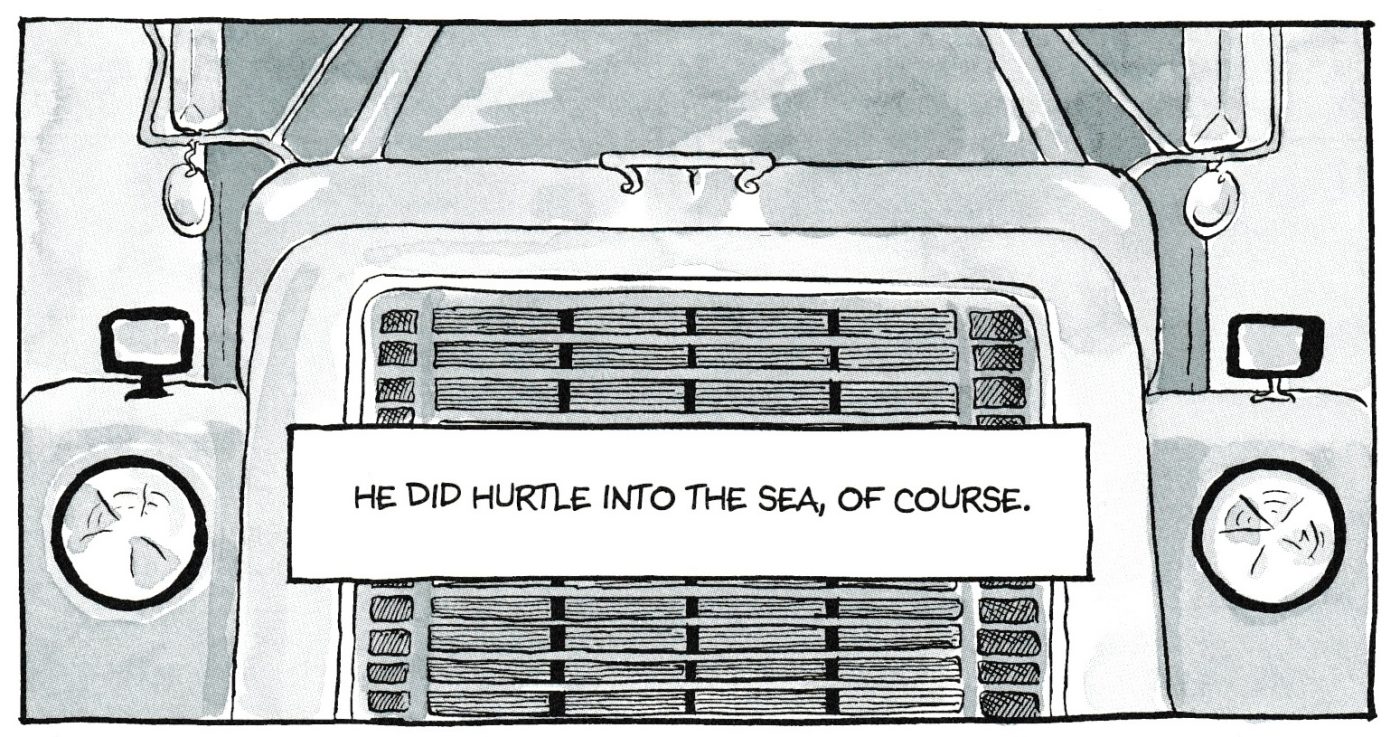
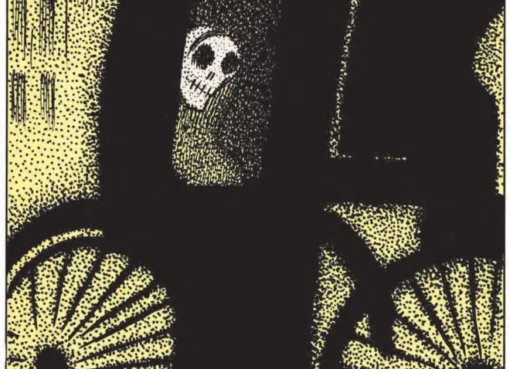
The finale consists of two primary panels that perform seemingly incompatible work. The first panel depicts the truck that killed Bruce Bechdel. It is rendered with a cool, documentary distance—a blunt piece of machinery representing the "unadorned force of accident." This image stands in stark contrast to the book’s otherwise ornate, literary style. It is a moment where the "machinery of fact" refuses to be absorbed into the "architecture of art."
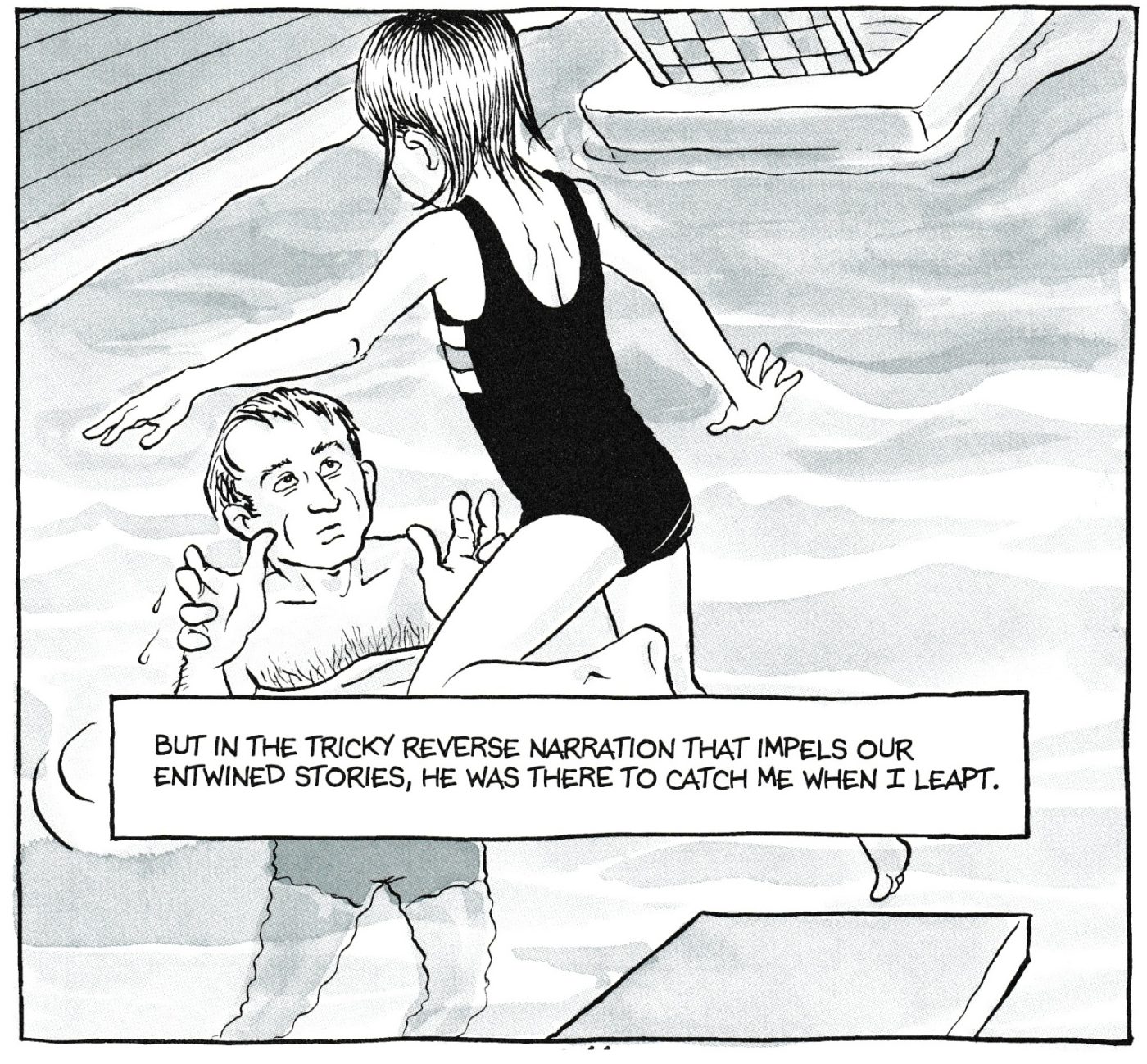
The final panel returns to a childhood memory of a game called "airplane." Alison is mid-air, leaping from a diving board, while her father stands below with his arms open. The caption reads: "He was there to catch me when I leapt."
The Temporal Gap:
Critics point to a fundamental dissonance between the text and the image in this final moment. The caption is written in the past tense, declaring a completed, successful action: "He was there to catch me." However, the drawing freezes the action before contact. Alison is suspended in the air; Bruce’s arms are open, but they have not yet closed around her.
This creates a "temporal suspension" that mirrors the Icarus myth. In the myth, Daedalus (the father/architect) builds the wings, and Icarus (the child) flies. The tragedy is the fall. By casting her father as both Daedalus (the creator) and Icarus (the one who falls), Bechdel suggests that flight and falling are separated only by a fraction of time. The final image asks the reader to decide: Is this a moment of redemption, or a frozen second before a catastrophe?
Official Responses and Critical Reception
Upon its release in 2006, the literary establishment was forced to reckon with the graphic novel as a serious medium. George Gene Gustines, writing for The New York Times, highlighted the emotional weight of the ending:
"The juxtaposition of the two images is compelling and striking. They also offer reader and author a choice: appreciate what was had or continue to yearn. In completing Fun Home, Ms. Bechdel may have finally ended her longing."
However, twenty years of scholarship has suggested that Bechdel did not "end" her longing so much as she "archived" it. Literary scholar Hillary Chute, a prominent figure in comics studies, has argued that Bechdel’s work uses the "spatiality of the page" to map trauma in a way that prose cannot. The official response from the academic community has been to treat Fun Home not just as a story, but as a "labor of witness," where the act of drawing every molding, every book spine, and every facial expression serves as a meticulous forensic reconstruction of a lost life.
In 2026, the consensus among critics is that the book’s "redemptive" ending is intentionally subversive. While the musical adaptation leaned into the emotional catharsis of the "catch," the original graphic text remains suspicious of such clean resolutions. The "choice" Gustines mentioned remains the central tension for every new generation of readers.
Implications: The Legacy of the "Tricky Reverse Narration"
The legacy of Fun Home extends beyond its contribution to LGBTQ+ representation. It redefined the "autobiografictional" nature of memory. Bechdel’s "tricky reverse narration" suggests that we do not live our lives forward, but rather interpret them backward through the stories we have read.
1. The Democratization of the Memoir:
Fun Home proved that the "low" medium of comics could handle the "high" themes of Modernist literature. It paved the way for a surge in graphic memoirs dealing with complex psychological and social issues, from Roz Chast’s Can’t We Talk About Something More Pleasant? to the works of Mira Jacob and Thi Bui.
2. The Inheritance of Risk:
The memoir’s final implication is that redemption is not a historical fact, but a narrative choice. By ending with the leap, Bechdel acknowledges that while her father was there to catch her in that specific childhood moment, he was not there later. The "wings" worked once, but they did not work forever. This creates a legacy of "inherited risk"—the idea that to love or to understand a parent is to accept the possibility of their failure.
3. The Preservation of Longing:
Twenty years later, the power of Fun Home remains rooted in its refusal to close the gap between the father and the daughter. Between the impact of the truck and the embrace of the father, the reader is left hovering in that "thin interval" where interpretation gives way to uncertainty.
In the final analysis, Fun Home is a testament to the fact that some stories do not end with closure; they end with a leap of faith. Whether Bruce Bechdel caught his daughter or let her fall is a question the book leaves for the reader to answer, ensuring that the memoir—and the man at its center—remains a living, breathing presence in the minds of those who turn its pages.

Leave a Comment