Meta Connect 2026: Pioneering the "Hands-First" Era with a $1 Million Developer Stimulus
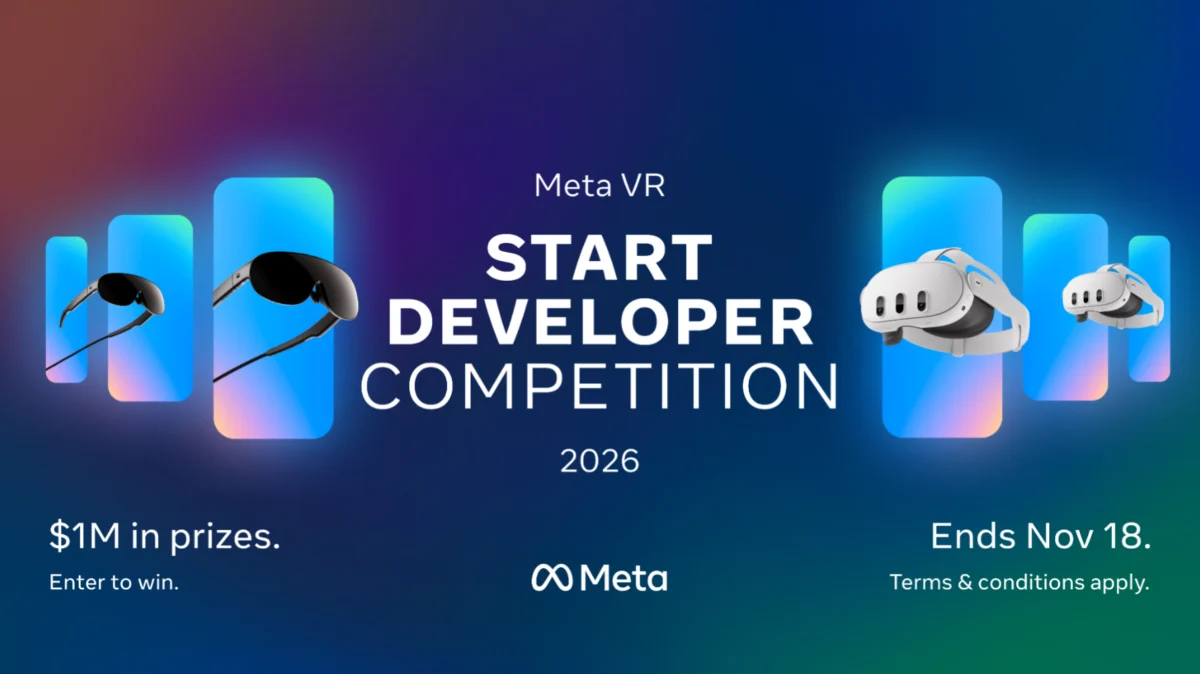
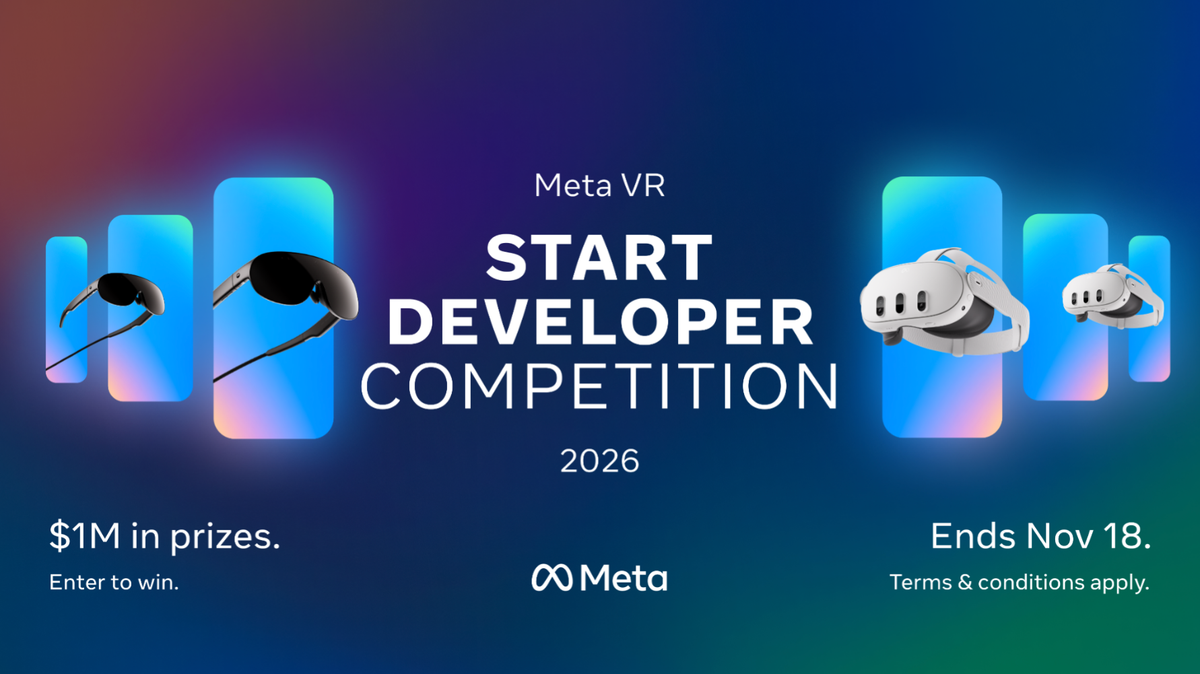
The landscape of spatial computing is undergoing a tectonic shift, moving away from the tethered controllers of the past decade toward a future defined by natural, intuitive interaction. At the Meta Connect 2026 Developer State of the Union, Meta Platforms Inc. signaled this transition with the announcement of the Meta VR Start Developer Competition 2026. Boasting a $1 million prize pool, the competition is designed to catalyze the development of "hands-first" applications for the Meta Quest ecosystem and the newly unveiled Meta VR Glasses.
This initiative arrives at a critical juncture for the company as it prepares for the Spring 2027 launch of its most ambitious hardware to date: a lightweight, high-performance wearable that eschews traditional input methods in favor of advanced eye and hand tracking.
Main Facts: The $1 Million Incentive for Spatial Innovation
The Meta VR Start Developer Competition 2026 is a strategic investment aimed at populating Meta’s next-generation app store with content that maximizes the capabilities of its upcoming hardware. The competition offers a total of 20 prizes, with individual awards reaching as high as $100,000.
Key Competition Details:
- Total Prize Pool: $1,000,000 USD.
- Categories: Entertainment, Gaming, and Productivity.
- Target Hardware: Meta Quest (3, 3S, and future iterations) and the newly announced Meta VR Glasses.
- Submission Deadline: November 18, 2026.
- Primary Requirement: A "hands-first" approach, focusing on skeletal hand tracking and natural gestures.
- Platform: Hosted via Devpost for registered Meta VR Start members.
The competition is not limited to entirely new software. Meta is actively encouraging developers to submit "adapted or significantly updated" versions of existing apps. To qualify as a significant update, developers must implement features such as integrated hand interactions, multiplayer support, mixed reality (MR) modes, or user-generated content (UGC) tools.
Chronology: The Evolution of Meta’s Developer Support
To understand the significance of the 2026 competition, one must look at the trajectory of Meta’s developer relations over the last several years. The program now known as Meta VR Start has undergone multiple rebrandings, reflecting the company’s internal shifts from pure VR to the "Metaverse" and now toward specialized spatial computing.
- The Oculus Start Era (2018–2021): Originally launched to support indie developers on the Rift and the original Quest, the program focused on providing hardware kits and technical support to small studios.
- Meta Horizon Start (2022–2025): As the company rebranded to Meta, the program shifted its focus toward the "Horizon" ecosystem, emphasizing social presence and the burgeoning Mixed Reality capabilities of the Quest Pro and Quest 3.
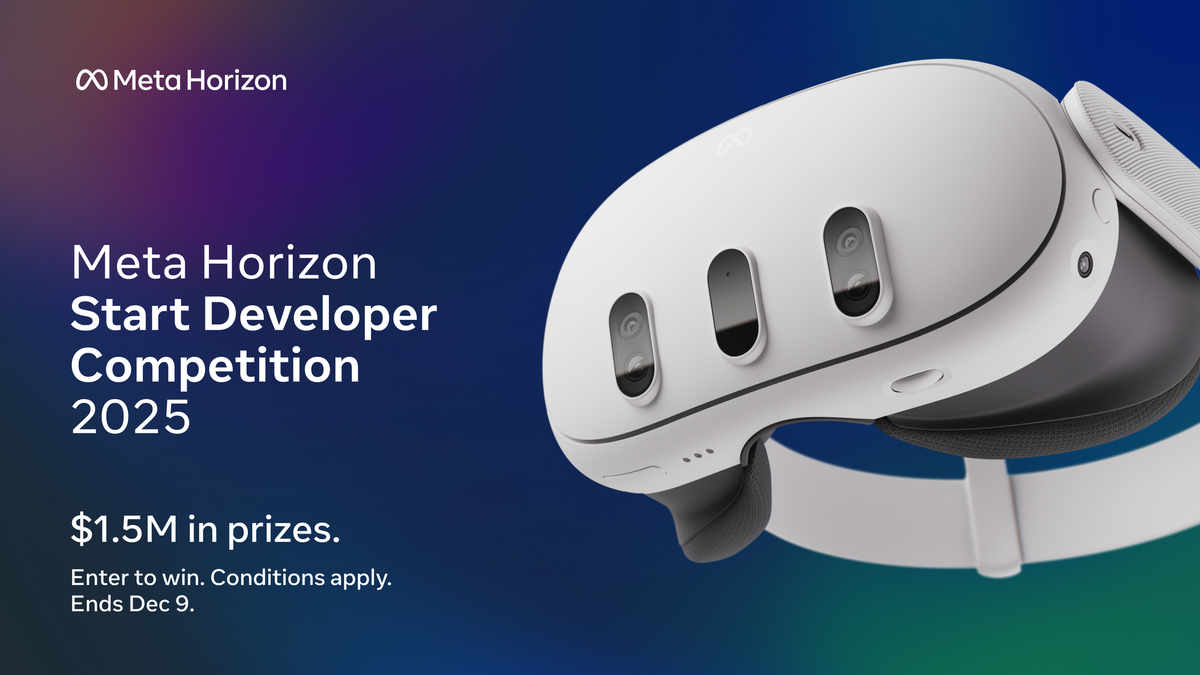
- The 2025 Competition: In late 2025, Meta launched a $1.5 million competition with 32 prizes. That iteration focused heavily on lifestyle and entertainment, aiming to broaden the Quest’s appeal beyond hardcore gaming.
- The 2026 Shift: The current competition represents a narrowing of focus toward "hands-first" input. This is a direct response to the hardware limitations and opportunities presented by the Meta VR Glasses, which do not include controllers in the box.
Supporting Data: Hardware as the Catalyst
The motivation behind the $1 million prize pool becomes clear when examining the specifications of the hardware it is meant to support. The Meta VR Glasses, officially announced at the same Connect event, represent a radical departure from the "goggles" form factor.
Meta VR Glasses Technical Specifications:
- Display: Dual 2.4K micro-OLED displays, offering significantly higher pixel density than the Quest 3.
- Weight: A mere 100 grams, achieved by offloading processing to a "tethered puck."
- Chipset: Qualcomm Snapdragon Reality Elite, housed in the external puck to manage heat and battery life.
- Input Philosophy: No default controllers. The system relies entirely on Eye Tracking and Skeletal Hand Tracking.
- Price Point: $1,300, positioning it as a premium "prosumer" device.
Data from Meta’s internal developer surveys suggests that while hand tracking has been available since the original Quest, only a fraction of the current library supports it as a primary input method. By offering $100,000 individual prizes, Meta is subsidizing the R&D costs for studios to rewrite their interaction engines—a necessary step if the $1,300 VR Glasses are to have a robust "Day 1" software catalog in Spring 2027.
Official Responses and Developer Mandate
During the Developer State of the Union, Meta executives emphasized that the goal is to make digital interaction as "invisible" as possible. The company’s developer relations staff stated that the "hands-first" mandate is not merely a preference but a requirement for the next era of the Meta Store.

"We are looking for experiences that make gameplay more intuitive than ever before," a Meta spokesperson noted during the announcement. "The goal of the Meta VR Start program is to bridge the gap between technical possibility and user experience. By removing the controller, we remove the final barrier between the user and the digital world."
Meta VR Start members receive more than just prize money; the program offers:
- Direct access to Meta developer relations staff.
- Community mentorship and a private Discord for high-level troubleshooting.
- Software credits and go-to-market guidance.
- Advanced technical education on the "Direct Touch" API and multimodal input (combining voice, eye, and hand tracking).
Implications: A Competitive Strike Against Apple and the Future of UI
The 2026 competition and the subsequent launch of the VR Glasses carry heavy implications for the broader XR (Extended Reality) industry.
1. The "Controller-Less" Standard
By incentivizing "hands-first" apps, Meta is effectively standardizing a UI language that mirrors the Apple Vision Pro’s "eyes and hands" approach. However, while Apple’s device remains a heavy, $3,500 "spatial computer," Meta is betting on a $1,300, 100-gram wearable. If Meta can successfully convince developers to port their best content to a controller-less format, they may win the battle for mainstream adoption.
2. The Productivity Pivot
The inclusion of "Productivity" as a core category for the $1 million fund suggests that Meta is no longer content with being a gaming-first platform. With 2.4K micro-OLED displays, the VR Glasses are capable of rendering crisp text, making virtual monitors and "infinite desktops" a viable reality. The competition seeks to find the "Excel of the spatial era"—the killer app that makes wearing glasses for eight hours a day a benefit rather than a chore.
3. Developer Friction and Haptic Challenges
The shift to "hands-first" is not without its hurdles. Developers have long relied on the haptic feedback and physical buttons of the Touch Plus controllers to provide "game feel." Removing these requires a fundamental rethinking of game design. Developers must now rely on visual and auditory cues to simulate the sensation of touch. The 2026 competition serves as a laboratory for these new UX patterns, with Meta footed the bill for the experimentation.
4. The Ecosystem Lock-in
By requiring developers to be members of the Meta VR Start program to enter, Meta is deepening its relationship with the most talented creators in the space. This creates a "walled garden" of high-quality content that is optimized specifically for Meta’s tracking algorithms, making it harder for competitors like HTC, Pico, or even Google/Samsung’s upcoming MR headset to lure those developers away.
Conclusion: Setting the Stage for 2027
The Meta VR Start Developer Competition 2026 is more than just a contest; it is a strategic mobilization of the developer community. By November 18, 2026, Meta hopes to have a shortlist of 20 premier applications that prove "hands-first" is the superior way to compute.

As the industry looks toward the Spring 2027 shipping date of the Meta VR Glasses, the success of this competition will likely determine whether the device is viewed as a revolutionary leap forward or a niche experiment. For developers, the $1 million fund represents a golden opportunity to define the rules of a new medium where the human hand is the only peripheral required.