Babylon, Mesopotamia – In the sprawling pantheon of ancient Mesopotamia, few deities commanded the enduring reverence and widespread influence quite like Nabu. Known variously as Tutu, "The Announcer," this Babylonian god was a profound symbol of intellect, creativity, and sustenance, his dominion stretching across wisdom, learning, prophecy, and the very act of writing. More than just a divine scribe, Nabu was also responsible for the earth’s bounty, ensuring abundant harvests and the flourishing of all growing things, embodying a holistic connection between knowledge and life itself. His name, "The Announcer," succinctly captures his essence, referencing his potent prophetic and creative powers to manifest words, cultivate harvests, and unveil the visions of prophecy.
Nabu’s significance transcended mere religious belief; he was a cultural cornerstone, shaping the intellectual and spiritual landscape of ancient Near Eastern civilizations for millennia. From his humble origins as a syncretized figure evolving from an earlier Sumerian goddess to his eventual widespread adoption across empires and identification with major Greco-Roman deities, Nabu’s journey reflects the dynamic interplay of religious tradition, political power, and cultural exchange in the ancient world.
The Origins of "The Announcer": A Chronological Journey
Nabu’s lineage is a fascinating tapestry woven from Sumerian antiquity and Babylonian theological innovation. His earliest roots trace back to the venerable Sumerian goddess Nisaba (also known as Nidaba or Nissaba), the patroness of writing, accounts, and learning, whose worship is attested as far back as the Early Dynastic period (circa 2900 to circa 2350/2334 BCE). Nisaba’s prominence is evident in Sumerian hymns and compositions that ritually concluded with "Praise be to Nisaba!" – a paradigm that Nabu would later inherit with the Babylonian phrase, "Praise be to Nabu!"
The transition from Nisaba to Nabu marks a significant shift in Mesopotamian religious thought, particularly during the Old Babylonian period (circa 1894-1595 BCE). This era witnessed a general elevation of male deities at the expense of older goddesses, a trend strongly propelled during the reign of King Hammurabi (1792-1750 BCE). As Mesopotamian society evolved, so too did its divine hierarchy, positioning Nabu to ascend as a preeminent male god of knowledge.
Initially, Nabu was regarded not as Marduk’s son, but as his esteemed vizier and personal scribe, an indispensable aide in the administration of the divine realm. This early depiction underscores his fundamental association with record-keeping and intelligent counsel. However, following the tumultuous Kassite period (circa 1595 BCE), Nabu’s status underwent a significant transformation. He began to be regularly depicted as the son of Marduk, the supreme god of Babylon and king of the gods, a familial link that cemented his position within the divine hierarchy and significantly amplified his power and prestige, making him almost Marduk’s equal. This shift mirrors the evolving political landscape of Babylon, where the relationship between the ruling deity and his heir often reflected succession and power dynamics within the mortal realm.
Nabu’s personal life also evolved through various divine consorts. His early wife was Tashmit (also known as Tasmetu), a goddess often associated with charm and compassion. Later, he took Nanaya, originally the divine consort of the Sumerian god Muati, into his fold, reflecting further syncretic processes that enriched his cult. Interestingly, in some mythological traditions, Nisaba herself, Nabu’s ancient predecessor, is depicted as his wife and divine assistant, mirroring the collaborative roles seen in other pantheons, such as the Egyptian goddess Seshat working alongside Thoth in maintaining the gods’ celestial library and records. This intertwining of older and newer deities speaks to the continuous reinterpretation and integration of religious narratives across Mesopotamian history.
Embodying Knowledge and Sustenance: Nabu’s Divine Portfolio
Nabu’s multifaceted portfolio positioned him as an indispensable figure in Babylonian life. As the god of wisdom and learning, he was the patron of scholars, astrologers, and all who pursued intellectual endeavors. His association with prophecy was profound, aligning with his name "The Announcer," signifying his role in revealing divine will and foretelling future events. This made him a crucial intermediary between the gods and humanity, a conduit for understanding destiny and navigating the uncertainties of life.
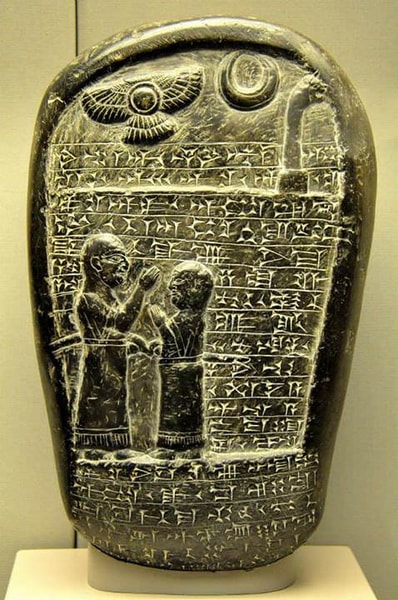
However, it was his guardianship over scribes and writing that perhaps defined him most prominently. The invention of cuneiform in Mesopotamia by the Sumerians around 3600/3500 BCE was a monumental leap for civilization. This system of wedge-shaped marks on wet clay, later dried, revolutionized administration, trade, law, and literature. While born of practical necessity, writing was universally revered as a divine gift. Nabu, as its primary patron, elevated the craft of the scribe to a sacred calling. Scribes, therefore, held an esteemed position in society, acting as both administrators and keepers of divine knowledge, their status directly reflecting the veneration of their patron god. As scholar E. A. Wallis Budge eloquently notes:
"He was endowed with great wisdom, like his father; and he acted as scribe to the gods; he had charge of the Tablet of Fate of the gods and had the power of prolonging the days of men. Like the Egyptian Thoth, his eyes travelled over the circuit of the heavens and over all the earth. He was the personification of knowledge and, as a god of vegetation, he caused the earth to produce abundant crops." (85)
This quote beautifully encapsulates Nabu’s comprehensive influence, linking intellectual prowess with the very sustenance of life. His role as a god of vegetation and abundant crops underscored the fundamental connection between human prosperity and divine favor, making him a deity of paramount importance for an agrarian society.
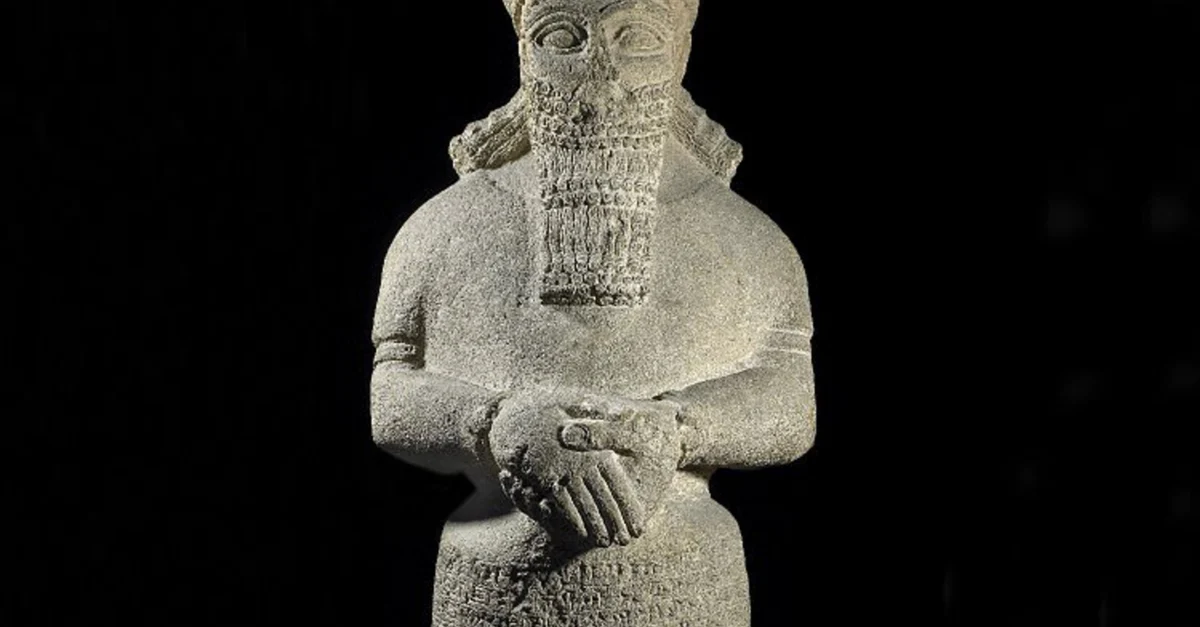
Nabu’s visual representations reinforced his identity. His primary symbol was a simple yet powerful one: a wedge-shaped cuneiform mark or a stylus resting upon a writing tablet, a direct nod to his domain over written knowledge. Iconographically, he was often depicted as a majestic bearded man clad in royal robes, holding a stylus, and significantly, standing atop the Mushussu Dragon. This mythical snake-dragon, a powerful protective spirit, was famously associated with Marduk and other prominent gods, and its imagery adorned significant structures like the Ishtar Gate. This shared symbolism further cemented Nabu’s close ties to the Babylonian royal house and its supreme deity. His divine lineage as the son of Marduk, king of the gods and patron of Babylon, and the grandson of Enki (also known as Ea), the ancient Sumerian god of wisdom, further elevated his status and solidified his place in the highest echelons of the Mesopotamian pantheon.
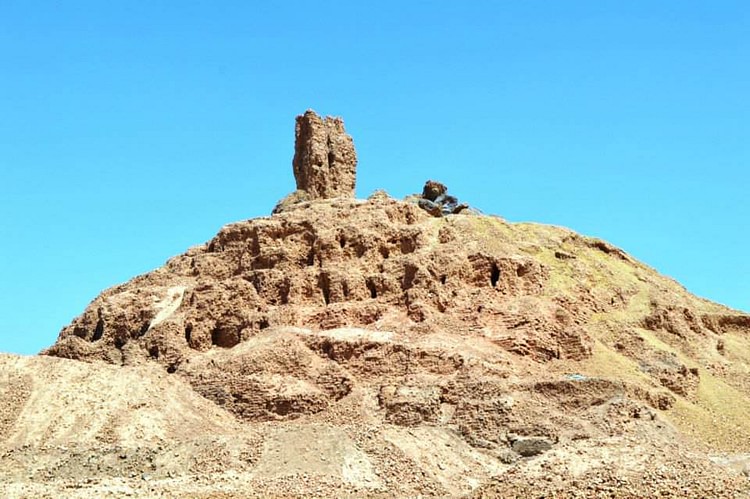
Nabu’s cult center at Borsippa, a city situated near Babylon, was nearly as significant as the Esagila, Marduk’s grand temple-ziggurat in Babylon itself. Borsippa was often referred to as a "second Babylon," reflecting its religious and cultural importance. The priests of Nabu at Borsippa were highly respected, diligently caring for the god’s statue, managing the vast temple complex, and presiding over elaborate rituals. The reverence for the written word, and by extension, for its divine patron and his representatives, ensured Nabu’s central role in the religious life of Babylonians. His prominence was nowhere more dramatically displayed than in the annual Akitu festival, arguably the most important celebration in Babylon.
The Akitu Festival: A Royal and Divine Spectacle
The Akitu festival was the apex of Mesopotamian religious and civic life, a twelve-day celebration observed across the region with varying rituals, marking the beginning of the New Year and celebrating the harvest. As scholar Stephen Bertman notes:
"In some communities, like Babylon, the ceremonies were conducted once a year immediately after the barley harvest in March at the time of the spring equinox (barley was Mesopotamian’s chief grain). In other communities, like Ur, there were two celebrations a year, one at the time of the harvest and the other in September when new seed was sown. Because the Mesopotamians looked upon the spring equinox as the beginning of their year, the Harvest Akitu was also a New Year’s holiday and a time of added celebration." (130)
Nabu played a pivotal, almost co-equal role with Marduk, in the elaborate Akitu rituals in Babylon, underscoring his immense importance. The festival’s detailed choreography intertwined divine and mortal actions, reinforcing the cosmic order and the king’s legitimacy.
Day One: The festival commenced with meticulous preparations. Priests in Babylon consecrated Marduk’s sanctuary, the Esagila, while simultaneously, priests in Borsippa prepared Nabu’s temple. Specific details of these initial preparations remain somewhat elusive but undoubtedly involved purification rites and ceremonial adornments.
Day Two: The high priest of Marduk engaged in a solemn renewal ceremony, dedicating himself anew to the supreme deity and offering prayers for Marduk’s continued protection of Babylon and gratitude for his divine gifts.
Day Three: In Babylon, the high priest presided over a ceremony involving the creation of two wooden dolls, believed to represent human worshippers of Nabu. While their precise significance and gender are not fully understood, these figures would play a symbolic role later in the festival.
Day Four: A crucial journey began. While the high priest and lesser clergy in Babylon prayed to Marduk, the King of Babylon embarked on a significant pilgrimage to Borsippa. His mission: to personally accompany the sacred statue of Nabu back to Babylon. During the king’s absence, the high priest honored Marduk and his divine consort Sarpanitum, blessing the temple and the city. As evening approached, the sacred creation epic, the Enuma Elish, was recited. This foundational text recounted Marduk’s heroic triumph over chaos, his ascension as king of the gods, and the creation of humanity, reinforcing the cosmic order he maintained.
Day Five: This day saw intense ritual cleansing. Priests of both Marduk and Nabu purified their respective temples, complexes, and Nabu’s shrine. The high priest communed with the statues of Marduk and Sarpanitum through prayer and meditation. Once cleansed, Nabu’s shrine was sumptuously covered with a gold canopy, as the populace eagerly awaited the king’s return with the divine statue. This day also featured a dramatic and humbling ceremony involving the king, as Bertman describes:
"Then followed a dramatic ceremony: the high priest divested the king of his royal insignia, slapped his face, and forced him to kneel before the god’s holy image – an act of humbling debasement that asserted the power of church over state, of god over man. On his knees, the king made confession, swearing that he had not abused the authority entrusted to him and had not sinfully forsaken the interests of Babylon, its people, and its god. In its negative formulation ("I have not…") this confession is reminiscent of the "Negative Confession" found in the Egyptian Book of the Dead by which souls sought to gain entry into paradise, and also of the biblical Ten Commandments, where were also cast in negative terms ("Thou shalt not…"). At the conclusion of the royal confession, the high priest again slapped the face of the king until tears flowed from his eyes, a sign of his genuine contrition." (131)
This profound act underscored the king’s subservience to the gods and the divinely ordained order of the state. Following this, the king joined the priests in prayers, and sacrifices were offered to the planet Mercury, associated with both Marduk and Nabu. Nabu’s statue was then reverently placed in its shrine, concluding the day with city-wide prayers.
Day Six: Statues of deities from other city-states, having made their pilgrimage to Babylon over the preceding days, finally arrived. They were positioned strategically between Nabu’s shrine and Marduk’s temple. The two wooden figures created on Day Three were brought forth, offered to Nabu, decapitated, and ritually burned. While Bertman suggests this might symbolize "an ancient human sacrifice or of an unknown episode in mythology," the precise significance of this ritual remains a subject of scholarly debate (131).
Days Seven and Eight: The king performed the symbolic act of "taking the hand" of Marduk’s statue, signifying his renewed covenant with the god and his dedication to divine will. This initiated the most public and joyous phase of the festival: a grand procession. Marduk’s statue, followed by Nabu’s and those of other gods, was carried through the thronged streets of Babylon to the Shrine of Destinies, located near Nabu’s sanctuary. Here, Nabu, the "Announcer," was invoked to deliver his prophecy regarding the king and the fortunes of the coming year, a crucial moment for the city, meticulously recorded by the priests. The statues of the gods were arranged to honor the king, and it is at this point that the sacred marriage ritual, possibly involving the king engaging in symbolic or actual sexual intercourse with a priestess representing the goddess Inanna, may have been observed to ensure fertility and prosperity. Following these profound rituals, the procession reformed, guiding Marduk out of the city to the bit-Akitu, a special temple adorned with flowers and plants, surrounded by a large public park.
Days Nine and Ten: The bit-Akitu became the site of the great banquet of the Akitu festival. The state provided abundant food, drink, and entertainment, turning the sacred observance into a vibrant public celebration of community and divine blessing.
Day Eleven: Marduk’s statue, accompanied by the other deities, was ceremonially brought back into Babylon, pausing at Nabu’s shrine. Here, the prophecy delivered by Nabu on Day Seven was publicly proclaimed, reaffirming divine guidance for the new year. A closing ceremony, attended by priests, nobility, and dignitaries from other cities, brought this phase to a conclusion.
Day Twelve: The festival culminated in public closing ceremonies centered around Nabu. His statue was gently removed from its shrine and began its short return journey by ship to Borsippa. As Nabu departed, the statues of the other gods also left Babylon, returning to their respective home cities, marking the official end of the Akitu festival.
The importance of Nabu in this grand spectacle is undeniable. The festival’s integrity depended on the presence of both Marduk and Nabu. Historical records, such as The Marduk Prophecy, detail the disruptions caused when Marduk’s statue was removed from Babylon due to conquest by powers like the Hittites, Assyrians, or Elamites. Similarly, the Akitu Chronicles note the years when Nabu remained in Borsippa, unable to join the festival because Marduk was absent from Babylon, highlighting the reciprocal and foundational nature of their roles.
Beyond Babylon: Nabu Among Later Civilizations
Nabu’s popularity was so immense that his veneration extended far beyond the confines of Babylon. The Assyrians, who often had a complex relationship with Babylonian culture, readily adopted Nabu, integrating him into their own pantheon as the son of their supreme god, Ashur (also Assur). This adoption was particularly significant during the Neo-Assyrian Empire, where Ashur’s worship became so widespread it approached a form of monotheism. Nabu, as Ashur’s son, became accessible to all subjects across the vast Assyrian Empire, solidifying his status as a major deity outside of his Mesopotamian heartland.
Unlike Marduk, whose cult remained closely intertwined with the political fortunes and identity of Babylon, Nabu largely escaped such direct political associations. This distinction proved crucial for his enduring legacy. When the Assyrian Empire collapsed in 612 BCE under the combined might of the Medes, Babylonians, and Persians, the statues of many Assyrian gods, especially Ashur and Marduk (due to his political ties to Babylon), were desecrated or destroyed. However, Nabu’s statue was often spared and continued to be honored. Scholar Gwendolyn Leick observes that Nabu "endured when other gods, who had been more closely identified with political power (e.g., Marduk) had lost popularity" (123). While Assyrian cities, temples, and divine effigies were razed, Nabu’s worship persisted throughout Mesopotamia and spread to regions including Egypt, Anatolia (modern Turkey), and Syria.
This remarkable longevity is a testament to the universality of Nabu’s domains. Wisdom, learning, prophecy, and the written word are timeless human pursuits, less susceptible to the shifting tides of imperial power than the patronage of a specific city or empire. His continued worship until at least the 2nd century CE, long after the fall of the great Mesopotamian empires, is unparalleled for many of his divine contemporaries.
Nabu’s influence reached even further through syncretism with other cultures’ deities. He was associated with the Egyptian god Thoth, another deity of wisdom, writing, and magic. The Greeks identified him with Apollo, their god of prophecy, music, and the arts, while the Romans saw him in Mercury, their swift messenger god of commerce, eloquence, and writing. This cross-cultural adoption speaks volumes about the resonance of his attributes. He is also referenced in the Bible as Nebo, mentioned alongside Marduk (called "Bel") in Isaiah 46:1-2, where their idols are depicted as being overthrown. Furthermore, Mount Nebo, the revered site from which Moses is said to have viewed the Promised Land and where tradition holds he was buried, takes its name from this ancient Babylonian deity.
Conclusion: A Legacy Etched in Time
Among the vast pantheon of Mesopotamian gods, Nabu carved a unique and exceptionally enduring path. His dedication to knowledge and the written word highlighted the profound value these elements held in ancient societies, transforming them from mere utilitarian tools into sacred arts. Veneration of Nabu fostered an environment where scribes and scholars were held in high esteem, their work considered a holy calling, and the act of writing seen as a divine gift essential for preserving the present for the future.
By the time of the Roman Emperor Augustus (27 BCE to 14 CE), Nabu’s legacy, under the guise of Apollo and Mercury, continued to inspire poets, writers, and thinkers in Greece and Rome. While definitive proof of direct inspiration on later literary gods remains a subject of scholarly debate, the chronological precedence and thematic parallels suggest a strong likelihood of his influence. Nabu’s remarkable journey from a Sumerian goddess to a pan-Mesopotamian deity, then across the Near East, and finally into the classical world, underscores his profound and lasting impact. He truly became the "Announcer" not just of divine prophecies and bountiful harvests, but also of the enduring power of knowledge and the written word, a legacy etched in the very fabric of human civilization.
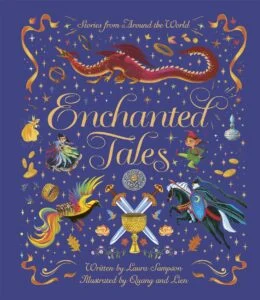
London, UK – In a literary landscape often dominated by new narratives, the timeless allure of classic fairy tales continues to captivate. Award-winning author Laura Sampson breathes new life into one
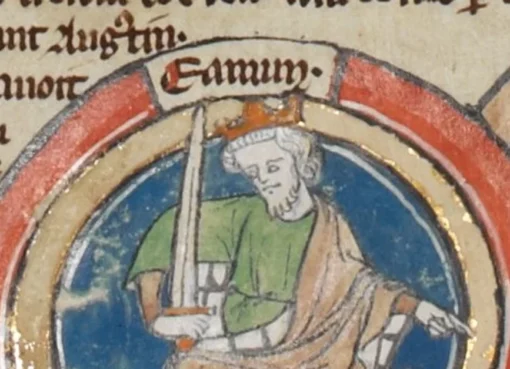
King Edmund I, who reigned over the Kingdom of the English from 939 to 946, stands as a pivotal yet often overshadowed figure in the tumultuous 10th century. Ascending to the throne at a mere 18, Edmu
FOR IMMEDIATE RELEASE LONDON, UK – In a captivating new literary offering, "Enchanted Tales," published by Templar Books, renowned storyteller Laura Sampson invites readers into a world of t