Navigating the Labyrinth of the Self: A Deep Dive into ‘HeartWeaver’ and the Evolution of Mental Health Narratives in Gaming
Introduction: The Internal Frontier
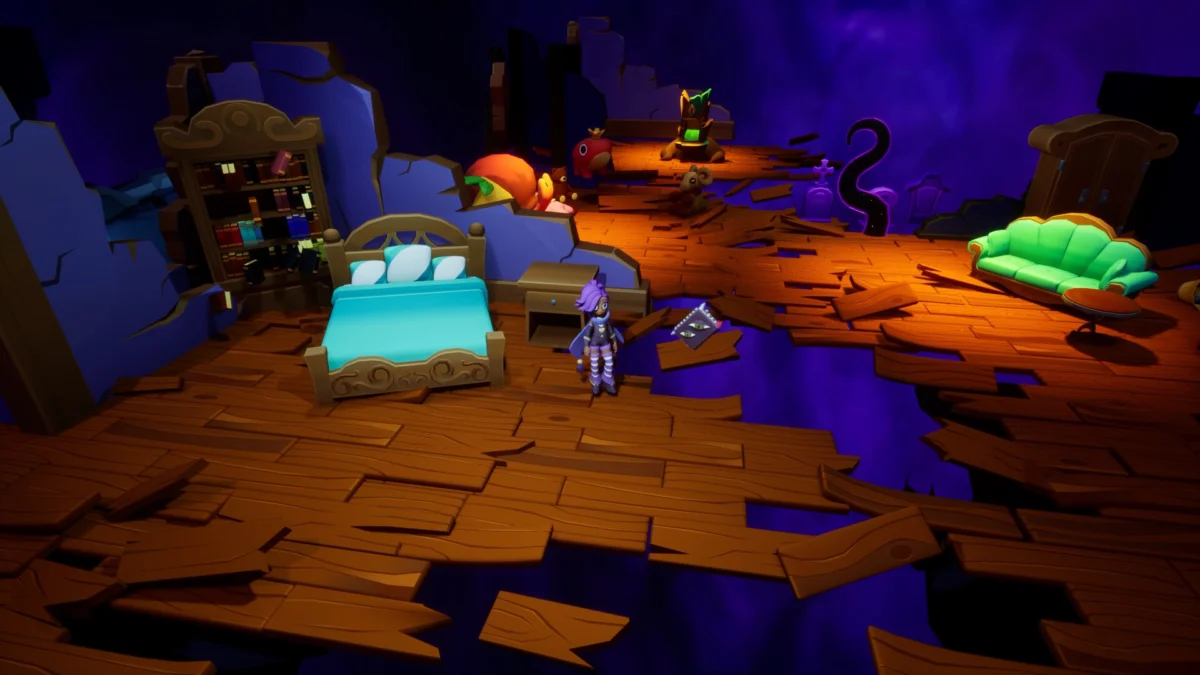
In the modern landscape of independent game development, the "inner world" has become a fertile ground for narrative innovation. Moving beyond the traditional tropes of high-fantasy quests or sci-fi warfare, a new wave of developers is looking inward, utilizing the interactive medium to explore the complexities of the human psyche. Among the most promising upcoming titles in this "empathy-core" genre is HeartWeaver, a 3D puzzle adventure that challenges players to navigate the fragmented, vine-choked corridors of a protagonist’s mind.
Revealed in greater detail during the recent Pocket Gamer Connects (PGC) event, HeartWeaver places players in the role of Ace, a character trapped within their own subconscious. The game is not merely a collection of environmental puzzles; it is a metaphorical journey toward healing, requiring players to confront repressed memories, manage volatile emotions, and contend with a personified inner critic.
Main Facts: The Architecture of ‘HeartWeaver’
HeartWeaver distinguishes itself through its ludonarrative approach—the idea that the gameplay mechanics themselves tell the story. Developed as a 3D adventure, the game’s primary objective is to guide Ace through a series of surrealist "mind-palaces" to achieve emotional reconciliation.
Core Gameplay Pillars
- Memory Restoration: Players must navigate worlds that represent specific life moments. Many of these are obscured by "vines"—a visual metaphor for repression and trauma—which must be cleared to reveal the truth of Ace’s past.
- Emotional Utility: Unlike traditional adventure games where tools are external (keys, hammers, or weapons), Ace’s "tools" are their emotions. Sadness, Fear, and Anger are not obstacles to be avoided but are granted specific mechanical functions to solve environmental puzzles.
- The Antagonistic Guide: The game introduces "Mark," a giant book monster. Mark serves as a personification of the "Inner Critic" or the "Superego," providing constant, often harsh, commentary that is frustratingly accurate, forcing the player to confront uncomfortable truths.
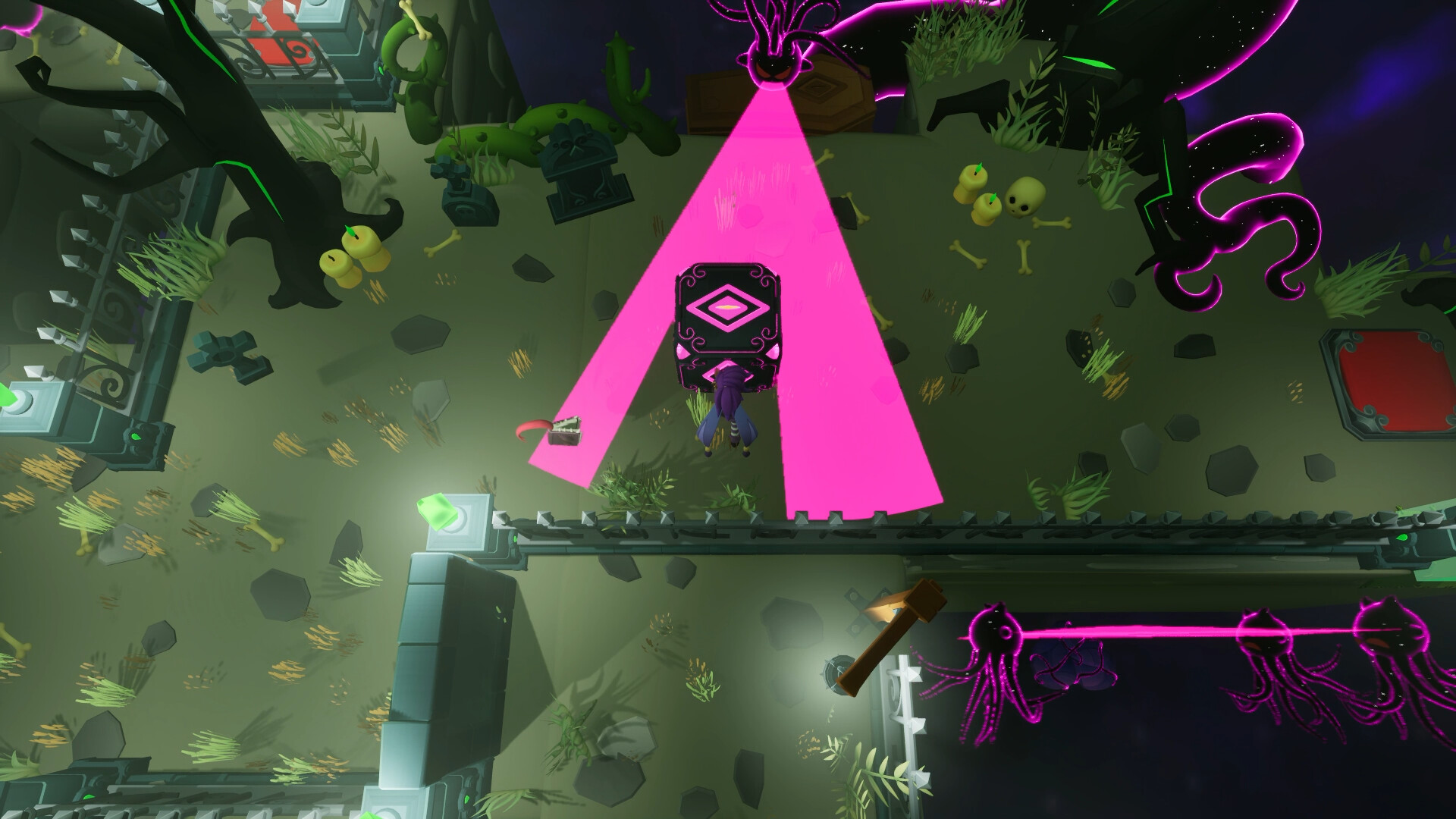
- Non-Violent Conflict Resolution: While the mind is populated by "octopus monsters" and other manifestations of distress, the game emphasizes solving these encounters through understanding and emotional management rather than combat.
Chronology: From Concept to Pocket Gamer Connects
The development of HeartWeaver follows a trajectory common to high-concept indie titles, beginning with a focus on psychological realism and transitioning into a polished, playable demo that has recently garnered industry attention.
Early Development and Vision
The project began with the intent to create a "therapeutic" gaming experience that didn’t feel like an educational tool. The developers sought to answer a specific question: How do you visualize the process of cognitive behavioral therapy in a 3D space? This led to the creation of Ace and the decision to set the entire game within a non-linear mental landscape.
The PGC Showcase
At the most recent Pocket Gamer Connects, HeartWeaver was presented to a broader audience of critics and industry professionals. The demo showcased at the event focused on the "fragmented" nature of the world. It allowed players to experience the jarring transition between peaceful, nostalgic memories and the "vine-infested" areas where Ace’s mind has locked away traumatic or difficult information.
The response at PGC highlighted the game’s unique character dynamics, particularly the relationship between the player and Mark the book monster. Observers noted that the game successfully creates a sense of "productive discomfort," mirroring the actual process of self-reflection.
Current Status: Demo and Wishlist
Following the success of the PGC showcase, the developers have released a public demo on Steam. This move is designed to build a community of "wishlisters" ahead of the full release, allowing the team to gather telemetry on how players interact with the more abstract puzzle mechanics.
Supporting Data: The Mechanics of Emotion
To understand the depth of HeartWeaver, one must look at how it categorizes and utilizes emotional states. The game’s "Ability System" is tied directly to Ace’s psychological state, a design choice that has been praised for its ingenuity.
The Emotional Ability Matrix
| Emotion | Mechanical Function | Psychological Metaphor |
|---|---|---|
| Sadness | Time Dilation / Slow Motion | The feeling of time dragging or "standing still" during depressive episodes. |
| Fear | Astral Projection / Leaving the Body | Dissociation and the "out of body" experience often associated with anxiety. |
| Anger | Kinetic Force / Pushing Objects | The externalization of frustration and the need to "push away" perceived threats. |
These mechanics are used to solve intricate 3D puzzles. For instance, a player might need to use "Sadness" to slow down a rapidly moving platform that represents a fleeting opportunity, or use "Fear" to scout a dangerous area without putting Ace’s physical (mental) form at risk.
The Role of Mark the Book Monster
Mark represents one of the most polarizing elements of the game’s design. As a giant book, he is the keeper of "rules" and "records." His harsh criticism is a deliberate design choice. In playtesting, players reported a genuine dislike for Mark, which the developers argue is the intended reaction. By making the inner critic "annoying" and "arrogant," the game forces the player to decide whether to succumb to that voice or move past it to find the truth.
Official Responses and Developer Philosophy
While the development team remains relatively small, their mission statement for HeartWeaver is clear. In statements following the PGC event, the lead designers emphasized that the game is not about "winning" against your mind, but "weaving" a better relationship with it.
"We didn’t want to make a game where you ‘kill’ your sadness or ‘defeat’ your anger," the developers noted during a panel discussion. "That’s not how mental health works. You have to use those emotions; you have to understand why they are there. The ‘vines’ in Ace’s mind are a defense mechanism. To heal, Ace doesn’t need to be a warrior; they need to be a weaver, re-integrating these lost parts of themselves."
Regarding the character of Mark, the team clarified that he is not a traditional villain. "Mark is the part of us that thinks it’s protecting us by being mean. He tells you that you’re failing because he’s afraid of you getting hurt. Dealing with Mark is about learning to listen to the truth in his words without letting his tone destroy your self-esteem."
Implications: The Rise of the ‘Mental Health’ Genre
The emergence of HeartWeaver reflects a broader trend in the gaming industry where "emotional literacy" is becoming a valued gameplay metric. This shift has several implications for the future of the medium.
1. Games as Supplemental Therapy
While HeartWeaver does not claim to be a medical tool, it follows in the footsteps of games like Celeste (anxiety) and Hellblade: Senua’s Sacrifice (psychosis). By providing a safe, interactive space to explore complex feelings, these games offer players a vocabulary for their own real-world experiences. The "Fear" mechanic (dissociation) in HeartWeaver is a particularly potent example of how games can explain complex psychological concepts through play.
2. The Evolution of Puzzle Design
The "puzzle-platformer" is one of the oldest genres in gaming. However, HeartWeaver suggests a move away from purely logic-based puzzles toward "empathy-based" puzzles. Success in the game requires the player to ask, "How is Ace feeling right now?" rather than just "Where does this block go?" This adds a layer of narrative depth that traditional puzzle games often lack.
3. Market Demand for "Meaningful Play"
The success of indie titles at events like Pocket Gamer Connects proves that there is a significant market for games that tackle heavy themes. Players are increasingly looking for experiences that resonate on a personal level. HeartWeaver’s focus on "repressed moments" and "fragmented worlds" taps into a universal human experience, suggesting strong potential for commercial and critical success upon its full release.
Conclusion: A Path Toward Healing
HeartWeaver stands as a testament to the power of indie games to tackle subjects that mainstream, AAA titles often avoid. Through its clever use of emotional mechanics, its challenging portrayal of the inner critic, and its beautiful, surrealist art style, it offers more than just entertainment—it offers a reflection.
As Ace moves through the vine-choked memories of their own life, players are reminded that the path to healing is rarely linear and often requires us to face the very things we have tried hardest to forget. With a demo currently available on Steam and a growing buzz within the industry, HeartWeaver is a title to watch for anyone interested in the intersection of interactive media and the human heart.
Availability Note: The ‘HeartWeaver’ demo is currently accessible on Steam, where players can also add the title to their wishlist to receive updates on the official release date and further development milestones.