Treasury of Folklore Series Culminates in Definitive Compendium, ‘Waterlands, Wooded Worlds and Starry Skies’
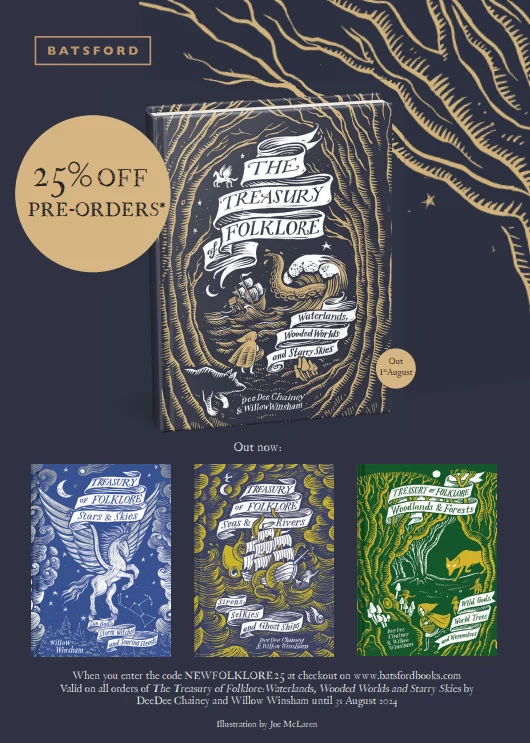
LONDON, UK – [Date of publication] – Nearly a decade after its initial conception, the acclaimed Treasury of Folklore series is set to culminate in a magnificent single-volume compendium, The Treasury of Folklore: Waterlands, Wooded Worlds and Starry Skies. Scheduled for release on August 1st, 2024, this highly anticipated "hefty tome" gathers the most beloved tales and insights from the original three best-selling books – Seas and Rivers, Trees and Woodlands, and Stars and Skies – into one beautifully bound collection. This special edition fulfills the authors’ initial vision of a comprehensive exploration of global folklore, celebrating the profound universality of human experience across diverse landscapes.
The new compilation promises to be more than just a collection of stories; it is an invitation to journey through the collective imagination of humankind, revealing how shared fears, dreams, and a sense of wonder shape our understanding of the world. Featuring the wonderful original illustrations of Joe McLaren, the book is designed to be both a beautiful addition to any library and a compelling conversation starter, connecting readers to the ancient narratives that continue to resonate in our modern lives.
A Decade of Discovery: The Chronology of a Folktale Phenomenon
The genesis of the Treasury of Folklore series by Dee Dee Chainey and Willow Winsham began almost a decade ago with an ambitious vision: to create a single, all-encompassing volume that would map the rich tapestry of folklore across every physical landscape inhabited by humans worldwide. This initial dream, however, soon proved too vast for a single book. The sheer volume and depth of material uncovered during their extensive research far surpassed what could be contained within one cover, necessitating a more focused, multi-volume approach.
The authors were profoundly inspired by the burgeoning online community surrounding the #FolkloreThursday hashtag, a vibrant digital movement that celebrates and shares traditional tales, myths, and legends from around the globe. This outpouring of interest affirmed their belief in the enduring power and relevance of folklore and solidified their desire to create something meaningful and lasting that reflected its unifying universality.
The subsequent release of the three individual books – Seas and Rivers, Trees and Woodlands, and Stars and Skies – was met with an overwhelmingly positive reception. Their popularity, described by the authors as both "surprising and heartwarming," underscored a deep public appetite for understanding the intricate connections between humanity and its environment through the lens of traditional narratives. The success of these volumes laid the groundwork for the ultimate realization of their original vision.
The idea for a compendium, bringing together the highlights of the series, emerged as a natural progression. This presented the perfect opportunity to revisit their initial goal and compile the essence of their work into a single, comprehensive volume. The process was meticulous, involving countless hours of re-reading and curating material from the existing texts "with fresh eyes." The challenge lay in selecting what to include and what to omit, ensuring that the new volume would flow seamlessly, encapsulate the series’ core themes, and still stand as a cohesive narrative entity that spans shared landscapes across time and place. The end result, according to the authors, has left them "blown away" and "utterly thrilled" to share this beautifully crafted volume, praising its substantial size, evocative cover, and the tactile pleasure of its "beautiful cream paper."
Unearthing Shared Humanity: Supporting the Universal Threads of Folklore
At the heart of the Treasury of Folklore series lies a profound quest for understanding: to explore how diverse human cultures forge customs, beliefs, and tales around the very places they inhabit. While the specific details of these narratives vary dramatically from one locale to another, the authors’ journey unequivocally revealed a fundamental truth – that, in countless ways, "we are all inherently the same." Across continents and cultures, humans share primal fears and dreams, irrespective of geographical location, societal customs, or the names given to the mythical creatures that populate their legends.

This universal thread manifests in our collective awe of the vast horizon and the desire for the treasures the world offers, our dread of the unknown as we huddle around campfires in the night, and our wonder at the eternity of time under ancient stars, pondering the fleeting nature of our own lives. The compendium aims to highlight these shared human experiences through its carefully selected extracts, which are divided into three thematic sections, each enriched by Joe McLaren’s captivating illustrations. While the book contains no new material, its curated selection provides a powerful testament to these shared human experiences, making it an invaluable resource for anyone seeking to explore the depths of global mythology.
From the Depths: Water Horses – Majestic and Malevolent
One of the book’s compelling sections delves into the perilous world of water horses, creatures of striking beauty and terrifying malevolence that lurk beneath the world’s lakes and waterways. These figures serve as potent cautionary tales, embodying the inherent dangers and mysteries of aquatic environments.
The most renowned of these is the Scottish Kelpie. Often conflated with other water horses, the kelpie specifically inhabits rivers, while its loch-dwelling counterpart, the each-uisge, is arguably more dangerous. A classic encounter involves a weary traveler, lured by the majestic appearance of a horse emerging from the water. Mounting it without caution, the traveler soon finds themselves irrevocably bound to the creature, dragged to a watery grave. Kelpies are often depicted as grey or white horses with dripping manes and tails, their beauty a deceptive façade. Folklore offers glimmers of hope for escape or temporary control; tales suggest a bridle marked with a cross might offer illusory taming, allowing a rider to compel the kelpie to work. However, this control is fleeting, and the creature inevitably returns to its watery domain, often taking its victim with it. The possibility of killing a kelpie, usually through the use of red-hot iron – a common weapon against many folkloric creatures – underscores the desperate measures required to combat such a formidable foe. The enduring cultural impact of the kelpie is powerfully showcased by the colossal 30-meter (98ft) tall sculptures near Falkirk, a modern tribute to a legend that has captivated the Scottish imagination since 2013, and its continued presence in contemporary literature, including works by Lari Don and J.K. Rowling. Interestingly, despite its prominence in Scotland, the kelpie and its variants are largely absent from English folklore.
Across the border in Wales, the Ceffyl Dwr fills this folkloric void. A staple of Welsh belief well into the 19th century, the Ceffyl Dwr exhibited regional variations. In the north, it was a shapeshifting spirit, often violent, adopting the form of a horse among others. In the south, it consistently appeared as a small, enchanting horse designed to lure unsuspecting individuals onto its back. Stories emphasize its incredible speed, capable of covering vast distances in impossibly short times before vanishing, leaving its hapless rider to drown. A peculiar exception to this grim fate involved clergymen of any creed, who were said to be able to ride the Ceffyl Dwr unscathed, while their accompanying clerks or deacons were abandoned or thrown into the water – a fascinating example of denominational equality in the face of supernatural peril.
In Scandinavia, the bäckahäst or ‘brook horse’ is a similarly treacherous figure. Most frequently sighted on foggy days, it is described as a majestic and luminous being. Like its Celtic cousins, it beguiles riders into mounting, only to plunge back into the water, its victims unable to dismount. Children are often depicted as its prey, perhaps to heighten the sense of vulnerability and tragedy. One popular tale recounts a group of boys playing on a frozen river who climb onto a beautiful bäckahäst. The last child, in awe, mispronounces a colloquial phrase, accidentally uttering "Jesus Christ." The horse, abhorring the holy name, instantly vanishes, leaving the boys with sore behinds but miraculously saved. While often associated with drowning, many bäckahäst tales surprisingly end with the riders surviving, and like the kelpie, it could occasionally be tricked into servitude. These water horses, in all their variations, serve as a stark reminder of the wild, untamed power of nature and the need for caution when venturing into its depths.
Guardians of the Green: Lords of the Wild – Shapeshifters and Protectors
Transitioning from watery depths to the verdant embrace of the forest, the compendium introduces readers to the Lords of the Wild – powerful spirits and creatures that govern the woodlands and jungles across the world. These entities embody the dual nature of the forest: a source of life and sustenance, but also a realm of danger and mystery.
Tapio, also known as Metsähine or Hiisi, is the revered king of the forest realm in Finnish folklore. He is depicted as a tall, thin figure, clad in ermine fur or moss, with a moss and lichen-capped head and bushy eyebrows, often sporting a great beard of straggling black hair. Like the Green Man figures of European lore, he is a personification and protector of the forest. From the front, he appears thoroughly human, but his back is said to resemble a gnarled tree, emphasizing his deep connection to the arboreal world. Hunters in ancient times would seek Tapio’s blessing before their chase, pledging respect for the forest, its creatures, and its delicate balance, believing he held sway over all forest fauna, capable of ensuring a bountiful hunt or cursing them to return empty-handed. His family includes his wife, Mielikki (benevolent) or Kuurikki (malevolent); his son, Nyrikki, who guides hunters with trail marks; and his daughter, Tulikki, who directs prey towards them. The Estonian equivalent is similar, but notably single-eyed, akin to the Norse god Odin. Tapio represents the ancient respect and spiritual connection indigenous cultures held for their natural environment.

From the Slavic lands emerges the Leshy (or leshii, lyeshy), a tutelary spirit of the woods, protector of trees and animals, particularly wolves in Ukraine and sometimes even serving the bear. The leshy, much like bears, hibernates in winter. Known by a multitude of names, these creatures are universally tied to the forests and sometimes associated with the Devil. Often likened to Greek satyrs, they are human from the waist up but possess horns, claws, and a bushy beard that can be forest green or moss-covered. They are master shapeshifters, capable of altering their size and form at will, appearing taller than trees or as small as a blade of grass, or conversely, massive from a distance but tiny up close. Leshies can mimic any human, animal, or plant in the forest. When in human form, tell-tale signs include a lack of eyelashes or brows, shoes worn on the wrong feet, clothing wrapped contrary to local fashion (e.g., Yaroslavl Province), or a single eye. All are covered in wild hair, and many possess the cloven feet associated with fauns or even the Devil. Some regional variations describe them with wings and a black furred tail, or dressed in white with swollen eyes.
Their presence can be terrifying: their bellowing whips up great winds, sending all creatures fleeing. If humans trespass uninvited and fail to heed their shrieking laughter, clapping, or howling, the leshy will confuse them, lure them off paths, and alter their surroundings, often leading to them being lost forever. As classic trickster figures, leshies can mimic voices, luring people to their demise, sometimes by tickling them to death. Their voices can also sound like creaking branches or rustling leaves. Crossing a leshy can result in illness, and they are notorious for abducting women and children. Farmers in the Olonetsky District of Russia, for example, would annually sacrifice a cow to appease leshies and protect their herds. Offerings of bread or tobacco, or a prayer before entering the forest, are believed to ensure safety. Leshies can live alone or with their families (lesovikha and children) in woodland huts, and are not above battling their own kind with clubs, ripping up trees in their wake. They are also gamblers, often bargaining with squirrels, and enjoy playing cards (excluding clubs, due to their resemblance to the Christian cross).
Protection against leshies, much like other fae folk, often involves disorienting them: turning one’s shirt inside out and shoes on the wrong feet is said to provoke laughter, guiding the lost back to the correct path. A more elaborate method involves stripping naked and re-donning clothes backwards. Swearing at them mercilessly is also said to make them leave, while the sign of the cross offers a more traditional banishment. For those daring enough to summon a leshy, the method is simple yet dangerous: cut young birch trees, arrange them in a circle with tops touching, stand in the center devoid of Christian symbols, and call out to the "grandfather of the forest." These "Lords of the Wild" underscore humanity’s ancient reverence and fear of the untamed natural world, and the intricate rituals developed to navigate its mysteries.
Gazing Skyward: The Moon and its Mythical Hare
Finally, the compendium directs our gaze skyward, to the greatest celestial body after the sun: the Moon. Across millennia and cultures, humankind has projected faces and images onto its luminous surface, generating a myriad of tales explaining these lunar markings and the Moon’s profound influence. One of the most widespread motifs is that of a rabbit or hare living on the moon, a phenomenon of pareidolia where lunar features like the Sea of Tranquility form the rabbit’s head, and the seas of Fertility and Nectar its ears.
In the Buddhist Sasa-Jātaka, the hare is a virtuous creature with three friends: an otter, a jackal, and a monkey. The hare instructs them on the importance of giving alms, especially on a forthcoming fast day. To test their sincerity, the deity Sakka, ruler of Trāyastriṃśa heaven and a protector of Buddhism, descends to Earth disguised as an old man, requesting food. The otter, jackal, and monkey readily provide what they have. However, the hare, possessing only grass, realizes it is unsuitable for a beggar. In an ultimate act of self-sacrifice, the hare offers itself upon a fire for Sakka to eat. Moved by such faithfulness, Sakka saves the hare and places its image on the moon for all to behold, or, in some versions, uses the essence of a squeezed mountain to draw the faithful hare for eternity. This powerful narrative underscores the Buddhist virtue of dāna (generosity) and selflessness.
Similar tales of a self-sacrificing hare exist in other cultures. In Sri Lanka, Buddha, lost and hungry in a wood, encounters a hare. When the hare offers to guide him, Buddha explains his poverty. The hare immediately offers itself as food, leaping into a fire Buddha creates. Buddha, using his divine powers, saves the selfless creature and sends it to reside on the moon. A parallel story from Japan, featuring Tsuki no Usagi (the Moon Rabbit), sees the Man in the Moon descend to Earth as a beggar. While other animals offer food, the rabbit, with only grass, sacrifices itself. The beggar transforms into his true form and takes the rabbit to live with him on the moon as recognition of its profound selflessness. This beloved Japanese tale is often shared with children during September, coinciding with the Harvest Moon and the Mid-Autumn Festival, linking celestial observation with seasonal celebrations and moral instruction.
In stark contrast to these tales of virtuous sacrifice, a South African legend attributes human mortality to the hare. The Moon dispatches Hare to deliver a message to humankind: just as she, the Moon, "dies" and is reborn each month, so too would humanity experience a cyclical death and return. However, the notoriously flighty Hare misdelivers the crucial message, informing people only that they would die, without the promise of return. Enraged upon discovering Hare’s error, Moon attacks him with a hatchet, intending to cleave him in two. She only succeeds in splitting his lip. In retaliation, Hare lashes out with his claws, scarring the Moon’s face – markings that are still visible today. This etiological myth explains not only human mortality but also the hare’s cleft lip and the dark shapes on the lunar surface, offering a compelling example of how different cultures interpret shared celestial phenomena through wildly divergent narratives, sometimes portraying the hare as a wise sacrifice, other times as a mischievous trickster.

Voices from the Creators: Official Responses and Vision
Dee Dee Chainey and Willow Winsham express immense satisfaction with the final product. "To say we have been blown away by the end result is an understatement," they shared, highlighting their deep personal connection to the project. They emphasize the physical beauty of the book, praising "the size and the cover combining everything and the beautiful cream paper: it is a ‘hefty tome’ indeed."
The authors are keen to clarify that while the compendium is a collection of previously published material, it is intended to serve a distinct purpose. "You will not find new material within this book," they stress, noting that the text is taken directly from the existing three books. However, its value lies in its curated presentation and physical form. It is designed to be "a beautiful addition to any book case or coffee table, a conversation starter, a way to connect." This new volume, with its three distinct sections and Joe McLaren’s exquisite original illustrations, offers a fresh perspective on the combined richness of the series, making it an ideal entry point for new readers and a cherished collector’s item for existing fans.
A Lasting Legacy: Implications for Folklore and Connection
The release of The Treasury of Folklore: Waterlands, Wooded Worlds and Starry Skies marks a significant milestone for the authors and for the broader appreciation of folklore. By bringing together these diverse narratives into a single, accessible volume, the compendium reinforces the series’ core mission: to illuminate the unifying universality of human experience through the lens of traditional tales. It serves as a powerful reminder that despite geographical and cultural distances, humans across the globe grapple with similar existential questions, express shared hopes and fears, and find meaning in the world through the act of storytelling.
This book is more than a compilation; it is a testament to the enduring power of folklore to connect us to our past, to each other, and to the elemental forces of nature and the cosmos. In an increasingly fragmented world, such collections become vital tools for fostering empathy, understanding, and a deeper appreciation for the rich tapestry of human culture.
The Treasury of Folklore: Waterlands, Wooded Worlds and Starry Skies is now available for pre-order and will be officially released on August 1st, 2024. For those eager to delve into these fascinating narratives, the book can be pre-ordered via Amazon UK and is also available at a 25% discount when ordering directly from Batsford Books using the code NEWFOLKLORE25.