"Orchid Rain on the Underground": Chris "Daze" Ellis Celebrates the Enduring Spirit of New York City at PPOW Gallery
New York, NY – PPOW Gallery is currently abuzz with the vibrant energy of "Orchid Rain on the Underground," the third solo exhibition by acclaimed artist Chris "Daze" Ellis. Running through April 25, 2026, this ambitious show is a profound exploration of Daze’s artistic journey, a testament to the enduring power of New York City’s cultural landscape, and a deeply personal homage to the era that forged his artistic identity. Featuring a dynamic new collection of paintings, a captivating multimedia installation, and a striking site-specific mural, the exhibition masterfully blends the raw, spontaneous spirit of 1970s and 80s graffiti with the meticulous precision of a career honed over five decades.
While the New York City that served as the crucible for Daze’s emergence as a fine artist might feel like a relic of a bygone era, "Orchid Rain on the Underground" emphatically argues for its persistent relevance. Through his revitalized artistic vision, Daze not only honors the foundational figures and iconic locations of his youth but also underscores their profound and ongoing influence on the city’s ceaseless creative pulse. The exhibition is a vivid reminder that the echoes of the past continue to resonate, shaping the contemporary artistic dialogue and inspiring new generations.
A Journey Rooted in the Concrete Jungle: From Subway Cars to Gallery Walls
Chris "Daze" Ellis, born in Brooklyn in 1962, found his artistic awakening amidst the electrifying milieu of the mid-1970s. While attending the High School of Art and Design, he was deeply inspired by the pioneering graffiti artists who were transforming the city’s public spaces into sprawling canvases. Figures like Blade, Lee Quiñones, and the visionary PHASE 2 became his early muses, their bold lettering and intricate designs igniting a passion that would define his life’s work.
His formative years were intrinsically linked to the burgeoning nightlife and artistic hubs that pulsed through the city. Daze was a familiar presence in establishments that would later achieve legendary status: the Lit Lounge in the East Village, Danceteria on West 21st Street, and the iconic Mudd Club in Tribeca. These were not mere watering holes; they were vibrant incubators of social and artistic experimentation, often serving a dual role as art galleries and performance spaces. This dynamic environment, teeming with creative energy and cross-pollination of ideas, became a fundamental wellspring for Daze’s early artistic endeavors.
By the early 1980s, Daze began a pivotal transition. The exhilarating act of tagging subway cars, a hallmark of the graffiti movement, evolved into a more deliberate and structured studio practice. This shift was not a renunciation of his roots, but rather an expansion of his artistic vocabulary, a conscious effort to encapsulate the very essence of the city’s ethos within a gallery context. He sought to translate the raw power and immediacy of the streets into a more refined and enduring form, a challenge he has met with remarkable success throughout his career.
A Tapestry of Influences: Urban Realism Meets Abstract Expressionism
"Orchid Rain on the Underground" reveals a rich tapestry of artistic influences that have shaped Daze’s unique aesthetic. His works pay homage to the early 20th-century urban realist painters, drawing inspiration from the Ashcan School’s John Sloan and the WPA era’s Reginald Marsh. These artists, known for their unflinching portrayals of everyday life in New York City, provided Daze with a framework for appreciating the city’s streets and subways as vital sites of creative exploration. He recognized the profound artistic potential inherent in the urban environment, the narratives woven into the fabric of its infrastructure and the lives of its inhabitants.
Simultaneously, Daze’s canvases resonate with the gestural energy and lyrical abstraction found in the works of Abstract Expressionist masters like Joan Mitchell and Willem De Kooning. This potent synthesis is evident in his signature style: bold, sweeping strokes of acrylic paint intermingle with the sharp, precise lines of spray paint. This dynamic interplay allows him to capture both the raw energy of the subway system and the intricate details of train car interiors, bustling tunnels, and stoic stations. The result is a visual language that is both dynamic and deeply evocative, a reflection of the multifaceted character of New York City itself.
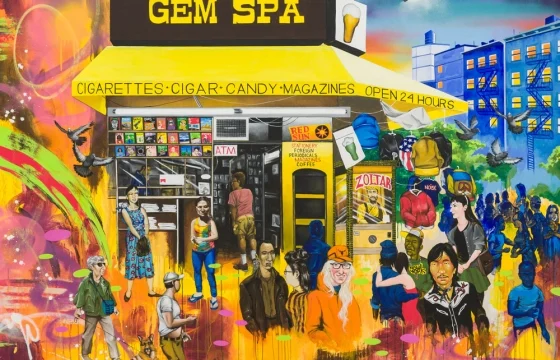
One of the exhibition’s standout pieces, "Gem Spa In the 80s" (2025), exemplifies this masterful fusion. The painting vividly recreates the iconic newspaper stand and candy store that once stood at the bustling corner of St. Mark’s Place and Second Avenue. Gem Spa was more than just a local business; it was a legendary nexus for the city’s diverse subcultures, a place where artistic and intellectual currents converged. Its significance is underscored by its mention in the works of literary giants like Jack Kerouac and Allen Ginsberg, the latter famously dubbing it a "nerve center" of the city.
In "Gem Spa In the 80s," Daze populates the scene with figures who were pivotal in his own life and the broader cultural landscape. Emerging from the vibrant crowd in the foreground are recognizable visages of critic and curator Carlo McCormick and artist Martin Wong, both influential figures who shared Daze’s passion for the city’s artistic undercurrents. Their inclusion transforms the painting into a poignant portrait of a specific time and place, imbued with personal significance and historical weight.
Beyond specific landmarks and individuals, Daze’s work often explores the duality of urban existence. In several pieces, vibrant, technicolor orchids erupt from heaps of urban rubble. These striking juxtapositions serve as powerful metaphors, symbolizing optimism blossoming amidst inequality and the inherent beauty that can emerge from destruction. The recurring motif of tropical flora, often mingled with local flowers from the artist’s upstate New York home, functions as a double-edged sword: a poignant memorial to what has been lost and a hopeful testament to the enduring beauty and creativity that can still be discovered in every corner of the city.
An Immersive Experience: Bridging the Gap Between Art and Environment
"Orchid Rain on the Underground" transcends the traditional gallery experience by actively engaging the viewer and blurring the lines between the artwork and its environment. A significant component of the exhibition is a breathtaking site-specific mural that adorns the gallery walls. This installation, an element typically reserved for outdoor urban spaces, is brought indoors, transforming a hallway into a dynamic canvas. The mural acts as a visual prelude, guiding visitors towards the exhibition’s culmination: a meticulously crafted multimedia installation.
This immersive environment aims to transport viewers directly into the heart of Daze’s formative years. Upon entering the final room, visitors are greeted by a meticulously curated scene that evokes the vibrant energy of the clubs and nightlife that shaped his artistic development. A light-up dance floor pulsates with energy, a disco ball casts its shimmering light, and actual subway car seats offer a place to rest and reflect. The sonic landscape is equally crucial, featuring a carefully selected track that seamlessly fuses house, disco, hip-hop, and club music, sounds that defined the era and fueled Daze’s creative spirit.
This installation is not merely a decorative element; it is a profound statement about the sources of creative inspiration. It emphasizes the sense of freedom, spontaneity, and boundless possibility that characterized these social and artistic spaces. For Daze, these environments were not just backdrops; they were integral to his personal and artistic evolution, shaping his perspective and fueling his artistic endeavors.
By weaving together elements from across his illustrious career, "Orchid Rain on the Underground" presents a comprehensive and deeply resonant portrait of Chris "Daze" Ellis. The exhibition is a powerful affirmation of his lifelong dedication to exploring the multifaceted realities of daily life in New York City. More than just a retrospective, it is a vibrant and ongoing dialogue with the city, a heartfelt tribute to the people, places, and enduring spirit that collectively comprise its extraordinary cultural heartbeat. The exhibition serves as a powerful reminder that even as the city evolves, its foundational creative energy, nurtured by artists like Daze, continues to thrive and inspire.