Navigating the Labyrinth of Character Archetypes: When "Charming Weirdo" Meets Reality in TTRPGs
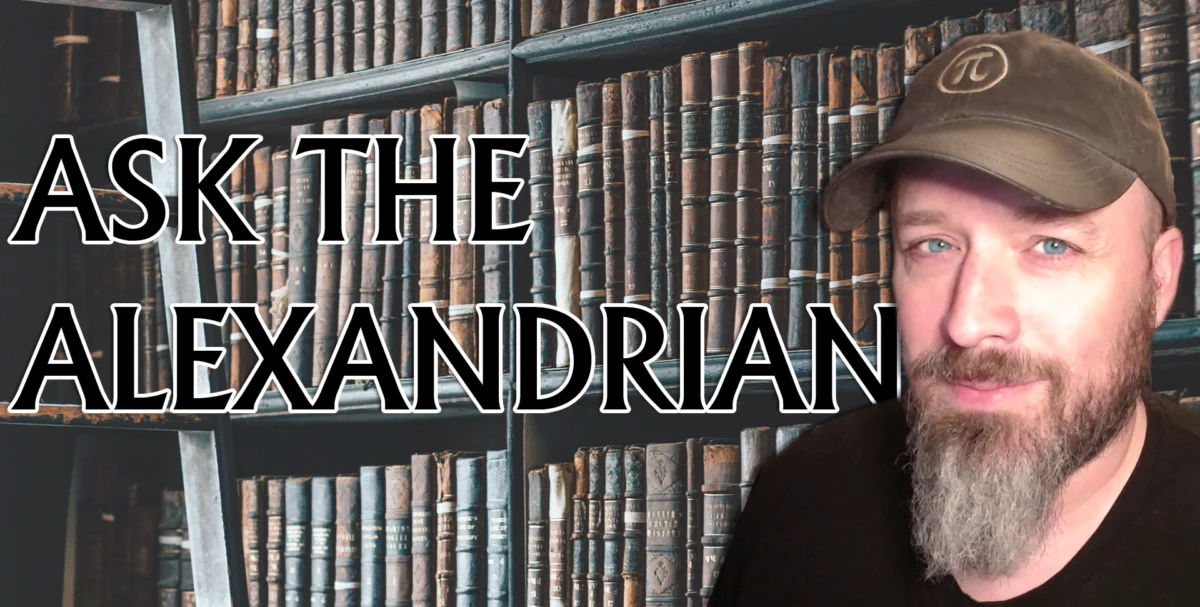
[City, State] – [Date] – The intricate world of tabletop role-playing games (TTRPGs) thrives on creativity, collaborative storytelling, and the vibrant interplay between player imagination and game master (GM) adjudication. Yet, even in these realms of boundless possibility, conflicts can arise when a player’s character concept, no matter how well-intentioned, collides with the logical consistency and established tone of the game world. A recent query submitted to the popular "Ask the Alexandrian" column, a renowned resource for TTRPG advice, vividly illustrates such a dilemma, highlighting the nuanced challenges of bringing unique character archetypes to life at the gaming table.
The core of the issue revolves around a player whose character was envisioned as "very strange, but in a charming way." However, initial in-game interactions saw non-player characters (NPCs) reacting with discomfort and dismissal rather than the anticipated endearment. This scenario brings into sharp focus the delicate balance between player agency, GM narrative control, and the often-unspoken social contract governing TTRPG sessions.
The Genesis of a Social Misstep: A Chronology of In-Game Events
The specific incident unfolded during the inaugural session of a new campaign, as detailed by "B.," the Dungeon Master (DM) seeking guidance. The player’s character, a newcomer to the campaign’s setting, immediately showcased her peculiar nature in encounters with significant NPCs.
Her introduction to the chief of police was marked by an unsettling observation: she informed him that his eyes reminded her of her deceased mother. This deeply personal and unconventional comment, delivered without apparent malice but certainly without social decorum, immediately set an unusual tone.
The character’s subsequent interaction with another NPC further solidified her reputation for eccentricity. She reportedly "ran in circles" around the individual before abruptly sitting cross-legged on the floor in front of them and inquiring about their favorite color. Such a sequence of actions, while perhaps intended to convey whimsical charm, demonstrably failed to elicit the desired response.
The DM recounted the NPCs’ reactions as decidedly negative, though not overtly hostile. Instead, their responses were characterized by a clear sentiment of "I don’t want to talk to this nutjob," indicating profound discomfort and a desire to disengage. It was at this juncture that the player interjected, reminding the DM that her character was designed to be "strange, but charming," implying a disconnect between the DM’s portrayal of NPC reactions and her character’s intended social effect.
This direct challenge prompted the DM to question their adjudication: "Should I just have NPCs find her antics charming, even if I don’t?" The query underscores a fundamental tension in TTRPGs: how to reconcile a player’s creative vision with the GM’s responsibility to portray a consistent and believable game world.
Deconstructing the "Feral Weirdo" Archetype: Supporting Data and Cultural Context
The Alexandrian, in its response, astutely identified the player’s potential aim: what it terms the "feral weirdo" or "hyper-kooky" archetype. This character type, frequently encountered in various forms of popular media, particularly anime, often features individuals who operate outside conventional social norms, exhibiting bizarre behaviors, unconventional thought processes, and an often-disarming innocence.
Characteristics of the Archetype:
- Unconventional Social Cues: These characters often misinterpret or outright disregard standard social etiquette. Their communication might be direct to the point of bluntness, or indirect to the point of being cryptic.
- Whimsical or Eccentric Behavior: Actions that appear strange or irrational to others are often simply a reflection of their unique internal logic or way of experiencing the world. This can range from unusual hobbies to peculiar physical habits.
- Underlying Good Nature (Often): Crucially, the "charm" aspect usually stems from an underlying innocence, kindness, or genuine curiosity that offsets their oddities. They are rarely malicious, though their actions can be inadvertently disruptive.
- Narrative Arc of Acceptance: In established fiction, the audience is often privy to the character’s internal world or observes how other, more conventional characters gradually come to appreciate their unique qualities, eventually finding them endearing.
Examples cited by The Alexandrian include Anya from Buffy the Vampire Slayer and Luna Lovegood from Harry Potter, both characters who, despite their initial social awkwardness or bizarre pronouncements, eventually become beloved figures due to their loyalty, unique perspectives, and inherent good hearts. Anime provides numerous examples, such as Mako Mankanshoku from Kill la Kill, and characters from series like The Melancholy of Haruhi Suzumiya or Nichijou, where hyper-kooky behavior is often central to the comedic tone.
The Discrepancy Between Fiction and TTRPGs:
The crucial difference lies in the narrative control. In a novel or film, the author or director dictates how an audience perceives a character’s strangeness – whether it’s charming, alarming, or merely peculiar. The audience is told or shown that Luna Lovegood is ultimately a good and charming person, despite her radish earrings and belief in Nargles. This "authorial intent" directly translates into audience reception.
In a TTRPG, however, the "author" is split between the player (character intent) and the GM (world reaction). A player’s declaration that their character is "charming" does not automatically make it so within the game world. NPCs, as extensions of the GM’s world-building, react based on their own simulated psychology, cultural norms, and the immediate context of the interaction. Running in circles around a police chief and asking about favorite colors, regardless of underlying intent, is likely to be perceived as bizarre, disrespectful, or even mentally unstable by a typical NPC, especially one in a position of authority.
The Psychology of Social Perception:

Human social interaction is heavily reliant on unspoken rules, non-verbal cues, and shared understanding. When these are violated, initial reactions are often caution, confusion, or discomfort. Charm, especially in the face of strangeness, is rarely an instantaneous phenomenon. It typically requires:
- Context: What is considered charmingly eccentric at a bohemian art gallery opening might be perceived as deeply inappropriate during a formal diplomatic meeting or an urgent police investigation.
- Reputation/History: Characters who are already known for their harmless eccentricities might be indulged. A stranger behaving bizarrely, however, lacks this social capital.
- Demonstrated Intent: True charm often emerges when the "weirdness" is accompanied by genuine kindness, wit, or a unique contribution that benefits others, gradually earning trust and affection.
For a character to be "charming despite their strangeness," their charm needs to be demonstrated through their actions and the positive impact they eventually have, rather than simply asserted.
Expert Guidance: Official Responses and Best Practices
The Alexandrian’s advice to the struggling DM is rooted in principles of clear communication and collaborative storytelling, presenting two primary paths forward:
1. Acknowledging Tonal Mismatch: When the Archetype Doesn’t Fit
The first, and sometimes necessary, option is for the DM to have a frank, non-judgmental discussion with the player if the "feral weirdo" archetype cannot be adequately supported within the current campaign’s tone.
Key Elements of the Discussion:
- Focus on the Game’s Tone: The conversation should emphasize that the issue isn’t the character concept itself, which is valid and fun in other contexts, but rather a "tonal mismatch" with the specific campaign being run. If the game is grim, realistic, or focused on intricate social maneuvering, a character whose primary mode of interaction is hyper-kooky might disrupt the immersion for everyone.
- Avoid Judgment: The DM should assure the player that they did nothing "wrong" by aiming for this archetype. Creativity should always be encouraged. The problem lies in the execution within a specific narrative framework.
- Explain Potential Frustration: The DM can explain that constantly forcing NPCs to react in ways that contradict their established personalities or the game’s tone will be frustrating for the DM, and constantly receiving negative reactions will be frustrating for the player. This shared frustration indicates a fundamental misalignment.
- Offer Alternatives: If the character cannot be supported as-is, the DM might suggest ways to tweak the character (e.g., less overtly strange, or having their strangeness manifest in ways that are more intriguing than off-putting) or offer the player the opportunity to create a new character more aligned with the campaign’s tone.
According to Dr. Evelyn Reed, a fictional TTRPG design ethicist at the Institute for Collaborative Narrative Studies, "The ‘session zero’ concept is paramount here. It’s the foundational social contract. When a player’s character concept fundamentally diverges from the established tone post-session zero, a re-evaluation is crucial to preserve the integrity of the shared experience for all participants."
2. Embracing the Archetype: A Two-Way Contract for Success
If the DM, understanding the archetype, is willing to incorporate it into their game, another frank discussion with the player is still essential. This conversation establishes a "two-way contract," outlining the responsibilities of both player and DM to make the archetype work harmoniously.
Player Responsibilities:
- Intentional Charm, Not Just Strangeness: The player needs to actively strive to make their antics genuinely whimsical and charming, not merely disruptive or nonsensical. This requires introspection about why the character does what they do and how it could be interpreted as endearing. For instance, a strange question delivered with genuine, innocent curiosity might be received differently than one that feels like a deliberate attempt to provoke.
- Acceptance of Varied NPC Reactions: The player must understand and accept that not all NPCs, and certainly not all initially, will find their character charming. Just like Luna Lovegood had to interact with Draco Malfoy, and Mako with Nanon and Nui, the character will face skepticism, confusion, and even disdain from some. This creates opportunities for character growth and meaningful social arcs.
- Earning Charm: The player should recognize that charm, particularly for an eccentric character, is often earned through consistent good intentions, surprising insights, or acts of unexpected kindness, rather than being an inherent trait.
DM Responsibilities:
- Promise of Acceptance: The DM must promise that some NPCs will eventually find the character charming, intriguing, or at least tolerable. This doesn’t mean every NPC will immediately adore them, but that the world won’t be universally hostile or dismissive.
- Facilitating Opportunities for Charm: The DM should create scenarios where the character’s unique perspective or peculiar methods might actually be advantageous or endearing. Perhaps a reclusive scholar appreciates their unconventional approach, or a child is fascinated by their odd behavior.
- Integrating Quirks into the Narrative: The DM can weave the character’s unique traits into the ongoing story, allowing their strangeness to contribute to plot developments or character interactions in meaningful ways.
If the DM finds they cannot realistically commit to creating opportunities for the character’s charm to blossom, or if the archetype truly clashes with their vision, then revisiting the "tonal mismatch" discussion is necessary.
The Power of Direct Communication: "What Is Your Goal?"
Beyond the specific archetype, The Alexandrian offers a universally applicable piece of advice: when a DM doesn’t understand a player’s character concept or the rationale behind their actions, the most effective approach is to simply ask, "What is your goal?" or "What are you aiming for?"
This direct inquiry bypasses assumptions and opens a channel for clarifying player intent. Using analogies to characters from other media, as demonstrated by The Alexandrian in identifying the "feral weirdo" archetype, can be an incredibly efficient way to establish a shared understanding. It provides a common vocabulary and allows both player and DM to align their expectations regarding how the character should behave and how the world should react to them.
Broader Implications for Collaborative Storytelling
The "charming weirdo" dilemma transcends this specific scenario, offering valuable insights into the broader dynamics of TTRPGs:
- The Importance of Session Zero: This incident highlights the critical role of a "session zero," a pre-game meeting where players and DMs discuss expectations, campaign tone, character concepts, and potential boundaries. Addressing such archetypes and their potential fit early on can prevent friction later.
- Balancing Player Creativity and World Consistency: GMs are custodians of the game world’s internal logic. While encouraging player creativity, they must also ensure that NPC reactions and world events remain consistent with established norms, even if those norms are unusual.
- Evolving Character Arcs: Characters, like people, are not static. The "charming weirdo" archetype often thrives on an arc of initial misunderstanding followed by gradual acceptance and even admiration. This journey provides rich storytelling opportunities.
- The Collaborative Nature of "Charm": Charm, especially in a TTRPG, is not solely determined by the player’s declaration but is a co-created experience between the player’s portrayal, the DM’s adjudication of reactions, and the developing narrative.
Ultimately, the success of a character like the "charming weirdo" in a TTRPG hinges on mutual understanding and a willingness from both the player and the DM to collaborate. Through open dialogue, clear expectations, and a shared commitment to the campaign’s narrative, even the most unconventional characters can find their place and truly flourish, proving that strangeness, when handled with care, can indeed be profoundly charming.