Talisman Returns: Avalon Hill Unveils Fifth Edition of Classic Fantasy Board Game
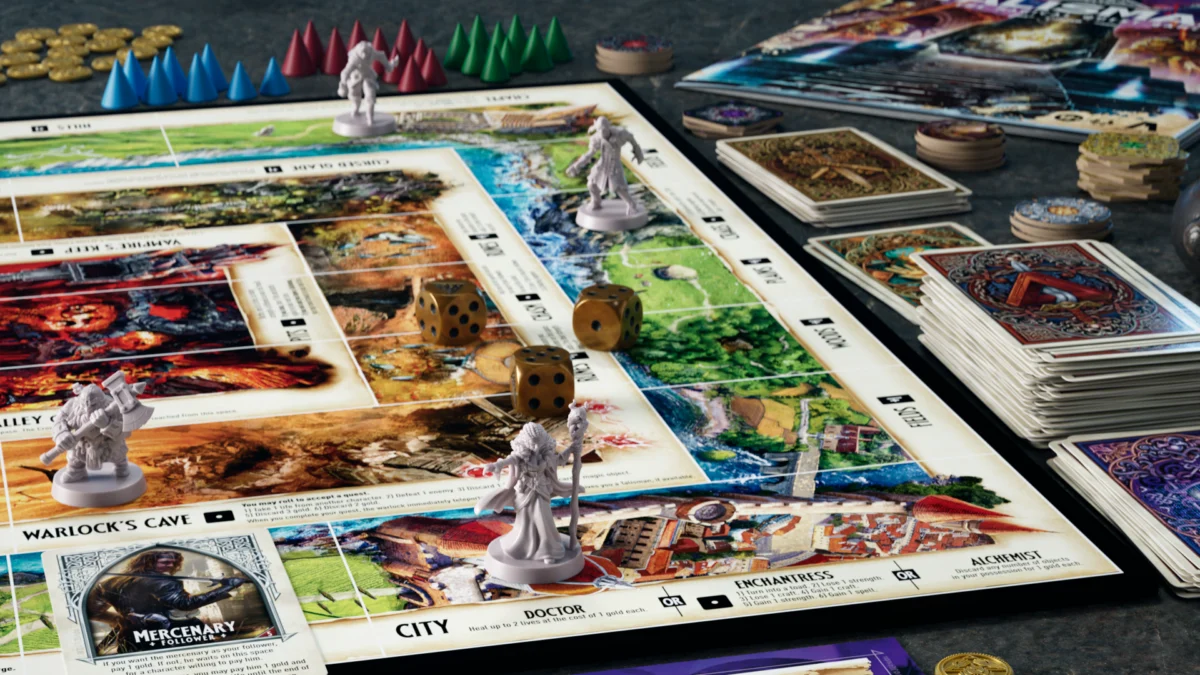
The venerable fantasy adventure board game, Talisman, is set to embark on a new quest this summer with the announcement of its fifth official edition. Titled "Talisman: The Magical Quest Board Game – 5th Edition," the highly anticipated release comes courtesy of Avalon Hill, a publisher renowned for its atmospheric and engaging titles such as the popular horror series Betrayal at House on the Hill. This latest iteration promises to streamline the classic experience while delivering a fresh visual identity, aiming to captivate both long-time devotees and a new generation of adventurers.
Scheduled for release on August 1st with a retail price of $60 (£47), the 5th Edition signals a significant milestone for a game that has charmed players for over four decades. As players once again vie for the mythical Crown of Command, the core journey through enchanted lands remains, but with modern refinements and a commitment to accessibility.
Main Facts: A New Chapter for a Legendary Quest
Talisman, originally conceived in 1983, has long held a unique position in the pantheon of fantasy board games. Its premise is elegantly simple yet endlessly engaging: two to six players assume the roles of classic fantasy archetypes – from valiant warriors and cunning thieves to mystical sorceresses and enigmatic ghouls – all striving to be the first to reach the coveted Crown of Command, located at the very heart of the game board. This journey is not merely a race; it’s an epic odyssey filled with perilous encounters, magical discoveries, and strategic decisions.
The 5th Edition, under the stewardship of Avalon Hill (a subsidiary of Wizards of the Coast), aims to refresh this beloved formula. Key features announced include:
- A Roster of Twelve Diverse Characters: Players will choose from a vibrant selection of heroes and anti-heroes, each possessing unique statistics and abilities that dictate their approach to the magical realm. Confirmed characters include the iconic Thief, Monk, Warrior, Ghoul, and Sorceress, promising a variety of playstyles and replayability.
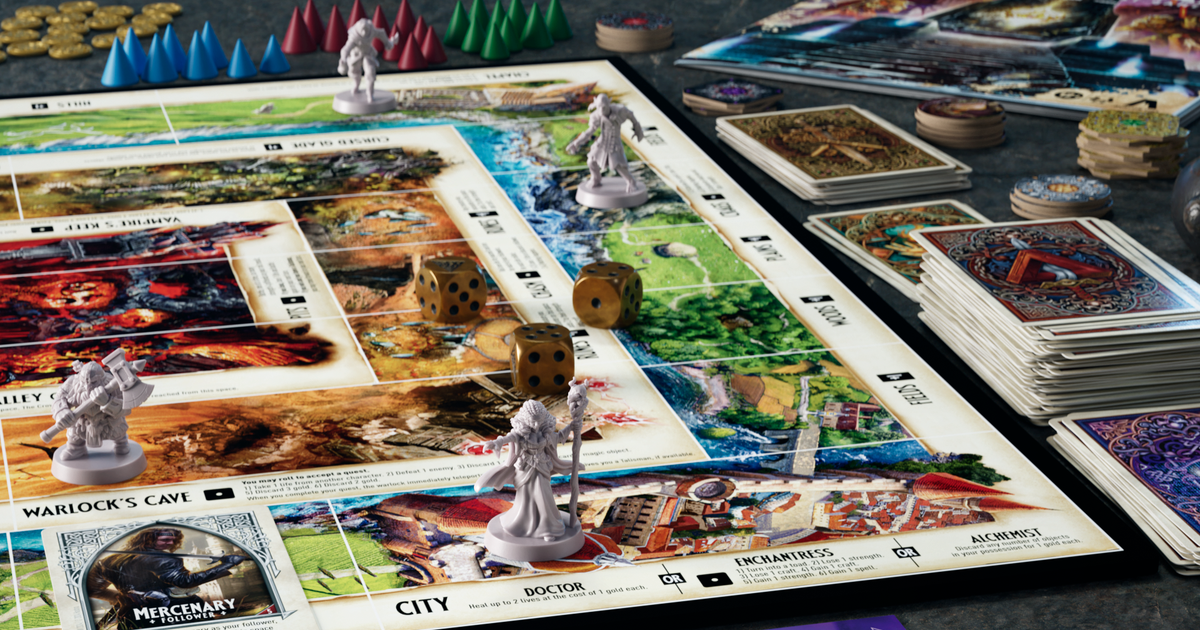
- Revitalized Artwork and Components: The entire game will boast brand new artwork, breathing contemporary life into the fantastical world of Talisman. This visual overhaul extends to updated components, ensuring a premium tactile experience for players.
- One Hundred New Adventure Cards: Central to Talisman’s unpredictable charm are its Adventure cards, which dictate the events and encounters players face as they traverse the board. The 5th Edition introduces 100 entirely new cards, ensuring fresh narratives and challenges even for seasoned players.
- Streamlined Gameplay: Perhaps the most significant mechanical change, Avalon Hill has committed to a "streamlined" gameplay experience. While specific details remain under wraps, this initiative is intended to make the game more accessible to less experienced players, potentially reducing complexity without sacrificing depth.
- Avalon Hill’s Proven Track Record: The choice of Avalon Hill as publisher instills confidence. Known for developing immersive narrative experiences like Betrayal at House on the Hill, their involvement suggests a focus on storytelling, thematic consistency, and polished production values.
The core objective remains unchanged: navigate the board’s concentric rings, gather power, overcome foes, and ultimately claim the Crown of Command to eliminate all other challengers. This blend of exploration, character progression, and direct player interaction has been Talisman’s enduring appeal, and the 5th Edition looks set to honor that legacy while paving the way for its future.
Chronology: A Journey Through Talisman’s Enduring Legacy
The story of Talisman is as rich and winding as the quests within its magical realm, spanning over four decades and multiple publishers. Its evolution reflects the broader history of tabletop gaming itself, from its humble origins to its current status as a global phenomenon.
The Genesis: Games Workshop’s Early Fantasy Vision (1983-2008)
Talisman first materialized in 1983, a pivotal year for tabletop gaming. Published by the then-fledgling Games Workshop, a company that would soon dominate the miniatures wargaming scene with Warhammer, Talisman was designed by Robert Harris. It arrived at a time when fantasy role-playing games like Dungeons & Dragons were booming, and board games offered a more structured, accessible way to explore similar themes.
The original Talisman captured the imagination with its unique blend of dice-rolling, card-drawing, and character progression. Players were immediately drawn to its simple yet addictive "roll and move" mechanics combined with the thrill of discovering new items, spells, and encounters. The game’s iconic circular board, divided into distinct regions (Outer, Middle, Inner), provided a clear visual progression toward the ultimate goal. Games Workshop released several expansions during this era, including The Dungeon, The City, and The Dragon, each adding new areas, characters, and challenges, significantly expanding the game’s replayability and lore. The game went through second and third editions, refining rules and updating components, but always retaining its core spirit of high-fantasy adventure. This era established Talisman as a beloved classic, a gateway game for many into the broader world of tabletop fantasy.
The Fantasy Flight Games Era: Refinement and Expansion (2008-2020s)
In 2008, the publishing rights to Talisman transitioned to Fantasy Flight Games (FFG), a company known for its lavish production values, thematic depth, and often intricate rule sets. FFG’s acquisition marked a new chapter, beginning with a revised version of the Fourth Edition. This iteration became widely regarded as the definitive modern version of the game.
FFG brought its characteristic attention to detail, enhancing the artwork, improving component quality, and clarifying rules. More importantly, FFG embarked on an ambitious expansion schedule, releasing a staggering array of add-ons that dramatically expanded the Talisman universe. Expansions like The Reaper, The Frostmarch, The Blood Moon, The Dragon, The Sacred Pool, The Highland, The City, The Dungeon, and The Cataclysm introduced new regions, characters, cards, and mechanics, often adding layers of strategic complexity and thematic richness. Each expansion felt like a fresh injection of content, ensuring that the game remained vibrant and continuously offered new experiences.
During this period, Talisman also saw successful digital adaptations developed by Nomad Games, bringing the classic experience to PC, mobile, and consoles. These digital versions introduced the game to a wider audience and allowed fans to play even when physical gatherings weren’t possible, further cementing Talisman’s place in modern gaming. Fantasy Flight Games’ stewardship was instrumental in solidifying Talisman’s reputation as a robust, expandable, and endlessly replayable adventure game, cultivating a dedicated global fanbase.
The Transition to Avalon Hill: A New Dawn
The shift from Fantasy Flight Games to Avalon Hill for the 5th Edition represents another significant turning point. While the exact reasons for the IP transfer are often complex, involving licensing agreements and corporate strategies, it positions Talisman within the portfolio of Wizards of the Coast, Avalon Hill’s parent company. This move places Talisman alongside other iconic fantasy properties like Dungeons & Dragons and Magic: The Gathering, suggesting a concerted effort to leverage and grow its fantasy gaming offerings. Avalon Hill, with its own rich history dating back to 1958 and a reputation for strategic and thematic games, is well-equipped to guide Talisman into its next era, balancing reverence for its past with an eye toward future innovation and accessibility.
Supporting Data: The Enduring Appeal and Mechanics of Talisman
Talisman’s longevity is a testament to its compelling gameplay loop and the potent fantasy it evokes. At its heart, the game is a journey of self-improvement and competitive exploration, underpinned by mechanics that balance strategy with the unpredictable thrill of adventure.
The Core Gameplay Loop: Rings, Characters, and Progression
The game board is ingeniously designed with three concentric rings: the Outer Region, the Middle Region, and the Inner Region, culminating in the Crown of Command. Players begin in the Outer Region, a relatively safe starting zone, and must progressively move inward. To advance, they typically need to acquire a Talisman artifact and overcome various challenges, eventually crossing the Portal of Power to reach the inner sanctum.
Character selection is foundational to each game. The 5th Edition will offer 12 distinct playable characters, each embodying a classic fantasy archetype. These characters are not mere cosmetic choices; they come with unique starting statistics (such as Strength and Craft, used for combat and magical prowess, respectively) and special abilities. For instance, a Warrior might excel in Strength-based combat, while a Sorceress would dominate with Craft and spellcasting. A Thief might have abilities to steal from other players, adding a layer of direct interaction and potential conflict. This variety ensures that each playthrough feels fresh, as different characters necessitate different strategies for advancement.
As players traverse the board, they encounter various spaces that trigger events, lead to battles, or allow them to draw Adventure cards. These cards are the lifeblood of the game, introducing a vast array of equipment (weapons, armor), abilities (spells, unique talents), and allies (companions who offer bonuses). Gaining these advantages is crucial for overcoming the escalating challenges of the inner rings. Success often hinges on skill checks, where players roll dice and add their character’s relevant statistics, testing their luck and developed power.
Encounters, Challenges, and Player Interaction
The world of Talisman is far from peaceful. Players will frequently encounter a "rogue’s gallery of monsters" through Adventure cards. These creatures range from goblins and brigands to mighty dragons and demonic entities, each requiring a successful combat roll to defeat. Victorious players often reap rewards, such as gold, magic items, or even experience points that allow them to improve their character’s stats.
Beyond monsters, Adventure cards can introduce diverse events: discovering hidden treasures, encountering benevolent strangers, falling victim to curses, or finding the crucial Talisman artifacts needed to progress. The ultimate goal, beyond merely reaching the center, often involves completing a specific "Talisman quest" – a thematic objective that grants access to the board’s inner world, leading to the final confrontation.
A defining characteristic of Talisman is its player-versus-player combat. Unlike many cooperative fantasy games, Talisman is fundamentally competitive. Players can actively challenge one another to combat, often with significant consequences for the loser, such as being forced to "fall back" to a previous space, losing an item, or even a life. This direct interaction adds a layer of tension and strategic maneuvering, as players must not only contend with the board’s challenges but also with their rivals. The player who successfully navigates these perils, reaches the Portal of Power, and claims the Crown of Command gains the ultimate power to eliminate all other players, securing victory.
Artistic Evolution and Community Legacy
The aesthetic presentation of Talisman has always been integral to its appeal. From Games Workshop’s distinctive early fantasy art to Fantasy Flight Games’ more refined and often grimdark illustrations, the artwork has shaped the game’s identity. The promise of "brand new artwork and updated components" for the 5th Edition is a significant draw. This means a fresh visual language that can attract new players while potentially reinterpreting familiar characters and creatures for long-time fans. The quality of components, from card stock to miniatures (if included), greatly enhances the tactile experience, contributing to the overall immersion.
Despite some criticisms over the years, particularly concerning its "roll and move" mechanics and perceived luck-heaviness, Talisman has maintained an incredibly dedicated fanbase. Its enduring appeal lies in its straightforward narrative, the joy of character progression, and the unpredictable nature of its adventures. It often serves as a "gateway game," introducing countless individuals to the broader world of hobby board gaming and fantasy themes, influencing many subsequent adventure board games in its wake.
Official Responses and Industry Context
The announcement of Talisman’s 5th Edition under Avalon Hill provides a window into the strategic thinking of its publishers and reflects broader trends within the tabletop gaming industry.
Avalon Hill’s Vision and Wizards of the Coast’s Strategy
While specific quotes from Avalon Hill regarding the 5th Edition’s design philosophy are limited to the term "streamlined gameplay," this single detail speaks volumes. Avalon Hill, under the umbrella of Wizards of the Coast, appears to be positioning Talisman not just as a revival for existing fans, but as a potential entry point for new players. The success of Betrayal at House on the Hill demonstrates Avalon Hill’s ability to create thematically rich, accessible games with engaging narratives. Applying this ethos to Talisman suggests a focus on smooth onboarding and reducing potential friction points that might deter newcomers from a game with a lengthy history.
Wizards of the Coast, a titan in the tabletop industry with Dungeons & Dragons and Magic: The Gathering, possesses a vast portfolio of fantasy intellectual properties. Releasing a revitalized Talisman aligns perfectly with their strategy of diversifying and strengthening their presence across different segments of the tabletop market. Talisman, with its universal fantasy themes and accessible adventure format, can serve as an excellent complement to their more complex offerings, potentially drawing players from Magic or D&D into a different kind of fantasy board game experience, or vice-versa. The consistent presence of the Wizards of the Coast logo alongside Avalon Hill in promotional materials underscores this synergy.

Industry Trends: The Revival of Classics and Accessibility
The board game industry is currently experiencing a renaissance, characterized by an explosion of innovative designs, crowdfunding successes, and a growing mainstream appeal. Within this vibrant landscape, a notable trend is the re-release and reimagining of classic games. Publishers are recognizing the value of established IPs, leveraging nostalgia while updating mechanics, art, and components to meet modern player expectations. Successful examples include updated versions of Cosmic Encounter, Ticket to Ride, and Catan, which continually find new audiences.
Talisman 5th Edition fits squarely into this trend. The "streamlined gameplay" is a direct response to the demand for more accessible games, especially in a market where many new releases can be overwhelmingly complex. Simplifying rules, clarifying terminology, and improving flow can significantly lower the barrier to entry, inviting players who might be intimidated by older, more dense rulebooks. This approach broadens the potential market for Talisman beyond its existing hardcore fanbase, aiming to recapture its role as a beloved "gateway game."
Furthermore, the continued success of digital adaptations of classic board games, including Talisman itself, highlights the enduring power of these IPs. A new physical edition often provides a boost to its digital counterpart and vice-versa, creating a synergistic ecosystem that keeps the game relevant across multiple platforms. The $60 price point is also competitive for a game of this scope, positioning it attractively in a market where premium board games can often exceed $100.
Implications: What Does This Mean for Talisman’s Future?
The release of Talisman: The Magical Quest Board Game – 5th Edition carries significant implications for its dedicated community, its potential new audience, and its standing within the broader board game landscape.
Impact on the Existing Fanbase
For long-time fans who have journeyed through multiple editions and collected numerous expansions, the 5th Edition will be met with a mix of excitement and cautious anticipation. The promise of "streamlined gameplay" is the most significant point of discussion. While many might welcome improvements to pacing and clarity, there’s always a concern that "streamlining" could lead to oversimplification or the removal of beloved mechanics that contribute to the game’s unique character. The challenge for Avalon Hill will be to strike a delicate balance: retaining the core spirit and strategic depth that fans cherish, while making it more approachable.
The new artwork and updated components are likely to be universally appreciated, offering a fresh visual take on a familiar world. The introduction of 100 new Adventure cards is also a positive, ensuring new surprises and replayability even for those who know the previous editions inside and out. The success of the 5th Edition will heavily depend on how well it resonates with this core demographic, as their enthusiasm and recommendations are crucial for its long-term viability. The potential for future expansions, building upon this new foundation, will also be a key factor for sustained engagement among veteran players.
Attracting New Players and Expanding Reach
The explicit focus on "streamlined gameplay" strongly suggests that attracting new players is a primary objective for Avalon Hill. In an increasingly crowded market, accessibility is paramount. By simplifying rules and perhaps reducing the overall game length, the 5th Edition could significantly broaden Talisman’s appeal beyond its established niche. It positions the game as an ideal entry point for individuals new to the hobby or those looking for a relatively straightforward, yet engaging, fantasy adventure.
The universal appeal of fantasy archetypes and the clear objective of a grand quest make Talisman inherently inviting. The competitive $60 price point further enhances its attractiveness to newcomers, making it an accessible investment for a game that promises hours of replayable fun. If successful, this strategy could re-establish Talisman as a quintessential "gateway game," introducing a new generation to the joys of tabletop adventure and potentially leading them to explore other fantasy titles within the Wizards of the Coast ecosystem.
Competitive Landscape and Long-Term Viability
In today’s board game market, Talisman 5th Edition will face stiff competition from a plethora of modern adventure games that offer innovative mechanics, intricate narratives, and diverse themes. However, Talisman occupies a unique niche: it blends RPG-lite character progression with a clear, competitive race objective, offering a different flavor than many cooperative dungeon crawlers or heavy Eurogames. Its inherent unpredictability, driven by card draws and dice rolls, also provides a distinct charm that sets it apart.
The long-term viability of the 5th Edition will hinge on its ability to maintain player engagement beyond the initial novelty. This will likely involve a robust post-launch strategy, including potential future expansions that build upon the streamlined core rules, introducing new characters, regions, and challenges. The success of the 5th Edition could also pave the way for renewed interest in digital adaptations, or even spin-off products and other media adaptations, further solidifying Talisman’s place as a lasting and evolving fantasy franchise. By modernizing its approach while respecting its storied past, Talisman: The Magical Quest Board Game – 5th Edition aims not just to revive a classic, but to secure its legacy for decades to come.