Rolling Into the Spotlight: An In-Depth Look at Marupoyo: The Round Chick’s Adventure
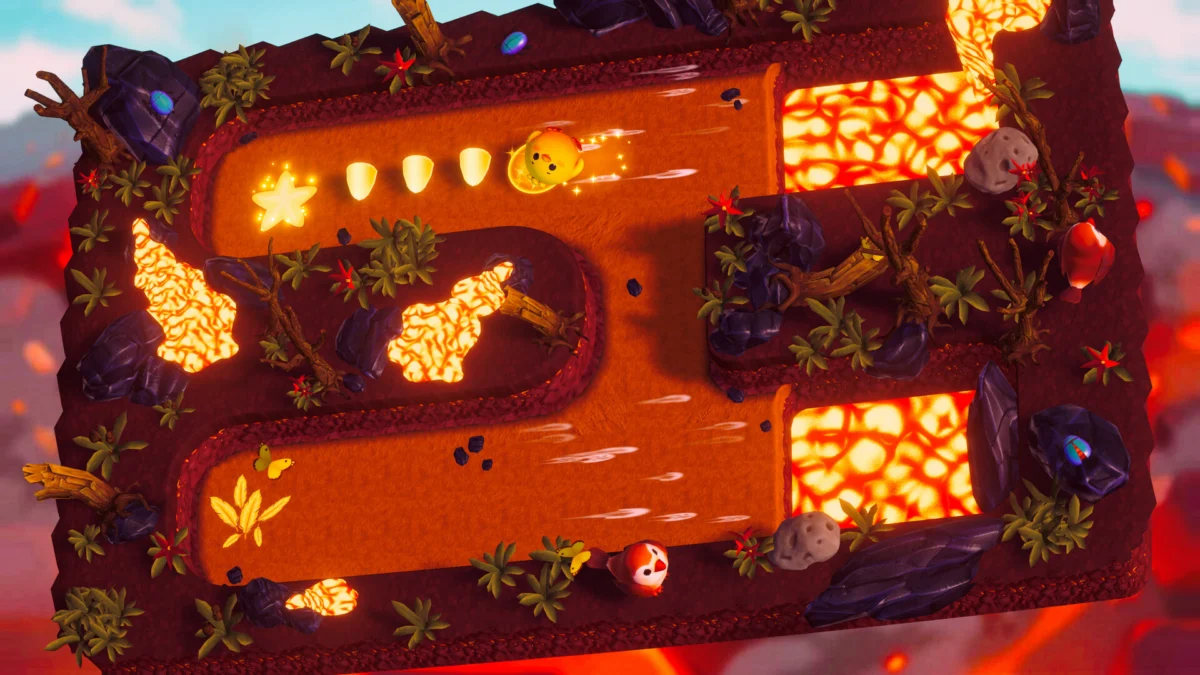
The indie gaming landscape at Gamescom 2024 was filled with high-octane shooters and sprawling open-world RPGs, yet one of the most captivating titles to emerge from the event was a deceptively simple, vibrantly colored tilt-based platformer. Marupoyo: The Round Chick’s Adventure is a title that seeks to bridge the generational gap between veteran gamers and young newcomers. By combining physics-based mechanics with a "kawaii" aesthetic, the game offers a nuanced experience that prioritizes accessibility without sacrificing the depth required for high-level mastery.
This article provides an exhaustive overview of Marupoyo, examining its core mechanics, its presentation at Gamescom, the technical data supporting its design philosophy, and the implications its release holds for the broader family-friendly gaming market.
Main Facts: A New Spin on the Tilt-Platformer Genre
At its core, Marupoyo: The Round Chick’s Adventure is a single-screen, physics-driven platformer. Unlike traditional platformers where players control a character’s movement via a directional pad or joystick, Marupoyo requires players to tilt the entire world. This mechanic, reminiscent of classics like Super Monkey Ball or Kirby Tilt ‘n’ Tumble, creates a unique relationship between the player and the environment.
Core Gameplay Loop
The player controls a small, perfectly spherical chick. The objective of each of the 120 levels is straightforward: navigate the chick through a series of obstacles, collect corn scattered across the terrain, and reach the exit goal. However, the simplicity ends there. Because the chick is round, momentum and inertia play critical roles. A slight tilt can send the protagonist hurtling toward a hazard, while a counter-tilt is necessary to brake or change direction on narrow ledges.
Key Features
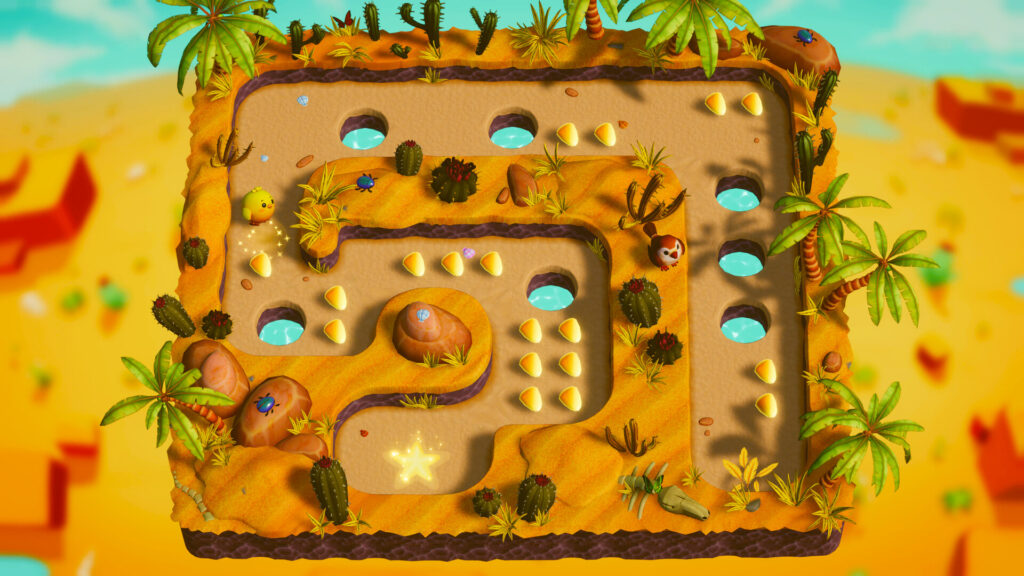
- 120 Handcrafted Levels: The game features a wide variety of environments, including lush grasslands, arid deserts, and volatile volcanic regions.
- Dual Difficulty Modes: A standard mode for enthusiasts and a "Child-Friendly Mode" that removes the risk of falling into hazards.
- Unlockable Characters: Players can rescue the protagonist’s siblings, each of whom becomes a playable skin with unique animations.
- Dynamic Hazards: The game introduces environmental variables such as wind gusts, moving platforms, and "bouncy" mushrooms to keep the gameplay fresh.
Chronology: From Concept to Gamescom Reveal
The journey of Marupoyo from a conceptual prototype to a highly anticipated indie title has been marked by a focus on "clean" design and intuitive controls.
The Development Phase
The developers of Marupoyo set out to create a game that felt "tactile." Early development focused heavily on the physics engine, ensuring that the chick’s weight and rolling speed felt natural. The decision to use a single-screen layout for levels was intentional; it allows players to assess the entire challenge at once, turning each level into a micro-puzzle rather than a test of endurance.

The Gamescom 2024 Demo
In August 2024, Marupoyo was showcased at Gamescom, one of the world’s largest gaming trade fairs. Journalists and attendees were given hands-on time with a demo that spanned several early-game worlds. The demo highlighted the game’s gradual difficulty curve, starting with basic flat surfaces and moving quickly into levels featuring water hazards and lava pits.
The reaction at Gamescom was overwhelmingly positive, particularly regarding the game’s performance on portable hardware. While the Steam version is the primary focus for the upcoming release, the developers confirmed that the game is being optimized for the Nintendo Switch, a platform whose gyroscopic sensors and handheld nature are perfectly suited for tilt-based gameplay.
Current Status
As of late 2024, Marupoyo is available for wishlisting on Steam. While a definitive release date has not yet been announced, the polished state of the Gamescom demo suggests that the title is nearing the final stages of production, with a likely launch window in the coming year.
Supporting Data: Mechanics and Accessibility Metrics
To understand why Marupoyo stands out in a crowded market, one must look at the data-driven design choices made by the development team.
The Logic of "Child-Friendly Mode"
In traditional platformers, "easy modes" often simply give the player more health or lives. Marupoyo takes a more innovative approach. In its Child-Friendly Mode, the game adds physical "cloud" buffers over dangerous pits and hazards.
Comparative Hazard Impact:

- Standard Mode: Falling into water or lava results in an immediate level reset. This requires precise motor skills and an understanding of momentum.
- Child-Friendly Mode: The "cloud" buffers act as invisible walls or floors. This allows younger children (ages 3-6) to enjoy the sensation of rolling the chick and collecting corn without the frustration of failure.
Level Complexity and Environmental Hazards
The 120 levels are distributed across several "worlds," each introducing a new mechanic that alters the physics of the game:
- Wind Gusts: These apply constant force in a specific direction, requiring the player to maintain a steady tilt just to stay stationary.
- Moving Blocks: These require timing and "catching" the momentum of the platform to jump gaps.
- Bouncy Mushrooms: These act as trampolines, introducing verticality to a game otherwise focused on horizontal rolling.
Narrative Integration
While Marupoyo is a mechanics-first game, it utilizes a "collect-a-thon" narrative structure. By rescuing siblings, players unlock snippets of story told through visual cues and character interactions (dancing and laughing). This provides a secondary incentive for completionists who want to see the "full" story of the round chick’s family.
Official Responses: Design Philosophy and Developer Insights
During the Gamescom showcase, representatives for Marupoyo shared insights into the creative vision behind the game. The overarching goal was to create a "universal" gaming experience.
"We wanted to make a game that a parent and child could play side-by-side," one developer noted. "The tilt control is the most intuitive way to interact with a digital space. You don’t need to explain buttons; you just show the tilt. But for the older players, we wanted to ensure that the later levels require the same kind of precision you’d find in a high-stakes puzzle game."
The developers also addressed the choice of the protagonist. The "Round Chick" was chosen not just for its cuteness, but for its geometric simplicity. A sphere is the most predictable object in a physics engine, allowing players to build a "muscle memory" for how the character will react to different slopes and forces.
Regarding the Nintendo Switch port, the team expressed excitement: "The Switch is the spiritual home for this kind of game. The ability to physically tilt the console adds a layer of immersion that we think will be the definitive way to experience Marupoyo."
Implications: The Future of Wholesome Gaming
The emergence of Marupoyo: The Round Chick’s Adventure signals several important trends in the gaming industry.
The Rise of "Wholesome" Hardcore Games
There is a growing market for games that look "soft" but play "hard." Titles like Untitled Goose Game or Fall Guys have proven that a cute aesthetic can coexist with challenging gameplay. Marupoyo fits firmly into this niche. It appeals to the "Wholesome Games" community while offering a high-skill ceiling that could potentially attract speedrunners and platforming enthusiasts.
Accessibility as a Standard
By implementing a Child-Friendly Mode that fundamentally changes level geometry rather than just "giving more lives," Marupoyo sets a new standard for accessibility. It recognizes that "difficulty" isn’t just about the number of attempts a player has, but about the physical dexterity required to navigate a space. This inclusive design philosophy is likely to be mirrored by other indie developers looking to capture a broader demographic.
The Longevity of Physics-Based Play
In an era of complex AI and ray-tracing, Marupoyo proves that fundamental physics—gravity, momentum, and friction—remain some of the most entertaining tools in a game designer’s kit. The game’s reliance on these principles ensures that its gameplay will remain timeless, unaffected by the shifting trends of more "technological" genres.
Conclusion
Marupoyo: The Round Chick’s Adventure is more than just a charming indie title; it is a masterclass in intuitive design. Whether it is being played by a toddler discovering the joy of movement or a veteran gamer navigating a gauntlet of wind and lava, the game offers a pure, unadulterated form of digital play. As it moves toward its full release on Steam and its eventual debut on the Nintendo Switch, Marupoyo is poised to become a staple of the family-friendly gaming library. For now, enthusiasts can only wait and wishlist, preparing for the day they can finally start rolling.