Science Fiction Meets Reality: "Project Hail Mary: Journey Among the Stars" Set for November 12 Release
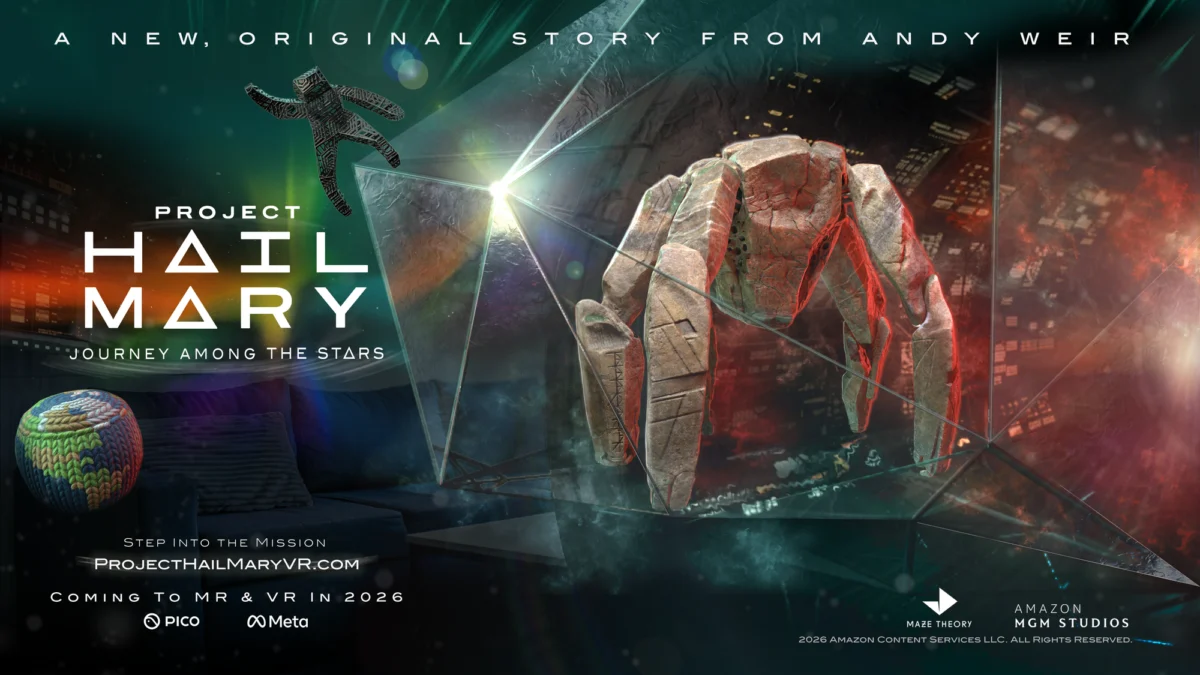
The boundaries between speculative fiction and immersive technology are set to blur this November. In a significant announcement for both the gaming industry and science fiction enthusiasts, the release date for Project Hail Mary: Journey Among the Stars has been officially confirmed. The mixed reality (MR) experience, which serves as a narrative expansion of Andy Weir’s best-selling novel and the highly anticipated feature film starring Ryan Gosling, is scheduled to launch on November 12.
Developed by the immersive storytelling specialists at Maze Theory, the title will be available on Meta Quest 3, Meta Quest 3S, Pico headsets, and the emerging Android XR platform. This release represents a pivotal moment in transmedia storytelling, offering fans a tangible way to step inside the cockpit of the Hail Mary and interact with one of modern literature’s most beloved alien characters.
Main Facts: A New Frontier in Mixed Reality
Project Hail Mary: Journey Among the Stars is not merely a traditional video game; it is a meticulously crafted mixed reality experience designed to leverage the latest hardware capabilities of passthrough technology. Unlike standard Virtual Reality (VR), which replaces the user’s environment entirely, this MR experience seeks to integrate the high-stakes environment of a deep-space vessel into the user’s physical surroundings.
The Premise and Gameplay
Players step into the magnetic boots of Ryland Grace, the lone survivor of a desperate mission to save Earth from a solar-dimming catastrophe. The experience focuses on a critical juncture of the mission where the Hail Mary—the last hope for humanity—is suffering from catastrophic system failures.
The core gameplay loop revolves around "hard science" problem-solving, a hallmark of Andy Weir’s writing. Players must:
- Diagnose and Repair: Use engineering skills to navigate the ship’s failing systems, mirroring the high-tension troubleshooting seen in the novel.
- Interspecies Cooperation: Interact with Rocky, the spider-like Eridian engineer. The relationship between Grace and Rocky, defined by their unique method of communication and mutual reliance, forms the emotional and mechanical heart of the game.
- MR Integration: Utilize the "passthrough" features of the Quest 3 and 3S to overlay the ship’s controls and Rocky’s presence onto the player’s real-world environment.
Preorder Incentives and Availability
To drum up excitement ahead of the November 12 launch, preorders have officially opened across supported platforms. Early adopters are being incentivized with exclusive digital content. Those who purchase before the release date will receive three exclusive digital sculptures:
- Rocky: A high-fidelity model of the Eridian companion.
- Ryland Grace: A model of the protagonist in his EVA suit.
- The Hail Mary: A detailed miniature of the interstellar spacecraft.
These sculptures are designed for display within the mixed reality home environment, allowing fans to decorate their physical spaces with icons from the Weir-verse.
Chronology: From Best-Seller to Immersive Experience
The journey of Project Hail Mary from a manuscript to a mixed reality blockbuster follows a rapid trajectory of success that highlights the growing synergy between the publishing, film, and tech industries.
- May 2021: Andy Weir releases Project Hail Mary. Following the massive success of The Martian, the book becomes an instant hit, lauded for its scientific accuracy and the heartwarming dynamic between its two leads.
- Early 2022: MGM (now under Amazon) fast-tracks a film adaptation. Ryan Gosling is attached to star as Ryland Grace, with Phil Lord and Christopher Miller (of Spider-Verse and The LEGO Movie fame) set to direct.
- 2023: Maze Theory, a studio known for its work on Doctor Who: The Edge of Time and Peaky Blinders: The King’s Ransom, begins development on a dedicated immersive experience. The goal is to create a bridge between the literary world and the upcoming cinematic universe.
- Early 2024: The first gameplay trailers emerge, showcasing the "Social Presence" technology used to bring Rocky to life. The trailer emphasizes the tactile nature of the ship’s interface.
- Late 2024: The official release date is set for November 12, positioning the game as a flagship title for the holiday season and a showcase for the Meta Quest 3S hardware.
Supporting Data: The Technology Behind the Mission
The technical specifications of Project Hail Mary: Journey Among the Stars suggest a high-performance experience optimized for the current generation of standalone headsets.
Platform Optimization
The decision to target Meta Quest 3 and 3S is strategic. These headsets feature advanced color passthrough, which is essential for the mixed reality elements of the game. By using the Quest’s depth sensors, the game can accurately map the ship’s consoles to the player’s walls and furniture, creating a more convincing sense of "being there."
Furthermore, the inclusion of Android XR signals a forward-looking approach. As Google and Samsung prepare to enter the spatial computing market, Maze Theory is positioning Project Hail Mary as a day-one or early-window title for the next generation of Android-powered headsets.
Maze Theory’s Design Philosophy
Maze Theory has built a reputation for "story-living" rather than just storytelling. Data from their previous titles indicates a focus on:
- Social AI: Rocky’s AI is designed to respond to player gestures and proximity, fostering a sense of genuine companionship.
- Tactile Interaction: Unlike many VR games that rely on menus, Project Hail Mary uses physicalized buttons, levers, and screens within the virtual cockpit to ground the player in the "hard sci-fi" reality.
Official Responses: Voices from the Development Front
While Andy Weir has often expressed his excitement for seeing his "science problems" brought to life, the developers at Maze Theory have been vocal about the challenges and rewards of adapting such a beloved property.
In a recent press statement, a spokesperson for Maze Theory noted:
"Our goal with Journey Among the Stars was to capture the essence of what makes Andy Weir’s work so special: the triumph of human (and Eridian) ingenuity. In Mixed Reality, we aren’t just showing you the Hail Mary; we are handing you the keys to the ship. Working on the relationship between Grace and Rocky was our highest priority, ensuring that the bond players feel in the book translates to a physical presence in their own living rooms."
Industry analysts suggest that the involvement of the film’s production team has ensured visual consistency. The ship’s design in the MR experience is expected to align closely with the aesthetic established for the 2026 film, providing a "first look" for fans eager to see how the world will be visualized on the big screen.

Implications: The Future of Transmedia and Spatial Computing
The release of Project Hail Mary: Journey Among the Stars carries implications that extend far beyond a single game launch. It serves as a litmus test for several emerging trends in the entertainment landscape.
1. The Bridge to Cinema
With the Project Hail Mary film not due in theaters until 2026, this MR experience acts as a "long-lead" marketing tool. It keeps the IP relevant and allows the audience to build an emotional investment in the characters and setting years before the movie’s premiere. This represents a shift in how studios manage major franchises, moving toward a continuous "ecosystem" of content.
2. The Validation of Mixed Reality
For years, VR was seen as an isolating medium. Mixed Reality, as demonstrated by this title, offers a different path. By allowing the user to remain aware of their physical surroundings while interacting with digital characters, MR reduces the "friction" of entry for casual users. If Project Hail Mary succeeds, it could pave the way for more "living room" adaptations of popular sci-fi and fantasy properties.
3. "Hard Sci-Fi" as a Gaming Genre
The success of The Martian and Project Hail Mary proved there is a massive appetite for science fiction that prioritizes logic and physics over space opera tropes. This game translates that appetite into a mechanical format. If players respond well to the "diagnose and repair" gameplay, we may see a surge in "engineering simulators" that use high-stakes narratives to teach or utilize real-world scientific principles.
4. The Rocky Effect
Perhaps the most significant implication is the evolution of AI companions. If Maze Theory successfully creates a "friendship" between the player and an alien through MR, it will set a new bar for character interaction in spatial computing. The emotional core of the Project Hail Mary story—two vastly different beings finding common ground—is a perfect use case for the empathy-inducing power of immersive tech.
Conclusion
As November 12 approaches, the anticipation for Project Hail Mary: Journey Among the Stars continues to build. For fans of the book, it is an opportunity to finally meet Rocky face-to-face. For tech enthusiasts, it is a showcase for the capabilities of the Meta Quest 3 and the potential of Android XR. And for the broader entertainment industry, it is a glimpse into a future where stories are no longer just read or watched, but lived.
In the words of Ryland Grace, "Science is the only thing that works." On November 12, players will find out if their own scientific skills are enough to save two worlds, right from the comfort of their own homes.