Temporal Fractures and the Architecture of Grief: An Analysis of Dave Boyle’s ‘Never After Dark’
The landscape of contemporary horror is often divided between the visceral "jump-scare" mechanics of mainstream studio offerings and the atmospheric, often metaphorical "elevated horror" of the independent circuit. With his latest feature, Never After Dark, director Dave Boyle—best known for the intricate neo-noir Man from Reno—attempts to bridge these worlds. The film, a slow-burn ghost story set against the frigid, isolated backdrop of Hokkaido, Japan, is a meticulous exercise in genre subversion. While it initially presents itself as a standard procedural of the paranormal, it sneakily plants the seeds of a much more complex meditation on the nature of time, memory, and the morality of the medium.
Main Facts: A New Vision of the Haunted House
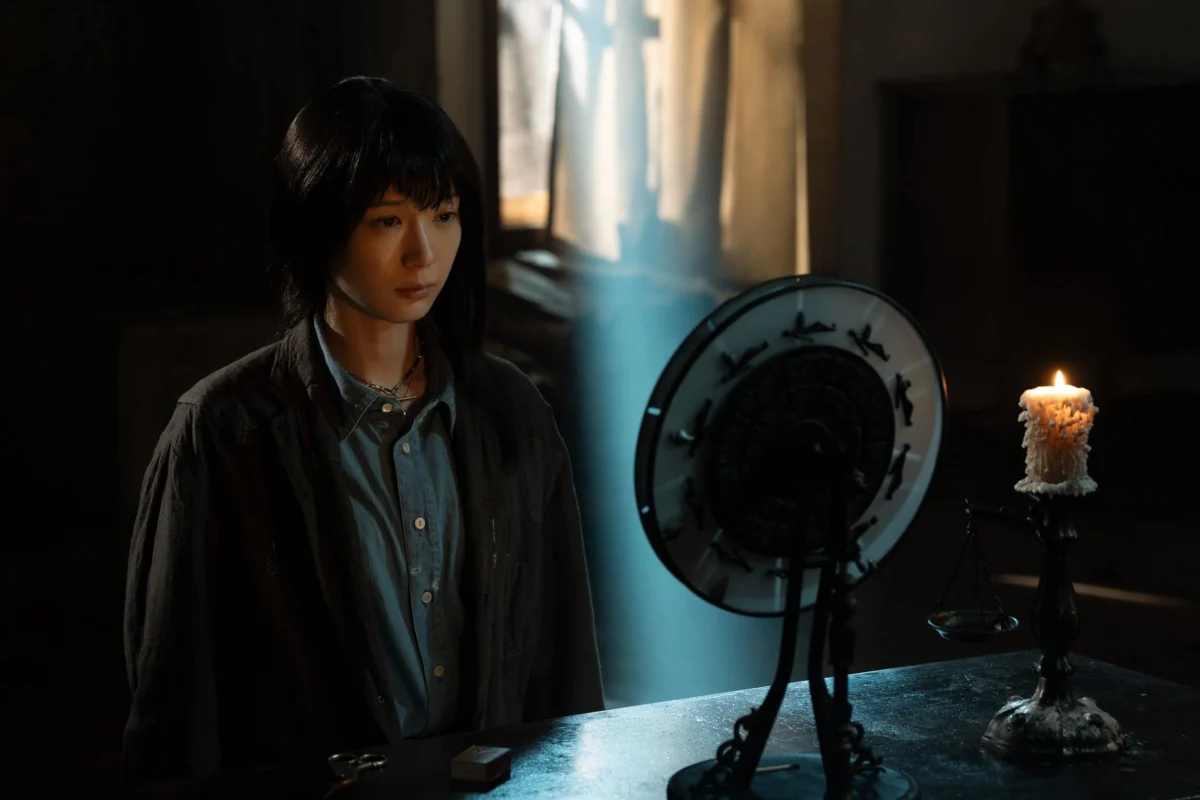
Never After Dark stars Moeka Hoshi, a breakout talent recently lauded for her performance in the epic series Shōgun. Hoshi portrays Airi, a professional medium whose cynicism toward the living is matched only by her casual intimacy with the dead. The film’s premise is deceptively simple: Airi is hired by a wealthy client, Teiko (Tae Kimura), and her abrasive son, Gunji (Kento Kaku), to cleanse their massive, remote estate of a malevolent spirit.
The setting itself is a character. Located in the forests of Kiyosato, the house is a real property that serves as a deliberate homage to the Overlook Hotel of Stanley Kubrick’s The Shining. Its cavernous hallways and oppressive silence provide the perfect canvas for Boyle’s patient, spare script. However, the film’s most striking deviation from tradition is Airi’s personal haunting. She is accompanied by the ghost of her elder sister, Miku (Kurumi Inagaki), who remains frozen at the age of her death. This relationship transforms the film from a mere "exorcism" narrative into a study of arrested development and the refusal to mourn.
Chronology: From Séance to Subversion
The narrative progression of Never After Dark follows a deliberate, almost rhythmic structure that mirrors the spinning of a zoetrope—a device central to the film’s internal logic.
The Arrival and the Ritual
The first act establishes the "rules" of Airi’s world. Unlike the dramatic, high-stakes exorcisms of Western cinema, Airi’s work is portrayed as a blue-collar grind. She arrives at the Hokkaido mansion with a "been there, done that" attitude. Her methodology is where Boyle introduces his first major stylistic flourish. To enter the spirit world, Airi uses a custom-built, zoetrope-like contraption. As the device spins, it flattens time into a loop, allowing her consciousness to exit her body. This sequence is a technical marvel, visually representing the blurring of the line between the physical and the metaphysical.

The Discovery of the "Gaping Mouth Man"
The middle chapter of the film focuses on the investigation of the "Gaping Mouth Man" (Mutsuo Yoshioka), a demon with a horrific facial wound who relentlessly scratches at a specific cabinet in a second-floor bedroom. While the visuals are traditionally horrific, Airi’s reaction is one of professional detachment. She spends her nights drinking beer, dancing to Kraftwerk, and debating the merits of various electronic albums with her sister’s reflection. This period of the film lulls the audience into a sense of security, making it seem as though Airi is perhaps a charlatan—or at least someone who has become too comfortable with the supernatural to recognize true danger.
The Third-Act Pivot: Banishing the Living
The final act of Never After Dark represents a radical shift in the genre’s moral compass. The "bump in the night" tropes give way to a harrowing realization: the barrier between the past and the present is failing. Airi is forced to move beyond her role as a ghostbuster and engage in a far more dangerous practice. The film redefines the act of "banishing" to the other side of the veil. In a twist that challenges the viewer’s empathy, Airi finds herself contemplating the necessity of banishing a living person to the spirit world—effectively committing a metaphysical murder to restore the temporal balance of the house.
Supporting Data: Casting and Production Context
The strength of Never After Dark lies heavily in its casting and its synthesis of Eastern and Western cinematic influences.
- The Lead: Moeka Hoshi’s performance is described as "teetering on the edge of control." Coming off the global success of Shōgun, Hoshi brings a modern, iron-willed energy to the role of Airi, making her a "ronin ghostbuster" who feels distinct from the typical victims or heroes of J-Horror.
- The Production Team: The film is a collaborative effort involving Kento Kaku, who serves as both a lead actor and a producer. This dual role underscores the film’s commitment to a specific creative vision that prioritizes atmosphere over traditional scares.
- The Visual Language: Boyle’s direction is heavily influenced by the "slow cinema" movement and the works of Kiyoshi Kurosawa (particularly Pulse and Chime). The use of the Kiyosato property adds a layer of architectural dread, utilizing long takes and wide shots to emphasize the isolation of the characters.
- Release Strategy: Magnolia Pictures, a distributor known for its curated selection of high-quality genre films, has scheduled the theatrical release for Friday, September 25. This timing suggests a push for the autumn horror season, targeting an audience that appreciates psychological depth over gore.
Official Responses and Critical Consensus
Initial critical responses to Never After Dark have been largely positive, resulting in a "B" grade from early reviewers. Critics have praised the film for its "clever and involving" script and its ability to "turn the genre on its head."
Key Critical Insights:

- Genre Blending: Reviewers have noted that Boyle successfully blends the tropes of the Japanese "Yurei" (ghost) story with the pacing of American "slow-burn" horror, such as Ti West’s The House of the Devil.
- Temporal Mechanics: The use of the zoetrope and the concept of time as a "perfect circle" have been highlighted as the film’s most innovative features. One critic noted that the film "reminds us that movies have always been the perfect medium through which to appreciate a medium."
- Character Depth: While the pacing is lauded, some critics have pointed out that the first half’s "measured gait" occasionally leaves the characters feeling slightly under-defined, making the emotional stakes of the finale feel somewhat detached. However, the "forceful performance" of Hoshi is cited as the anchor that holds the experience together.
Implications: The Future of the "Medium"
The release of Never After Dark has significant implications for both Dave Boyle’s career and the evolution of cross-cultural horror.
For Dave Boyle
Boyle has long been a filmmaker interested in the intersection of cultures and the mechanics of identity. By moving from the neo-noir of Man from Reno into the supernatural realm, he demonstrates a versatility that positions him as a major voice in international independent cinema. His ability to secure high-profile Japanese talent like Moeka Hoshi and Tae Kimura suggests a growing trend of "trans-Pacific" collaborations that bypass the traditional Hollywood remake machine.
For the Horror Genre
The film’s refusal to engage in traditional "letting go" moralizing is a breath of fresh air for the genre. Most ghost stories end with the protagonist finding closure; Never After Dark suggests that the past and the present are so inextricably linked that "closure" is a fallacy. This "elusively ambiguous" approach may signal a shift toward more philosophically rigorous horror films that prioritize ontological dread over simple survival.
Final Verdict
Never After Dark is a testament to the power of patient storytelling. It is a film that demands the audience’s full attention, rewarding them not with easy answers, but with a hauntingly beautiful exploration of the dangers of a "broken clock." As Airi takes her zoetrope for one final spin, the film leaves us with the unsettling realization that the ghosts we carry with us are often the only things keeping us grounded in a world that has ceased to make sense.
Release Information:
- Never After Dark
- Director: Dave Boyle
- Starring: Moeka Hoshi, Kento Kaku, Tae Kimura
- Distributor: Magnolia Pictures
- Theatrical Premiere: September 25
- Grade: B