The Architecture of Dread: How Liminal Horror Defined the Cinematic Landscape of 2026
VANCOUVER — If 2024 was the year of the maximalist "elevated horror" and 2025 belonged to the resurgence of the slasher, 2026 has indisputably become the year of the void. Specifically, it is the year of "liminal horror," a subgenre that trades in the terrifying familiarity of empty, transitional spaces and the existential dread of the "uncanny valley" applied to architecture.
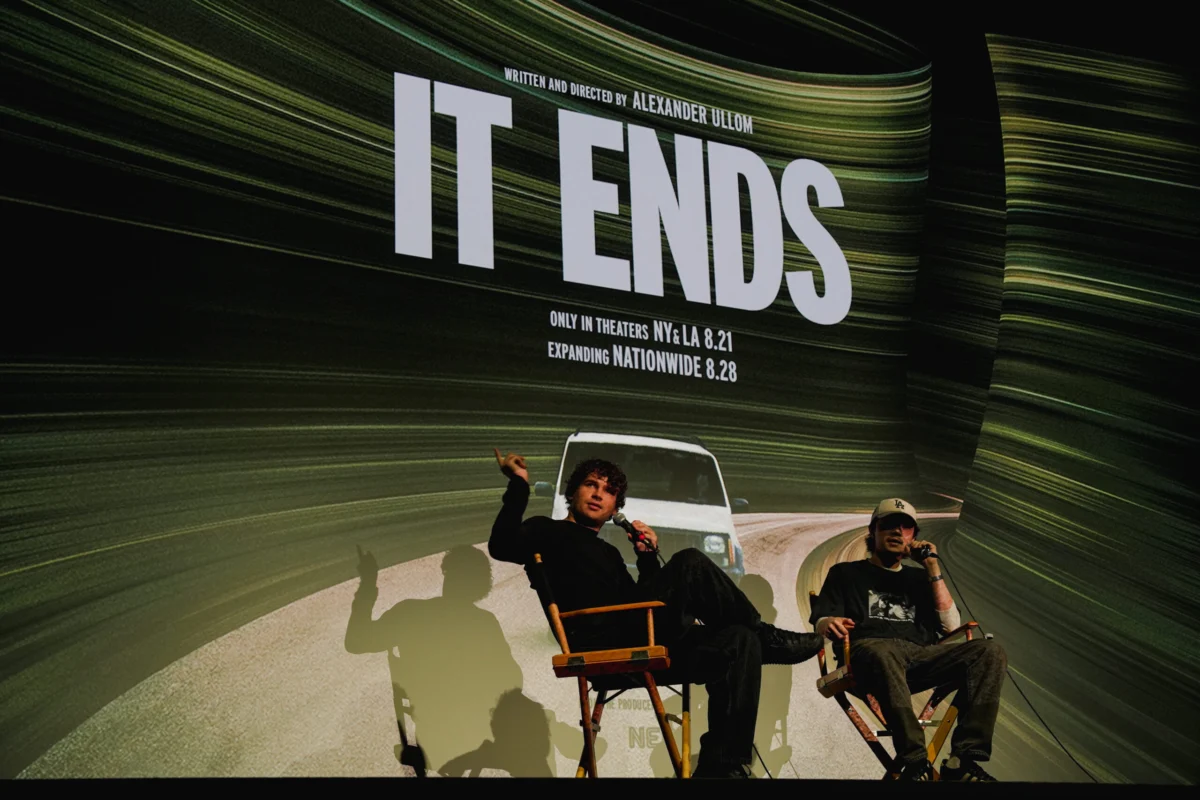
The movement reached a fever pitch this month as Neon expanded the release of It Ends, the sophomore feature from Gen Z auteur Alex Ullom. To mark the occasion, the industry witnessed a symbolic passing of the torch—or perhaps a shared haunting—as Kane Parsons, the director whose Backrooms franchise ignited this commercial firestorm, moderated an exclusive Q&A with Ullom in Vancouver. The conversation, released by IndieWire, serves as a manifesto for a generation of filmmakers who find more terror in a fluorescent-lit hallway than in any masked killer.
Main Facts: The Rise of a New Subgenre
The cultural dominance of liminal horror in 2026 is anchored by two pivotal cinematic events. First, the unprecedented box-office success of Kane Parsons’ Backrooms, which successfully translated an open-source internet "creepypasta" into a multi-million dollar franchise. Parsons, who began his journey as a teenager on YouTube, proved that the aesthetic of "weirdcore"—characterized by low-resolution footage of empty, nonsensical office spaces—could sustain a narrative feature and captivate a global audience.
Building on this momentum, Neon acquired It Ends, a film that shifts the liminal focus from the indoors to the asphalt. Premiering at SXSW 2025 to critical acclaim, It Ends follows a group of teenagers trapped on a stretch of highway that defies the laws of Euclidean geometry. The road never ends, the exits lead back to the entrance, and the horizon remains perpetually out of reach.
By combining the unsettling vibes of the Backrooms with the classic tropes of the American road trip movie, Ullom has solidified liminal horror as a bankable, culturally resonant genre. The film’s expansion on August 28, 2026, marks a significant bet by Neon that the youth-led obsession with "transitional spaces" is not merely a digital fad, but a profound shift in how audiences consume fear.
Chronology: From 4chan to the Global Box Office
To understand the significance of 2026, one must trace the rapid evolution of this aesthetic from the fringes of the internet to the center of the film industry.
- 2019–2021: The Emergence of the "Yellow Room." The concept of the Backrooms originated on a 4chan paranormal board, featuring a single image of a yellow, carpeted room with the caption describing "the stink of old moist carpet" and "approximately six hundred million square miles of randomly segmented empty rooms." It became a viral sensation, spawning thousands of fan-made levels and entities.
- January 2022: The Parsons Pivot. A 16-year-old Kane Parsons uploaded The Backrooms (Found Footage) to YouTube. Its high-fidelity CGI and masterclass in pacing garnered tens of millions of views, catching the attention of major studios like A24 and Atomic Monster.
- 2024–2025: The Industrialization of Liminality. As Parsons began production on his feature debut, other young directors began experimenting with "liminality." Alex Ullom’s It Ends was shot during this window, moving the "stuck in a loop" concept into the sunlight of a desert highway, filming throughout the summer of 2024.
- March 2025: The SXSW Breakthrough. It Ends premiered at SXSW, where it was immediately hailed as the "road trip Backrooms." Neon won a heated bidding war for the distribution rights, sensing a shift in the horror zeitgeist toward Gen Z-led narratives.
- August 2026: The Summer of Stasis. Parsons’ Backrooms franchise becomes a staple of the summer box office, leading directly into the late-August wide release of It Ends. The Vancouver Q&A between the two directors serves as the definitive retrospective on how the genre conquered the year.
Supporting Data: Why Liminality Resonates
The success of these films is backed by a shift in audience demographics and psychological triggers. According to industry analysts, "liminal horror" over-indexes with the 16–25 age bracket, a demographic that has grown up in an era of digital saturation and physical isolation.

Liminal spaces—defined as "places of transition" such as hallways, airports, parking garages, and waiting rooms—are inherently unsettling because they lack a clear purpose without people in them. In the context of 2026, these spaces serve as metaphors for the "waiting room" of modern life.
Data from social media monitoring tools shows that the hashtags #LiminalSpaces and #Dreamcore saw a 400% increase in engagement following the trailer release for It Ends. Furthermore, the visual language of these films—often utilizing 16mm film grain or "found footage" digital artifacts—appeals to a nostalgia for an analog world that many Gen Z viewers never actually experienced, creating a sense of "anemoia" (nostalgia for a time one has never known).
Official Responses: A Dialogue on Instability
The Vancouver Q&A provided a rare look into the philosophical engines driving these directors. During the session, Ullom and Parsons discussed the technical hurdles of post-production workflows, but the conversation quickly pivoted to the "horrifying experience of being a young person in a world that often feels brutally unstable."
When Ullom used the word "liminal," Parsons jokingly lamented that the term had become "a whole crazy thing," implying a sense of guilt for mainstreaming a subculture. Ullom’s response was both playful and poignant: "It’s your fault, by the way."
The core of their discussion centered on why these "transitional spaces" have become the primary site of horror for their generation.
"I think there’s just a general feeling across the board, in our age range that’s like, ‘We’re on the precipice of a massive transition… something is coming,’" Ullom remarked during the screening. "Because things are off, this is not how things should be!"
Ullom further articulated the "Gen Z ennui" that permeates It Ends. He argued that liminal horror provides a temporary "excuse to detach" from a digital world that is increasingly nonsensical and violent. He famously noted the jarring nature of modern digital consumption: "One second you’re watching a dude’s head get blown off, and the next second you’re watching the Geico lizard twerking. That’s just natural existence now."
For Ullom, the endless road in his film is not just a monster; it is a manifestation of the "malaise" that comes from being unable to find a "moral cohesiveness" in a fragmented, algorithmically driven society.

Implications: The Future of the Horror Genre
The rise of liminal horror in 2026 suggests several long-term shifts in the film industry:
1. The Democratization of the Auteur
Kane Parsons and Alex Ullom represent a new wave of "native digital" directors. They did not come through traditional film schools or the commercial circuit; they built their visual languages in the sandbox of the internet. Their success signals to studios that "viral aesthetics" can be translated into sophisticated, high-concept cinema without losing their edge.
2. The Shift from External to Internal Monsters
Traditional horror often relies on the "Other"—a monster, a ghost, or a killer. Liminal horror suggests that the "Other" is the environment itself. The threat is not that something will jump out at you, but that you will simply never leave the room. This reflects a growing societal anxiety regarding stagnation and the feeling of being "trapped" in systems that no longer function.
3. The Aesthetic of the "Uncanny Architecture"
As It Ends moves into more theaters, the industry is already seeing a wave of "liminal-adjacent" projects in development. From haunted shopping malls to infinite suburban cul-de-sacs, the focus of horror is shifting toward the spaces we inhabit. Architects and urban planners are even being brought on as consultants for horror films to ensure the geometry of the sets feels "wrong" enough to trigger an instinctual fear response.
4. A Search for Moral Cohesiveness
Perhaps the most significant implication lies in Ullom’s final thoughts during the Vancouver Q&A. He noted that while "detachment" is a way of processing current global trauma, it cannot be a permanent state. "There has to be some sort of moral cohesiveness with each other that will pull us out of that eventually," he said.
This suggests that the next phase of horror—post-2026—may move toward "reconstruction," looking for ways to escape the liminal void and find genuine human connection. But for now, as It Ends plays to packed houses of anxious teenagers and curious cinephiles, the world seems content to remain on that endless road, staring into the beautifully lit, terrifyingly empty distance.
“It Ends” is currently playing in select theaters and will expand nationwide on Friday, August 28, 2026.