The Architecture of Ephemerality: Jennifer Latour’s Surreal Botanical Hybrids
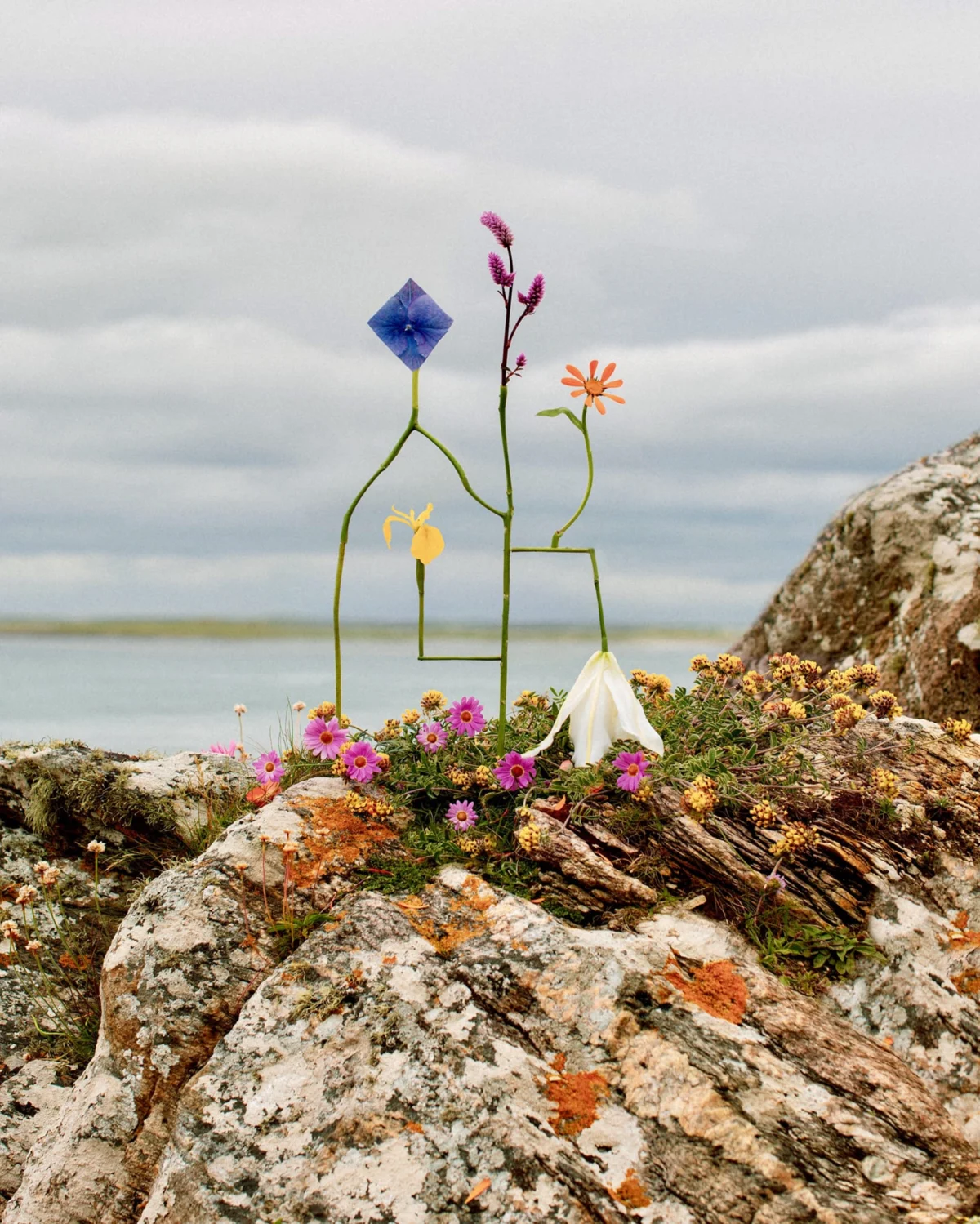
In the delicate intersection of photography, sculpture, and floristry, Vancouver-based artist Jennifer Latour has carved out a niche that defies traditional botanical classification. Her ongoing series, Bound Species, presents a world where the laws of biology are rewritten through the lens of human imagination. By meticulously grafting disparate floral elements onto singular stems and photographing them against vast, natural landscapes, Latour creates "sculptural assemblages" that appear both alien and intimately rooted in the earth. These works, while visually stunning, are inherently precarious—vulnerable to the slightest shift in the atmosphere and existing in their physical form only long enough to be immortalized by the camera.
Main Facts: The Genesis of ‘Bound Species’
Jennifer Latour’s Bound Species is a photographic and sculptural exploration of hybridity. The core of the project involves the creation of temporary botanical sculptures. Latour sources various plant parts—blooms, succulents, branches, and stems—and joins them together to form a single, unified organism that does not exist in nature. These "new species" are then transported to specific outdoor locations, ranging from the rugged terrains of Utah’s Red Canyon to the lush environments of British Columbia, where they are staged and photographed.
The aesthetic of the work draws heavily from Ikebana, the Japanese art of flower arrangement, which emphasizes shape, line, and form. However, Latour pushes this discipline into the realm of surrealism. Unlike traditional arrangements designed for a vase, her works are designed to look as though they are sprouting directly from the ground or a weathered branch, mimicking the growth patterns of real flora.

The primary challenge of the work is its fragility. Latour famously refers to the wind as her "nemesis." Because the sculptures are held together by delicate manual connections rather than permanent adhesives, a soft breeze can instantly dismantle hours of meticulous labor. Consequently, the final photograph is not merely a record of an object, but a document of a fleeting, successful moment of stability in an unstable environment.
Chronology: From Lockdown Dreams to Global Landscapes
The evolution of Bound Species is a testament to the transformative power of restricted movement. The project began during the global COVID-19 lockdowns, a period when Latour’s world—like that of billions of others—shrank to the confines of her home.
2020–2021: Domestic Origins and Dreamscapes
During the height of the pandemic, Latour began experiencing recurring dreams of giant, multi-species flowers growing around her. "I started having a recurring dream of giant flowers growing around me with multiple species of other flowers growing off one stem," she explains. Influenced by these subconscious visions and the "slow time" of lockdown, she began experimenting with materials found within her immediate reach. These early iterations were smaller in scale and created using household objects and grocery-store flowers, serving as a laboratory for the technical challenges of stem-to-stem connection.

2022–2023: The Transition to the Wild
As travel restrictions eased, Latour sought to test her creations against the backdrop of the natural world. This transition marked a significant shift in the project’s complexity. Moving from the controlled environment of a studio to the unpredictable "wild" introduced the elements of weather, changing light, and difficult terrain. It was during this phase that she visited locations like Snow Canyon and Red Canyon in Utah. The stark, monochromatic oranges and reds of the desert provided a high-contrast stage for her vibrant, multicolored hybrids, elevating the work from still-life photography to environmental installation.
2024 and Beyond: Expanding the Horizon
Currently, Latour is preparing to take the series to even more diverse climates. With upcoming trips planned for the arid deserts of Arizona and the rugged, windswept seashores of the United Kingdom, the artist continues to seek out "remote and unique locations" that challenge the structural integrity of her work. Her long-term vision includes a solo exhibition scheduled for 2027, marking a decade of development for the series.
Supporting Data: The Mechanics of the "Hybrid Character"
The technical execution of Bound Species involves a rigorous process of selection and assembly. While the final images look effortless, the "supporting data" of the artist’s process reveals a deep commitment to craftsmanship and botanical research.

Material Sourcing
Latour’s materials are a blend of the professional and the mundane. She sources botanicals from:
- Local Garden Centers: For hardy stems and structural branches.
- Specialty Flower Shops: For exotic blooms and rare textures.
- Grocery Stores: For locally grown, seasonal specimens that ground the work in a specific time and place.
The Assembly Process
The "grafting" process is entirely manual. Latour connects stem to stem, often using hidden supports or delicate balancing acts to ensure the sculpture can stand long enough for the shutter to click. This method is a physical manifestation of her philosophical interest in "interconnectedness." By forcing different species to share a single life-line (the stem), she creates a visual metaphor for the biological and social systems that bind different entities together.
Environmental Factors
The outdoor phase of the work is a race against time. Flowers begin to wilt the moment they are cut and exposed to the sun or wind. The artist must balance the aesthetic requirements of the composition with the biological reality of her materials. This creates a high-stakes environment where the "success" of a piece is measured in seconds.

Official Responses and Curatorial Recognition
The art world has responded to Latour’s work with significant interest, recognizing its unique position between traditional photography and contemporary sculpture. Her work is currently being featured in several high-profile group exhibitions that highlight the intersection of nature and artifice.
Current Exhibitions
- Where the Seasons Endure (Gallery COA, Montreal): This exhibition explores the themes of time and the changing environment. Curators have noted that Latour’s work provides a "surreal bridge" between the natural world and the human imagination, offering a vision of nature that is both fragile and resilient.
- The House and the Forest (Can Balaguer, Palma, Mallorca): This show examines the relationship between domesticity and the wild. Latour’s inclusion highlights the domestic origins of her project—born in a house during lockdown—and its eventual migration into the forest and desert.
Critical Reception
Critics have praised Latour for her ability to evoke a sense of "uncanny beauty." By using real flowers rather than digital manipulation (CGI), she maintains a tactile quality that resonates with viewers. The physical reality of the objects—the visible veins in the petals, the rough texture of the bark—anchors the surreal compositions in a way that purely digital art cannot.
Implications: Nature, Interconnectedness, and the Future of Botanical Art
The implications of Jennifer Latour’s work extend beyond the gallery walls, touching on broader conversations about our relationship with the environment and the future of artistic practice in the age of the Anthropocene.

The Philosophy of Bound Species
Latour states that her work serves as a reminder that "all creatures are bound simultaneously by both their similarities and their differences." In an era of increasing ecological fragmentation, her sculptures propose a radical unity. By blending species that would never naturally meet, she suggests a world where boundaries are fluid and collaboration is a prerequisite for beauty.
Environmental Commentary
While the work is primarily aesthetic, it carries an inherent environmental message. The ephemeral nature of the sculptures mirrors the fragility of the ecosystems Latour photographs. As climate change alters the habitats of the very flowers she uses, her work becomes a poignant record of botanical diversity, albeit in a reimagined form. The "wind" that Latour fights is a literal force, but it also symbolizes the external pressures—environmental and social—that threaten delicate structures.
The Evolution of the Medium
Latour’s commitment to "continuing to create and evolve until either my hands or my body stop working" suggests that Bound Species is more than a series; it is a life-long practice. Her work points toward a future for botanical art that moves away from static illustration and toward a more performative, sculptural, and site-specific engagement with the natural world.

As she prepares for her 2027 solo show and her upcoming international expeditions, Jennifer Latour remains an artist defined by her patience. In the face of her "nemesis," the wind, she continues to piece together a fragmented world, one stem at a time, proving that even the most fleeting moments of beauty can be bound and preserved for the world to see.