The Architecture of Minimalism: How Solitaire Defined the Modern Indie Game Revolution
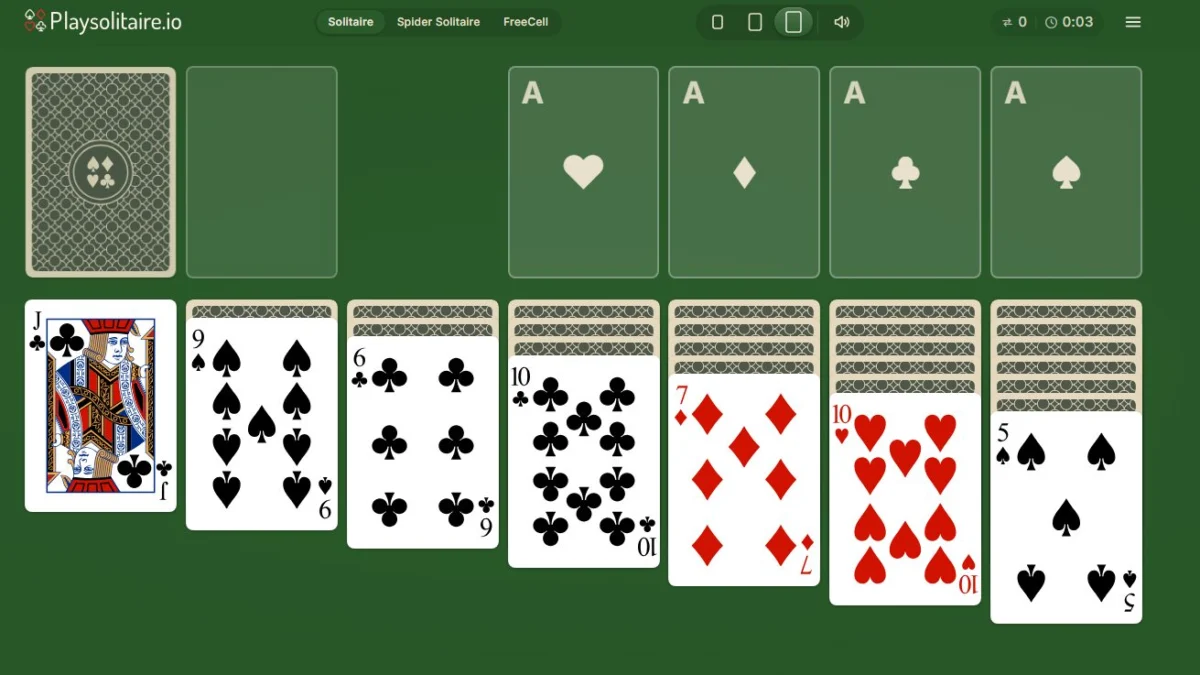
In an era of gaming defined by 100-gigabyte installs, photorealistic ray-tracing, and "live-service" models designed to capture every waking second of a player’s attention, a quiet counter-revolution has taken hold. The indie game scene, once a fringe movement, has spent the last decade elevating the "small game" to an art form. These are the "game jam" entries, the single-mechanic wonders, and the personal projects that reject the industry’s obsession with bloat.
Yet, as developers and critics celebrate this "new" philosophy of focused design, they are often overlooking the progenitor of the movement. Long before "scope creep" became a dirty word in development studios, Solitaire—the digital version of which remains a staple of modern browsing at platforms like Playsolitaire.io — proved that a single, perfectly realized idea could outlast the most expensive blockbusters. The indie movement is not inventing the small-game philosophy; it is vindicating a design truth that has existed for centuries.
Main Facts: Defining the "Small Game" in a Big Industry
The term "small game" is frequently misunderstood by those outside the development community. In a professional context, "small" is not a measurement of quality or ambition, but a specific design value. It represents a commitment to mechanical purity over feature density.
The Pillars of Small Game Design
- Mechanical Focus: A small game identifies a core interaction—jumping, matching, sorting, or surviving—and polishes it until it is frictionless.
- Constraint as Creativity: Rather than seeing a lack of budget or staff as a hurdle, small-game developers use constraints to force innovative solutions.
- The "Honest" Loop: These games do not rely on psychological "dark patterns" or artificial progression treadmills. They offer a complete experience that respects the player’s time, allowing them to engage and disengage without penalty.
The indie scene’s recent successes, from the viral card-battler Balatro to the minimalist survival of Vampire Survivors, are built on these exact pillars. They are games that can be understood in seconds but mastered over weeks—a profile that matches Solitaire almost perfectly.
Chronology: From Physical Decks to Digital Dominance
To understand why Solitaire is the ultimate "small game," one must look at its evolution from a physical pastime to a digital cornerstone.
The Pre-Digital Era
Solitaire (specifically the "Klondike" variant) evolved over the 18th and 19th centuries. It was a game born of physical necessity—designed for a single person with a standard 52-card deck. Its "code" was the rules of physics and the probability of the shuffle. This inherent physical constraint meant the game had to be "small" by default.
1990: The Windows 3.0 Revolution
The most significant moment in Solitaire’s digital history occurred when Microsoft included it in Windows 3.0. While it appeared to be a simple pack-in game, its purpose was utilitarian: it was a covert tutorial designed to teach users how to use a mouse. By clicking and dragging cards, a generation of users learned the "drag-and-drop" interface that would define modern computing.
2010s–Present: The Indie Renaissance
As the "Triple-A" industry moved toward massive open worlds and "games as a service" (GaaS), indie developers began to look backward. The rise of digital storefronts like Steam and Itch.io allowed for the commercial viability of "tiny" games. Developers rediscovered that players were hungry for the "Solitaire experience"—a game that fits into the gaps of a busy life rather than demanding to be the center of it.
Supporting Data: The Economics and Psychology of Focus
The shift toward smaller, focused games is supported by both economic reality and cognitive science.
The Cost of Bloat
According to industry reports, the cost of developing a high-end AAA title has ballooned to between $200 million and $500 million. These games require hundreds of features to justify their price tag, often leading to "feature creep"—where the addition of unnecessary mechanics dilutes the core gameplay. In contrast, "small" indie games often boast higher profit margins because their development costs are tied to a singular, high-quality loop rather than a sprawling, unoptimized world.
The Flow State and Replayability
Psychological studies on "Flow"—the state of being fully immersed in an activity—suggest that clear goals and immediate feedback are essential. Solitaire provides this every few seconds. Modern indie hits replicate this by shortening the feedback loop.
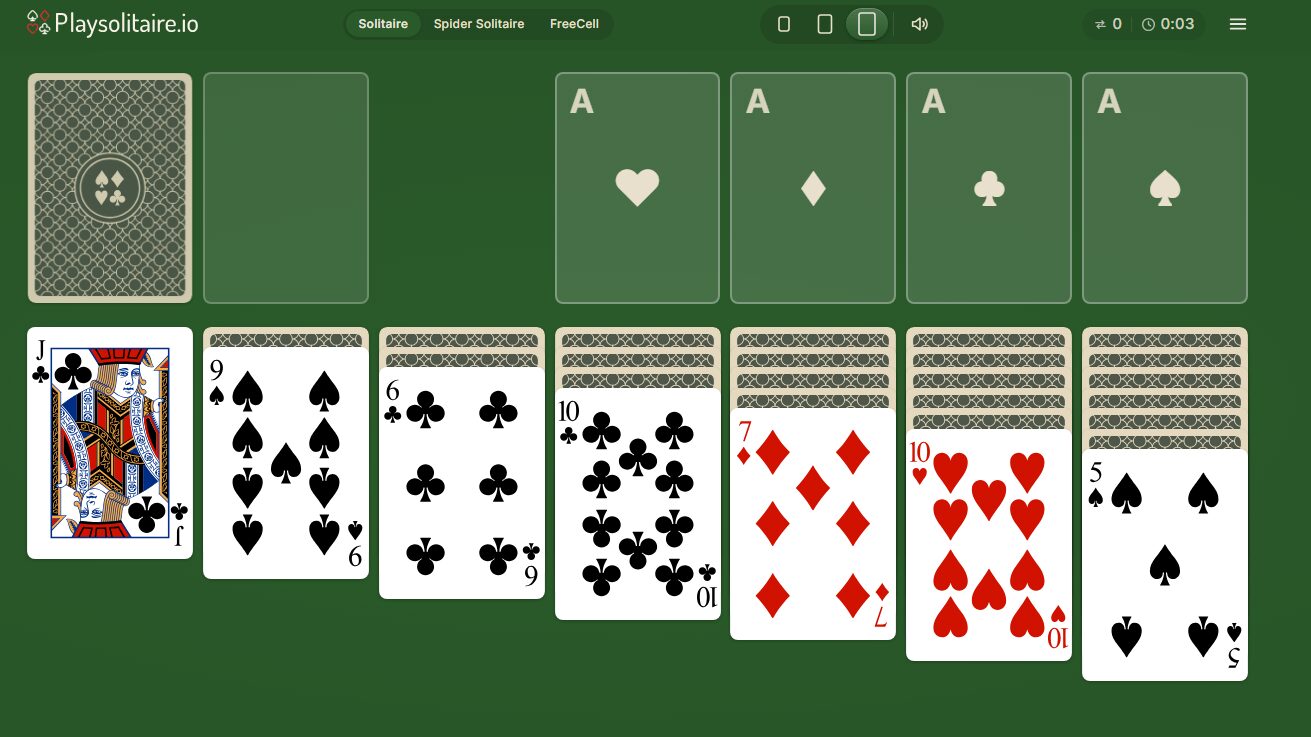
- Data Point: A 2023 survey of indie game players found that 68% preferred games they could "finish" or "master" within 10–20 hours over 100-hour epics. This preference for "completable" content is a direct echo of the Solitaire loop, which offers a definitive conclusion in every 5-to-10-minute session.
Industry Perspectives: The "Solitaire Model" of Design
While there is no "official" spokesperson for Solitaire, veteran game designers frequently cite it as a masterclass in UX (User Experience).
The Minimalist Perspective:
"The genius of Solitaire is its legibility," says Marcus Thorne, a veteran independent UI designer. "The entire game state is visible at a glance. There are no hidden menus, no complex skill trees. Modern indies are returning to this ‘legibility of play.’ When you look at a game like Into the Breach or Wordle, you are looking at the ‘Solitaire Model’—total transparency of mechanics."
The Developer Perspective:
Many indie developers argue that "smallness" is a form of respect. "A game that lets you go is a game that loves you," says Sarah Chen, a regular participant in Global Game Jams. "The mainstream industry is terrified of you closing the app. But Solitaire, and the best indie games, are confident enough to be a ‘weekend project’ or a ‘lunch break’ game. They provide a service, deliver a feeling, and then step aside."
Implications: The Future of Game Design is "Small"
The enduring popularity of Solitaire, and the subsequent rise of the indie "small game," suggests a permanent shift in the landscape of digital entertainment. The implications for the future of the industry are profound.
1. The Death of "Infinite Content"
For years, the marketing metric for games was "hours of content." We are now seeing a pivot toward "density of experience." As the "attention economy" becomes more crowded, games that can deliver a meaningful experience in a small package—like the browser-based versions of Solitaire found at Playsolitaire.io—will likely see higher long-term retention than bloated titles that feel like a second job.
2. Accessibility as a Feature
Solitaire’s success was built on the fact that it was everywhere—pre-installed on every PC. The modern equivalent is the cross-platform, low-spec indie game. By keeping the "scope" small, developers ensure their games can run on anything from a high-end PC to a five-year-old smartphone, democratizing access to play.
3. The "Solitaire DNA" in New Genres
We are seeing the "Solitaire-ification" of other genres. "Micro-platformers," "Single-screen shooters," and "One-button RPGs" are all applying the logic of the card game to more complex genres. They strip away the fluff until only the "fun" remains.
Conclusion: The Quiet Vindication
The indie movement did not discover that focus is a superpower; they rediscovered it. They looked at the noise of the mainstream industry and realized that the most durable game in history—a simple arrangement of 52 cards—had already solved the problem of engagement.
Solitaire remains the most stubborn piece of evidence that "bigger" is rarely "better." It has no marketing budget, no seasonal battle pass, and no 4K textures, yet it has outlasted nearly every blockbuster of the last thirty years. It is a game that is exactly as big as it needs to be, and not one feature larger.
As the indie scene continues to flourish, it does so in the shadow of this quiet giant. Whether it’s a solo dev building a game over a weekend or a player looking for a ten-minute mental reset on their browser, they are both participating in a philosophy that Solitaire mastered centuries ago: that a single idea, fully realized, is the most powerful thing in gaming.