The Alchemy of Bitterness and Beauty: A Comprehensive Review of Cram Comics #5
The landscape of contemporary independent comics is often a battlefield between high-concept graphic novels and the ephemeral nature of digital webcomics. Standing defiantly in the middle of this fray is the anthology—a format that, when executed with precision, offers a panoramic view of the medium’s soul. The fifth issue of Cram Comics, edited by Andrew Alexander, serves as a potent reminder of the power of the printed collective. Centered around the evocative, melancholic prompt, “Something Strong For When The Love Is Gone,” this issue traverses the jagged terrain of heartbreak, resentment, and the surrealist coping mechanisms of the human psyche.
Main Facts: The Curation of Counter-Culture
Cram Comics #5 arrives as a deliberate antithesis to the polished, sanitized output of mainstream corporate publishing. From its visual identity to its narrative risks, the anthology positions itself within the lineage of the 1960s underground "comix" movement, yet it is undeniably rooted in the anxieties of the 2020s.
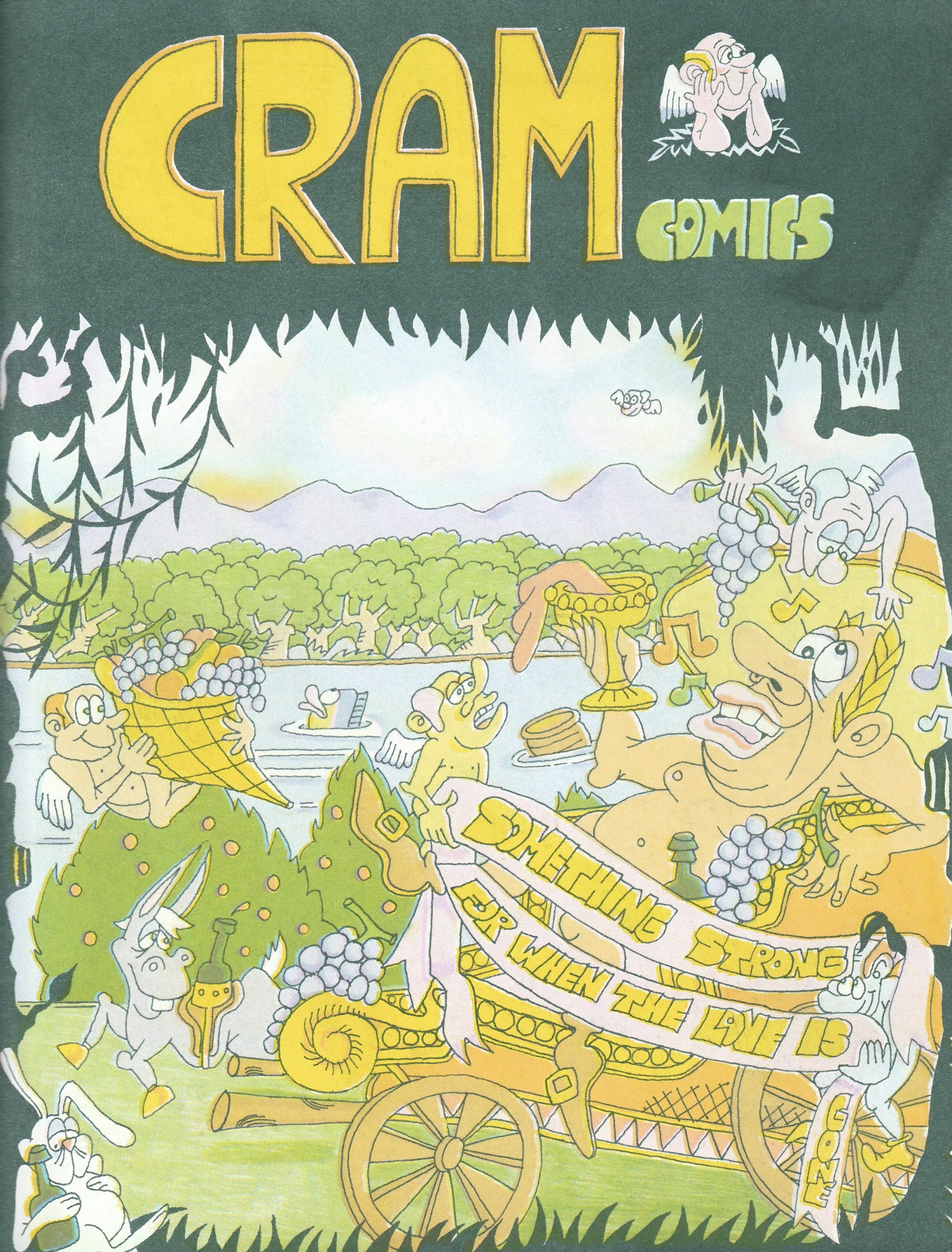
The issue is anchored by a striking cover from Lillian Ansell, featuring a nude Bacchus. The god of wine and ecstasy is depicted slouching in a pastoral setting, a visual nod to the loose, rubbery cartooning styles of the psychedelic era. However, the banner held by two balding cupids—bearing the issue’s theme—immediately complicates the imagery. While Bacchus suggests a celebratory escape into inebriation, the phrase “Something Strong For When The Love Is Gone” suggests a more desperate form of consumption. This tension between outward whimsy and inward rot defines the ninety-plus pages of content within.
Editor Andrew Alexander has assembled a diverse roster of nine contributors, ranging from slice-of-life realists to post-ironic surrealists. The result is a curated experience that treats "lost love" not merely as a romantic failure, but as a multifaceted dissolution of family bonds, artistic passion, and societal cohesion.
Chronology: The Evolution of the Cram Aesthetic
To understand the impact of the fifth issue, one must look at the trajectory of the Cram series. Historically, the anthology has functioned as a laboratory for experimental storytelling. Early issues established a reputation for "lo-fi" aesthetics and a rejection of traditional narrative structures. By the time of this fifth installment, the series has matured into a sophisticated platform where the "underground" label refers less to a lack of professional polish and more to a commitment to raw, unfiltered emotional honesty.
This issue marks a significant milestone in the anthology’s development. The transition from the colorful, carefree implications of the cover to the heavy, often bleak contents of the internal strips reflects a editorial shift toward thematic complexity. It suggests that Cram is no longer just a collection of "cool art," but a cohesive exploration of a singular emotional state.
Supporting Data: An Analytical Deep Dive into the Narrative Contributions
The strength of Cram #5 lies in the sheer variety of its interpretations. The contributors do not merely tell stories of breakups; they dismantle the very concept of "loving" anything.
The Domestic and the Mundane
The anthology opens with Swayam Parekh’s "Shabana, I Hate Tears." This single-page entry is a masterclass in tonal dissonance. Using a whimsical drawing style—complete with a literal halo over a mother’s head—Parekh explores the toxic undercurrents of social obligation. The plot, involving unacknowledged birthday napkins, serves as a vehicle for a biting critique of resentment. It posits that the "loss of love" often manifests as a petty, simmering rage over perceived slights.
Following this is Anand’s "The River Keeps on Flowing." Set in India, this eight-page narrative utilizes the visual language of romantic cinema to critique the reality of arranged emotional labor. The protagonist, an emotionally stunted young man, seeks refuge in melodramas, only to find that real-life relationships lack the scripted resolution of the silver screen. Anand’s art captures the quiet desperation of a life lived in the shadows of someone else’s expectations.
Metaphorical Decay and Formalist Grief
One of the most technically impressive entries is "Fixing It" by Médar de la Cruz and Médar Serrata. Spanning twelve pages, the story uses a leaky bathroom tap as an exhaustive metaphor for a crumbling marriage. The escalating domestic disaster—the search for tools, the inevitable flood, the struggle with the main valve—mirrors the father’s internal realization that his wife no longer cares for his struggles. The dialogue, "That’s when I knew she had it out for me," transforms a plumber’s nightmare into a haunting domestic tragedy.
In contrast, Nate Doyle’s "Earthing" abandons the traditional panel-and-gutter system entirely. This four-page experimental piece utilizes free-flowing imagery and poetic captions to process grief. By visualizing loss as a series of "hellish tortures," Doyle bypasses the intellectualization of sadness, offering instead a visceral, first-person experience of what it feels like to be shattered by the cost of love.
The Loss of the Creative Spark
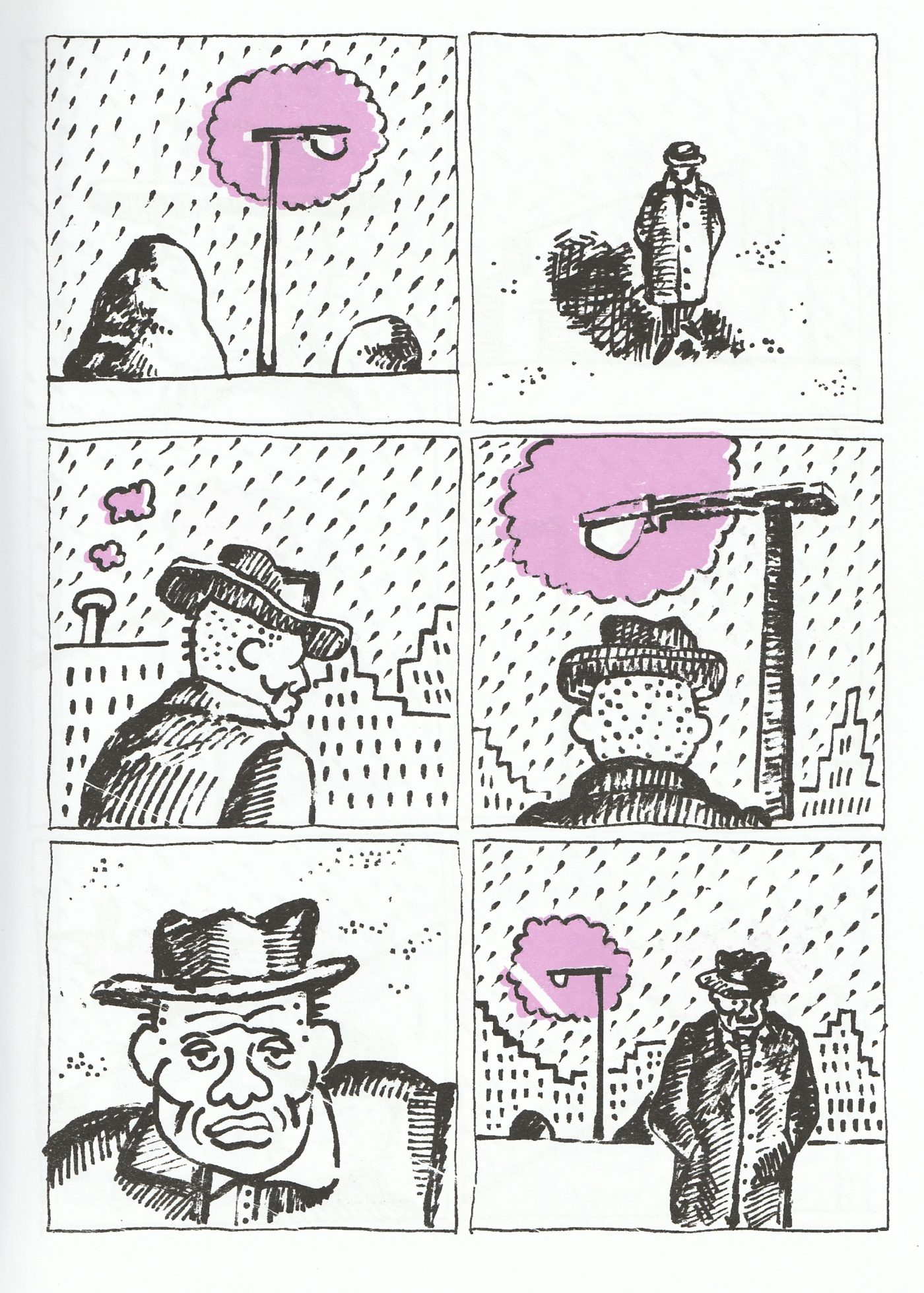
Michael D. Kennedy’s "Jumbie’s Muse" shifts the focus from interpersonal love to the love of craft. The wordless, eight-page story follows an artist who has lost his passion for painting. The introduction of a shapeshifting pink cloud—an ambiguous symbol for inspiration—leads to a climax that is as frightening as it is beautiful. Kennedy’s use of black-and-white urban landscapes contrasted with the surreal pink entity highlights the alienating nature of the creative process.
The Post-Ironic and the Absurd
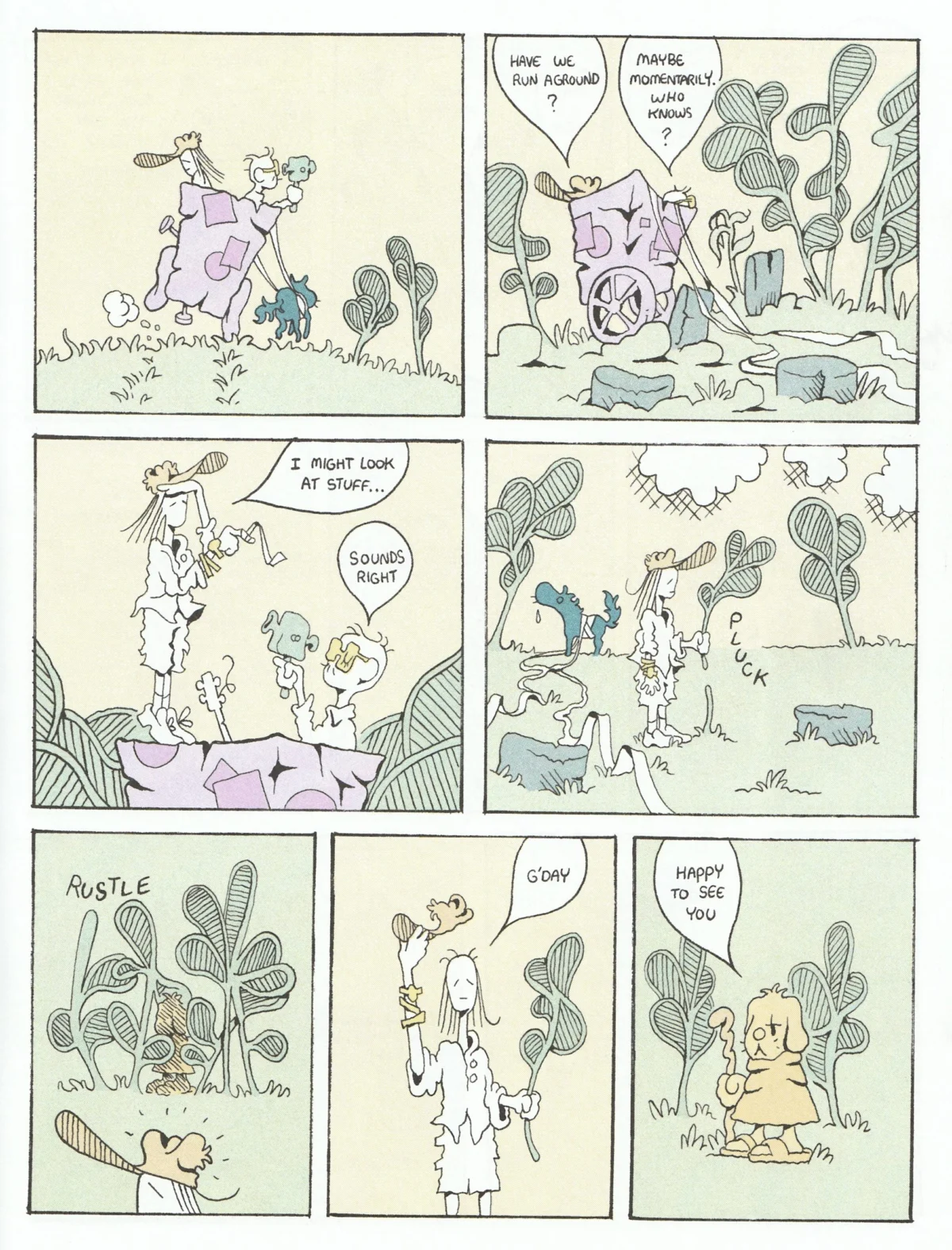
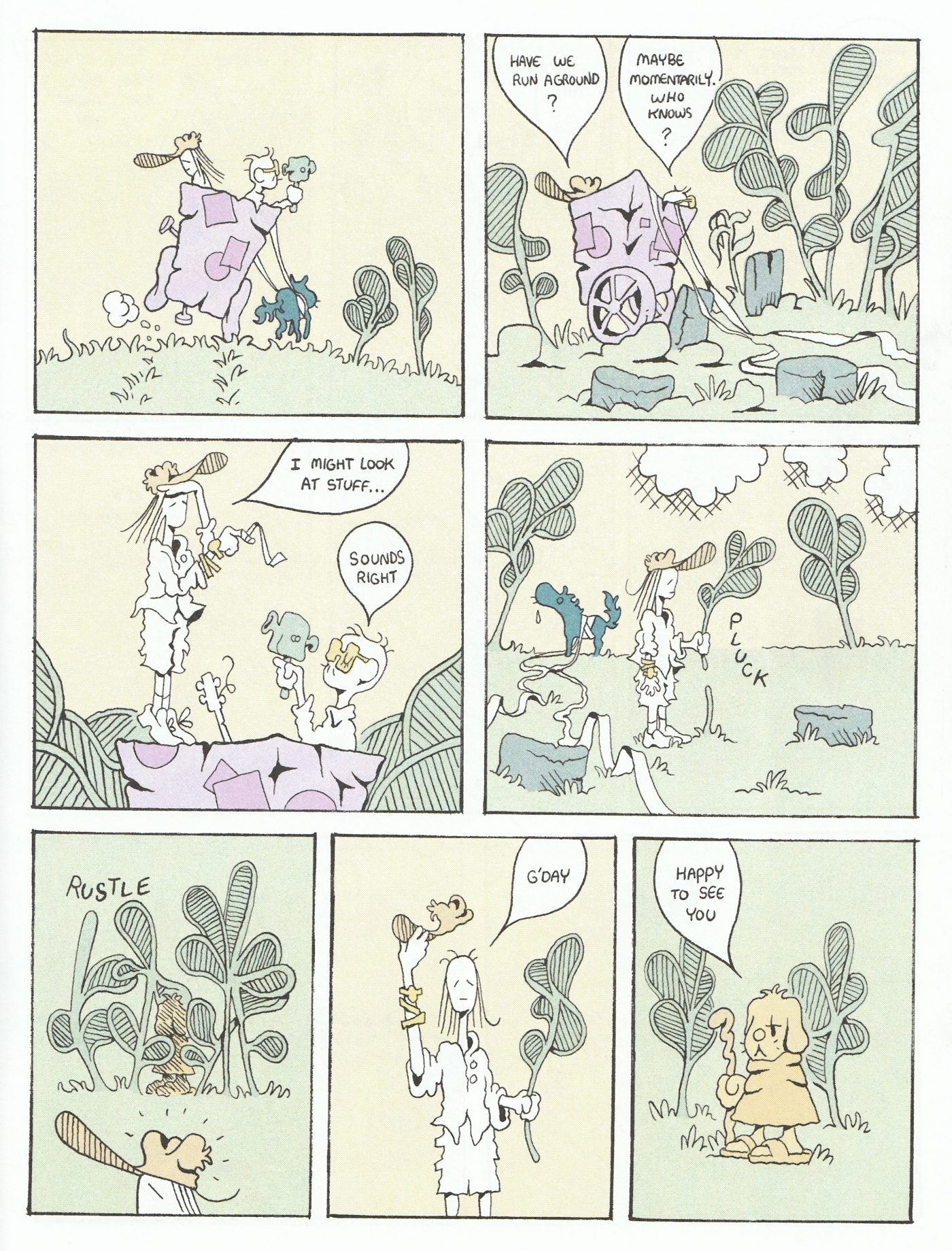
As the anthology progresses, it leans into the "outright oddness" that has become a hallmark of the series. James Collier’s "We’re Here" evokes the "hippie-centric" strain of old-school underground comics, featuring meandering dialogue and a loose, unstructured plot about a garden of strange people. It serves as a tonal palate cleanser, offering a "heath" of meaningless interactions that somehow feel inviting.
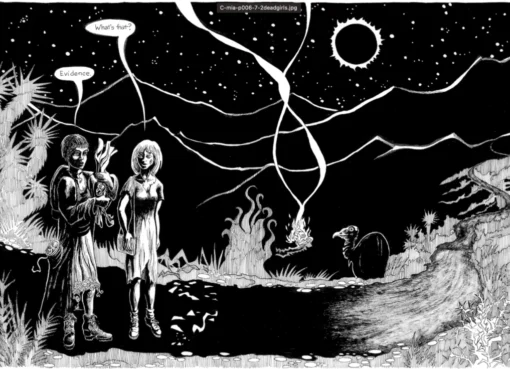
The most contemporary-feeling entry is Sam Szabo’s "The Enlightened Transsexual in: The Electric Kool-Aid Acid Testosterone Blocker." Riffing on Tom Wolfe’s 1968 counter-culture classic, Szabo’s story is a neon-soaked, "post-ironic, pre-apocalyptic" fever dream. Characters named Sam and The Enlightened Transsexual (a three-eyed, three-breasted figure) discuss "puppygirl heteropessimism" and "skibidi blajah" from a nuclear bunker. It is a dense, linguistically fractured exploration of identity and culture in the digital age, proving that the "underground" can still be cutting-edge.
Syd Madia’s "All the Time Aquatics" rounds out the surrealist offerings. By depicting an aquarium-keeper who wishes to devolve and return to the sea, Madia suggests that the ultimate "loss of love" is a rejection of humanity itself.
Official Responses and Editorial Intent
While direct statements from the contributors are not included in the volume, the editorial hand of Andrew Alexander is visible in the sequencing of the stories. By placing the "funny-because-it’s-true" humor of Parekh directly before the devastating realism of Cameron Arthur’s "Sacred Heart," Alexander forces the reader into a state of emotional whiplash.
"Sacred Heart" is widely regarded as the anthology’s emotional centerpiece. It follows Eric, a bland prison guard who collects trinkets and religious drawings from inmates. The story’s power lies in its subtlety; Eric’s detached relationship with his girlfriend and his passive role in the carceral system paint a portrait of a man who has lost the capacity for empathy. The implication that a "small act" can hold life or death in its hands is a chilling conclusion to the theme of lost love.
Critical reception within the indie comics community has praised Cram #5 for its refusal to provide easy answers. Unlike commercial anthologies that often feel like a collection of "audition pieces" for larger publishers, Cram feels like a singular, albeit fragmented, work of art.
Implications: The Enduring Power of the Anthology
The release of Cram Comics #5 has significant implications for the "alternative" comics market. First, it demonstrates that the underground aesthetic—characterized by wobbly lines, surrealist imagery, and transgressive themes—is not a relic of the past but a vital tool for processing modern trauma.
Second, the anthology proves that thematic constraints ("Something Strong For When The Love Is Gone") do not limit creativity but rather provide a focal point that allows disparate styles to harmonize. The transition from the domestic drama of a leaky faucet to the digital-native slang of a nuclear bunker feels organic because both stories are reaching for the same core truth: that living without love requires a "strong" constitution.
Ultimately, Cram #5 succeeds because it understands that the primary-colored joviality of its cover is a lie. Like the Bacchus it depicts, the anthology invites the reader to indulge, but it warns that the hangover—the bitterness, the resentment, and the silence—is the only thing that truly lasts. It is a vital, challenging collection that cements Andrew Alexander’s project as one of the most important voices in the contemporary indie scene.