"Valhalla Burning": A Dark Viking Saga Forged in the Crucible of Modern Storytelling
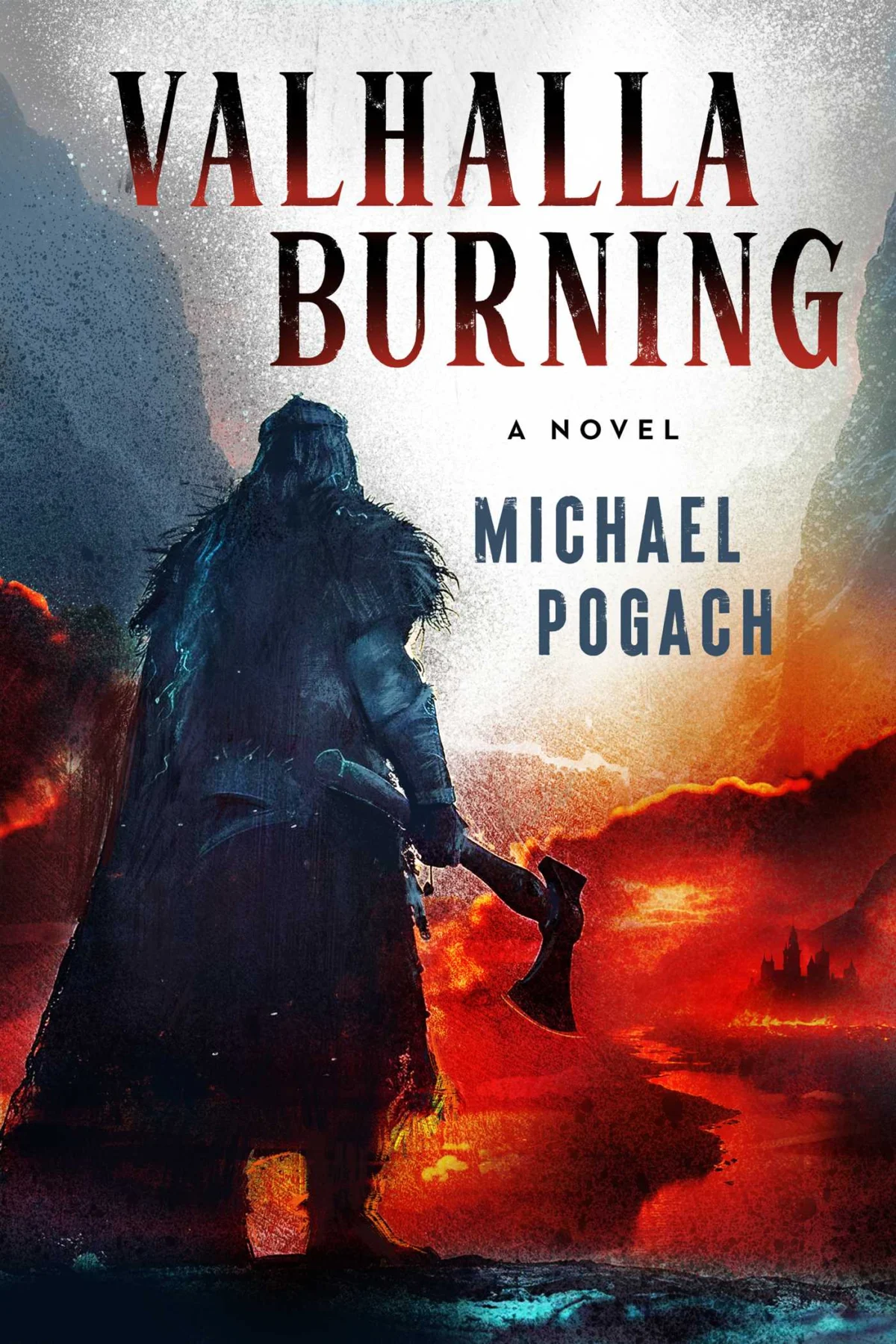
Philadelphia, PA – July 21, 2026 – In a literary landscape often defined by rigid genre boundaries and established conventions, author Michael Pogach is challenging perceptions with his latest novel, "Valhalla Burning." This visceral dark Viking adventure, set in 9th-century Norway, plunges readers into a world of supernatural warriors, profound loss, and a relentless quest for vengeance. However, Pogach’s journey to bring this saga to life is as compelling as the narrative itself, revealing a creative process deeply intertwined with contemporary storytelling mediums and a profound engagement with ancient lore.
The Saga Unfolds: A Hero’s Descent into Darkness
"Valhalla Burning" introduces Rúnr Njálsson, a formidable warrior blessed with the supernatural abilities of Odin’s chosen Berserkr. His might is legendary, instilling fear in allies and enemies alike. Yet, even this unparalleled strength proves insufficient when a brutal raid by a rival clan results in the abduction of his daughter, Yrsa. This devastating loss shatters Rúnr, compelling him to embark on a perilous quest for vengeance, not just for himself, but to secure Yrsa’s rightful passage into Valhalla.
Haunted by tormenting visions and the spectral presence of his lost child, Rúnr seeks guidance from a seeress. Her prophecy directs him to a mysterious red temple, the site where he must confront Yrsa’s killer and save her soul from the clutches of Hel, the Norse goddess of the underworld. His journey transcends his homeland, leading him through the shadowed forests of the Slavs and the Rus, ultimately reaching the fabled city of Constantinople. Along the way, Rúnr forges an unlikely alliance with a band of seasoned Viking raiders: Captain Garmr, a warrior whose ferocity mirrors the mythological hound of Hel; Erasmus, a nervous merchant harboring hidden secrets; Ingimar, a hot-tempered warrior whose impulsiveness threatens the group; and Ingirid, a formidable shieldmaiden who proves capable of piercing Rúnr’s hardened exterior. As Rúnr’s affection for Ingirid grows, his Berserkr rage intensifies, testing the bonds of camaraderie and pushing him towards an unimaginable sacrifice. The novel promises a brutal, immersive experience, inviting readers to "lift a horn of ale and taste sweat and blood."
The Genesis of a Story: Beyond Traditional Inspiration
Pogach’s reflections on the creation of "Valhalla Burning" reveal a deliberate and expansive approach to inspiration, a stark contrast to the notion of a singular, singular muse. He directly challenges the "gatekeepers" who dismiss various forms of media as less legitimate than traditional literature.
Video Games: A Powerful Narrative Medium
A significant catalyst for "Valhalla Burning" was the video game "Assassin’s Creed Valhalla." Pogach recounts a period of creative drought, feeling directionless and believing his wellspring of stories had run dry. The release of this game, however, reignited his passion. "BOOM: inspiration," he states, crediting the immersive narrative and historical setting of the game with sparking his return to writing.
This personal experience leads Pogach to passionately advocate for the narrative legitimacy of video games. He draws parallels to his own childhood experiences with early gaming consoles like the NES, highlighting how titles like "Super Mario Brothers," "The Legend of Zelda," and "Metroid" offered more than just simple entertainment. He points to the storytelling elements present even in these early games, citing the narrative progression and the groundbreaking reveal in "Metroid" as examples of sophisticated storytelling. Pogach argues that the emotional depth and complexity found in modern games like "The Last of Us" are as valid and impactful as any literary work. His core message is clear: creativity thrives when fueled by diverse experiences, and aspiring writers should embrace all forms of art, including video games, without succumbing to the pronouncements of purists.
Echoes of the Past: Translating "Beowulf"
Beyond contemporary digital realms, Pogach’s literary journey for "Valhalla Burning" also delved into the foundational texts of Anglo-Saxon literature. Driven by a personal fascination with the epic poem "Beowulf" and his identity as an English professor, Pogach undertook the ambitious task of translating a portion of the ancient text himself.
He acknowledges the difficulty and often tedious nature of working with Old English, describing it as "difficult. Frustrating. Recursive. Dull. Sometimes exciting." Despite these challenges, he successfully rendered approximately 25 lines spanning Beowulf’s legendary battles. This endeavor, while seemingly academic, served a deeper purpose for Pogach. He frames it as an act of pure creative will, akin to wanting ice cream for dinner – a desire pursued for its own sake. This personal translation project underscores his belief in the importance of engaging with art and creation for the sheer joy and fulfillment it brings, encouraging others to pursue their own passions without external validation.
The Inner Voice: Heeding Creative Intuition
A recurring theme in Pogach’s reflections is the importance of listening to one’s inner creative voice. He reveals that the initial title for the novel, "Of Vengeance and Valhalla," felt inadequate, a sentiment confirmed by an internal "little voice." This same internal guidance prompted him to restart the manuscript in the third person after the first draft faltered.

Pogach likens this intuitive guidance to a muse, intuition, or even a "Jiminy Cricket." He emphasizes that while authors may sometimes try to ignore or override these inner nudges, heeding them is often crucial for producing one’s best work. This reliance on instinct and intuition highlights the deeply personal and often non-linear nature of the creative process.
The Long Road to Publication: A Testament to Patience and Perseverance
The path from manuscript to published book is rarely swift, and Pogach’s experience with "Valhalla Burning" is a profound illustration of this arduous journey. He candidly admits to struggling with patience throughout the process.
A Marathon of Months and Years
The genesis of "Valhalla Burning" can be traced back to late 2020, amidst the global COVID-19 pandemic. The manuscript was completed in early summer 2023, a process punctuated by significant setbacks, including crippling self-doubt and complete rewrites. The subsequent querying process to secure an agent was, by Pogach’s own admission, emotionally taxing, marked by daily fluctuations of hope and despair. He signed with an agent in spring 2024, followed by intensive revisions and the subsequent search for a publisher, which commenced in June 2024.
The publication itself involved a protracted series of negotiations, contract offers, and editorial stages. Pogach details the agonizing wait times for publisher responses, the meticulous revisions, line edits, copyedits, and the finalization of cover art and promotional materials. This entire process, from the first word to the book’s release on July 21, 2026, spanned five years and eight months. Pogach’s self-deprecating humor about his lack of patience, illustrated by his aversion to long queues, underscores the immense fortitude required to navigate the publishing industry.
The Brutal Beauty of the Viking Era
Pogach also offers a nuanced perspective on the historical Vikings, moving beyond simplistic stereotypes. He acknowledges the common imagery associated with them – braided beards, axes, longships, and pillaging – but also addresses the historical nuance that "Viking" was often more of an occupation than an ethnic identity.
While the Viking era was undeniably brutal, characterized by violence, disease, and conflict, Pogach stresses that it was also populated by individuals with rich and complex lives. Farmers, priests, hunters, settlers, and even shieldmaidens were real people who loved, struggled, created art, and developed sophisticated cultural tapestries. He argues against reducing this diverse culture to mere clichés, asserting that Vikings, like all humans, were a blend of arrogance and oppression, brutality and kindness.
Pogach uses this understanding to frame "Valhalla Burning" not solely as a Viking novel, but as a story that explores universal themes of fatherhood, family, friendship, oaths, monsters, trauma, humanity, and faith, all set against the backdrop of a world where Vikings were leaving their indelible mark. This approach aims to connect with contemporary readers by highlighting the enduring human experiences that transcend historical periods.
Conclusion: A Modern Saga Rooted in Ancient Echoes
Michael Pogach’s "Valhalla Burning" is more than just a historical novel; it is a testament to the evolving landscape of storytelling and the author’s personal journey through creative challenges. By drawing inspiration from video games, engaging with classical literature, and heeding his own creative intuition, Pogach has crafted a narrative that is both deeply rooted in the brutal beauty of the Viking age and remarkably resonant with modern sensibilities. His candid reflections on the painstaking process of creation serve as an inspiring reminder of the perseverance required in the literary world, while his nuanced portrayal of the Vikings encourages a deeper, more complex understanding of history. "Valhalla Burning" stands as a powerful example of how contemporary art forms can fuel ancient narratives, resulting in a literary experience that is both thrilling and thought-provoking.