The Eridu Genesis, an ancient Sumerian text, stands as the earliest known Mesopotamian account of a catastrophic Great Flood, a narrative that reverberates through millennia and cultures, from the Akkadian Atrahasis and the epic of Gilgamesh to the biblical Book of Genesis. This remarkable artifact, often referred to as the Sumerian Flood Story, offers unparalleled insight into humanity’s oldest reflections on divine judgment, survival, and renewal.
Discovered amidst the ruins of ancient Mesopotamia, the Eridu Genesis challenges long-held assumptions about the originality of biblical narratives and underscores the deep roots of shared human mythologies. Though badly damaged, its deciphered fragments reveal a sophisticated cosmological tale, predating its more famous successors and providing a critical lens through which to understand the evolution of one of the world’s most pervasive stories.
Main Facts: A Precursor to Global Flood Myths
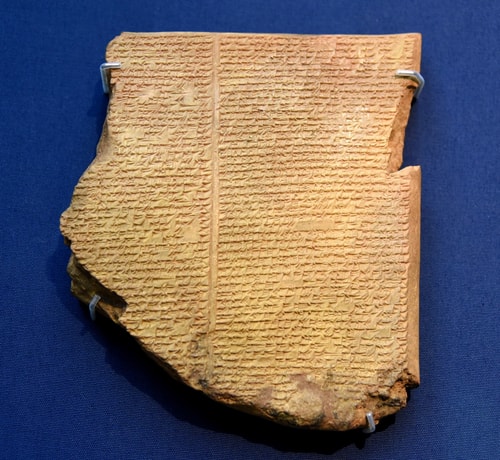
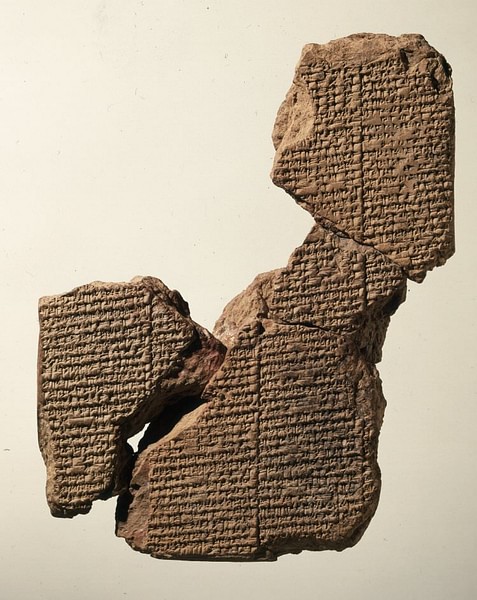
The Eridu Genesis is the oldest Mesopotamian textual record of a Great Flood, a cataclysmic event orchestrated by divine powers to cleanse the world of humanity. Its modern title was coined in 1981 by scholar Thorkild Jacobsen, as the original Sumerian name remains unknown. Dated to approximately 1600 BCE in its written form, scholars believe the story itself circulated orally as early as 2300 BCE, indicating its profound antiquity.
This Sumerian narrative serves as a foundational text for later Mesopotamian flood stories, including the 17th-century BCE Atrahasis and the monumental Epic of Gilgamesh (circa 2150-1400 BCE). Crucially, it also predates the biblical account of Noah and his ark, found in the Book of Genesis, which is conservatively dated between 1450 BCE and 600 BCE. The parallels between these narratives are striking, featuring a divine decision to destroy humanity, a chosen righteous individual tasked with building an ark, the preservation of life, and the eventual re-establishment of the world.
The protagonist of the Eridu Genesis is Ziudsura, a priest-king of the city of Suruppak, whose name translates to "life of long days." He is the Sumerian counterpart to Atrahasis ("exceedingly wise") in the eponymous Akkadian epic, Utnapishtim ("he found life") in The Epic of Gilgamesh, and Noah ("rest" or "peace") in the biblical tradition. This consistent figure across diverse cultures highlights a shared archetype of the wise savior chosen by the gods.
Despite the tablet’s fragmented condition, with numerous significant lines missing, its core narrative remains comprehensible. Scholars frequently rely on the more complete Akkadian/Babylonian Atrahasis to reconstruct the lacunae in the Eridu Genesis, underscoring the interconnectedness of these ancient traditions. The story’s influence extends beyond Mesopotamia, likely impacting the Egyptian "flood story" known as The Book of the Heavenly Cow (dated in part to 2181-2040 BCE), but undoubtedly serving as the primary inspiration for later Near Eastern flood myths.
Chronology: Excavations, Skepticism, and Paradigm Shifts
The discovery of the Eridu Genesis in 1893 was a pivotal moment in a century marked by profound intellectual and scientific upheaval. The 19th century witnessed a surge in archaeological expeditions across Mesopotamia, largely funded by Western institutions like museums and universities. The primary motivation for many of these ventures was to unearth physical evidence that would corroborate the historicity and divine origin of biblical narratives, which were increasingly under scrutiny.
This period was characterized by a growing wave of critical biblical scholarship, challenging the infallibility and traditional interpretations of the sacred texts. Archbishop James Ussher’s 17th-century chronology, which, based on genealogical calculations in Genesis, dated the creation of the world to October 22, 4004 BCE, at 6:00 p.m., was still widely accepted. The Bible was seen as the oldest, most original, and divinely inspired book, offering an unassailable account of human history and the cosmos.
However, the intellectual landscape was rapidly changing. Charles Darwin’s Origin of Species, published in 1859, presented a theory of evolution that directly contradicted the biblical creation account, suggesting humanity evolved from primates rather than being divinely created "a little lower than the angels." A few decades later, in 1882, Friedrich Nietzsche’s The Gay Science famously declared "God is dead," reflecting a growing societal shift towards secularism and a perceived triumph of technology and human reason over traditional religious dogma. These developments created an environment ripe for questioning established religious truths.
The Mesopotamian excavations, intended to bolster biblical literalism, inadvertently produced the opposite effect. As cuneiform tablets were deciphered from the mid-19th century onwards, scholars began to discover a wealth of stories, motifs, and symbols that appeared in biblical narratives but demonstrably pre-dated them. Among these groundbreaking discoveries was the Sumerian Flood Story, the earliest known iteration of the deluge narrative that people of the time primarily associated with Noah’s Ark.
The badly damaged Eridu Genesis tablet was unearthed in the ruins of the ancient city of Nippur during an expedition sponsored by the University of Pennsylvania in 1893. It remained untranslated for nearly two decades until German Assyriologist Arno Poebel deciphered it in 1912. The existence of a pre-biblical flood account was not entirely new; George Smith’s 1876 translation of The Epic of Gilgamesh had already revealed an earlier Mesopotamian deluge story. However, the Eridu Genesis, as the oldest Sumerian version, added further weight to the growing body of evidence.
The revelation of these ancient flood narratives sparked intense debate. For some, they served as corroboration, suggesting that a great flood was indeed a historical event, recorded from different cultural perspectives. For others, particularly critical scholars, these discoveries necessitated a radical rethinking of the Bible’s traditional interpretation, questioning its originality and divine singularity.
This latter view gained significant traction with the work of British archaeologist Sir Leonard Woolley. His excavations at the ancient city of Ur in the 1920s provided crucial geological evidence. During the 1928-1929 season, Woolley sank a series of shafts, revealing clear evidence of significant flooding in the region. However, he concluded that these were localized, not global, events, and furthermore, were not singular, but rather recurrent occurrences caused by the periodic overflowing of the Tigris and Euphrates rivers.
Woolley’s findings were corroborated by other archaeologists across Mesopotamia, leading to a scholarly consensus that the biblical narrative of a global Great Flood could no longer be maintained as a literal historical event. Ussher’s chronology, once a cornerstone of biblical interpretation, was effectively dismissed by academic circles. Scholar Stephanie Dalley succinctly summarizes this shift: "No flood deposits are found in third-millennium strata, and Archbishop Ussher’s date for the Flood of 2349 BC, which was calculated using numbers in Genesis at face value and which did not recognize how highly schematic Biblical chronology is for such early times, is now out of the question." (Dalley, 5). The humble, fragmented tablet of the Eridu Genesis, therefore, played an indirect yet vital role in liberating academic inquiry and facilitating a more nuanced understanding of ancient history and religious texts.
Supporting Data: The Narrative and Its Parallels
The Eridu Genesis, despite its lacunae, presents a coherent and compelling narrative that begins with the creation of the world, including the "black-headed people" (the Sumerians) and various animals. The primary deities involved in this act of creation are An (Anu), Enlil, Enki, and Ninhursag – central figures in the Sumerian pantheon who would later be adapted and integrated into subsequent Mesopotamian theological systems.
Following creation, the gods decree the establishment of cities, starting with Eridu, revered as the oldest city in the world. Each city is assigned a patron deity, thereby establishing a fundamental tradition in Mesopotamian religion. The text also alludes to the development of irrigation systems, vital for agricultural societies in the fertile crescent.
A significant section of the tablet is missing after this initial creation and city-building phase. These missing lines are presumed to have explained the gods’ motivations, specifically An and Enlil’s decision to destroy humanity with a great flood. The later Atrahasis epic offers a compelling reason: humanity had become too numerous and their incessant noise disturbed Enlil’s divine rest. In Atrahasis, Enlil attempts to reduce the human population through droughts, plagues, and famines, but each time, Enki, the wise god and friend of humanity, intervenes by instructing humans on how to appease the gods and reverse the calamities. It is highly probable that the Eridu Genesis contained similar details, with Enki playing an analogous role as humanity’s divine advocate.
The story resumes with the gods swearing an oath, presumably to prevent any divine interference with the flood decree. Ziudsura, the priest-king of Suruppak, is then introduced. Bound by the oath, Enki cannot directly warn Ziudsura. Instead, in a moment of ingenious divine circumvention, Enki speaks to a wall, knowing Ziudsura will overhear his instructions.
More lines are missing at this crucial juncture, which would have detailed Ziudsura’s construction of a massive boat, designed to preserve life. The narrative picks up again with the depiction of the deluge itself, raging for seven days and seven nights. When the storms subside, Utu (Utu-Shamash), the sun god, appears, illuminating the heavens and earth. Ziudsura creates an opening in his boat, allowing Utu’s rays to enter, and then offers a sacrifice to the god. The precise events immediately following this sacrifice are lost to the damaged tablet.
The conclusion, however, is largely preserved: An and Enlil, apparently regretting their destructive decision, are grateful that Ziudsura has preserved their creations. As a reward, they grant him eternal life in the paradise land of Dilmun. The tablet ends with another 39 missing lines, the content of which remains speculative.
The following translated excerpts from The Literature of Ancient Sumer by Black, Cunningham, Robson, and Zólyomi illustrate the narrative flow and the extent of the damage:
"I will stop the annihilation of my creatures, and I will return the people from their dwelling grounds. Let them build many cities so that I can refresh myself in their shade. Let them lay the bricks of many cities in pure places, let them establish places of divination in pure places, and when the fire-quenching…is arranged, the divine rites and exalted powers are perfected and the earth is irrigated, I will establish well-being there."
"After An, Enlil, Enki, and Ninhursag had fashioned the black-headed people, they also made animals multiply everywhere, and made herds of four-legged animals exist on the plains, as is befitting. [Here there are approximately 32 lines missing]"
"I will oversee their labor. Let…the builder of the Land, dig a solid foundation."
"After the…of kingship had descended from heaven, after the exalted crown and throne of kingship had descended from heaven, the divine rites and the exalted powers were perfected, the bricks of the cities were laid in holy places, their names were announced and the…were distributed. The first of the cities, Eridu, was given to Nudimmud the leader. The second, Bad-tibira, was given to the Mistress. The third, Larag, was given to Pabilsag. The fourth, Zimbir, was given to hero Utu. The fifth, Suruppag, was given to Sud. And after the names of these cities had been announced and the…had been distributed, the river…was watered. [Here there are approximately 34 lines missing]"
“…seat in heaven…flood…mankind. So he made…Then Nintud…Holy Inanna made a lament for its people. Enki took counsel with himself. An, Enlil, Enki, and Ninhursag made all the gods of heaven and earth take an oath invoking An and Enlil. In those days, Ziudsura the king, the gudug priest…He fashioned…The humble, committed, reverent…Day by day, standing constantly at…Something that was not a dream appeared, conversation…taking an oath by invoking heaven and earth. In the Ki-ur, the gods…a wall."
"Ziudsura, standing at its side, heard: "Side-wall standing at my left side, …Side-wall, I will speak words to you; take heed of my words, pay attention to my instructions. A flood will sweep over the…in all the…A decision that the seed of mankind is to be destroyed has been made. The verdict, the word of the divine assembly, cannot be revoked. The order announced by An and Enlil cannot be overturned. Their kingship, their term has been cut off; their heart should be rested about this…[Here there are approximately 38 lines missing]"
"All the windstorms and gales rose together and the flood swept over the [land]. After the flood had swept over the land, and waves and windstorms had rocked the huge boat for seven days and seven nights, Utu the sun-god came out, illuminating heaven and earth. Ziudsura could drill an opening in the huge boat and hero Utu entered the huge boat with his rays. Ziudsura the king prostrated himself before Utu. The king sacrificed oxen and offered innumerable sheep. [Here there are approximately 33 lines missing]"
""They have made you swear by heaven and earth…An and Enlil have made you swear by heaven and earth…""
"More and more animals disembarked onto the earth. Ziudsura the king prostrated himself before An and Enlil. An and Enlil treated Ziudsura kindly…they granted him life like a god, they brought down to him eternal life. At that time, because of preserving the animals and the seed of mankind, they settled Ziudsura the king in an overseas country, in the land of Dilmun, where the sun rises…[Here there are approximately 39 lines missing]"
The initial lines, referencing "the annihilation of my creatures" and the gods’ desire to "return the people from their dwelling grounds," hint at an earlier narrative, perhaps similar to Atrahasis, where humans were initially intended to be co-workers with the gods and granted long lifespans. The missing text might have detailed the gods’ subsequent decision to limit human lifespan and increase mortality post-flood, a common motif in Mesopotamian epics aimed at explaining the human condition.
Official Responses: Debating the Universal Flood Myth
The discovery of the Eridu Genesis, alongside other Mesopotamian flood narratives, fundamentally altered scholarly understanding of universal flood myths. The widespread appearance of a great flood story across diverse cultures worldwide has prompted two primary hypotheses:
Independent Genesis: The belief that a single, cataclysmic historical flood event occurred, to which different cultures independently responded by creating similar stories.
Cultural Diffusion: The theory that an early, influential flood story (likely the Mesopotamian original) resonated deeply with ancient audiences and spread through trade, migration, and cultural exchange, being adapted and localized by each culture it reached.
Modern scholarship overwhelmingly favors the cultural diffusion model. The precise parallels in narrative structure, divine motivation, human protagonist, and resolution across Near Eastern texts strongly suggest a common origin rather than independent invention. Stephanie Dalley, a prominent scholar of Mesopotamian literature, articulates this view: "All these flood stories may be explained as deriving from the one Mesopotamian original, used in traveler’s tales for over two thousand years, along the great caravan routes of Western Asia: translated, embroidered, and adapted according to local tastes to give a myriad of divergent versions." (Dalley, 7).
The Eridu Genesis, therefore, is not merely one flood story among many; it is regarded by many scholars as the likely ur-text, the original source from which countless variations sprang. These ancient narratives served multiple purposes. They offered cosmological explanations for the creation of the world as people knew it, often attributing geological features or societal structures to the post-flood rebuilding. More profoundly, they acted as cautionary tales, emphasizing the absolute power of divine will and the precariousness of human existence. The stories strongly encouraged adherence to religious-cultural precepts and the maintenance of goodwill with deities who possessed the power to both create and destroy.
Even in versions where the gods or God repent of their decision—as seen in the biblical Genesis with the rainbow covenant—the underlying message of divine capacity for severe punishment remained potent for ancient audiences. Such narratives fostered a worldview where divine pleasure was paramount, and human transgression could invite equally dire consequences at any moment.
Implications: Legacy and Enduring Significance
The Eridu Genesis, along with its Mesopotamian brethren, has left an indelible mark on religious, historical, and cultural understanding. Its discovery catalyzed a profound shift in biblical scholarship, compelling a re-evaluation of the Bible’s historical context and its relationship to older Near Eastern traditions. No longer could the biblical narratives be viewed in isolation or as entirely original; they were now understood as part of a rich tapestry of ancient storytelling, influenced by and in dialogue with the vibrant literary traditions of Mesopotamia.
This shift has profound implications for comparative mythology and the study of cultural diffusion. The Eridu Genesis serves as a powerful testament to the human tendency to grapple with existential questions—the origins of the world, the nature of good and evil, divine justice, and the fragility of life—through narrative. The enduring popularity of the flood myth across civilizations highlights a universal fascination with catastrophic change and the possibility of renewal.
Furthermore, the Eridu Genesis underscores the vital role of archaeology in reshaping our understanding of the past. Without the painstaking work of excavators and Assyriologists, this foundational text might have remained buried, and our perception of religious history would be considerably less complete. The tablet’s fragmented state also reminds us of the inherent challenges and interpretive artistry involved in reconstructing ancient knowledge.
In a broader sense, these ancient texts continue to inform our understanding of the human relationship with the divine. The portrayal of powerful, sometimes capricious, gods who interact directly with humanity, offering both creation and destruction, resonates with fundamental human anxieties and hopes. The figure of Ziudsura, chosen for his piety and wisdom, offers a timeless archetype of the individual capable of navigating divine wrath and ensuring the continuation of life.
The Eridu Genesis, though an artifact from a distant past, remains a potent symbol of humanity’s shared narrative heritage. It is a reminder that while cultures diverge, the fundamental questions and stories that define the human condition often echo across time and geography, shaping belief systems and cultural identities for millennia. Its legacy is not just historical or archaeological, but deeply philosophical, prompting ongoing reflection on the origins of our myths and the enduring power of ancient narratives in the modern world.
London, UK – For many, the word "folklore" conjures images of quaint anachronisms or fantastical tales spun for entertainment. It might evoke the sight of antler-wearing men dancing in Abbot
Sydney, Australia – In the vast, cerulean expanse of the Coral Sea, a revolutionary naval engagement unfolded between May 4 and 8, 1942, marking a watershed moment in military history. The Battle of t
FOR IMMEDIATE RELEASE [City, State] – [Date] – The spectral echoes of ancient Europe continue to captivate scholars and enthusiasts alike, particularly the enduring mystery of the Wild Hunt. A signifi