The Paradox of Ancient Justice: Unearthing the Sumerian ‘Hymn to Nungal,’ Goddess of Prisons and Rehabilitation
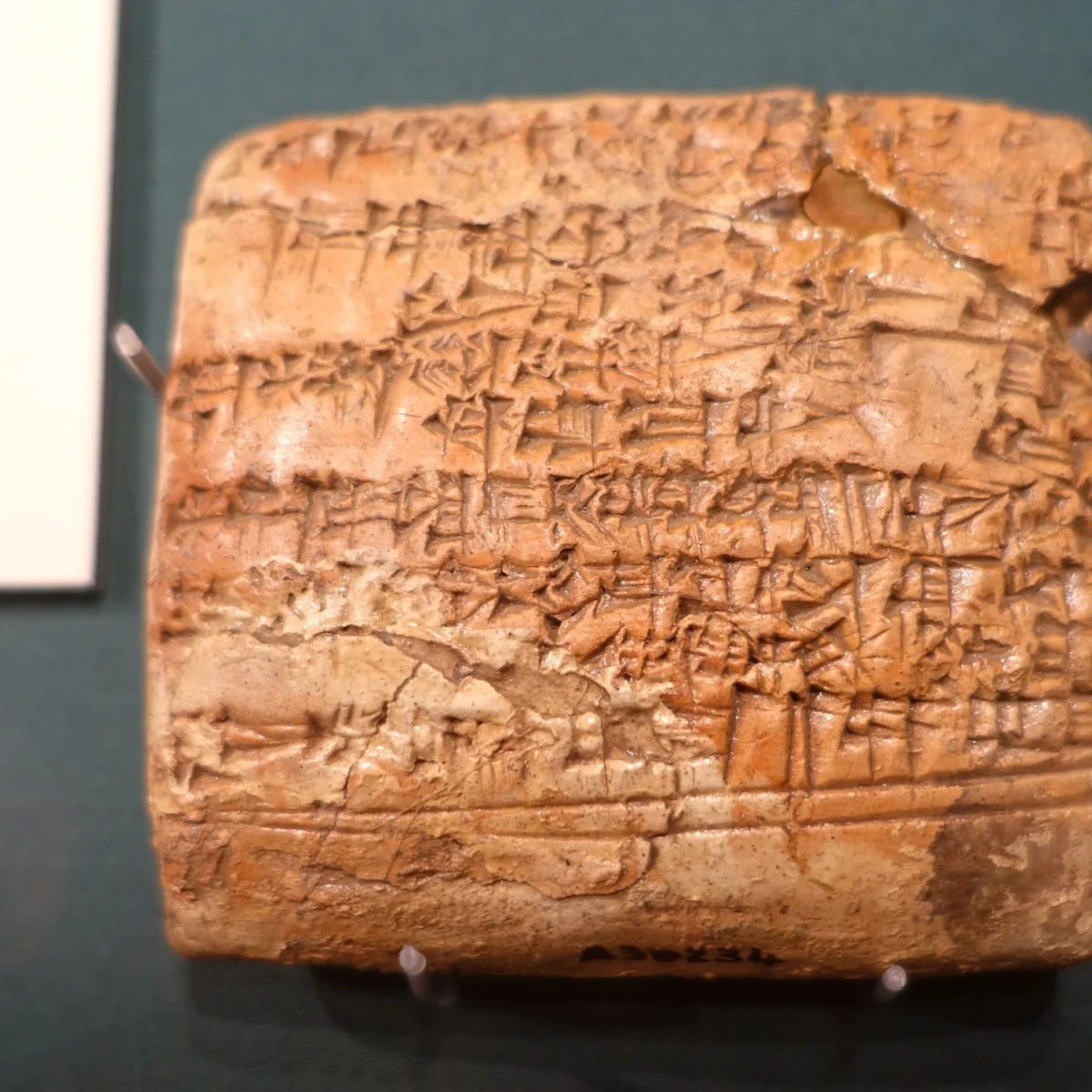
UR, Mesopotamia – In the annals of ancient Sumerian literature, few texts offer such a profound and complex glimpse into the concepts of justice, punishment, and redemption as the Hymn to Nungal. Dating primarily to the Old Babylonian period (circa 1894-1595 BCE), this powerful poem venerates Nungal, a deity of formidable yet compassionate character, known as the goddess of prisons and rehabilitation, and deeply intertwined with the enigmatic underworld. Often referred to simply as Nungal A, this hymn was not merely a devotional piece; it was a cornerstone of the scribal school curriculum, frequently copied, studied, and revered, shaping the legal and ethical understanding of generations of Mesopotamian administrators.
Nungal, whose name translates majestically as "Great Princess," also bore the epithet Manungal, or "Mother Nungal," underscoring a nurturing aspect often juxtaposed with her stern domain. The hymn itself, discovered amidst the ruins of ancient cities like Nippur, paints a vivid picture of her prison house—a place simultaneously terrifying and redemptive, a site of despair for the wicked and a crucible for the transformation of the misguided. This duality lies at the heart of Nungal’s enduring significance: a goddess who embodied both the inescapable consequence of wrongdoing and the profound potential for mercy and a second chance.
A Chronicle of Divine Justice: Tracing the Hymn’s Origins
The precise moment of the Hymn to Nungal‘s composition remains a subject of scholarly debate, yet its influence spanned centuries. While the vast majority of extant copies hail from the Old Babylonian period, archaeological and linguistic evidence suggests its origins might stretch further back. Some scholars propose its creation during the preceding Ur III period (circa 2112 to circa 2004 BCE), an era marked by a deliberate cultural and administrative renaissance. It is plausible that the hymn was commissioned or at least popularized under the reign of Shulgi of Ur (reigned 2094 to circa 2046 BCE), a king renowned for his zealous promotion of widespread literacy. Shulgi’s establishment of numerous scribal schools, known as edubba ("the house of tablets"), fostered an unprecedented surge in written works, providing fertile ground for the dissemination and study of such a foundational text.
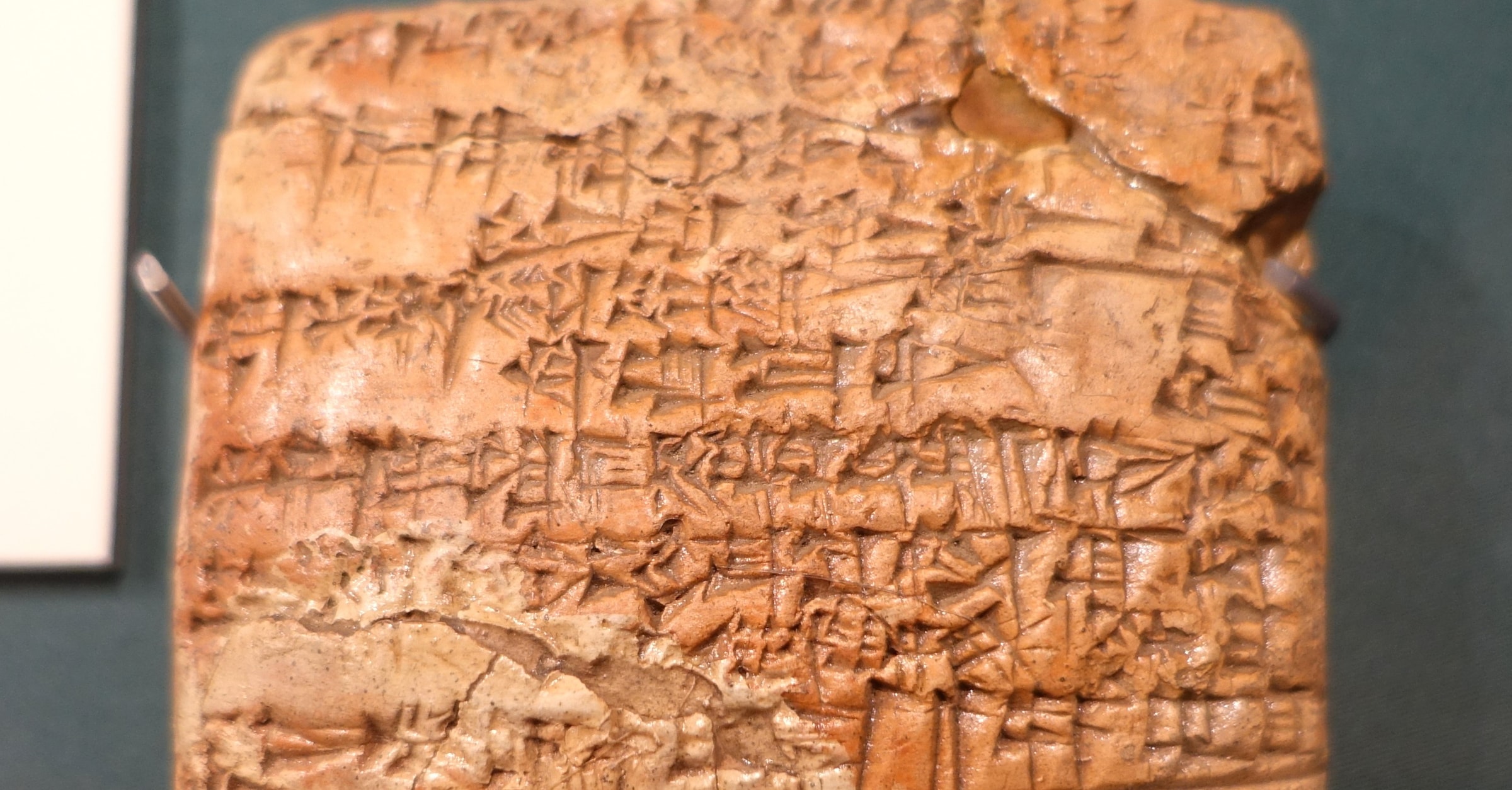
Further adding to its antiquity, Nungal’s name appears in inscriptions from the even earlier Early Dynastic period in Mesopotamia (circa 2900 to circa 2350/2334 BCE). This suggests that the goddess, and perhaps an earlier iteration of her hymn, was already a recognized figure in the Sumerian pantheon long before the Ur III or Old Babylonian eras. The sheer volume of cuneiform tablets containing the Hymn to Nungal, unearthed primarily from the mid-19th through the mid-20th centuries across various sites in modern-day Iraq, particularly Nippur—a major religious and intellectual center—unequivocally testifies to its widespread popularity and enduring cultural relevance throughout Sumerian and later Mesopotamian civilizations. This abundance of copies confirms its status as a canonical text, an essential part of the intellectual and spiritual fabric of the time.
The Divine Architect of Justice: Nungal’s Pantheon and Purpose
Nungal’s divine connections underscore her multifaceted role in the Sumerian cosmic order. She is identified as the daughter of Ereshkigal, the formidable Queen of the Underworld, thereby associating her intrinsically with the realm of the afterlife and the destinies of souls beyond mortal existence. Yet, her lineage also links her to the forces of order and terrestrial justice: she is the daughter-in-law of Enlil, the preeminent sky god responsible for maintaining cosmic balance and societal laws. Her consort, Birtum, an underworld deity whose very name translates to "shackle," further solidifies her dominion over confinement and punishment. Symbolically, she is also referenced as a "daughter of An" (Anu), Enlil’s father, the supreme sky god, reinforcing her association with primordial justice and cosmic decree.
In ancient Mesopotamia, legal systems, exemplified by monumental codes such as the Code of Ur-Nammu and the later Code of Hammurabi, meticulously delineated crimes and prescribed corresponding punishments. However, these human-enacted laws were understood to be reflections of a deeper, divine mandate. The gods were the ultimate arbiters, validating and enforcing justice. Scholar Stephen Bertman eloquently captures this societal ethos:
"The key [to Mesopotamian justice] was an innate compliance to higher authority, a behavioral characteristic that permeated Mesopotamian culture. Society’s prime personal virtue was humble and unquestioning obedience to the gods and their earthly surrogates. Within society, it was the state and its demands, rather than the individual and his rights, that were supreme." (70)
While deities like Utu-Shamash were also closely linked with justice, Nungal held a unique and specialized portfolio. From the Early Dynastic period through the Old Babylonian period and potentially beyond, she was the specific deity responsible for the accused after a crime had been committed. Her singular power was the ability to "separate the innocent from the guilty," making her central to the process of adjudication and rectification.
It is crucial to understand that imprisonment in Mesopotamian law was generally a temporary measure. The accused would be confined in a guardhouse or prison only until guilt or innocence could be established through trial or, more dramatically, through divine ordeal. Once judgment was rendered, punishment typically took various forms: a fine, specific forms of mutilation, periods of slavery or forced labor, or, in severe cases, death. Nungal’s domain, therefore, extended beyond mere incarceration; it encompassed the very process of discerning truth and guiding the fate of the individual.
The House of Justice: A Poetic Journey Through Nungal’s Domain
The Hymn to Nungal is a masterpiece of Sumerian literature, meticulously structured to convey its profound message. It presents a detailed, often terrifying, description of Nungal’s "prison house"—a metaphorical space believed to exist in the underworld or a parallel divine realm, yet clearly modeled on the earthly realities of Mesopotamian confinement. This divine prison serves as the crucible where Nungal enacts her dual roles: punishing the wicked and rehabilitating the misguided.
The poem unfolds in distinct sections, offering varying perspectives on this formidable institution:
1. The Terrifying Inescapability: The Prisoner’s Perspective (Lines 1-61)
The initial lines, spoken by an unidentified narrator, plunge the reader into the chilling reality of Nungal’s house, portrayed as a place of immense power and dread:
"House, furious storm of heaven and earth, battering its enemies; prison, jail of the gods, august neck-stock of heaven and earth! Its interior is evening light, dusk spreading wide; its awesomeness is frightening. Raging sea which mounts high, no one knows where its rising waves flow. House, a pitfall waiting for the evil one; it makes the wicked tremble!"
The imagery is visceral, depicting the prison as an inescapable, all-encompassing force—a "net whose fine meshes are skillfully woven," a "river of the ordeal which leaves the just ones alive, and chooses the evil ones." The architectural descriptions are equally menacing, personifying the prison’s components as predatory entities: its stairs a "great open-mouthed dragon," its door jamb a "great dagger," its bolt a "horned viper, slithering in a wild place."
This section vividly conveys the despair of those confined within. Inmates are depicted as utterly disoriented, unable to recognize loved ones, their identities eroded by their suffering:
"Even a powerful man cannot open up its door; incantations are ineffective (?). It opens to a city in ruins, whose layout is destroyed. Its inmates, like small birds escaped from the claws of an owl, look to its opening as to the rising of the sun. Brother counts for brother the days of misfortune, but their calculations get utterly confused. A man does not recognize his fellow men; they have become strangers. A man does not return the password of his fellow men, their looks are so changed."
The atmosphere is one of profound sorrow: "The interior of the temple gives rise to weeping, laments and cries. Its angry heart causes one to pass the days in weeping and lamentation." Yet, even amidst this desolation, a hint of Nungal’s rehabilitative power emerges: "Its brick walls crush evil men and give rebirth to just men." The section culminates with the gods present at an "interrogation," at the "river ordeal, to separate the just from the evildoers; a just man is given rebirth."
2. The Compassionate Arbitress: Nungal’s Proclamation (Lines 62-116)
The poem dramatically shifts perspective as Nungal herself speaks, revealing the deeper, compassionate purpose behind her formidable domain. She begins by asserting her divine authority and lineage:
"Then the lady is exultant; the powerful goddess, holy Nungal, praises herself: ‘An has determined a fate for me, the lady; I am the daughter of An. Enlil too has provided me with an eminent fate, for I am his daughter-in-law. The gods have given the divine powers of heaven and earth into my hands. My own mother, Ereshkigal, has allotted to me her divine powers.’"
Nungal proudly declares her role as a benevolent mother figure, not just a punisher:
"Mercy and compassion are mine. I frighten no one. I keep an eye upon the black-headed people: they are under my surveillance. I hold the tablet of life in my hand, and I register the just ones on it. The evildoers cannot escape my arm; I learn their deeds. All countries look to me as to their divine mother. I temper severe punishments; I am a compassionate mother. I cool down even the angriest heart, sprinkling it with cool water. I calm down the wounded heart; I snatch men from the jaws of destruction."
Her house, though a prison, is fundamentally "built on compassion," functioning as a place of moral transformation: "My house gives birth to a just person but exterminates a false one." The goddess describes a process of spiritual cleansing, where the individual is polished "clean like silver of good quality" and cleansed "of dirt." Through this arduous process, the offender’s heart is soothed, and their spirits are refreshed, leading to a profound reconciliation with their god:
"When it has appeased the heart of his god for him; when it has polished him clean like silver of good quality, when it has made him shine forth through the dust; when it has cleansed him of dirt, like silver of best quality …, he will be entrusted again into the propitious hands of his god. Then may the god of this man praise me appropriately forever! May this man praise me highly; may he proclaim my greatness!"
This section introduces Nungal’s divine retinue, including her consort Birtum, her chief superintendent Ig-alim, her messenger, and her chief prosecutor Nindimgul, all of whom play roles in the administration of her unique brand of justice, ensuring that even those sentenced to death "will not be killed; he snatches the man from the jaws of destruction and brings him into my house of life and keeps him under guard."
3. Final Acclaim: The Radiance of Justice (Lines 117-121)
The hymn concludes with a powerful affirmation of Nungal’s greatness and the transformative power of her house:
"Because the lady has revealed her greatness; because she has provided the prison, the jail, her beloved dwelling, with awesome radiance, praise to be Nungal, the powerful goddess, the neck-stock of the Anuna gods, whose … no one knows, foremost one whose divine powers are untouchable!"
This concluding praise encapsulates the profound respect and awe Nungal commanded, acknowledging her as a formidable yet ultimately benevolent force in the cosmic order.
Scholarly Interpretation and Ancient Societal Function
The Hymn to Nungal served multiple crucial functions in ancient Mesopotamian society. As a core component of the edubba curriculum, it was an indispensable text for advanced scribal students. These future administrators, judges, and legal professionals were not merely learning theology; they were internalizing a complex philosophy of justice that blended divine authority with practical legal principles. Jeremy Black, a preeminent scholar of Sumerian literature, characterizes the hymn as:
"one of the most menacing and unsettling compositions in the Sumerian literary corpus, posing difficult questions about the nature of justice and hinting darkly at the fate of criminals and transgressors in early Mesopotamia – for while the legal process is well recorded in law-codes and court records, the operation of prisons themselves is virtually undocumented." (Literature, 339)
Black further emphasizes the direct message it conveyed to those in training: "As a curricular composition, it sent a message to the scribes in training that it was their duty to uphold a just and fair legal system while showing what was in store if they did not." This dual imperative instilled both a fear of divine retribution and a commitment to maintaining societal order.
Beyond the formal education system, the hymn is believed to have been recited aloud or performed at public festivals honoring Nungal. This public recitation would have reinforced societal norms, reminding the populace of the divine oversight of justice and the consequences of transgression. More importantly, it communicated a nuanced understanding of justice that extended beyond mere retribution. The goddess, with her "mercy and compassion," offered a path to reconciliation and renewal.
Enduring Implications: A Timeless Message of Redemption
The Hymn to Nungal stands as an extraordinary testament to the sophistication of ancient Sumerian thought regarding justice and human nature. It masterfully navigates the tension between punishment and rehabilitation, fear and hope. While it vividly portrays the terrifying consequences awaiting transgressors, it equally emphasizes Nungal’s role as a "compassionate mother" who can "snatch men from the jaws of destruction" and restore them to a state of grace.
This ancient text provided solace and a framework for understanding divine judgment. It reassured a society that believed deeply in divine intervention that even in the face of grave error, there was a possibility of forgiveness and a second chance. Nungal’s prison house, far from being a place of eternal damnation, was a transformative space where a "just person" could be "given rebirth." This concept of rehabilitation, deeply embedded within the framework of divine justice thousands of years ago, offers a profound insight into the ethical complexities grappled with by one of humanity’s earliest civilizations. The Hymn to Nungal thus continues to resonate, speaking to the universal human quest for justice, accountability, and the enduring hope for redemption.