
A Divine Strategy Unfolds: Unpacking the Acclaimed The Great Commission: Strategic Card Game
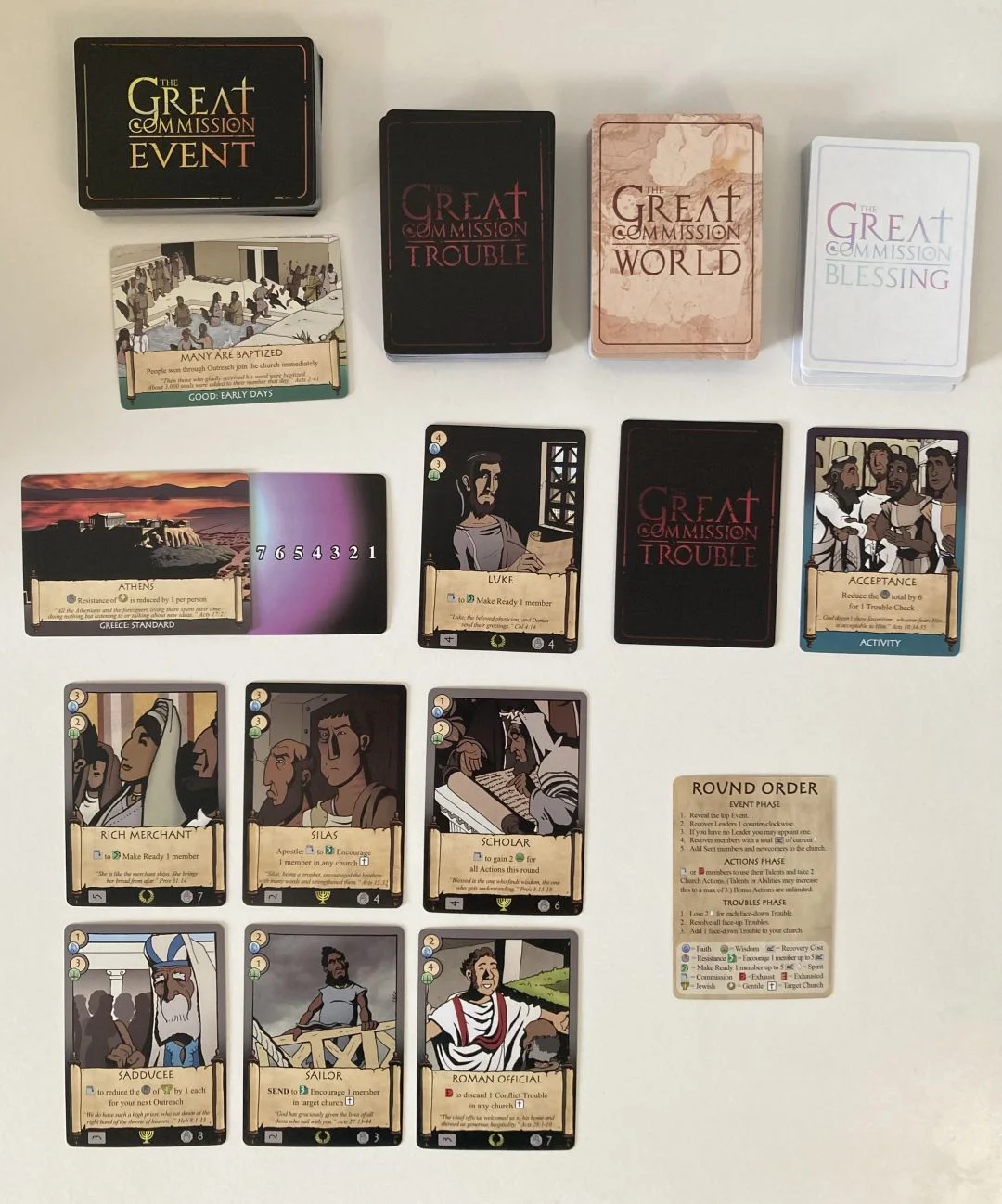
In an increasingly diverse landscape of tabletop gaming, where themes range from epic fantasy to intricate economic simulations, a unique contender has emerged, masterfully blending faith-inspired narrative with compelling strategic mechanics. The Great Commission: Strategic Card Game, from the visionary minds at Word For Word Bible Comic, has captivated players with its smooth, engaging, and profoundly thoughtful cooperative experience. Far from a mere novelty, this game stands as a testament to how thematic depth and sophisticated design can converge, offering a rich and authentic journey for players dedicated to expanding their church and spreading the Word.
Released to critical acclaim, The Great Commission has carved a niche for itself by offering an accessible yet deep strategic challenge, proving that faith-based gaming can achieve both thematic integrity and mechanical excellence. Its success has not only garnered a dedicated following but has also paved the way for a highly anticipated sequel, The Great Commission: Roman Oppression, currently drawing significant interest on Kickstarter. This article delves into the core of what makes The Great Commission a standout title, exploring its design philosophy, gameplay intricacies, market impact, and the broader implications for faith-based entertainment.
Main Facts: Pioneering Faith-Based Cooperative Strategy
The Great Commission: Strategic Card Game is more than just a card game; it is an immersive experience designed to transport players into the early days of Christian evangelism, tasking them with a sacred mission. At its heart, it is a cooperative strategy game for one to four players, where the ultimate goal is to unite all people into their church – symbolically achieved by winning all cards in a World Deck – before the Church’s spiritual resolve (Spirit) is depleted or time runs out. This delicate balancing act forms the core tension of the game, demanding careful planning and collaboration.
Core Concept and Thematic Depth
The game’s thematic foundation is unequivocally Christian, drawing heavily from biblical narratives and principles. Players are not merely moving tokens on a board; they are embodying the role of early church leaders, striving to spread the word of God despite numerous obstacles. This commitment to authenticity is evident in every facet of the game, from the events depicted on cards to the inspirational quotes accompanying character cards, and even the very premise of expanding one’s church. Troubles that threaten to derail the mission are presented as "World Events," mirroring historical and spiritual challenges faced by early communities. These events, whether positive or negative, have tangible impacts on the church’s progress, compelling players to strategically leverage the unique "special abilities" of their followers for support and resilience. The integration is seamless, ensuring that the thematic elements enhance, rather than overshadow, the strategic gameplay.
Engaging Mechanics and Gameplay Flow
Played over a structured seven rounds, each comprising three distinct phases, The Great Commission introduces a rhythm that is both predictable and dynamically challenging.
- Unveil World Event: Each round begins with the revelation of a new World Event, immediately setting the tone and presenting new challenges or opportunities. This ensures no two rounds feel identical, fostering adaptability.
- Player Actions: Players then undertake two actions of their choosing. This seemingly limited action economy is, in fact, a strength, forcing meaningful decisions without overwhelming players. Available actions include:
- Commissioning Followers: Assigning characters to complete specific tasks, often crucial for progressing towards the objective or mitigating threats.
- Gaining More Followers: Expanding the church’s influence and capabilities by recruiting new characters with diverse abilities.
- Praying for Miracles: Seeking divine intervention to overcome particularly daunting challenges or gain advantages.
- Other strategic moves aimed at resource management or mitigating impending crises.
- React to Troubles: Finally, players must face the consequences of the World Event and any unresolved challenges, often resulting in a loss of Spirit or other setbacks.
Resource management is streamlined and intuitive, utilizing a concise set of terms: Faith, Wisdom, and Resistance. These aren’t abstract points but thematic representations of the Church’s spiritual and practical strengths, making them easy to track and understand their strategic implications. Faith might be used to commission prayers, Wisdom for strategic planning, and Resistance to overcome direct opposition.
Despite its cooperative nature, the game is remarkably versatile. In two-to-four player sessions, each player manages their own church, fostering a sense of individual responsibility that directly contributes to the collective success or failure. This distributed responsibility ensures engagement from all participants, mitigating the "alpha player" syndrome sometimes found in co-op games. Crucially, the mechanics are robust enough to support a compelling solo-player mode, allowing individuals to experience the full strategic depth independently.
Production Quality and Accessibility
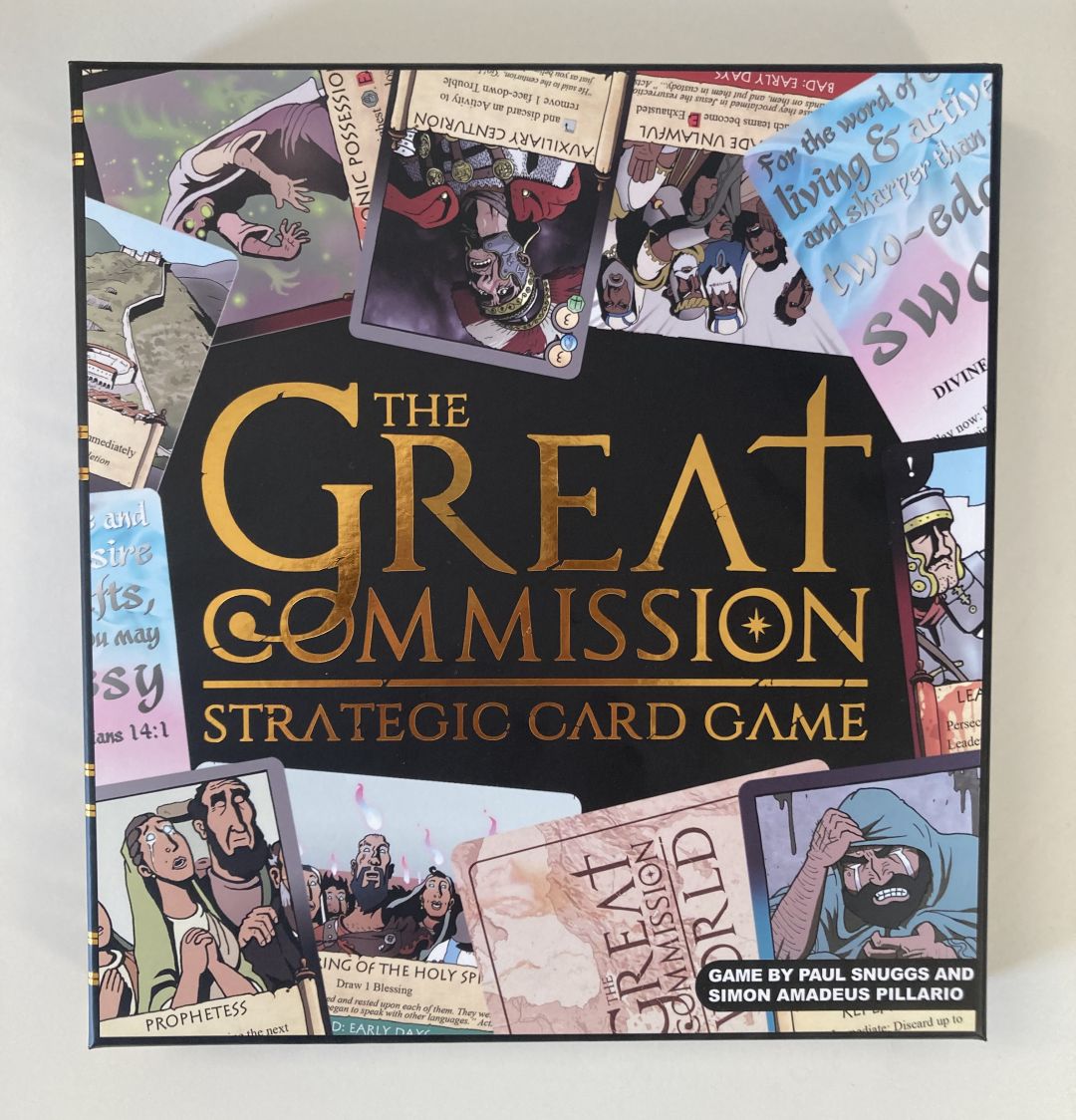
From a tactile perspective, The Great Commission impresses with its high production values. The quality of the cards is robust, designed to withstand repeated play, and the illustrations are consistently excellent, contributing significantly to the game’s immersive atmosphere. Beyond aesthetics, the game prioritizes accessibility. While a streamlined, 12-page "how-to-play" guide is included (complete with a QR code for a full rulebook), the development team has gone above and beyond by creating an extensive range of tutorial and playthrough videos on the Word for Word Bible Comic YouTube page. These video resources are highly recommended, serving as the most effective method for new players to quickly grasp the game’s nuances and get started. This commitment to clear instruction ensures that the game’s thoughtful mechanics are not obscured by a steep learning curve.
Critical Reception and Market Position
The Great Commission has been lauded for its meticulous design, with reviewers frequently highlighting its "thoughtful" nature in every aspect. The technicality of its mechanics, combined with their seamless interplay, has been a particular point of praise. It doesn’t claim to "break new ground mechanically," but its strength lies in the nuanced execution of existing systems, resulting in a cohesive and error-free experience. The game has been described as "one of the most well-rounded games" on the market, offering consistent engagement and varied play sessions driven by the ever-changing World Events. This robust design has earned it a "Must Play" recommendation, positioning it as a significant title within the cooperative card game genre, particularly for those seeking a thematically rich and strategically satisfying experience.
Chronology: From Concept to Campaign
The journey of The Great Commission: Strategic Card Game reflects a thoughtful and deliberate development process, rooted in a broader mission to make biblical narratives accessible and engaging. The game’s evolution from concept to a successful tabletop product, and now to an expanding franchise, illustrates a consistent vision from its creators.
Genesis of an Idea
The foundation of The Great Commission lies with Word For Word Bible Comic, a publisher renowned for its visually stunning and biblically accurate graphic novel adaptations of scripture. Their mission is inherently educational and evangelical, seeking to engage audiences with the Bible in a contemporary and compelling format. It was a natural progression for them to explore interactive media, using games as another powerful avenue for storytelling and thematic exploration.
The designers, Paul Snuggs and Simon Amadeus Pillario, likely conceived of The Great Commission as an extension of this mission. Their goal was not just to create a game with a Christian theme, but one where the theme was intrinsically woven into the mechanics, making the act of playing itself a reflection of the biblical mandate to "go therefore and make disciples." The conceptualization phase would have involved extensive research into the historical context of the early church, identifying key challenges, virtues, and strategic considerations that could be translated into game systems. This dedication ensured that the game would resonate deeply with its target audience while also appealing to strategy game enthusiasts.
The Inaugural Journey: Kickstarter Success
The first iteration of The Great Commission: Strategic Card Game launched on Kickstarter in May 2020. This crowdfunding platform proved to be an ideal launchpad, allowing Word For Word Bible Comic to connect directly with a community eager for high-quality, faith-based gaming experiences. The campaign successfully funded, demonstrating a clear demand for a game that combined thematic authenticity with robust mechanics. Backers were drawn to the promise of a cooperative experience that was both challenging and spiritually uplifting, with the clear tutorial videos and detailed descriptions provided during the campaign building confidence in the project’s execution. The success of this initial Kickstarter not only brought the game to fruition but also validated the designers’ vision and the publisher’s expansion into tabletop gaming. Following its successful funding, the game went through its production and fulfillment phases, eventually reaching the hands of players who had supported its creation.
Building on Success: The Roman Oppression Sequel
Riding on the positive reception and established fanbase of the original game, Word For Word Bible Comic announced and subsequently launched a Kickstarter campaign for its sequel, The Great Commission: Roman Oppression. This expansion or standalone sequel delves deeper into a specific historical period and set of challenges faced by the early church. The decision to pursue a sequel, particularly through crowdfunding again, highlights a strategic approach to community building and responding to player desires for more content within this established universe. The sequel’s campaign page would showcase new mechanics, characters, and World Events tailored to the "Roman Oppression" theme, promising an evolution of the core gameplay while retaining the beloved elements of the original. This continuous development demonstrates the publisher’s commitment to nurturing the franchise and expanding its narrative scope.

Supporting Data: The Mechanics of Mission and Market Appeal
The success of The Great Commission is not accidental; it stems from a deliberate synthesis of engaging game design principles, a profound understanding of its target audience, and an astute appreciation for the broader tabletop gaming market.
Dissecting the Strategic Layer
At its core, The Great Commission excels in creating a compelling strategic puzzle. The game’s fundamental "balancing act" is a prime example: players must simultaneously work towards the long-term goal of bringing everyone into their church (drawing cards from the World Deck) while managing immediate threats that could deplete the Church’s Spirit. This constant tension forces players to make difficult choices: Do we push forward aggressively, risking a spiritual setback, or do we consolidate our resources to shore up our Spirit, potentially losing precious time?
The dynamic nature introduced by the "World Events" is crucial. Each round presents a new, often unpredictable, challenge or opportunity, ensuring that no single strategy remains optimal throughout the game. Players must adapt, evaluating the current crisis and deploying their limited actions and resources – Faith, Wisdom, and Resistance – in the most impactful way. For example, a sudden "Persecution" event might demand a high Resistance cost to mitigate Spirit loss, while a "Famine" event might require Wisdom to distribute aid and prevent widespread disaffection. The streamlined resource system, with only a few key terms, ensures that players can focus on strategic decision-making rather than getting bogged down in complex calculations or jargon. This elegance of design is a hallmark of truly engaging strategy games.
The Co-operative Appeal
Cooperative board games have seen a significant surge in popularity, offering a refreshing alternative to competitive play. The Great Commission effectively taps into this appeal by fostering a genuine sense of camaraderie and shared purpose. While each player manages their own church, their success and failures are intertwined. This means individual strategic decisions have collective consequences, promoting discussion, collective problem-solving, and a unified front against the game’s challenges. The absence of direct player-versus-player conflict creates an environment where players can collaborate without reservation, focusing their efforts entirely on overcoming the game’s systemic obstacles. This aligns perfectly with the game’s theme of communal effort and shared mission, making the cooperative mode feel incredibly natural and immersive. The game’s scalability to a solo mode further enhances its appeal, offering a personal strategic challenge for those times when a group isn’t available.
The Niche of Faith-Based Gaming
The market for Christian-themed board games, while perhaps smaller than mainstream genres, is robust and growing. However, it often faces challenges in producing games that are both thematically resonant and mechanically sophisticated. Many faith-based games lean too heavily on theme at the expense of engaging gameplay, or vice versa. The Great Commission distinguishes itself by achieving a rare equilibrium. Its designers have demonstrated that a game can be deeply faithful without being didactic or sacrificing strategic depth. This balance positions The Great Commission not just as a game for Christians, but as a well-designed cooperative card game that happens to have a Christian theme, potentially attracting players from broader demographics who appreciate strong mechanics, regardless of the subject matter. Its success can serve as a benchmark for future developers in this niche, demonstrating the commercial viability and critical potential of high-quality faith-based entertainment.
Comparative Analysis: Echoes of "Set A Watch"
The comparison to Set A Watch is insightful, highlighting a shared design philosophy in resource management and assignment-led gameplay. While Set A Watch immerses players in a fantasy world battling monsters to defend a campsite, the underlying strategic loops share common ground with The Great Commission. Both games require players to:
- Allocate Limited Resources: Players must make critical decisions about how to spend their limited actions or resources each round to address immediate threats and advance their long-term goals.
- Character Assignment: Assigning unique characters (followers in The Great Commission, heroes in Set A Watch) to specific tasks or locations to leverage their special abilities.
- Tension and Escalation: Both games build tension through persistent threats (World Events, monster waves) that escalate over time, forcing players to adapt and strategize under pressure.
- Cooperative Problem-Solving: Success hinges on effective communication and coordinated efforts among players to overcome systemic challenges.
This comparison underscores that The Great Commission operates within a proven design framework, adapting successful mechanics to its unique thematic context. It reassures players that despite its distinct theme, the game offers a familiar and satisfying strategic depth that resonates with fans of well-crafted cooperative experiences.

Official Responses: The Visionaries Behind the Vocation
While the original review does not include direct quotes from the creators, the game’s design, presentation, and marketing efforts provide ample insight into the probable vision and intent of the designers and publisher.
Designers’ Intent: Paul Snuggs and Simon Amadeus Pillario
One can infer that Paul Snuggs and Simon Amadeus Pillario approached The Great Commission with a dual objective: to create a mechanically sound strategy game and a thematically authentic Christian experience. They likely aimed to avoid the pitfalls often associated with faith-based games, ensuring that the gameplay itself was engaging and challenging, not just a vehicle for a message. Their emphasis on "seamless" systems and a "well-rounded" design suggests a meticulous process of iteration and refinement, balancing the game’s strategic depth with accessibility.
They would likely articulate their desire for players to feel the weight and joy of the early church’s mission. The choice of cooperative gameplay, for instance, would be intentional, reflecting the communal aspect of spreading the Gospel. The dynamic World Events and the careful management of Spirit, Faith, Wisdom, and Resistance would be designed to simulate the real-world struggles and triumphs, encouraging players to empathize with the historical figures and the spiritual journey. They might emphasize that the game is an experience of strategic stewardship, where players are entrusted with a vital mission and must use their resources wisely.
Publisher’s Mandate: Word For Word Bible Comic
Word For Word Bible Comic, as the publisher, extends its core mission of biblical engagement into the realm of tabletop gaming with The Great Commission. Their move beyond traditional comic formats into interactive media signifies a broader vision to reach diverse audiences through various storytelling mediums. One could envision them stating that the game serves as an accessible and enjoyable way for individuals and families to explore biblical themes, learn about the early church, and foster fellowship.
They would likely highlight the game’s potential for both entertainment and education, seeing it as a tool for spiritual reflection and discussion. The comprehensive video tutorials on their YouTube channel exemplify their commitment to ensuring that the game is not only well-designed but also easily learned and enjoyed by as many people as possible. Their support for the game, including the development of a sequel, demonstrates a long-term commitment to building a robust and high-quality faith-based gaming portfolio. They would likely express pride in creating a product that upholds the integrity of the biblical narrative while delivering a top-tier gaming experience.
Community Engagement and Feedback
The inclusion of extensive tutorial videos and a streamlined rulebook, alongside a QR code for a full rulebook, suggests a publisher and design team keenly attuned to player experience. They likely engage actively with their community, listening to feedback and using it to refine their products. The decision to launch a sequel on Kickstarter again is a direct reflection of this, allowing them to gauge interest, involve the community in the development process, and ensure that new content aligns with player expectations. This collaborative approach fosters a loyal player base and ensures the longevity of the franchise.
Implications: Spreading the Word, One Game at a Time
The success and ongoing development of The Great Commission: Strategic Card Game carry significant implications, both for the niche of faith-based gaming and for the broader tabletop industry.

Impact on Christian Entertainment
The Great Commission sets a new, high standard for quality and strategic depth within Christian entertainment. By demonstrating that a game can be both deeply thematic and mechanically excellent, it challenges other developers in this space to elevate their offerings. It moves beyond the stereotype of overtly didactic or simplistic faith-based games, proving that complex narratives and strategic engagement can coexist harmoniously with spiritual themes. This can inspire a new generation of designers to explore biblical stories and Christian principles through sophisticated game design, leading to a richer and more diverse landscape of faith-based media.
Future of the Franchise
With the successful launch of the original game and the ongoing Kickstarter for The Great Commission: Roman Oppression, the franchise appears to be on a trajectory of sustained growth. The "Roman Oppression" theme suggests a commitment to exploring distinct historical and thematic challenges faced by the early church. This episodic approach could lead to further expansions or standalone sequels, each focusing on different eras, geographical regions, or specific trials (e.g., "The Apostolic Journeys," "The Council of Nicaea"). Such a strategy would allow the designers to continually introduce fresh mechanics and narratives while retaining the core appeal of the original game, building a comprehensive "Great Commission" universe.
Broader Appeal and Outreach
While explicitly Christian in its theme, the game’s robust mechanics and engaging cooperative gameplay have the potential to attract players beyond the traditional Christian demographic. A well-designed game, regardless of its theme, will always find an audience. For non-Christian players, The Great Commission offers a unique thematic experience, providing insights into early Christian history and values through an accessible medium. This potential for cross-cultural and cross-faith engagement makes the game a subtle yet powerful tool for dialogue and understanding, perhaps even serving as a form of soft outreach or an entry point for those curious about the faith.
Legacy and Contribution
In the landscape of cooperative card games, The Great Commission stands as a unique contributor. It reaffirms the versatility of the genre and demonstrates how thematic integration can elevate the player experience. Its legacy will likely be twofold: first, as a benchmark for quality in faith-based gaming, and second, as a strong example of how compelling storytelling and strategic depth can be harmoniously intertwined. It showcases the power of tabletop games not just as entertainment, but as vehicles for shared narrative, collaborative problem-solving, and meaningful thematic exploration.
Conclusion: A Testament to Thoughtful Design
The Great Commission: Strategic Card Game is a shining example of how thoughtful design, meticulous execution, and a clear thematic vision can culminate in a truly exceptional tabletop experience. From its authentic portrayal of early Christian evangelism to its seamless blend of strategic mechanics and cooperative play, the game offers a rich and engaging journey for players. Its commitment to accessibility, evident in its comprehensive video tutorials, ensures that its depth is not intimidating.
As noted by reviewer George Chrysostomou, the game doesn’t seek to revolutionize mechanics, but rather perfects them, creating a "well-rounded" experience that leaves "very little room for error." This dedication to polish and player enjoyment, coupled with its unique thematic proposition, solidifies The Great Commission as a "Must Play" title. With the successful groundwork laid by the original and the exciting prospect of its sequel, The Great Commission franchise is poised to continue its mission, spreading both strategic enjoyment and a profound narrative to tabletops around the world. It is a testament to the idea that great games can inspire, challenge, and unite, one thoughtfully designed card at a time.




Leave a Comment