Pazuzu: From Ancient Protector to Modern Horror Icon – Unveiling Mesopotamia’s Complex Demon
London, UK – In the annals of ancient Mesopotamian mythology, few figures loom as large or as paradoxically as Pazuzu. For millennia, this Babylonian/Assyrian demon, prominent in the first millennium BCE, was a creature of formidable destructive power, yet simultaneously revered as a potent guardian against the very calamities he embodied. Today, his terrifying visage is instantly recognizable to millions, not through dusty archaeological texts, but through the chilling lens of modern horror cinema, specifically his iconic role as the malevolent entity in William Peter Blatty’s 1971 novel and William Friedkin’s 1973 film, The Exorcist. This transformation from a complex, dual-natured entity of ancient belief to a singular force of absolute evil underscores a profound evolution in how humanity perceives the supernatural.
Main Facts: The Ancient Paradox of Pazuzu
Pazuzu was no ordinary demon. He was the son of Hanbi (or Hanba), the formidable king of the underworld’s demonic legions, and brother to Humbaba, the monstrous protector of the Cedar Forest in The Epic of Gilgamesh. This lineage alone placed him within an elite echelon of supernatural beings, commanding respect and fear in equal measure. His primary domain was the control of the destructive west and southwest winds. These winds were harbingers of devastation: during the arid season, they brought famine, scorching crops and drying vital water sources; in the rainy season, they unleashed tearing storms and swarms of locusts, capable of annihilating entire harvests.
Yet, it was precisely because of his immense capacity for destruction that Pazuzu was invoked for protection. Ancient Mesopotamians, much like the Egyptians who appealed to figures like Set, understood that a being capable of inflicting such harm was equally capable of warding it off. Prayers and amulets dedicated to Pazuzu were not meant to appease him into benevolence, but rather to divert his inherent destructive energies towards safeguarding the supplicant. He possessed a unique, albeit terrifying, form of apotropaic power, making him the ultimate defense against the very threats he represented. Scholar Stephen Bertman succinctly captures his modern notoriety, noting, "Though short on pizzazz, Pazuzu made it to Hollywood: he is the only Mesopotamian demon to have starred in a movie – The Exorcist." This role cemented his image in the modern psyche as a quintessential embodiment of evil, a stark contrast to his multifaceted ancient identity.
Origins and Lineage: A Demonic Dynasty
Pazuzu’s familial ties are crucial to understanding his stature. His father, Hanbi, reigned as the king of the underworld’s demons, signifying a deep connection to the chthonic realms and immense power. His brother, Humbaba, featured prominently in one of humanity’s oldest surviving literary works, The Epic of Gilgamesh. Humbaba was appointed by the god Enlil to guard the Cedar Forest, a sacred realm, and his eventual defeat at the hands of Gilgamesh and Enkidu highlights the epic struggles involving such powerful supernatural entities. Pazuzu’s association with such formidable figures underscored his own significant authority within the Mesopotamian spiritual hierarchy, distinguishing him from lesser spirits or minor malevolent entities.
The Winds of Destruction and Protection
The west and southwest winds were not merely meteorological phenomena in ancient Mesopotamia; they were divine or demonic manifestations directly impacting life and death. The dry season’s famine, exacerbated by these winds, threatened the very survival of communities dependent on agriculture. Conversely, the rainy season’s storms and locust plagues could obliterate a year’s hard work in moments. Pazuzu, as the commander of these forces, represented the unpredictable and often harsh realities of the natural world. His invocation for protection against these winds was a pragmatic decision, an appeal to the source of the danger itself, hoping to redirect its power for beneficial outcomes. This practice reflects a sophisticated understanding of power dynamics within their pantheon, where even destructive forces could be harnessed.
Modern Reincarnation: The Exorcist‘s Enduring Shadow
The 1973 horror film The Exorcist, based on William Peter Blatty’s novel, irrevocably etched Pazuzu into global consciousness. In the film, Pazuzu is depicted as the demon possessing the young girl Regan MacNeil, portrayed by Linda Blair. This portrayal linked him explicitly with the Christian concept of Satan and absolute evil, stripping away the complex duality that defined him in ancient Mesopotamia. The movie’s immense cultural impact ensured that for many, Pazuzu became synonymous with the epitome of demonic malevolence, a singular, malevolent force, detached from his historical context as both bringer of woe and guardian.
The Nuance of Mesopotamian Demonology
The modern understanding of "demon" is almost exclusively negative, connoting pure evil. However, this interpretation is a radical departure from the ancient Mesopotamian perspective. In the ancient world, the English word "demon" is a translation of the Greek "daimon," meaning simply "spirit." A daimon could be benevolent, malevolent, or neutral, its nature determined by its intentions and actions.
Beyond Evil: Understanding the Ancient ‘Daimon’
In Mesopotamia, demons were integral to the cosmic order. They were often viewed as agents of the gods, dispatched to mete out punishment for transgression, to remind humanity of its duties, or even to test the righteous. While some demons undeniably brought suffering and death, they were rarely considered "evil incarnate" in the monotheistic sense. Pazuzu, despite his destructive capabilities, fits this nuanced profile. He was not seen as inherently evil but rather as a powerful, sometimes capricious, entity who could be swayed or invoked for specific purposes. He was regarded more as a trickster god, capable of both harm and good depending on circumstance or divine directive.
One of Pazuzu’s most crucial benevolent roles was the protection of pregnant women and infants from the demon-goddess Lamashtu. Lamashtu was a truly terrifying figure, infamous for preying on unborn and newborn babies, causing miscarriages, stillbirths, and infant mortality. Pazuzu, with his fearsome appearance and immense power, was considered the ultimate deterrent against Lamashtu, a testament to the belief that a greater, more frightening power could scare away a lesser one.
Demons as Agents of the Divine Plan: Lessons from Atrahasis
The presence and actions of demons were often rationalized within a broader theological framework. The Atrahasis myth, a foundational Mesopotamian narrative, provides a profound insight into this perspective. In this myth, humanity multiplies excessively, their clamor disturbing the god Enlil. Driven to desperation, Enlil resolves to wipe out humanity with a great flood. After the deluge, Enki, the god of wisdom, devises a new plan for repopulation: a revised humanity with shorter lifespans and lives fraught with greater perils. This new existence would be plagued by disease, miscarriages, infertility, attacks by wild animals, and numerous other forms of daily death.
Demons were essential components of this divine design. They served to regulate the human population, punish the wicked, test the virtuous, and torment individuals for reasons even the gods might disagree upon. Demons that interfered with fertility and sexual intercourse were particularly problematic, as they directly impacted the gods’ efforts to manage human numbers.
Case Study: Samana, The Troubling Agent of Gula
The demon Samana exemplifies the complex and often perplexing nature of Mesopotamian demonic entities. Described with terrifying features – dragon’s teeth, eagle talons, and a scorpion’s tail – Samana was a constant threat to human well-being. Sumerian incantations vividly detail his malevolent actions: blocking menstruation in young girls, debilitating the potency of young men, and disrupting the services of courtesans and prostitutes (Leick, 223). His destructive reach extended beyond human fertility, affecting crops and livestock. Scholar Bertman notes his "special appetite for infants and prostitutes" (125).
What makes Samana particularly illustrative is his paradoxical association with Gula, the Sumerian goddess of health and healing. Despite his malice, Samana was considered an agent of Gula, sometimes dispatched by her for reasons inscrutable to mortals. This highlights the ancient Mesopotamian worldview where divine and demonic actions were not always neatly categorized into good or evil, and suffering could arise from even benevolent deities, challenging human understanding. The inherent uncertainty of life meant that one could be targeted by a god or demon for torment at any moment, for reasons not always discernible. Gwendolyn Leick articulates this vulnerability: "Sexual life per se, of the individual and of society at large, was under a potential threat from the wrath of vengeful gods or the malice of demonic forces" (224). This vulnerability, especially concerning reproduction, was a deliberate part of the divine plan to maintain a manageable human population.
Chronology of Demonic Depiction
The visual representation of demons in Mesopotamia underwent a significant evolution, reflecting changing theological and cultural perspectives. According to scholar Jeremy Black, Mesopotamian demons transformed from abstract representations of natural threats to vividly terrifying personifications of danger and death, with Pazuzu representing the zenith of this development.
From Composite Beasts to Full Horror: A Visual Evolution
Black outlines five distinct phases in this evolution:
- A formative phase (late Ubaid and Uruk periods): This era saw the initial combination of animal features into unnatural, composite beings, marking the earliest attempts to visually articulate supernatural threats.
- An optimistic phase (Akkadian period): Glyphic scenes from this period often depict the capture and punishment of nefarious demons, suggesting a societal confidence in overcoming these forces.
- A balanced phase (Old Babylonian period): Cylinder seal designs frequently blended images of gods, symbols, and motifs with both positive and negative connotations for humanity, reflecting a more nuanced understanding of the intertwined nature of good and bad forces.
- A transformative phase (Mitannian, Kassite, and Middle Assyrian art, 14th-11th centuries BCE): During this period, the human-centered imagery of the Old Babylonian era gradually gave way to a prevalence of animal-headed hybrids, indicating a shift towards more monstrous and less anthropomorphic representations of supernatural entities.
- A demonic phase (Neo-Assyrian and Neo-Babylonian art): This final phase, coinciding with the first millennium BCE, saw individual demons depicted in their full, terrifying horror. Pazuzu, with his grotesque and composite features, is a prime example of this development, embodying the full, fearsome power of the underworld.
The Shift Towards the First Millennium BCE
This "demonic phase" aligns perfectly with the emergence of a new theological understanding: a densely populated underworld teeming with powerful demons. This period also witnessed the rise of monumental statues and reliefs of magically protective beings in palaces and temples, alongside the practice of burying small clay images of them in foundations. These practices demonstrate a sophisticated system of apotropaic magic, where the visual depiction and strategic placement of powerful figures were believed to actively deter malevolent forces.
Pazuzu: The Fearsome Protector
Within this complex demonic landscape, Pazuzu emerged as one of the most popular and effective protective deities. His terrifying appearance was not a hindrance to his protective role but rather a key asset.
Guardian Against Lamashtu and Other Threats
Pazuzu was primarily invoked as a bulwark against Lamashtu, the demon-goddess notorious for her attacks on mothers and infants. His fearsome presence was believed to scare Lamashtu away, ensuring the safe delivery and healthy survival of children. Beyond this crucial role, Pazuzu was also appealed to for protection against various diseases, impotency, and the ill effects of the very winds he commanded – the west and southwest winds, believed to originate from the land of the dead. This duality reinforced the belief that only a power strong enough to cause harm could effectively prevent it.
The Terrifying Visage: A Detailed Iconography
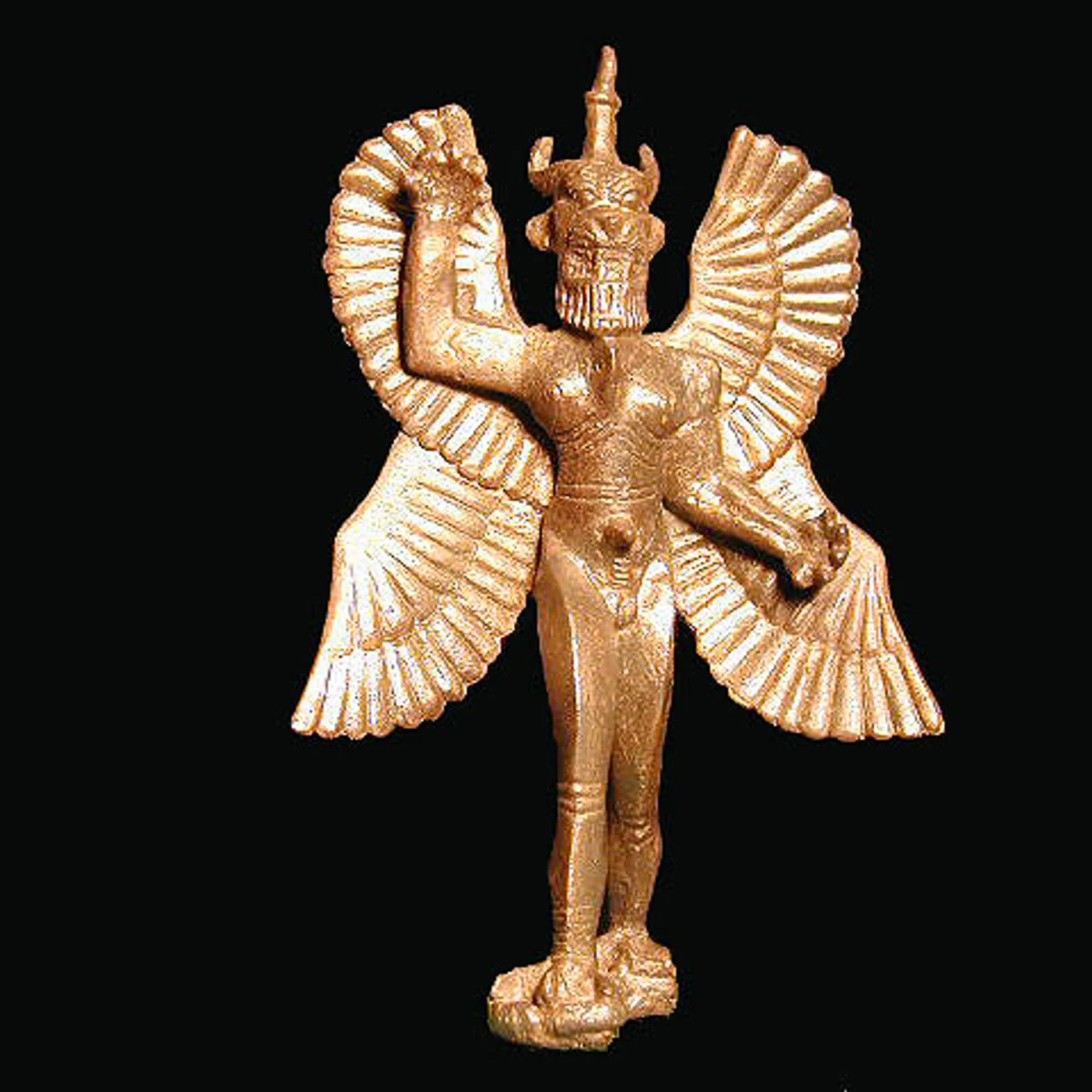
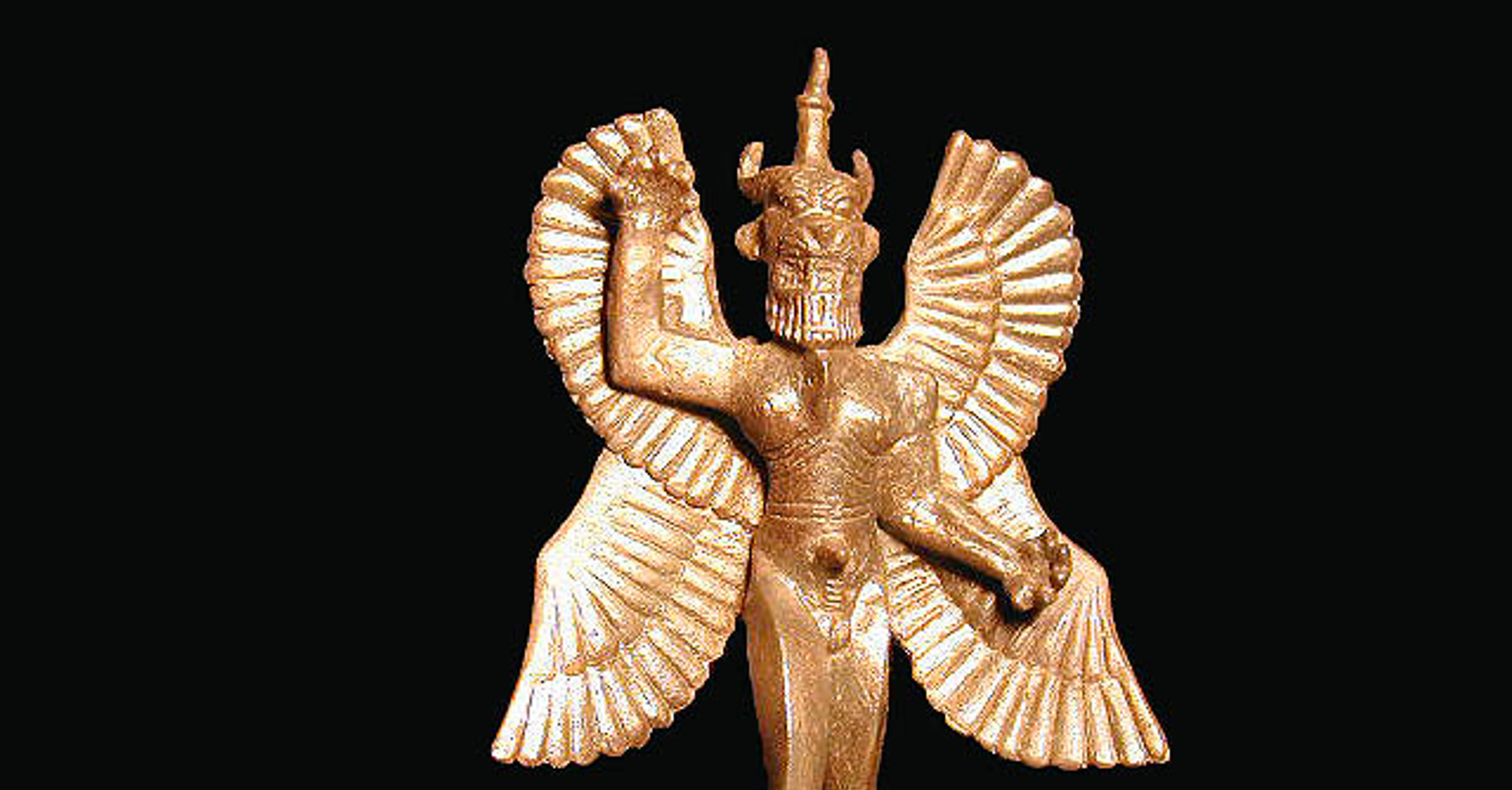
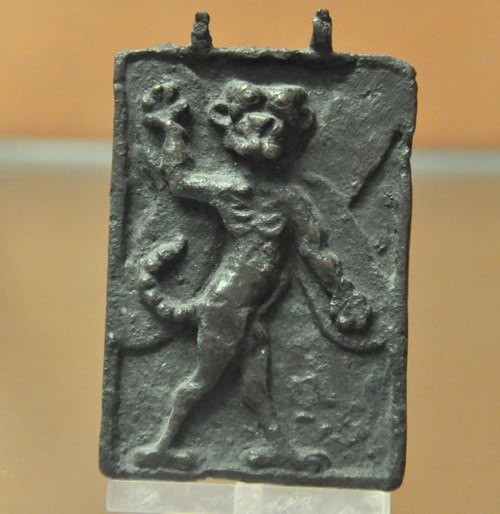
Pazuzu’s physical representation is central to his power. He is consistently depicted as an exceptionally frightening figure, designed to repel any lesser demon or ghost. Statuettes and engravings portray him with a distinctive and grotesque iconography: bulging eyes set in a canine face, a scaly body, a snake-headed penis, the talons of a large bird, and enormous, powerful wings. This composite imagery, drawing on various dangerous animals, created an entity of unparalleled terror and power.
In The Exorcist, the film accurately captures this visual horror in the opening scenes, where the priest discovers a life-sized statue of Pazuzu in the ancient city of Hatra. While the novel depicts the priest handling a small statue, both portrayals are accurate to archaeological findings. Small statuettes and amulets of Pazuzu have indeed been discovered at sites like Hatra. However, full-sized statues are exceedingly rare, and likely nonexistent, reflecting an ancient Mesopotamian apprehension: creating a large, detailed image of a powerful, chthonic entity was believed to attract its direct attention, a prospect few mortals desired.
The Power of the Amulet: Invoking Protection
This apprehension explains why smaller images, statuettes, and amuletic charms of Pazuzu were far more common. These diminutive representations served the same function as larger effigies but concentrated their protective power without inviting the full, potentially overwhelming, attention of the demon. The individual wearer or homeowner who placed a Pazuzu statuette near a doorway or window was not feared by the demon. Instead, by honoring him and seeking his protection, they became his "charges." Pazuzu, in turn, would direct his immense demonic powers against any threats to those under his guardianship, not against the mortal who had respectfully invoked him.
These small statuettes were frequently placed in children’s rooms, underscoring their primary role in infant protection. They functioned similarly to the Nimrud Dogs, small dog statuettes buried under thresholds or strategically placed in rooms to guard against evil spirits, demons, or ghosts. The Nimrud Dogs were believed to be imbued with the protective spirit of actual dogs, associated with Gula, the healing goddess. In the same vein, Pazuzu statuettes were thought to channel the essence of the demon himself, guaranteeing safety in their presence.
Legacy and Transformation: From Mesopotamia to Modernity
The evolution of demons did not cease with the end of the Mesopotamian civilizations; it continued into the Hellenistic period and, crucially, profoundly transformed with the advent of Christianity.
The Christian Reinterpretation of Demons
With the rise of Christianity, the nuanced, dualistic understanding of demons as agents of a complex divine plan largely dissolved. The new faith had no place for protective demons or reliance on older religious beliefs, which were actively discouraged. Demons, along with the "old gods," were systematically relegated to the Christian Hell, becoming singular agents of God’s adversary, Satan. Their association with the underworld made it an easy transition to portray them as instruments of eternal punishment, as well as the bringers of danger, destruction, disease, and death in life.
The Gospels of the New Testament frequently depict Jesus Christ casting out demons, and books like Acts and Revelation describe demons as servants of Satan. The letter of I John 4:1 explicitly admonishes believers to "test every spirit to see whether they are from God," implying that spirits not aligned with God are inherently malevolent. This marked a radical departure from the Mesopotamian view, where demons could serve God’s will, albeit sometimes in destructive ways.
Pazuzu’s Enduring Cultural Impact
In the Christian worldview, demons were unequivocally agents of evil, incapable of good, except perhaps inadvertently in fulfilling God’s overarching plan. This theological conditioning, spanning nearly two millennia, perfectly primed audiences for Pazuzu’s role in The Exorcist. His fearsome, ancient aspect made him an ideal antagonist, instantly recognizable as a force of profound evil, fitting seamlessly into a narrative of demonic possession and spiritual warfare.
Conclusion: A Complex Figure in an Uncertain World
Pazuzu stands as a powerful testament to the complex and often paradoxical nature of ancient religious belief. Far from being a simplistic figure of evil, he was a demon of immense power, capable of unleashing devastating natural forces, yet simultaneously revered as a vital protector. To the people of ancient Mesopotamia, Pazuzu was a formidable, if terrifying, security guard, a shield against the misfortunes of famine, disease, and the insidious attacks of other malevolent spirits like Lamashtu. His dual nature reflected a world where good and bad were often intertwined, and even destructive forces could be harnessed for protection.
His journey from a nuanced protector within a polytheistic framework to the monolithic embodiment of evil in The Exorcist illustrates a profound shift in cultural and theological understanding. While modern audiences primarily know him as a symbol of absolute malevolence, his ancient legacy reveals a more intricate truth: Pazuzu was a critical, albeit terrifying, figure of reassurance in an uncertain and often frightening world, a fearsome guardian whose power was sought precisely because of his capacity for destruction. His story remains a compelling bridge between ancient fears and modern anxieties, echoing across millennia.