The Architecture of the Overlooked: Adelene Koh and the Metamorphosis of Bookbinding
The intersection of traditional craftsmanship and contemporary sculpture has found a profound new voice in Adelene Koh. A bookmaker and conservator whose work transcends the utilitarian origins of her medium, Koh has recently emerged as a global figure in the world of high artisanship. Her selection as one of the 30 finalists for the prestigious Loewe Foundation Craft Prize marks a significant moment for the discipline of bookbinding—a field often relegated to the background of the literary and art worlds. Through her studio, dddots, based in Taiwan, Koh is not merely preserving a dying art; she is deconstructing it to reveal the rhythmic, structural beauty that has historically remained hidden beneath leather spines and cloth covers.
Main Facts: The "Endless" Innovation of the Loewe Prize Finalist
The Loewe Foundation Craft Prize, established in 2016 by Loewe Creative Director Jonathan Anderson, seeks to recognize international artisans who demonstrate an exceptional ability to innovate within traditional frameworks. In the most recent cycle, Adelene Koh’s work, titled "Endless," stood out among thousands of submissions for its technical virtuosity and conceptual depth.
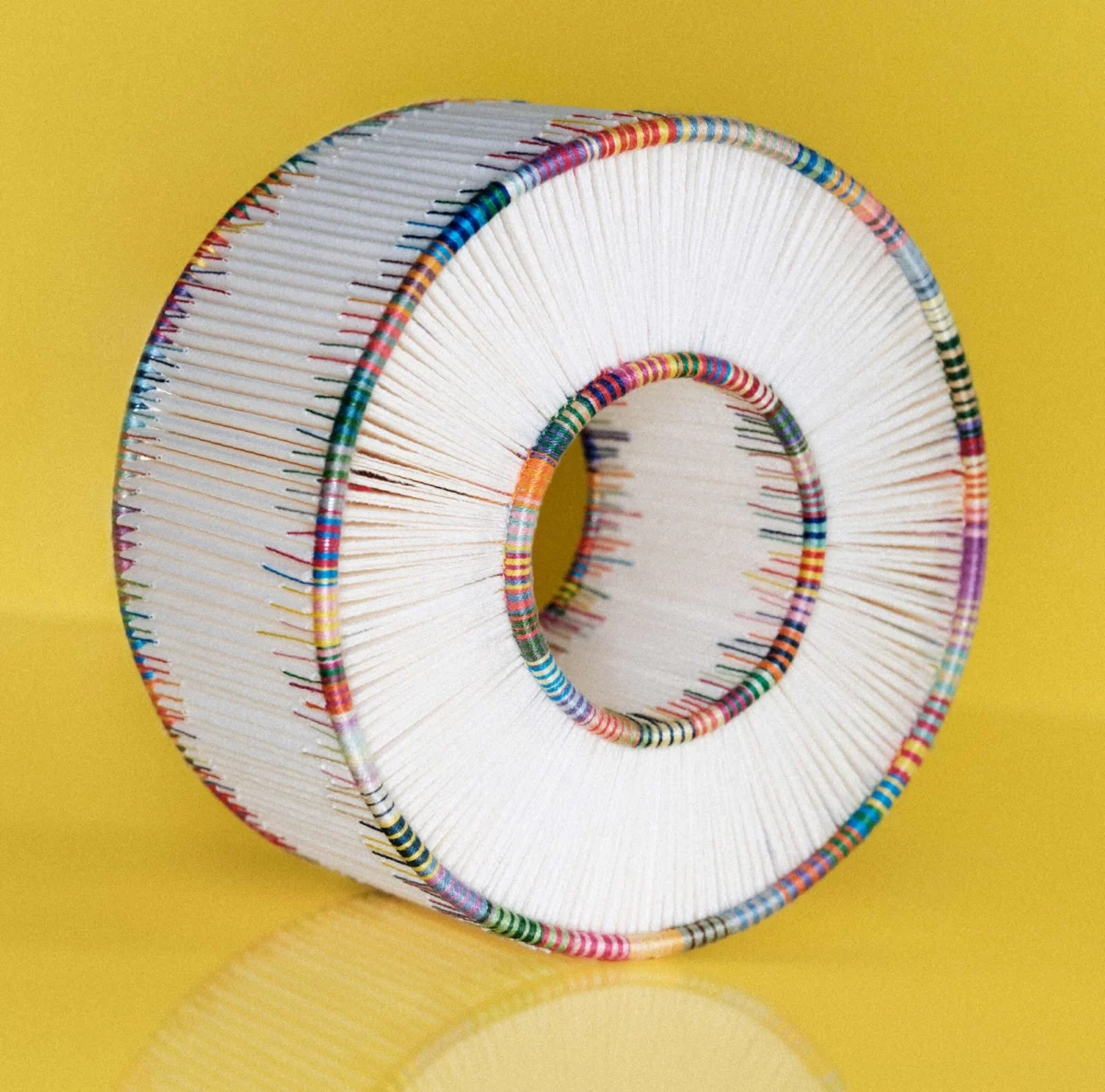
"Endless" is a sculptural achievement that reimagines the anatomy of a book. Rather than a vessel for text, the work is a cylindrical, ouroboros-like form—a continuous loop that merges the "spine" and the "fore-edge" into a single, unified entity. The sculpture is composed of meticulously folded paper, but its defining feature is the intricate stitching that binds its edges. Koh utilizes 18th and 19th-century English endband sewing techniques, traditionally used to reinforce the head and tail of a book’s spine. By bringing these structural elements to the forefront and utilizing vibrant, multi-colored fibers, Koh transforms a functional necessity into the centerpiece of the aesthetic experience.
The work was featured in the Loewe Foundation Craft Prize exhibition, where it was lauded for its "rhythmic patterns" and its ability to turn the "overlooked and sidelined" components of book construction into a mesmerizing visual narrative.

Chronology: From the New York Fair to the Global Stage
Adelene Koh’s journey into the world of bookbinding was not a predetermined path but rather a series of international immersions that shaped her unique perspective on the craft.
2011: The Catalyst in New York
The spark for Koh’s career occurred in 2011 during a visit to the New York Art Book Fair. It was here that she was first "smitten" with the tactile world of bookbinding. At the time, the independent publishing scene was exploding, yet Koh found herself drawn less to the content of the books and more to the physical architecture that held them together. This initial fascination led her to seek out formal training that would provide the technical foundation necessary for high-level conservation and creation.
The Japanese Foundation
Koh’s professional training began in Japan, a country renowned for its reverence for paper (washi) and its exacting standards of precision. In Japan, she learned the discipline of repetitive motion and the spiritual weight of material integrity. This period was foundational in developing the "technical precision" that would later allow her to experiment with complex sculptural forms without sacrificing the structural soundness of her work.
The London Specialization
Following her time in Japan, Koh moved to London, a global hub for book conservation and historical binding. In London, she delved into the history of the craft, studying the evolution of European binding techniques from the medieval period through the Industrial Revolution. It was here that she mastered the 18th and 19th-century English endband techniques that would eventually define "Endless." Her work as a conservator—repairing and preserving historical volumes—gave her an intimate understanding of how books fail and how they endure, insights that are visible in the durability and complexity of her contemporary sculptures.

The Taiwan Residency and dddots
Currently based in Taiwan, Koh operates dddots, a studio that serves as both a laboratory for new sculptural ideas and a sanctuary for the traditional craft of bookmaking. Taiwan’s vibrant art scene and its own rich history of paper production have provided Koh with the ideal environment to synthesize her global training into a singular artistic voice.
Supporting Data: The Technicality of the "Endless" Loop
To understand the significance of Koh’s work, one must understand the technical components she has elevated.
The English Endband
In traditional bookbinding, an endband (also known as a headband or tailband) is a small cord or strip of material, often covered in silk or linen thread, that sits at the top and bottom of the spine. Its original purpose was structural: to tie the sections of the book together and provide a "handle" for pulling a book off a shelf. Over centuries, these became decorative, but they remained diminutive—rarely more than a few millimeters in height.
In "Endless," Koh has scaled and multiplied this technique. The "sewn endbands" in her work are not tucked away; they are the primary visual language. By using colorful yarn and rhythmic stitching patterns, she creates a texture that feels both organic and mathematical.

Materiality and Form
The sculpture utilizes high-grade paper that has been folded with architectural exactness. The cylindrical shape refers to the "ouroboros"—the ancient symbol of a serpent eating its own tail, representing infinity and the cycle of renewal. By binding the spine to the fore-edge, Koh creates a "book" that can never be opened and never be finished, challenging the viewer’s perception of what a book is meant to do.
The Conservator’s Eye
Koh’s background in conservation is evident in her choice of materials and the longevity of her construction. Unlike many contemporary paper artists who may prioritize form over structural integrity, Koh’s work is built to last. Every stitch is a calculated reinforcement, reflecting her belief that the parts that "quietly support everything else" are the most deserving of our attention.
Official Responses and Competition Context
The Loewe Foundation Craft Prize is judged by a panel of luminaries from the worlds of design, architecture, and journalism, including figures like Anatxu Zabalbeascoa and Patricia Urquiola. The jury’s selection of Koh as a finalist underscores a broader trend in the art world: a return to "slow craft" and a deep respect for manual labor in an increasingly digital age.
While the top prize for this year’s competition was awarded to Jongjin Park for his innovative use of ceramics and paper, Koh’s inclusion in the shortlist placed her alongside other visionary artists like Xanthe Somers. The Loewe Foundation’s official statement regarding the exhibition highlighted the "innovation across a wide range of artisanship," specifically noting Koh’s ability to bring "hidden elements into focus."

Koh herself has been vocal about the philosophy behind her studio, dddots. "I’m interested in bringing hidden elements of books into focus," she stated. "I’m drawn to the overlooked, the sidelined, the parts that quietly support everything else." This sentiment resonates with the Loewe Foundation’s mission to celebrate the "poetry" of the handmade.
Implications: The Future of Book Arts and Conservation
Adelene Koh’s recognition by the Loewe Foundation has several implications for the future of the craft.
1. The Elevation of the Conservator
Historically, the conservator’s goal has been invisibility—to repair a work so perfectly that the intervention is undetectable. Koh is flipping this script. By using conservation techniques to create original art, she is positioning the conservator as a creator in their own right. This could lead to a new genre of "conservation-art" where the history of an object’s construction becomes the subject of the art itself.
2. Redefining the Book in the Digital Era
As the physical book becomes less of a necessity for information delivery, it is increasingly being treated as an art object. Koh’s "Endless" takes this to the extreme. By removing the possibility of text, she forces the viewer to confront the book as a physical presence—a weight, a texture, and a series of tensions. Her work suggests that the "soul" of the book lies not in its words, but in the labor and geometry of its binding.

3. Cross-Cultural Synthesis
Koh’s career is a testament to the power of globalized craft. By combining Japanese precision, British historical technique, and a Taiwanese contemporary aesthetic, she has created a visual language that is truly international. This synthesis is a blueprint for other artisans looking to modernize traditional crafts; it shows that innovation often comes from the cross-pollination of geographically distinct traditions.
4. The Sustainability of Craft
In a world of mass production, Koh’s work at dddots emphasizes the value of the "rhythmic pattern" created by the human hand. The Loewe Prize serves as a reminder that these skills are not just relics of the past but are vital components of our cultural future. Koh’s success provides a platform for other bookmakers to seek out high-art venues, potentially leading to more grants, exhibitions, and commercial opportunities for a field that was once considered purely trade-based.
Conclusion
Adelene Koh’s "Endless" is more than a sculpture; it is a manifesto for the marginalized components of craft. By taking the humble endband and the structural fold and elevating them to the status of fine art, Koh challenges us to look closer at the world around us. In the hands of a master like Koh, the "parts that quietly support everything else" are finally given their moment in the spotlight, proving that in the world of art, the most profound stories are often found in the margins.