The End of an Era: Sony Confirms Transition to All-Digital Future by 2028
The landscape of interactive entertainment is standing on the precipice of its most significant structural transformation since the transition from cartridges to optical media. In a move that has sent shockwaves through the global gaming community, Sony Interactive Entertainment (SIE) has officially announced that it will cease the production and distribution of physical game discs for all new PlayStation titles starting in January 2028.
This decision marks the beginning of the end for physical media in the console space, a medium that has defined the PlayStation brand since the original console’s debut in 1994. As the industry pivots toward a cloud-integrated and download-centric ecosystem, the implications for consumers, retailers, and the preservation of gaming history are profound.
Main Facts: The Sunset of the Physical Disc
Sony’s announcement, delivered via a concise but definitive update on The PlayStation Blog, outlines a roadmap for the total phase-out of physical software. The core components of the announcement are as follows:
- The Hard Cutoff: Starting January 1, 2028, all new software titles developed by Sony’s first-party studios and third-party partners for PlayStation consoles will be released exclusively in digital formats.
- Legacy Support: Sony has clarified that games released prior to the January 2028 deadline will remain available in their existing physical formats. Production of legacy discs will continue for a limited time to meet existing demand, though the company did not specify an end date for the manufacturing of back-catalog titles.
- Distribution Channels: Following the transition, the primary gateway for purchasing software will be the PlayStation Store. Third-party retailers—such as Amazon, Best Buy, and GameStop—will be restricted to selling digital download codes rather than physical boxed copies.
- Hardware Implications: While Sony has not yet officially announced the "PlayStation 6," the timing of this shift strongly suggests that future hardware iterations may omit optical disc drives entirely, or offer them only as niche, external peripherals.
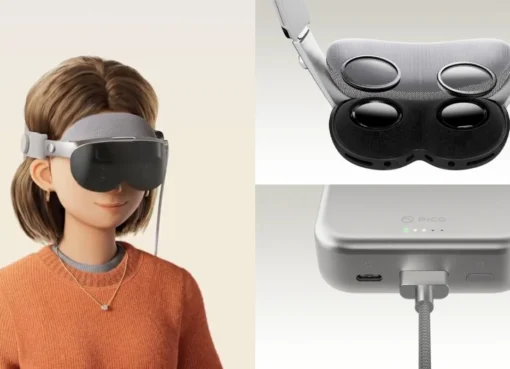
- VR Ecosystem: The mandate extends to the PlayStation VR2 (PSVR2) and any subsequent head-mounted displays. Historically, physical releases for VR have been a cornerstone for collectors, including titles like Tetris Effect: Connected and The Walking Dead: Saints & Sinners. These will henceforth be digital-only ventures.
Chronology: The Long March to Digital Dominance
The transition to an all-digital future has not occurred in a vacuum; it is the culmination of nearly two decades of incremental shifts in consumer behavior and corporate strategy.
The Early Seedlings (2006–2013)
The foundation for this shift was laid during the PlayStation 3 era with the launch of the PlayStation Network (PSN) in 2006. Initially, digital downloads were reserved for smaller "indie" titles and classic PS1 games. However, by the mid-lifecycle of the PS3, full-budget AAA titles began appearing simultaneously on the PS Store and at retail.
The Hybrid Era (2013–2020)
The PlayStation 4 era saw the normalization of mandatory game installations. Even if a user owned a physical disc, the data was copied to the hard drive, and the disc served merely as a physical "license key." This decoupled the gameplay experience from the optical drive’s read speed, making the disc a vestigial component of the hardware’s performance.
The PS5 and the "Digital Edition" (2020–Present)
The launch of the PlayStation 5 in 2020 was the definitive turning point. By offering a "Digital Edition" console at a $100 discount, Sony effectively incentivized a segment of its user base to abandon physical media. According to Sony’s financial reports from 2022 and 2023, digital software sales consistently accounted for 70% to 80% of total units sold, signaling that the "consumer preference" cited in their recent blog post is backed by hard sales data.
Supporting Data: The Economic and Logistical Drivers
Sony’s decision is driven by a combination of evolving consumer habits and the cold logic of corporate overhead. The shift to digital offers several strategic advantages for the manufacturer.
Profit Margins and the "Middleman"
In a traditional physical retail model, a significant portion of a game’s $70 MSRP is diverted to manufacturing, packaging, shipping, and retailer margins. By moving to a digital-only model, Sony captures a much larger percentage of each sale. Furthermore, it eliminates the "used game" market. Currently, Sony earns $0 from the resale of a physical disc at a shop like GameStop. In a digital-only ecosystem, every transaction occurs within a closed loop controlled by the platform holder.
The Rise of Subscription Services
The growth of PlayStation Plus Extra and Premium has fundamentally changed how players consume media. Much like Netflix did for cinema, Sony is training its audience to view games as a service rather than a product to be owned. When users become accustomed to "renting" a library of hundreds of games for a monthly fee, the desire to own a plastic case on a shelf diminishes.
The Logistics of Scale
Modern AAA games frequently exceed 100GB in size. Standard Blu-ray discs (even triple-layer 100GB discs) are increasingly unable to hold an entire game without requiring massive "Day One" patches. In many cases, the disc is already an incomplete product at launch, serving as little more than a trigger for a massive download. Sony argues that removing the physical bottleneck streamlines the delivery process.
Official Responses and Public Outcry
The reaction from the gaming public has been overwhelmingly negative, highlighting a significant disconnect between corporate efficiency and consumer sentiment.
Sony’s Official Stance
In the PlayStation Blog post, Sony framed the move as an adaptation to "evolving industry standards." The post stated:
"We are committed to providing the best possible gaming experiences. As we look toward the future, it is clear that consumer preferences have shifted toward the immediacy and convenience of digital access. By streamlining our production to digital formats, we can focus our resources on innovating the next generation of play."
The "Everyone Disliked That" Phenomenon
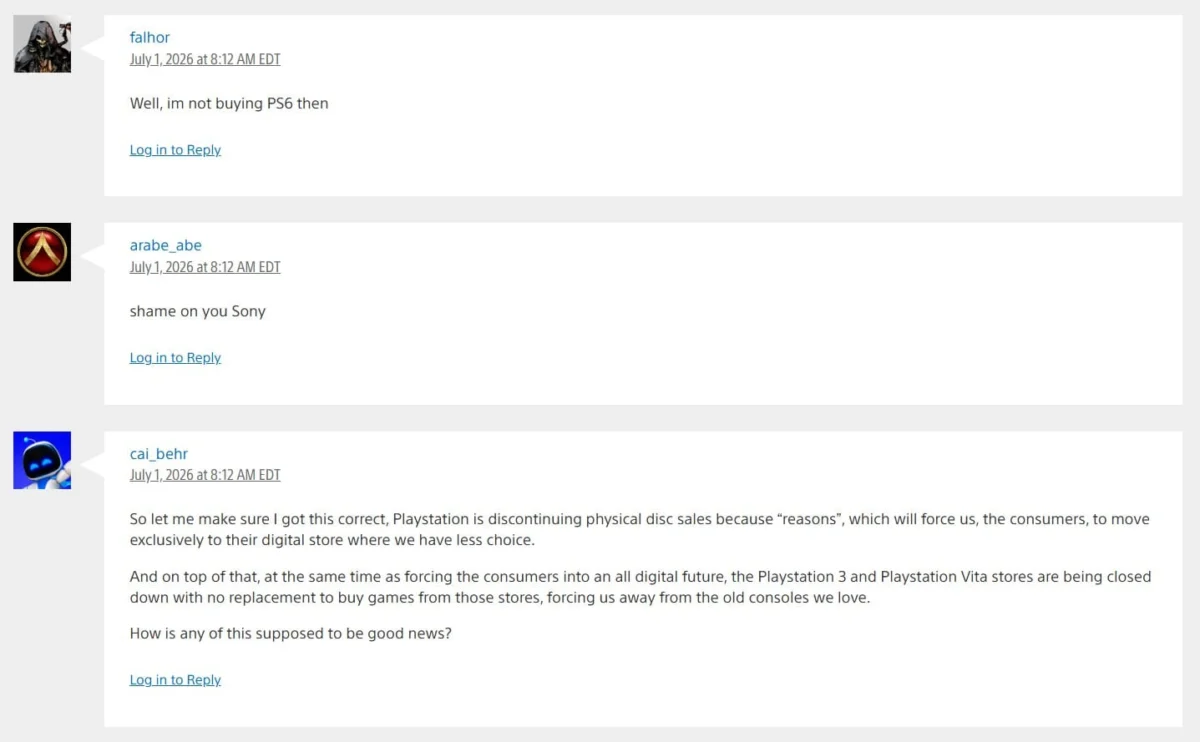
The comments section of the announcement became a lightning rod for criticism. Users expressed a variety of concerns, ranging from the loss of consumer rights to the environmental impact of server farms.
One top-rated comment noted: "If I don’t own the disc, I don’t own the game. I am simply paying for a license that Sony can revoke at any time. This is a dark day for consumer rights."
Another user pointed to the practical limitations: "Not everyone has gigabit fiber internet. Downloading a 150GB game on a 10Mbps connection takes days. Sony is effectively locking out rural gamers."
The Delisting Fear
Central to the public’s irritation is the documented history of digital delisting. Sites like Delisted Games have tracked hundreds of instances where licensing disputes, music rights expirations, or studio closures have resulted in games being scrubbed from digital storefronts. Unlike physical media, which can be played as long as the hardware functions, digital media is tethered to a server that may not exist in twenty years.
Implications: A New Paradigm for the Industry
The ripple effects of Sony’s January 2028 deadline will be felt across multiple sectors of the economy and culture.
The Death of the Secondary Market
The most immediate victim of this policy is the used game market. For decades, budget-conscious gamers have relied on buying pre-owned titles or trading in old games to fund new purchases. By 2028, this economy will effectively vanish for new PlayStation titles. This gives Sony total control over pricing, as there will be no price competition from physical retailers.
Historical Preservation and the "Digital Dark Age"
Game historians and preservationists are among the most vocal critics. Physical discs serve as a "master copy" that can be archived and studied. If the only copy of a game exists on a proprietary server, the history of the medium becomes fragile. Organizations like the Video Game History Foundation have warned that without physical backups, we risk entering a "Digital Dark Age" where thousands of titles could be lost forever due to corporate restructuring or server shutdowns.
Retailer Obsolescence
For specialized retailers like GameStop, this news is an existential threat. If the two major console players (Microsoft has also hinted at an all-digital future with the Xbox Series S and "Project Ellewood") abandon discs, the primary foot-traffic driver for these stores disappears. We can expect a massive pivot toward merchandise, collectibles, and hardware, or a total collapse of the specialized gaming retail sector.
The Internet Infrastructure Gap
Sony’s decision assumes a level of global internet infrastructure that does not yet exist. In many parts of the United States and the developing world, data caps and slow speeds remain the norm. A digital-only future creates a "class system" in gaming, where those with high-speed access enjoy seamless play, while others are left behind.
Conclusion
Sony’s announcement of a January 2028 cutoff for physical media represents the final closing of a door that has been swinging shut for a decade. While the move offers Sony unprecedented control over its ecosystem and promises a more streamlined distribution model, it comes at the cost of consumer autonomy and the permanence of the medium.
As 2028 approaches, the industry will watch closely to see if competitors like Nintendo follow suit, or if they will leverage physical media as a "premium" alternative for collectors and those on the wrong side of the digital divide. For now, PlayStation fans have less than four years to fill their shelves before the "New Game" smell of a freshly opened plastic case becomes a relic of the past.