The Enduring Deception: Unmasking the Mimic in Dungeons & Dragons Merchandise
Main Facts
The world of Dungeons & Dragons (D&D) is replete with fantastical creatures, but few hold as iconic and meme-worthy a status as the Mimic. These cunning aberrations, capable of transforming into seemingly innocuous objects, have terrified and delighted players for decades. Their fundamental premise—that any mundane item could conceal a gaping maw and a ravenous hunger—taps into a primal fear of the familiar turning hostile. This pervasive blend of paranoia and dark humor has permeated the D&D community, leading to a fascinating array of real-world accessories that playfully lean into the Mimic’s deceptive nature. From humble stickers to intricately designed dice boxes, these products celebrate the monster while simultaneously reminding players that vigilance, even in their own homes, is always advised. While none of these accessories are actually sentient, the subtle artifice of their design ensures that the spirit of the Mimic lives on, ready to inject a touch of playful dread into any adventurer’s collection.
The Mimic Phenomenon: A Brief History and Its Cultural Resonance
The Genesis of Deception: A Chronological Look at the Mimic’s Evolution
The Mimic first clawed its way into the collective consciousness of D&D players with its introduction in the original Advanced Dungeons & Dragons Monster Manual in 1977. Conceived by Gary Gygax, the creature was designed to challenge players’ assumptions and introduce an element of pervasive paranoia into dungeon exploration. Before the Mimic, a chest was simply a chest, a door merely a barrier. After its debut, every seemingly benign object became a potential threat, forcing players to approach their environment with a heightened sense of caution and suspicion. This ingenious design immediately cemented the Mimic as a staple of D&D lore, fundamentally altering how players interacted with treasure and dungeon furniture.

Over the subsequent editions of D&D, the Mimic’s core concept remained remarkably consistent, though its specific mechanics and lore might have seen minor adjustments. It retained its ability to flawlessly impersonate inanimate objects, its adhesive pseudopods, and its razor-sharp teeth. Its ecological niche often placed it in dungeons, ruins, and other places where adventurers might expect to find valuable objects, making it a natural guardian of perceived treasures—or a treasure itself, luring the greedy to their doom.
Beyond the tabletop, the Mimic quickly transcended its origins to become a broader cultural touchstone. Its simple yet terrifying premise—the betrayal of the inanimate—resonated deeply, appearing in various forms across video games, literature, and popular culture. The phrase "Is it a Mimic?" became a universally recognized inside joke among gamers, signifying a shared understanding of a particular brand of playful dread. This evolution from a mere monster entry to a celebrated meme highlights the Mimic’s unique ability to encapsulate a core aspect of the D&D experience: the thrill of the unexpected and the humor found in shared peril.
Anatomy of Deception: Exploring Mimic-Inspired Accessories
The robust market for D&D accessories continually seeks to tap into the most beloved and recognizable elements of the game. The Mimic, with its inherent humor and terrifying potential, is a natural fit for merchandise that evokes both nostalgia and a playful sense of dread. These items range from practical tools to purely decorative pieces, each imbued with the Mimic’s signature trickery.
"Not a Mimic" Stickers: The Irony of Assurance
Among the simplest yet most effective mimic-themed accessories are the "Not a Mimic" stickers. These unassuming decals offer a meta-commentary on the player’s perpetual state of caution. Designed to be affixed to personal items—a dice bag, a water bottle, a laptop—they playfully declare the object’s benign nature. The humor, of course, lies in the inherent irony: a truly intelligent Mimic would undoubtedly disguise itself as an item already bearing such a sticker, exploiting the adventurer’s trust. This double-bluff elevates the simple sticker from a mere label to a statement about the game’s psychological underpinnings.

These stickers serve multiple purposes: they act as a witty conversation starter at gaming tables, a subtle nod to fellow D&D enthusiasts, and a constant, albeit humorous, reminder of the Mimic’s pervasive threat. Some variations even include "Maybe a Mimic" or "Definitely a Mimic" options, allowing players to escalate the paranoia to their preferred level. For the discerning adventurer, maintaining a mental (or even written) log of genuinely safe items becomes another layer of the game, extending the Mimic’s influence beyond the dungeon walls and into everyday life.
Building Block Mimic Kit: Constructing the Classic Predator
The appeal of construction sets, particularly those involving building blocks, spans generations. The Building Block Mimic Kit capitalizes on this universal enjoyment by allowing enthusiasts to physically assemble their own rendition of the classic treasure chest Mimic. Comprising approximately 330 pieces, the kit meticulously recreates the iconic image of a wooden chest with a cavernous, tooth-filled maw.
Upon completion, the 17cm tall model serves as a striking decorative piece, perfect for display on a shelf, desk, or gaming table. It’s a tangible representation of a D&D legend, appealing to both seasoned players and younger fans who might be discovering the game for the first time. While its considerable size makes it impractical for use as a miniature in most standard D&D combat encounters—it would dwarf nearly any player character—its presence can inspire DMs. A truly colossal Mimic could present a unique and memorable challenge, turning the joke of its size into a genuine in-game threat. The kit embodies the joy of creation, allowing fans to engage with the Mimic’s design in a hands-on, interactive manner.
Miniature Mimic Collection: Populating the Perilous World
For Dungeon Masters (DMs), miniatures are invaluable tools for visualizing combat and enhancing player immersion. A collection of Miniature Mimics is an essential addition to any DM’s arsenal, offering tangible representations of these shape-shifting threats. Unlike the singular chest Mimic, these sets often include a variety of common dungeon objects—barrels, doors, tables, and even small structures—all subtly (or overtly) revealing grotesque teeth, eyes, and mouths.
These miniatures are designed to sow seeds of doubt. A seemingly ordinary barrel could suddenly spring to life, or a sturdy wooden door could snap shut with predatory intent. The artistic interpretations in these miniatures are key; some feature only a hint of teeth along a seam, while others boast fully open, drooling maws. The inclusion of a "house" Mimic, as alluded to in the original article, takes the concept to an entirely new level, challenging players to consider the possibility of truly massive, environmental threats. These miniatures not only facilitate tactical gameplay but also serve as potent psychological weapons, encouraging players to question the safety of every corner of the game world. They are a testament to the versatility of the Mimic concept, demonstrating that deception can manifest in countless forms.

Mimic Plush: Cuddly Calamity
Contrasting sharply with the terrifying aspect of the Mimic, the Mimic Plush transforms the monster into an ironically adorable companion. Standing approximately six inches tall and stuffed with soft material, this plushie takes the fear out of the equation, replacing it with a sense of whimsical charm. It typically retains the Mimic’s signature features—the chest shape, the gaping mouth, the rows of teeth—but renders them in a non-threatening, huggable form.
The Mimic Plush appeals to a wide audience: collectors who appreciate the ironic juxtaposition, players looking for a unique piece of D&D decor, or even those seeking a quirky comfort item. Its presence on a bed or shelf acts as a playful subversion of the monster’s predatory nature. Some players even assign a humorous, supervisory role to their plush Mimic, positioning it near their dice as a "scarecrow" to remind them to roll well. This transformation of a fearsome foe into a cuddly toy highlights the D&D community’s ability to find humor and affection even in its most dangerous adversaries.
"Totally Normal" Outhouse: The Unexpected Encounter
The concept of an outhouse Mimic is a prime example of the creative potential within D&D for unexpected and often hilarious encounters. DMs are constantly seeking ways to surprise their players, and while a Mimic chest is classic, a Mimic outhouse adds a layer of absurd humor that is instantly memorable. Adventuring parties, particularly after long journeys, are prone to investigating all aspects of their environment, and the mundane necessity of an outhouse makes it a perfect candidate for a surprising reveal.
Placing a "totally normal" outhouse on a dungeon map or in a desolate wilderness setting almost guarantees that at least one player will approach it, leading to a genuinely funny and unexpected Mimic battle. The humor stems from the juxtaposition of a common, unglamorous utility with a monstrous threat. Such an encounter not only provides a good laugh but also reinforces the Mimic’s reputation for appearing in the least expected places, keeping players perpetually on their toes. These models, often crafted with rustic charm but with subtle hints of grotesque features, are designed to catch players off guard and provide a unique narrative beat.
Creepy Mimic Dice Box: Functional Fear
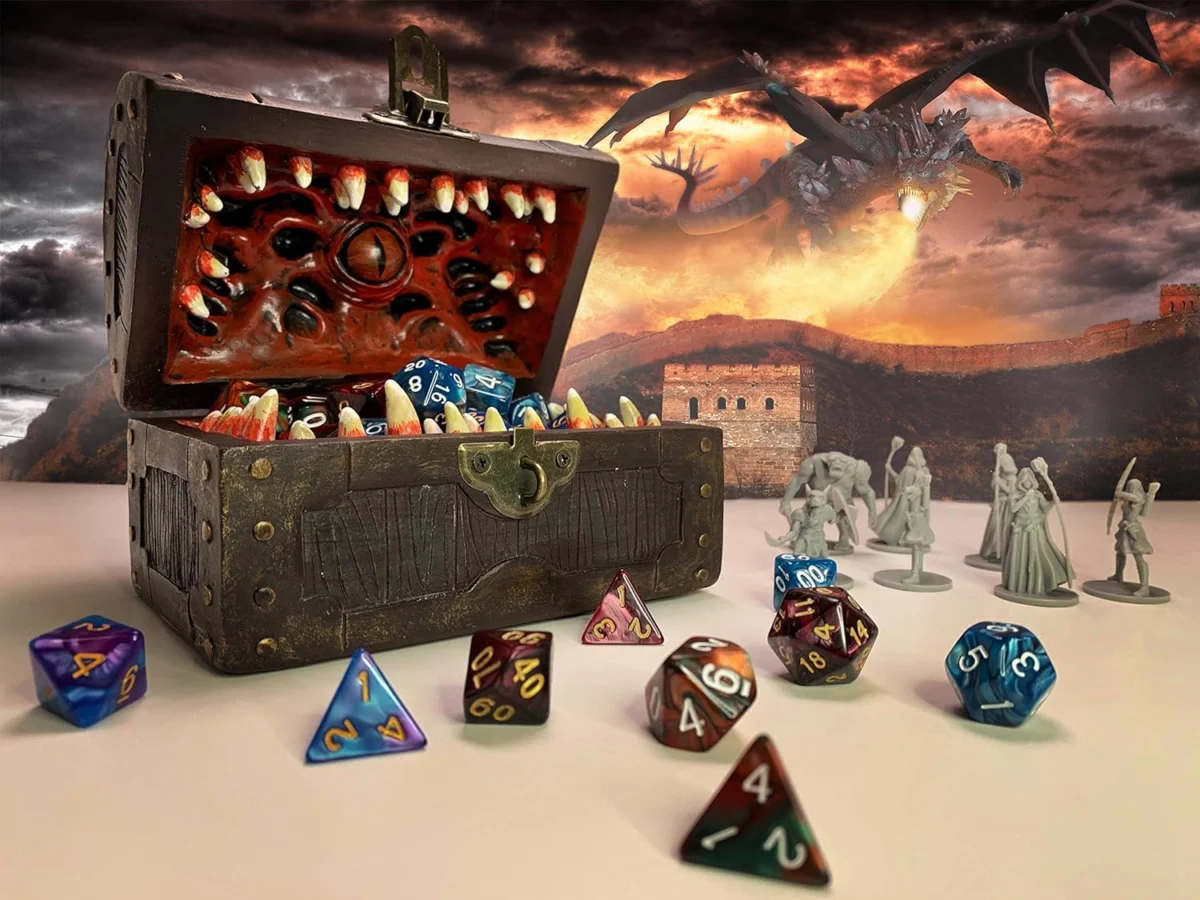
Perhaps the most functional and visually striking item on this list is the Creepy Mimic Dice Box. This accessory perfectly merges utility with the Mimic’s terrifying aesthetic. Designed to securely hold multiple sets of dice, it features a latch closure, ensuring precious polyhedrals remain safe. However, its true appeal lies in its meticulously crafted design.

These dice boxes often boast an extraordinary level of detail: gnarled, grimy wood paneling on the exterior, hinting at its true, monstrous nature, and an interior that transforms into a cavernous maw. Huge, bloody teeth, a fleshy tongue, and sometimes even glistening "saliva" textures bring the Mimic to horrifying life. The artistry involved in creating such a piece makes it more than just a storage container; it’s a conversation starter, a centerpiece for any gaming table. Players often approach it with a genuine, if humorous, trepidation when retrieving their dice, adding a subtle layer of meta-game roleplaying to every session. This blend of practical function and visceral horror makes the Mimic dice box a highly sought-after item for D&D enthusiasts who appreciate both form and frightening function.
The Crafters and the Community: The Genesis of Mimic Merchandise
Official Lore and Community Responses: Fueling the Creative Fire
While there are no direct "official responses" from Wizards of the Coast (WotC), the creators of Dungeons & Dragons, regarding specific third-party mimic merchandise, their broader approach to intellectual property and game lore implicitly encourages such creativity. The D&D brand thrives on community engagement and the vast, open-ended nature of its fantasy worlds. The original D&D Open Gaming License (OGL) famously allowed third-party creators to develop and sell content based on the core D&D rules, fostering an immense ecosystem of independent products, including unique monsters and accessories. While the OGL has seen changes, the spirit of creative freedom remains deeply ingrained in the D&D community.
The proliferation of Mimic-themed items is a direct response to the monster’s iconic status and the strong affinity players have developed for it. Artisans, designers, and small businesses are driven by a passion for D&D, seeking to translate beloved in-game elements into tangible, real-world products. They tap into the collective humor and shared experiences of the D&D community, knowing that a "Not a Mimic" sticker or a detailed Mimic dice box will resonate deeply with fellow players.

Community response to these items is overwhelmingly positive. Social media platforms, D&D forums, and conventions buzz with discussions about new mimic creations. Players eagerly share their purchases, showcase their custom-painted miniatures, and invent new, humorous scenarios for their mimic accessories. This grassroots enthusiasm acts as a powerful feedback loop, encouraging more creators to delve into the mimic’s deceptive charm. In essence, the "official response" to Mimic merchandise comes not from a corporate statement, but from the vibrant, active, and appreciative D&D community itself, whose purchases and engagement validate and sustain this unique niche of fantasy merchandise.
Beyond the Teeth: Implications for D&D Culture
The enduring popularity and diverse range of Mimic-themed accessories have significant implications for D&D culture, enhancing the player experience in multiple ways.
Enhancing Immersion and Table Humor: These accessories serve as more than mere trinkets; they are extensions of the game itself. A Mimic dice box at the table, a Mimic miniature poised for combat, or even a "Not a Mimic" sticker on a character sheet all contribute to a deeper sense of immersion. They act as constant, playful reminders of the game’s inherent unpredictability and its rich tapestry of lore. Furthermore, they are excellent catalysts for table humor, sparking laughter and shared jokes that strengthen the bonds between players. The collective groan when a DM pulls out an unexpected Mimic miniature, or the knowing smirk when someone reveals their Mimic plush, are integral parts of the D&D social experience.
Merchandise as Storytelling: These items extend the narrative beyond the confines of a game session. A Mimic dice box isn’t just for holding dice; it’s a small piece of a dungeon brought to life. A building block Mimic isn’t just a toy; it’s a personal project that connects the builder to the fantastical world. This tangible connection allows players to carry a piece of their D&D adventures with them, fostering a continuous engagement with the hobby even when not actively playing. They become conversation starters with non-gamers, offering a glimpse into the creative and humorous aspects of the D&D universe.

The Enduring Appeal of Monsters: The Mimic’s consistent presence in merchandise underscores the enduring appeal of D&D’s monster manual. Certain creatures, through clever design and memorable encounters, transcend their stat blocks to become cultural icons. The Mimic’s genius lies in its simplicity—the betrayal of the inanimate—a concept that is universally understood and feared, yet simultaneously ripe for humor. Its ability to surprise and confound players ensures its continued relevance and popularity, proving that sometimes, the most terrifying monsters are those that hide in plain sight.
The Future of D&D Merchandise: The success of Mimic-inspired products suggests a promising future for D&D merchandise that embraces both functionality and meta-humor. As the D&D community continues to grow and evolve, there will likely be an increasing demand for innovative products that tap into specific lore, iconic creatures, and the shared inside jokes that define the experience. This trend blurs the line between the game world and reality, inviting players to integrate elements of their fantasy adventures into their daily lives in creative and often humorous ways.
In conclusion, the Mimic, a deceptively simple monster introduced decades ago, has cemented its place not just in D&D lore but in the hearts and minds of its players. The myriad of accessories it has inspired—from the overtly creepy to the ironically cuddly—are a testament to its enduring power to surprise, delight, and instill a healthy dose of paranoia. As adventurers continue to explore perilous dungeons and vast wildernesses, the question will always linger: is this just an ordinary item, or does it conceal a hungry maw? Probably. We’re pretty sure. But maybe, just maybe, it’s safer to have someone else poke it first.