The Global Canvas: Assessing the State of Contemporary Cartooning and Visual Satire
The world of cartooning, often dismissed as mere entertainment, has reasserted itself in 2026 as a critical intersection of political dissent, economic intellectual property, and cultural heritage. From the high-stakes extradition of digital pirates in East Asia to the subversive ink-lines challenging authority in Tanzania, the medium is undergoing a profound transformation. As veteran illustrators are honored in Nigeria and middle-aged artists in South Korea are retrained to navigate the age of Artificial Intelligence, the global cartooning landscape reveals a profession that is as resilient as it is embattled.
Main Facts: A Global Summary of Recent Developments
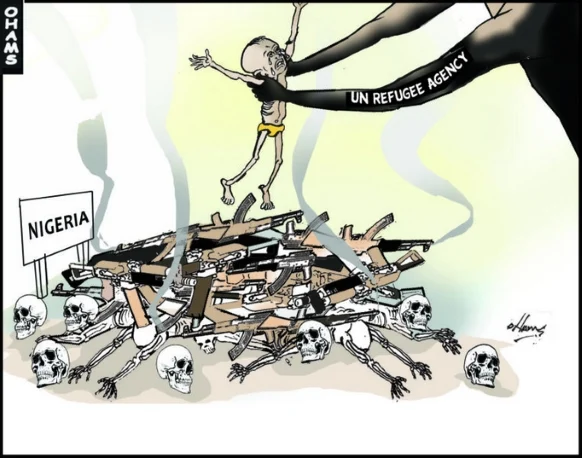
The month of June 2026 has seen a flurry of activity across four continents, highlighting the diverse roles that cartoons play in modern society. In Nigeria, the Humor Awards Academy recognized long-term excellence by naming Albert Ohams the Best Cartoon Illustrator, a victory that followed three consecutive years of nominations.
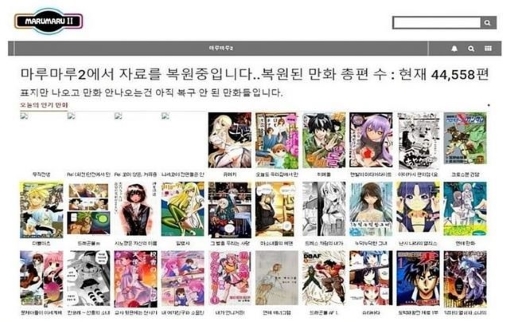
Simultaneously, the legal front of the industry saw a landmark victory for copyright enforcement. South Korean authorities successfully extradited a 37-year-old operator of a massive piracy network from Japan. This network, which included the notorious site Marumaru2, was responsible for the illicit distribution of Japanese and Korean comics (webtoons) on a scale that funneled significant revenue into illegal gambling advertisements.
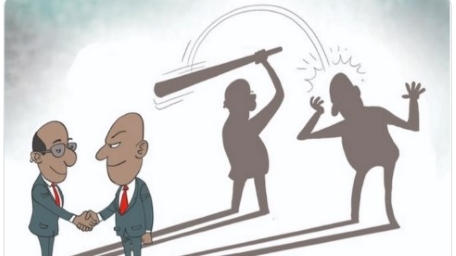
In East Africa, the political cartoon has emerged as a "democratic barometer." In Tanzania, publications like The Citizen are utilizing visual satire to bypass strict media censorship laws, providing a platform for dissent that prose often cannot safely occupy. Meanwhile, in India, the Indian Institute of Cartoonists hosted a high-level debate on whether the art form is thriving or facing a systemic pushback from political entities.
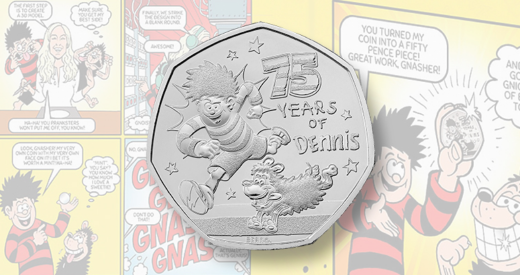
Finally, the industry is looking toward its future and its past. The United Kingdom is celebrating the 75th anniversary of the iconic character Dennis the Menace with commemorative currency, while South Korea has launched a pioneering "Webtoon Senior Mentoring Program" to help artists over the age of 40 adapt to generative AI and digital shifts.
Chronology: The Timeline of a Changing Medium
The events of June 2026 mark a culmination of several long-standing trends in the industry:
- June 10, 2026: The Korea Manhwa Contents Agency (KOMACON) officially launches its retraining program for 25 veteran cartoonists. The move responds to the rapid encroachment of generative AI in the webtoon production pipeline.
- June 11, 2026: South Korean authorities announce the successful repatriation of a major piracy site operator from Japan, marking the first time such an extradition has occurred under the current bilateral treaty for comic-related intellectual property theft.
- June 12, 2026: The Citizen in Tanzania publishes a seminal editorial cartoon that analysts cite as a masterclass in "plausible deniability," critiquing the ruling Chama Cha Mapinduzi (CCM) party amidst ongoing political reforms.
- June 13, 2026: The Maya Kamath Memorial International Cartoon Contest 2026 convenes in Bangalore, India. Leading cartoonists, including Sandeep Adhwaryu, lead a panel discussion on the "pushback" against political satire in the world’s largest democracy.
- Mid-June 2026: The Royal Mint in the UK begins the distribution of the 75th-anniversary Dennis the Menace 50-pence coins, signaling the enduring commercial and cultural power of classic comic characters.
Supporting Data: The Scale of Industry Challenges
The digital and political challenges facing cartoonists are underscored by staggering data. The piracy network recently dismantled by Korean and Japanese authorities provides a window into the scale of intellectual property theft. According to reports from Maeil Business, illegal English-speaking webtoon sites based in Vietnam, run by the same operators as the captured suspect, recorded over 1.1 billion visits annually. These sites targeted Western markets, including the United States and Europe, causing billions in potential revenue losses for legitimate creators.
In South Korea, the shift toward digital platforms is absolute, yet it has left older creators behind. The Korea Manhwa Contents Agency noted that the retraining of artists aged 40 and older is not merely a courtesy but an economic necessity. As generative AI begins to handle background art and coloring, veteran artists must learn to integrate these tools or face professional obsolescence.
In the realm of political impact, the "Maya Kamath Memorial" panel highlighted a growing trend of "soft censorship." While the number of digital cartoonists in India has grown, the number of mainstream newspaper slots for daily political cartoons has seen a relative decline, replaced by more "neutral" or lifestyle-oriented illustrations to avoid friction with government regulators.
Official Responses and Industry Advocacy
The response from official bodies and industry coalitions has been one of cautious optimism regarding legal victories, but concern regarding creative freedom.
The Anti-Piracy Coalition
A coalition of seven major tech and entertainment firms, including Kakao Entertainment and Naver Webtoon, issued a joint statement welcoming the extradition of the Marumaru2 operator. The group, known as the Webtoon Illegal Distribution Response Council, praised the Ministry of Culture, Sports and Tourism, as well as the prosecution and police services, for their "sustained investigative cooperation." They characterized the repatriation as "meaningful progress in holding copyright infringers accountable" and urged the judiciary to impose "strict punishment" to deter future piracy.
The African Perspective
In Tanzania, the use of cartoons is being viewed by media analysts as a survival strategy. Under the administration of President Samia Suluhu Hassan, there has been a perceived opening of democratic space, yet many repressive media laws remain on the books. Streamline Opinion & Analysis noted that editorial cartoons serve as a "crucial democratic barometer." By using metaphors and allegories, cartoonists can critique economic inequality and state power while maintaining a level of "plausible deniability" that protects the publication from direct legal retaliation.

The Veteran Voice
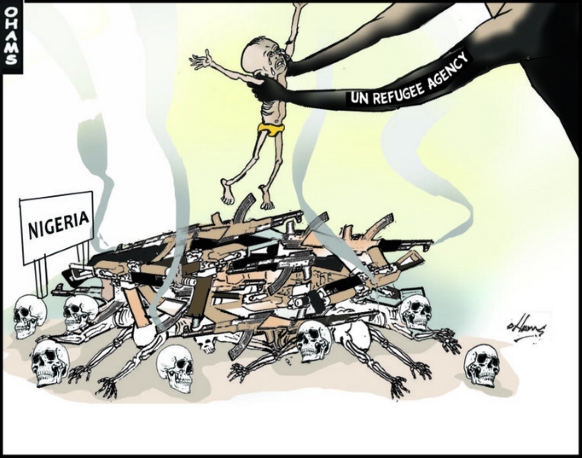
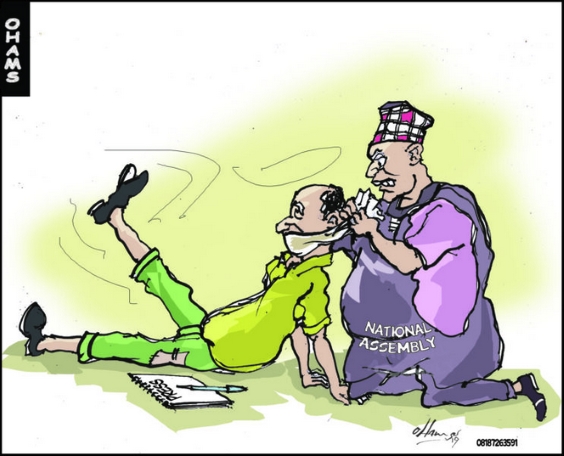
In Nigeria, Albert Ohams’ win at the Humor Awards Academy was met with praise from the veteran community. Ohams, who has been active since the early 1980s, noted that the award was a "validation of years of dedication." His win highlights a growing movement in West Africa to treat cartooning not as a secondary craft, but as a primary form of journalistic illustration.
Implications: The Future of the Illustrated Word
The current state of global cartooning suggests several long-term implications for the medium.
1. The Legalization of the Digital Frontier
The successful extradition between Japan and Korea sets a legal precedent. It signals to piracy operators that geographical borders are no longer a shield against intellectual property laws. As webtoons become a multi-billion-dollar global export for South Korea, the government is likely to increase its "cartoon diplomacy," seeking similar treaties with countries like Vietnam and Thailand to protect its cultural assets.
2. The AI-Human Hybrid Model
The retraining program in Korea suggests that the future of the industry is not "Human vs. AI," but rather a hybrid model. Middle-aged cartoonists, who possess deep knowledge of anatomy, pacing, and storytelling, are being taught to use AI as a productivity tool. This could lead to a "renaissance" of veteran artists who were previously slowed down by the manual labor of digital coloring and line work.
3. Satire as a Safe Haven
As global governments become increasingly sophisticated in monitoring text-based dissent, the "visual allegory" will become more vital. The Tanzanian model shows that a single image can communicate what a 1,000-word op-ed cannot. However, this also places cartoonists in the crosshairs. As Sandeep Adhwaryu noted in Bangalore, a strong political cartoon is "not just entertainment or a joke; it is a comment." This inherent power makes cartoonists vulnerable to both state pressure and social media "cancel culture."
4. The Commercialization of Nostalgia
The UK’s celebration of Dennis the Menace through the Royal Mint demonstrates the "longevity of IP." While new digital forms like webtoons dominate the youth market, classic characters remain high-value assets for collectors and national branding. This suggests a bifurcated market: a high-speed, high-volume digital sector for new content, and a prestigious, "legacy" sector for established icons.
Conclusion
The events of 2026 reveal that the cartooning world is far from a monolithic entity. It is a complex ecosystem where the struggle for democratic expression in East Africa and India coexists with high-tech legal battles in East Asia and the celebration of cultural heritage in Europe and Africa. Whether it is through a commemorative 50-pence coin or a subversive sketch in a Dar es Salaam newspaper, the cartoon remains one of humanity’s most potent tools for communication, reflection, and resistance. As technology evolves, the ink may change from physical to digital, but the "subversive power" of the well-drawn line remains undiminished.