Embracing the Everyday: Why Consciously Engaging with Folklore Can Transform Your Life
London, UK – For many, the word "folklore" conjures images of quaint anachronisms or fantastical tales spun for entertainment. It might evoke the sight of antler-wearing men dancing in Abbotts Bromley, or the memory of a grandparent attempting a wart charming cure. To some, it’s merely "flim flam," a device to lull children to sleep, twist a literary plot, or extract revenue from eager fandoms. Others unknowingly dabble in its periphery, from decorating Christmas trees to spreading jam before cream on their scones, without a second thought to the deep cultural currents they navigate. And then there are those who don’t think about folklore at all.
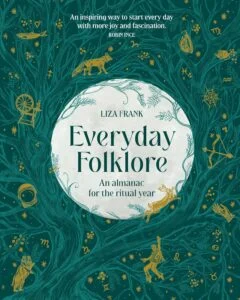
Yet, as author Liza Frank argues in her compelling new book, Everyday Folklore: An Almanac for the Ritual Year, folklore is not a dusty relic confined to history books or remote villages. It is, in fact, an ever-present, dynamic force woven into the fabric of our daily lives—a subtle symphony of rituals, traditions, and customs that quietly guide our existence, down to the precise method of brewing a cup of tea. Frank’s insights stem from a unique, immersive project: between St Distaff’s Day in 2020 and Twelfth Night in 2021, she meticulously practiced ritual year folklore every single day, transforming her experiences into a practical guide for year-round engagement.
Published by Folklore Thursday, a platform dedicated to exploring global traditions, Frank’s work extends an open invitation to even the most casual observer of folklore. She presents a powerful call to action, asserting that everyone stands to benefit from consciously incorporating a little bit of folklore into their life. Or, as she playfully puts it, to "feel the folklore fear and do it anyway." This assertion challenges modern perceptions, suggesting that a deliberate embrace of these ancient and contemporary practices offers profound personal and societal advantages, moving beyond mere academic curiosity to become a vital tool for enriching contemporary existence.
The Call to Action: Reclaiming Our Shared Heritage
Frank’s project began as a personal exploration but quickly evolved into a broader commentary on the modern human condition. In an era dominated by rapid technological advancements and a relentless pace of life, the subtle anchors of tradition often go unnoticed or are dismissed as irrelevant. However, folklorists and cultural anthropologists have long underscored the fundamental role of folklore in shaping community identity, transmitting cultural values, and providing a sense of continuity across generations. It acts as a collective memory, a living archive of human ingenuity, belief, and adaptation.
Frank’s "year of living folklorishly" provides a tangible example of how these practices can be reintegrated into a contemporary lifestyle, offering a counterbalance to the ephemeral nature of digital existence. Her book, Everyday Folklore, serves not just as an almanac, but as a manifesto for re-enchanting the mundane. It’s a practical guide for those who might feel disconnected from their surroundings or overwhelmed by the ceaseless march of time, offering a pathway to rediscover joy, wonder, and a deeper sense of belonging. By deliberately engaging with these traditions, individuals can tap into a rich vein of shared human experience, fostering both personal growth and a renewed connection to their cultural heritage.
The Five Pillars of Everyday Folklore: A Path to Deeper Engagement
Frank meticulously outlines five compelling reasons why conscious engagement with folklore is not just a whimsical pursuit but a valuable practice for modern life. These pillars demonstrate how folklore can serve as a powerful antidote to some of the most pervasive challenges of our time, from accelerating time perception to widespread ennui.
1. Cultivating Presence: Slowing Down the Ritual Year’s Unfolding
In an age where days bleed into weeks and weeks into months, leading to the familiar lament of "how fast the year has gone," folklore offers a potent antidote: mindful presence. While folklore cannot literally halt time—though, as Frank wryly notes, "I’m sure there’s a charm for that"—observing the ritual year provides a structured framework for conscious engagement with the passage of time.
Modern life, characterized by constant digital stimulation and a relentless pursuit of productivity, often detaches individuals from natural rhythms. By contrast, practices tied to specific dates, months, or seasons compel a pause, a moment of observation and participation. Wassailing in January, for instance, isn’t just an ancient apple orchard ritual; it’s an act that instills a tangible "stake in how the apple harvest turns out," fostering a connection to the land and its cycles. Counting fogs in August to predict winter snowfalls transforms weather observation into a playful, predictive game, heightening awareness of meteorological patterns. Experimenting with lunar plantings or simply observing the hedgerows transition from barren dormancy to budding life and then to fecund abundance before returning to sparseness, cultivates a profound appreciation for nature’s relentless, beautiful cycle.
These deliberate acts of observation and participation compel a slower pace, fostering a heightened sense of presence. This deceleration, in turn, opens one up to "possibility and wonder," allowing for a richer, more textured experience of life. It’s a powerful form of mindfulness, anchoring individuals to the present moment and the unfolding narrative of the year, rather than letting time slip by unobserved.
2. An Abundance of Celebration: Infusing Joy into Daily Life
Beyond the standard roster of birthdays, anniversaries, religious festivals, and secular holidays, the ritual year bursts with an "endless capacity for marking the passage of time with excuses for joy." Folklore provides an expansive calendar of opportunities for celebration, transforming the mundane into the memorable.
Consider the sheer variety: if one wishes to celebrate trees, the ritual year offers multiple designated days. For a quirky nod to human anatomy, entire festivals are dedicated to "innies and outies" during June and July. Epicureans can raise a glass to specific libations, marking 19 August for wine, the second Saturday of June for gin, and 31 July for rum. Pop culture enthusiasts are not left out, with dedicated days for Back to the Future, Star Trek, and the universally recognized Star Wars Day ("May the Fourth be with you").
Folklore even provides occasions to celebrate the absence of an event, such as the joyous relief if it doesn’t rain on St Swithin’s Day, averting a predicted forty days of downpour. More actively, completing a specific folkloric task, like the intricate process of counting "seven stars on seven consecutive nights" to have a wish granted, transforms an ordinary evening into an act of hopeful magic and achievement. These myriad celebrations, whether grand or intimate, historical or modern, provide frequent opportunities to punctuate the year with moments of collective or personal delight, fostering a pervasive sense of optimism and connection.
3. Banishing Boredom: Folklore as an Antidote to Ennui
In an increasingly digitized and often passive world, boredom and ennui are persistent modern maladies. Folklore, however, offers a vibrant, hands-on, and often wonderfully absurd antidote. It encourages active participation, creativity, and a healthy dose of daredevilry.
Leftover Christmas cake, for instance, need not be merely discarded; inspired by the good people of Manitou Springs, Colorado, one could stage a "Great Fruitcake Toss" in January, transforming a domestic leftover into a community spectacle. The culinary arts offer another rich avenue: challenging oneself to recreate ritual year recipes like "Heg Peg Dumps" or "knotting-sowins," or simply baking a large batch of scones for National Cream Tea Day, provides a tangible, delicious connection to tradition. (Though, as Frank humorously advises from personal experience, one might "avoid plum duffs, especially if tempted to use vegetarian suet and your favourite tea towel").
For those with a flair for the theatrical, folklore presents opportunities for elaborate costume and role-playing, from becoming "King for a weekend" at the Porthcawl Elvis Festival in September to embodying a badger to celebrate St Piran’s Day in March. And for the genuinely adventurous, there’s the adrenaline rush of running down Cooper’s Hill after a wheel of cheese in May, or the unique challenge of the Dorking Wife Carrying Race in March, where spouses are lugged over an obstacle course. As Frank discovered during her "year of living folklorishly," the world of folklore always offers "something to do," even if it’s as unconventional as "conducting an exorcism at midnight by spitting black beans and walking backwards." This active engagement combats passivity, stimulating creativity, physical activity, and a playful embrace of the unconventional.
4. The Unexpected Wisdom: Winning Quizzes and Broadening Horizons
Folklore is a treasure trove of "weird and wonderful stuff," offering an endless supply of fascinating facts and curious insights that extend far beyond the realm of pub quizzes, though it certainly equips one to excel in them. It’s a field where ancient beliefs intersect with surprising scientific observations and modern cultural practices.
Consider the intriguing tidbit that "spiders prefer classical music to techno," a fact supported by a 1966 study on orb-weaving spiders’ reactions to airborne sounds. This knowledge, Frank suggests, might influence one’s playlist choices, especially if a sudden "uptick of spiders" in March (which, incidentally, "augurs rain") prompts a reevaluation of one’s eight-legged housemates. Another compelling example is the unique pre-launch ritual of Baikonur cosmonauts, who, since the early 1970s, have traditionally watched The White Sun of the Desert—a 1970 Russian Civil War comedy—for good luck, as detailed by Richard Hollingham.
Furthermore, folklore illuminates the multifaceted nature of symbols and creatures. Bats, often burdened with the reputation of being "the Devil’s messenger," are also revealed to be "one of the main pollinators of agave plants," vital for the production of tequila. Without these winged wonders, as Frank humorously points out, one might be "swapping your Margaritas for Manhattans." Delving into folklore is akin to going down a delightful "rabbit hole," where each discovery leads to another, fostering intellectual curiosity and broadening one’s understanding of diverse cultural beliefs, scientific phenomena, and the unexpected connections that bind them.
5. Crafting Personal Narratives: Tales for the Ages (and the Second Date)
Perhaps one of the most enduring benefits of engaging with folklore is the rich tapestry of personal stories it helps to weave. Let’s be frank: "some folklore is just bonkers," and Frank embraces this eccentricity wholeheartedly, acknowledging that if you’re "stalking a churchyard in Leicestershire on 1 June to see if St Wistan’s hair sprouts amongst the headstones, you’re my kind of people." The more one participates in these traditions, the more unique and memorable anecdotes one accumulates.
These can range from the slightly spooky—like the time you thought you "caught a whiff of demonic sulphur in the woods while a-nutting in September"—to the unexpectedly curative, such as swearing that a boil on your neck "decreased with the application of a cabbage leaf." Then there are the romantic, if unfulfilled, visions, like seeing your "one true love after slipping a sprig of rosemary and a crooked sixpence under your pillow on St Luke’s Eve" (in Frank’s case, the vision was "Mark Hamill. He’s not rung though").
These experiences, whether they confirm or playfully subvert folkloric beliefs, become indelible parts of one’s personal narrative. They offer engaging conversational fodder, enriching social interactions and providing a unique lens through which to view the world. However, Frank offers a pragmatic word of caution: while you might find it utterly impressive that you "failed to detect any vampire activity in your gardening implements," it might be wise to "save this kind of anecdote for the second date." Ultimately, folklore empowers individuals to become active participants in their own unfolding stories, transforming passive observation into lived, memorable experience.
Conclusion: A Resolution for a Richer Life
In essence, Liza Frank’s Everyday Folklore is more than just a book; it’s an invitation to embark on a journey of discovery and conscious living. Her overarching message is clear: make it your New Year’s resolution to deliberately infuse a bit of folklore into your life. Be more curious, try new things, initiate personal traditions, and challenge preconceived notions. This active engagement promises not only to slow down the perceived rush of time but also to multiply opportunities for joy, banish boredom, expand your knowledge, and furnish you with a lifetime of captivating tales.
It’s a call to embrace the rich, often quirky, and always meaningful traditions that underpin human experience. And for those who might falter, remember the common pitfall: 19 January is often cited as the day when most New Year’s resolutions are abandoned. But in the spirit of folklore, Frank offers a comforting thought: given that the ritual year boasts a multitude of "New Year’s Days" throughout its cycle, there will always be "plenty of opportunities for a do over should you need one."
Everyday Folklore: An Almanac for the Ritual Year is out now, poised to guide you through a year brimming with forgotten customs, joyous celebrations, and profound connections to the enduring magic of human tradition. By stepping into this rich tapestry, you don’t just observe folklore; you live it, enriching your existence and reaffirming your place within the grand narrative of human culture.
Footnotes & Further Reading:
[1] Warshaver, G. E. (1991) On Postmodern Folklore. Western Folklore, 50(3), 219–229.
[2] Frank, L. (2021) The Everyday Lore Project. https://liza-frank.com/the-everyday-lore-project/
[3] Frings, H. and Frings, M. (1966) Reactions of Orb-Weaving Spiders (Argiopidae) to Airborne Sounds. Ecology, 47, 578-588.
[4] Hollingham, R. (2014) The strangest space launch rituals. BBC Future. https://www.bbc.com/future/article/20140610-the-strange-rituals-of-cosmonauts
[5] Menchaca, A., Arteaga, M.C., Medellin, R.A., Jones, G. (2020) Conservation units and historical matrilineal structure in the tequila bat (Leptonycteris yerbabuenae). Global Ecology and Conservation, Volume 23.
[6] Vukanovic, T. P. (1958) The Vampire. Journal of the Gypsy Lore Society, 37(1), 21-31.