
The King Returns to the Lower East Side: New York City Officially Unveils Jack Kirby Way
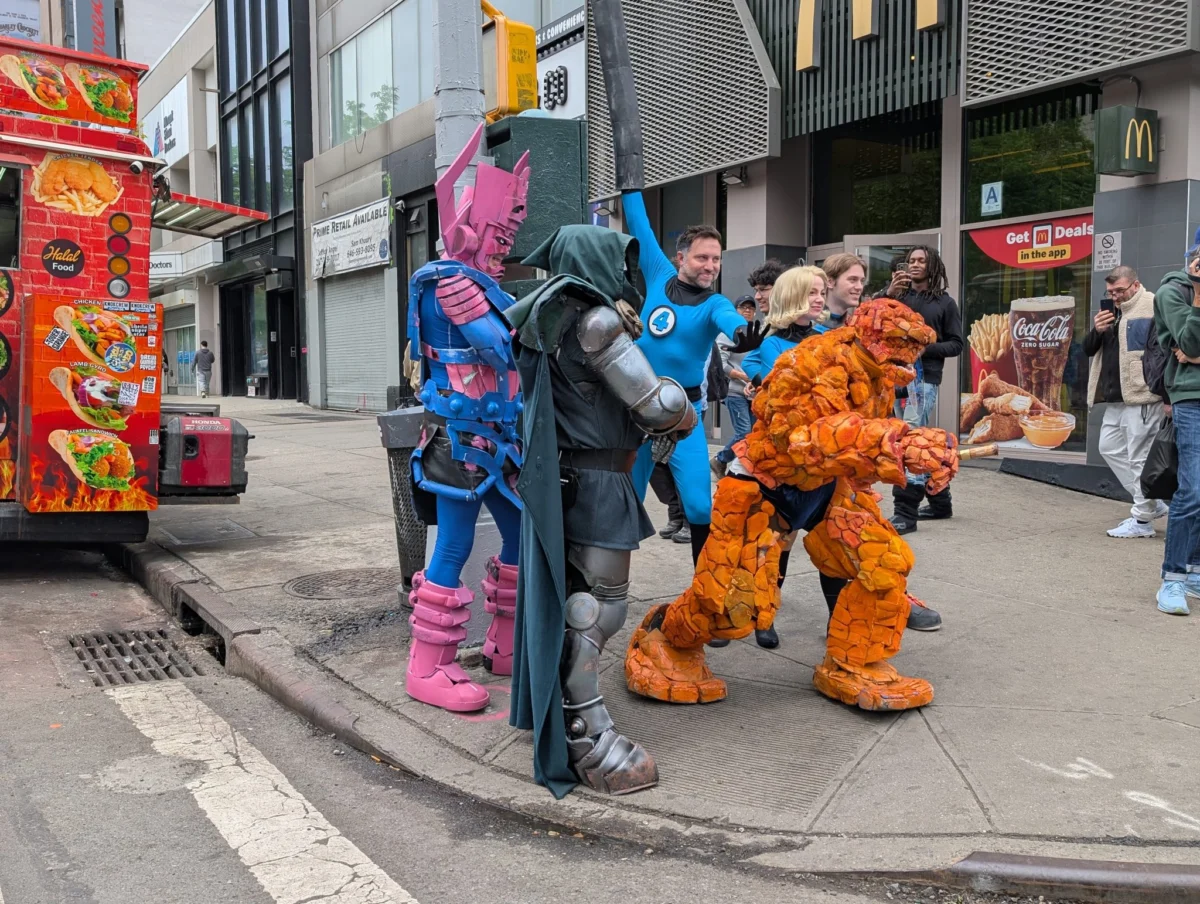
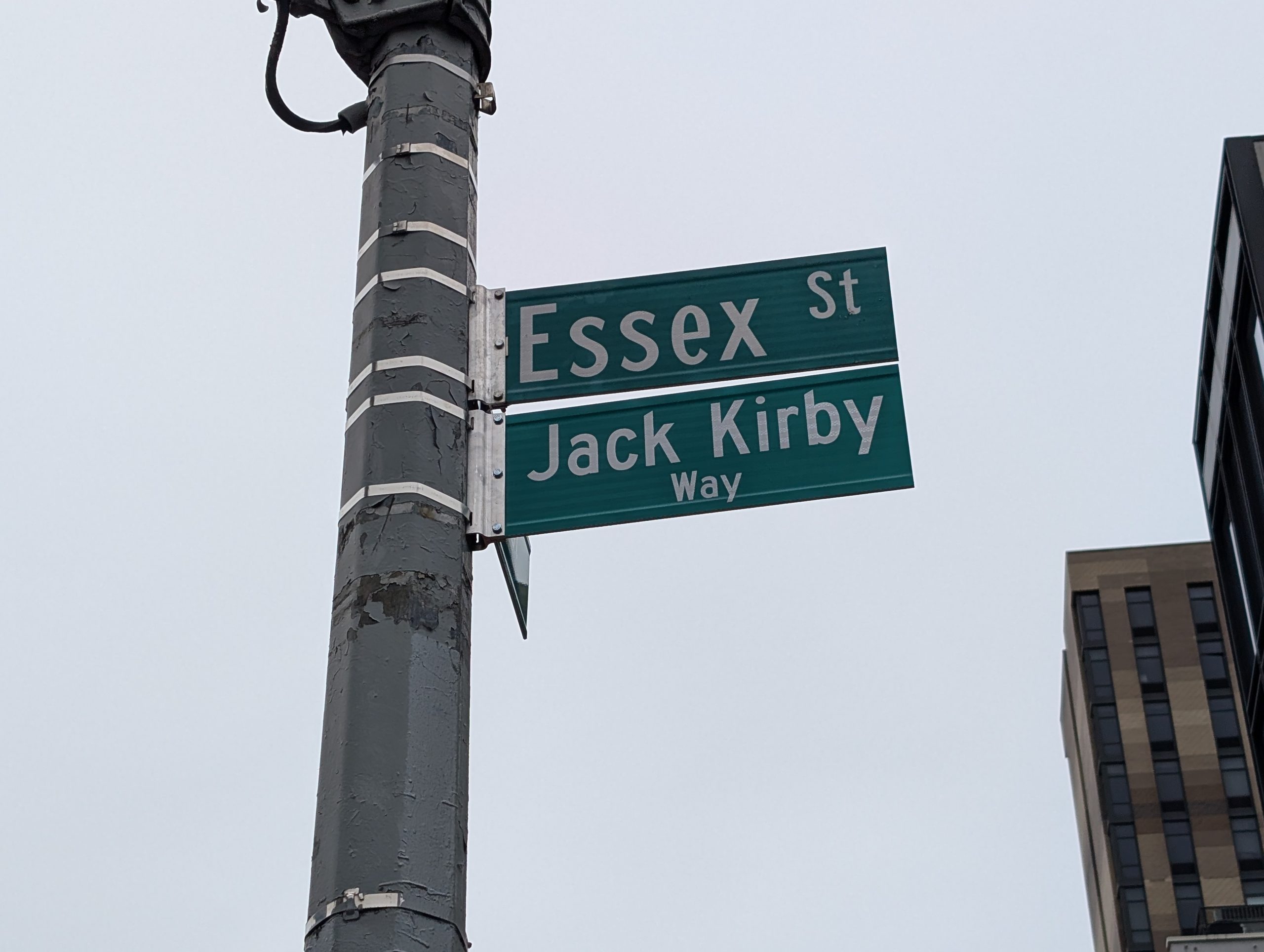
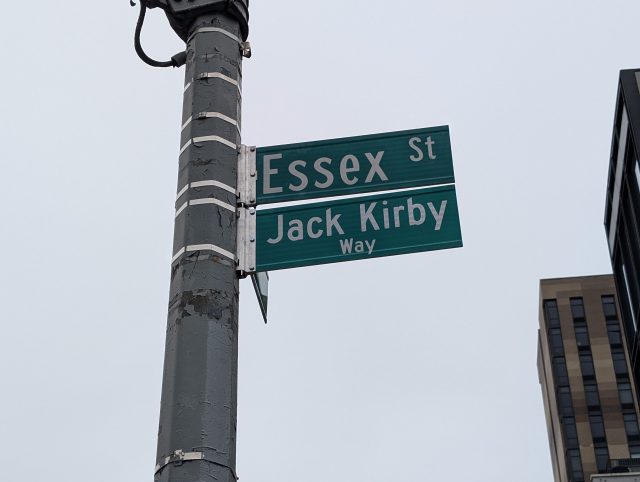
NEW YORK CITY — On a grey but resolute Monday afternoon in May 2026, the intersection of Delancey and Essex Streets in Manhattan’s Lower East Side underwent a transformation that many argue was nearly a century in the making. Amidst a crowd of several hundred fans, historians, and industry titans, the City of New York officially unveiled "Jack Kirby Way," a permanent street sign honoring the man widely regarded as the "King of Comics" and the primary architect of the modern American mythological landscape.
The event served as more than a simple municipal dedication; it was a profound cultural reckoning. For a man who co-created Captain America, the Fantastic Four, the X-Men, the Avengers, and the New Gods—characters that currently anchor multi-billion-dollar global franchises—the placement of a street sign just one block from his birthplace at 147 Essex Street represented a symbolic homecoming and a long-overdue acknowledgement of his contribution to the 20th-century arts.
Main Facts: A Permanent Tribute to the King
The dedication of Jack Kirby Way marks a definitive shift in how New York City recognizes its cultural icons. While the city has long celebrated its literary and musical giants, the recognition of comic book creators has historically lagged. The new sign, situated at one of the busiest crossroads of the Lower East Side, cements Kirby’s legacy in the very neighborhood that forged his creative spirit.
Key details of the event include:
- Location: The corner of Delancey and Essex Streets, Manhattan.
- Significance of Site: Located one block from 147 Essex Street, where Jacob Kurtzberg (Jack Kirby) was born in 1917.
- Key Organizers: The initiative was led by pop culture historian Roy Schwartz, in collaboration with the Kirby family and the office of Councilmember Christopher Marte.
- Attendance: A diverse assembly of approximately 200 people, including high-ranking executives from Marvel and DC Comics, legendary artists, and fans dressed as Kirby’s most famous creations, such as Galactus, Doctor Doom, and the Fantastic Four.
Unlike previous attempts to honor the artist, this designation is permanent. It follows a temporary 2025 publicity stunt that saw the street briefly renamed "Yancy Street," a nod to the fictional home of the Thing (Ben Grimm), a character Kirby modeled after his own rough-and-tumble youth in the neighborhood. While the 2025 event lasted only a few hours, the "Jack Kirby Way" unveiled on Monday is a permanent fixture of the New York City streetscape.
Chronology: The Long Road to Recognition
The path to "Jack Kirby Way" was not a swift one. It mirrored, in many ways, the artist’s own lifelong struggle for credit and compensation within an industry that often treated its most brilliant minds as "work-for-hire" laborers.
The Formative Years (1917–1930s)
The story begins in the tenements of the Lower East Side. Born to Austrian Jewish immigrants, Kirby used drawing as an escape from the crushing poverty and gang violence of the era. The architecture of the LES—the fire escapes, the crowded stoops, and the looming shadows of the Williamsburg Bridge—would later inform the "Kirby Krackle" and the kinetic energy of his artwork.
The Advocacy Phase (2010s–2024)
For decades, the Jack Kirby Museum & Research Center and figures like Columbia University curator Karen Green lobbied for greater public recognition of Kirby’s impact. Despite his death in 1994, his influence only grew as the Marvel Cinematic Universe (MCU) became a dominant cultural force. Historians pointed out the irony that while Kirby’s characters earned billions for corporations, the man himself had to fight for years just to have his original art returned.
The Legislative Push (2025–2026)
The campaign gained momentum in 2025 through the efforts of Roy Schwartz. Schwartz worked to navigate the bureaucratic hurdles of the New York City Council, ensuring the proposal moved beyond a "honorary" temporary sign to a permanent renaming. Last year’s "Yancy Street" gimmick served as a proof of concept, demonstrating the massive public interest and the deep emotional connection fans felt toward Kirby’s biography.
The Unveiling (May 11, 2026)
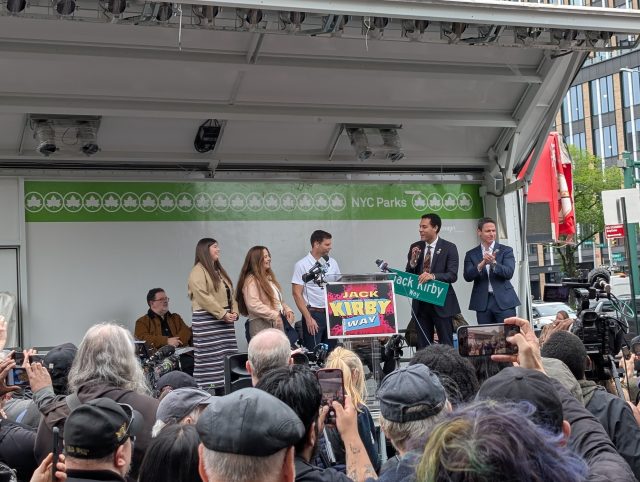
The ceremony on Monday lasted just under an hour but contained decades of pent-up emotion. The proceedings began with speeches from local politicians and industry leaders, culminating in the pulling of a rope that removed a green protective sleeve to reveal the "Jack Kirby Way" signage.
Supporting Data: The Magnitude of Kirby’s Influence
To understand why a street sign in the Lower East Side is national news, one must look at the sheer scale of Kirby’s output. Over a career spanning seven decades, Kirby produced an estimated 25,000 pages of art, thousands of stories, and hundreds of characters.
- Architect of the Marvel Universe: Along with Stan Lee, Kirby co-created the bedrock of Marvel Comics. While Lee was the voice and the promoter, Kirby was the visual engine and a primary plotter.
- The DC Expansion: In the 1970s, Kirby moved to DC Comics to create the "Fourth World" saga, introducing Darkseid—one of the most recognizable villains in fiction—and the concept of the "Mother Box," a precursor to modern smartphone concepts in science fiction.
- Cinematic Dominance: As of 2026, films featuring characters co-created by Kirby have grossed over $30 billion worldwide.
- Educational Recognition: The unveiling coincides with increased academic interest in Kirby. Beyond the street naming, Ricki Stern (director of Joan Rivers: A Piece of Work) recently announced Kirbyvision, a major documentary aimed at chronicling the artist’s visual grammar and his fight for creator rights.
The location of the sign is also data-rich in its historical context. Delancey Street was the inspiration for "Yancy Street" in the Fantastic Four comics. By naming the real-world street after the creator, the city has effectively closed the loop between the fictional universe and the gritty reality that inspired it.
Official Responses: "Beyond Overdue"
The speeches delivered at the ceremony reflected a mix of triumph and somber reflection. There was a palpable sense among the speakers that this event was an act of historical restitution.
Councilmember Christopher Marte addressed the crowd with a blunt assessment of the timeline: "This was beyond overdue. Jack Kirby didn’t just draw comics; he drew the soul of this neighborhood. He showed that a kid from a tenement could build worlds. The city is finally acknowledging that his contribution to our history is as permanent as these streets."
Paul Levitz, former President and Publisher of DC Comics, highlighted the scale of Kirby’s imagination: "Jack Kirby gave us a universe. It is only fitting that we acknowledge him as powerfully as we can in our universe. He was a man who saw the cosmic in the everyday, and today, the everyday of New York City becomes a little more cosmic."
Tom Brevoort, Marvel Comics’ VP of Publishing, spoke to the artist’s enduring influence on the medium: "Every artist working today is standing on Jack’s shoulders. Whether they know it or not, they are using his language, his pacing, and his energy. This sign is a reminder of where it all started."
Perhaps most moving were the words of Kirby’s grandchildren, who spoke not of the "King of Comics," but of the man who loved his family and worked tirelessly at a drawing board in his basement to provide for them. Their presence underscored the human element of a legacy that is often discussed in terms of intellectual property and corporate assets.
Implications: A New Era for Creator Rights and Cultural Heritage
The naming of Jack Kirby Way carries implications that extend far beyond the borders of the Lower East Side. It signals a shift in the "Great Man" theory of history, expanding it to include the creators of popular culture who were once dismissed as mere illustrators.
1. The Righting of Historical Wrongs
As noted by several attendees, the event had an "undertone" of justice. For years, the narrative of Marvel’s success was dominated by Stan Lee, often at the expense of Kirby’s contributions. The street naming serves as a public, government-sanctioned affirmation of Kirby’s primary role in American culture. It suggests that the "work-for-hire" model, which historically stripped creators of their legacy, is being challenged by the weight of public opinion and historical scholarship.
2. The Gentrification and Reclaiming of the LES
The Lower East Side has undergone massive gentrification over the last two decades. Many of the tenements Kirby knew have been replaced by luxury condos and high-end boutiques. Jack Kirby Way acts as a "historical anchor," reminding residents and tourists alike of the neighborhood’s roots as a sanctuary for immigrant creativity and working-class struggle.
3. The Future of Comic Art as High Art
With a street name, a museum, and an upcoming documentary, Jack Kirby is being moved into the same pantheon as New York’s great novelists and playwrights. This elevation of comic art to the status of permanent civic heritage may pave the way for other creators—such as Will Eisner or Bill Finger—to receive similar municipal honors.
4. A Moment of History
The event was best summarized by an exchange witnessed during the unveiling. A teenager passing by on a skateboard asked what the commotion was about. A bystander simply replied, "History."
While it is a tragedy that Kirby did not live to see his name on the corner of Delancey and Essex, the permanence of the sign ensures that future generations will know his name. As the industry continues to grapple with the ethics of its past, Jack Kirby Way stands as a green-and-white beacon of progress—a signpost indicating that while justice may be delayed, the King eventually receives his crown.

Leave a Comment