The Midpoint Pivot: Unlocking Compelling Character Arcs and Conquering the "Saggy Middle"
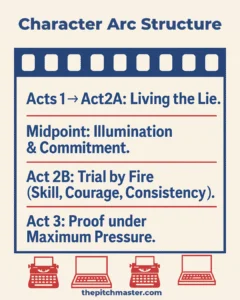
A fundamental shift in narrative structure, often overlooked, is the crucial role of the midpoint in transforming a static protagonist into a dynamic force, breathing life into the heart of any story and averting the dreaded "saggy middle." This pivotal moment, where a character moves from delusion to dawning realization, is not merely a plot device but the engine that drives authentic growth and ensures a satisfying narrative arc.
For writers and storytellers, the middle of a narrative can often feel like a vast, uneventful expanse, a stretch of time where momentum seems to wane and the initial spark of intrigue dims. However, this perceived quietude belies a profound structural transformation. The midpoint, as identified by seasoned story analysts and narrative theorists, is precisely where the lights truly illuminate the character’s inner journey, signaling a fundamental shift from "living the lie" to embracing a nascent truth. This illumination is not an endpoint but a powerful catalyst, fundamentally altering the protagonist’s motivations, strategies, and ultimately, their destiny for the remainder of the story.
At its core, a compelling character arc is propelled by three interconnected forces: the protagonist’s internal desires, their external goals, and the evolving understanding of themselves and the world around them. The midpoint acts as the critical juncture where these forces converge, forcing a reevaluation and a decisive pivot. It’s the moment when the character, confronted by a significant revelation, a crushing defeat, or an unexpected victory, can no longer sustain their previous illusions. This confrontation compels them to acknowledge their deepest "want" – often distinct from their superficial "need" – and commit to a new path, a new strategy, and a fundamentally altered worldview.
The Four Beats of a Character Arc: From Lie to Truth
Understanding the character arc through distinct structural phases provides a clearer roadmap for narrative development. This framework, often visualized through plot diagrams, highlights the significance of the midpoint as a transformative hinge:
Beat 1: Acts 1 through Act 2A – Living the Lie
In the initial stages of a story, protagonists typically operate under a fundamental misconception or a deeply ingrained belief system that is, in essence, a lie. This "lie" dictates their actions, their goals, and their methods. They pursue objectives, often with considerable effort, employing tactics that are rooted in this falsehood. While these lie-based tactics may yield short-term successes or create the illusion of progress, they invariably come at a deeper, often unseen, cost. This period is characterized by the character’s internal dissonance, a subtle but persistent undercurrent of dissatisfaction that their current approach, despite its apparent effectiveness, doesn’t fully address.
Beat 2: The Midpoint – Illumination and Commitment
The midpoint represents a seismic shift in the narrative. It is the "aha!" moment, the point of no return, where the protagonist is forced to confront the limitations of their lie. This can manifest in various forms: a devastating failure that shatters their illusions, a profound revelation that exposes the truth of their situation, or even a significant victory that, upon closer inspection, reveals the hollowness of their current path. Crucially, at the midpoint, the protagonist experiences an "illumination"—a glimpse of their true want, a deeper need that transcends their superficial desires. This realization is followed by a conscious "commitment" to a new approach. This is a cognitive and directional switch; the character formulates a new plan, adopts new tactics, and discovers a more profound "why" for their actions. They are no longer operating from a place of deception but from a nascent understanding of their authentic selves.
Beat 3: Act 2B – Trial by Fire: Skill, Courage, Consistency
The period following the midpoint is the protagonist’s "trial by fire." Having committed to their new truth and a revised strategy, the world now rigorously tests this commitment. This phase is about the protagonist actively practicing what they now believe to be true. They begin to employ their newfound understanding, honing the necessary skills, mustering courage in the face of adversity, and striving for consistency in their actions. However, this is not a smooth ascent. The protagonist will experience setbacks, moments of doubt, and instances where they may backslide into old habits or confront the rising costs associated with their new path. Adversaries, sensing the shift, will adapt their strategies, and the consequences of the protagonist’s choices will tighten, creating escalating pressure.
Beat 4: Act 3 – Proof Under Maximum Pressure
The final act culminates in the protagonist’s ultimate test: "proof under maximum pressure." Following a period often characterized by a "Dark Night of the Soul"—a moment of profound despair and existential questioning—the hero must demonstrate their transformation by operating from their fundamental need, their truth, even when the circumstances are at their most challenging. The climax of the story becomes the ultimate examination of this arc. It is a choice made without external support, without a safety net, and with the highest possible stakes. This is where the character arc is fully realized, not just in internal understanding but in decisive, consequential action. The midpoint signaled the intention to change; the climax solidifies that change through sacrifice and earned transformation.
The Strategic Importance of the Midpoint Turn
The narrative power of the midpoint’s turn extends far beyond simply altering a character’s trajectory. It serves critical strategic functions within the storytelling architecture:
Story Fuel: Preventing the Sagging Middle
One of the most pervasive challenges in storytelling is the dreaded "saggy middle"—that section of the narrative where pacing falters, reader engagement wanes, and the plot feels stagnant. The midpoint pivot is the antidote to this phenomenon. By forcing the protagonist to shift from a reactive posture to a proactive one, armed with a fresh plan and renewed purpose, the narrative gains immediate momentum. This shift inherently introduces new complications, unexpected challenges, and fresh plot developments, effectively revitalizing the story and propelling it towards its conclusion.
Meaningful Escalation: Earning the Climax
Without a significant internal shift occurring mid-story, the climax often devolves into a mere rhetorical flourish or a superficial decision. The midpoint provides the essential groundwork for a truly earned and impactful climax. It grants the protagonist the necessary time and space to test their new convictions, to learn from their failures, to adapt their strategies, and to understand the true cost of their commitment. This period of trial and error makes the final confrontation feel not only inevitable but deeply resonant, as the audience has witnessed the protagonist’s struggle and growth firsthand. The climax then becomes the ultimate demonstration of this hard-won transformation, a powerful testament to their developed character.
Illustrative Applications: How the Midpoint Plays Out
The universality of the midpoint’s function is evident across various genres, demonstrating its adaptability and enduring relevance:
Romance: From Defense to Vulnerability
In romantic narratives, the midpoint often signifies a shift from guarded self-protection to honest vulnerability. One lover, previously hesitant to reveal their deepest insecurities or true feelings, might take a risk, offering genuine openness. This act of vulnerability, driven by their underlying need for connection rather than their superficial desire for control, deepens the bond between the characters and raises the emotional stakes considerably. Act 2B then tests this newfound honesty, pushing the couple to confront doubts and challenges that might tempt them to retreat to their old, self-protective habits. The "All is Lost" beat, a common narrative beat that often precedes the climax, can present a particularly potent temptation to revert to the lie. The climax, in this context, sees the couple choosing continued openness and trust, even when the potential cost is the very relationship they cherish.
Thriller: From Pragmatism to Principle
In thrillers, the midpoint can represent a crucial moral inflection point. A protagonist, who may have previously subscribed to a "ends justify the means" philosophy, might reject this pragmatic, yet ethically dubious, approach. They might choose to switch to a more lawful, principled, or ethical strategy, even if it appears slower or riskier. Act 2B then becomes a period of arduous progress. Allies might question their new methods, and the antagonist, unburdened by such moral considerations, presses their advantage. The climax arrives when the protagonist is presented with an opportunity to employ the very illegal or unethical shortcut they previously rejected, a shortcut that would almost guarantee victory. However, their commitment to their new principles, solidified at the midpoint, leads them to refuse. Their ultimate triumph, in this scenario, is not just a victory over the antagonist but a testament to their ethical evolution, often bolstered by the trust and support they have garnered through their principled stand.
Diagnosing Your Midpoint: Five Essential Functions
To ensure a robust and impactful midpoint, screenwriters and authors should verify that this pivotal scene fulfills five critical functions:
- Revelation: The midpoint must introduce new information, a significant discovery, or a profound realization that fundamentally reframes the core conflict and the protagonist’s understanding of it. This revelation acts as the initial spark for the subsequent shift.
- Intention Flip: The protagonist must make a clear and conscious choice to pursue a plan that aligns with their newly glimpsed Truth, rather than their previous Lie. This is a decisive pivot in their internal compass and their forward momentum.
- Strategy Change: The protagonist’s tactics, methods, or even their allies must visibly change. This external manifestation of their internal shift demonstrates a tangible departure from their previous modus operandi.
- Stakes Reset: The costs and consequences of the protagonist’s actions must demonstrably increase. The pursuit of Truth, often more challenging and perilous than clinging to a Lie, necessitates a higher price, thereby escalating the narrative tension.
- Point-of-No-Return: The new course of action embarked upon at the midpoint must effectively close the door on the old one. The protagonist’s commitment to their new path should make a return to their previous Lie or strategy virtually impossible, creating a sense of irreversible progression.
The Act 2B Progression: Practice, Pushback, Price
Following the midpoint, the narrative’s engine should be fueled by a consistent rhythm of:
- Practice: The protagonist actively applies their new understanding and skills.
- Pushback: The external world, including antagonists and unforeseen obstacles, resists and challenges their new approach.
- Price: The protagonist experiences the escalating costs and consequences of their choices, forcing them to adapt and learn.
Common Pitfalls to Avoid
Writers often stumble when constructing the midpoint and its subsequent act. Common errors include:
- The False Midpoint: A moment that appears significant but doesn’t fundamentally alter the protagonist’s core beliefs or trajectory.
- The Midpoint as Resolution: Presenting the midpoint revelation as the story’s conclusion, rather than the catalyst for the second half.
- Lack of Internalization: The character intellectually grasps the new truth but doesn’t emotionally or behaviorally integrate it.
- Unchanged Tactics: The character may claim to have changed but continues to employ the same old methods.
- Insufficient Escalation: The stakes don’t genuinely increase after the midpoint, leading to a narrative plateau.
Conclusion: Earning the Finale Through Transformation
The midpoint is not merely a plot point; it is the crucible in which character transformation is forged. By gifting protagonists an "aha!" moment at the story’s center and then meticulously demanding that they "earn it" through a series of tested choices, writers can ensure that their characters’ final decisions are not just believable but deeply resonant. When a protagonist stands at the climax, their actions speak volumes, not just of their intent but of the profound change they have undergone. This deliberate structural approach banishes the specter of the "saggy middle" and delivers a finale that is not only satisfying but profoundly impactful, resonating with heart, heat, and undeniable truth.