The Shifting Sands of Storytelling: Reading Declines, AI Surges, and the Indie Author’s Ascendancy
July 17, 2026 – The literary landscape is undergoing a seismic transformation, marked by a stark decline in reading habits, a legal reckoning with artificial intelligence, and a resounding affirmation of the independent author’s power. As reported by The Atlantic, a significant portion of the adult population has seemingly drifted away from books, while publishers and authors are launching a high-stakes legal battle against tech giant Google over alleged copyright infringement by its AI models. Simultaneously, new studies suggest AI-generated audiobooks are gaining traction, and data reveals independent authors are now outpacing their traditionally published counterparts in earnings, signaling a profound shift in the publishing industry’s dynamics.
The Specter of Post-Literacy: America’s Evolving Relationship with Books
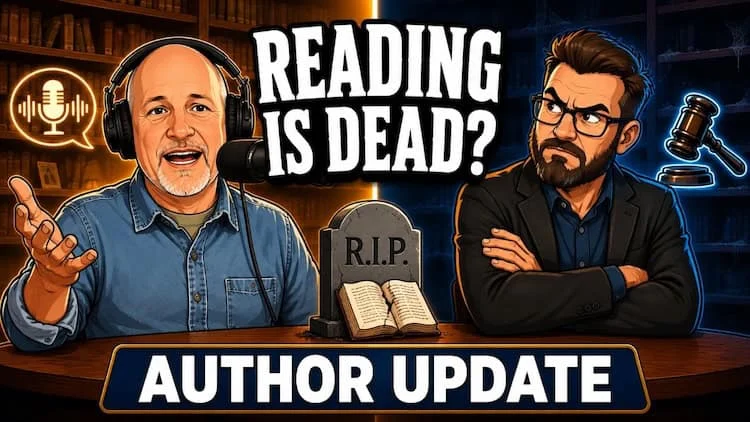
A sobering report from The Atlantic paints a stark picture of declining engagement with literature. The August cover story, "The End of Reading Is Here" by Rose Horowitch, posits that America has entered a "post-literate" era. This doesn’t signify a loss of the ability to read, but rather a dramatic decline in the desire to do so. Citing data from the National Endowment for the Arts, the article reveals that a staggering 51% of adults read zero books in the past year. This decline is not confined to specific demographics; it cuts across age, gender, and educational backgrounds, even impacting groups historically considered avid readers, such as retirees, women, and college graduates.
The very nature of books appears to be adapting to this shrinking audience. Sentences in contemporary New York Times bestsellers are reportedly one-third shorter than those from a century ago, reflecting a trend towards simpler, more digestible content. This shift is particularly alarming for younger generations, with reading scores for fourth and eighth graders declining for a decade. Among 13-year-olds, the percentage who rarely or never read for pleasure has surged from 8% in 1984 to a concerning 29% by 2025. The article concludes that the primary threat is no longer illiteracy, but "post-literacy"—the choice to read, despite possessing the capability.
This trend has profound implications for authors. The traditional audience for long-form narratives is rapidly diminishing, with a concentrated core of just 20% of adults accounting for over 80% of all books read. This necessitates an adaptation in format, marketing strategies, and even sentence-level craft to capture attention in an environment saturated with shorter content, videos, and audio alternatives. The prestige and pipeline for new writers in fields traditionally reliant on deep reading, such as humanities and letters, may also be affected, potentially impacting future literary output. Authors who can master attention in this evolving cultural landscape stand to gain a significant advantage.
Publishers and Authors Unite Against Google in Landmark Copyright Lawsuit
In a move that underscores the escalating tensions between the creative industries and artificial intelligence development, major publishing houses and a bestselling author have initiated a massive class-action lawsuit against Google. Filed on July 10, 2026, in the U.S. District Court for the Southern District of New York, the suit by Hachette Book Group, Cengage Learning, Elsevier, and author Scott Turow accuses Google of willful copyright infringement through the unauthorized use of millions of copyrighted works to train its Gemini large language models.
The plaintiffs allege that Google illegally copied textual works, many originally provided for limited use in services like Google Books, and engaged in unauthorized web scraping from across the internet, including pirate sources and paywalled content. These reproduced works were allegedly used multiple times during the training of Gemini, with copyright management information stripped to conceal the origins of the data. The lawsuit contends that Gemini now generates content that directly competes with and substitutes for original human works, thereby undermining the market for legitimate creative content.
Crucially, the complaint highlights internal Google documents suggesting that executives were aware of the risks associated with training AI on publisher-provided books. These internal communications reportedly flagged the practice as "highly problematic," with projections of potential fines reaching tens to hundreds of billions of dollars and a high likelihood of copyright infringement lawsuits. Despite explicit warnings about restrictive licenses, publisher sensitivities, and weak fair use defenses, and direct notifications from copyright owners that authorization for AI training was absent, Google proceeded with the practice.
This legal action represents a united front by publishers and authors across genres, from fiction and nonfiction to children’s books and scholarly articles. It seeks to establish precedents regarding fair use in AI training and fair compensation for creators. The outcome of this lawsuit could significantly shape the future of AI development and its relationship with intellectual property rights, impacting author incomes and publisher business models for years to come.

The Rise of AI Narrators: A Blind Study Challenges Human Dominance in Audiobooks
In a development that could reshape the audiobook industry, a recent blind study commissioned by AI audiobook company Spoken has revealed a surprising preference among listeners for artificially generated voices. According to a Variety report, the May 2026 study, conducted by Edison Research at SSRS, involved 1,005 fiction audiobook listeners who were exposed to excerpts without knowing whether they were listening to human or AI narrators.
The results were striking: Spoken’s Multi-Cast AI productions, which simulate full-cast audio with multiple distinct voices, garnered 61% favorable ratings, surpassing the 53% achieved by human-narrated versions. Furthermore, AI versions were rated higher for narration quality (66% versus 60%) and overall engagement (58% versus 49%). This suggests that when preconceptions are removed, AI-generated audio can offer a competitive, and in some cases superior, listener experience.
For authors, this presents a compelling new avenue for reaching audiobook audiences. AI tools promise lower costs and faster production times compared to traditional narration, potentially enabling more titles to receive audio adaptations and expanding market reach. Companies like Spoken, by focusing on quality and multi-voice productions, are actively working to counter the negative perception of low-effort AI outputs. As Spoken CEO Phil Marshall noted, while strong storytelling remains paramount, AI is emerging as a powerful delivery tool to make stories more compelling and accessible. The implications for authors are significant, opening up new possibilities for audiobook production and distribution, and potentially lowering the barrier to entry for those looking to capitalize on the booming audiobook market.
Indie Authors Surge Ahead: The Data Confirms the Shift in Publishing Power
Contrary to earlier predictions of its demise, the independent author sector is not only surviving but thriving, now demonstrably out-earning traditionally published authors. Data from the Alliance of Independent Authors (ALLi) for 2025 reveals that the median income for self-published authors reached $13,500, a healthy 6% year-on-year increase. In stark contrast, traditionally published authors reported a median income of only $6,000-$8,000, with a downward trend.

This financial success is mirrored by a significant shift in author sentiment and strategy. ALLi’s findings indicate that fewer than 50% of authors under 45 now desire traditional publication for their next book, with a majority actively preferring the self-publishing route. This preference is further evidenced by the increasing trend of direct sales, with 30% of indie authors already selling directly to readers and another 30% planning to implement such strategies in 2026.
The appeal of independent publishing extends beyond financial gains. Kingston University research shows that 93% of indie authors express positive sentiment towards self-publishing, citing greater control, faster iteration, and broader opportunities. Intriguingly, a reverse gender pay gap has emerged in self-publishing, with women earning approximately 41% more than men, a mirror image of the traditional publishing industry.
Innovation is also a hallmark of the indie sector. AI is being pragmatically integrated into marketing and research, with up to 45% of authors reporting a positive impact on their business. Furthermore, initiatives like the Indie Author Project have facilitated library access for over 15,000 US indie authors, expanding their reach. Indie authors are also demonstrating remarkable prolificacy, with those dedicating 50% or more of their time to writing producing an average of 14 books. This data paints a clear picture: independent publishing is no longer a secondary option but "Plan A" for a growing number of authors, offering a sustainable career path built on direct reader relationships, diverse formats, and smart utilization of emerging tools.
Market Bifurcation: Indie Authors Face Turbulence Amidst Growth
While the overall trend favors independent authors, a 2026 Mid-Year Author Sentiment Survey by Written Word Media reveals a growing bifurcation within the self-publishing market. The survey of 582 indie authors indicates that while nearly half are maintaining or increasing their revenue, a significant portion are experiencing declining sales.

The data shows that 44% of authors reported their business growing or holding steady, with 23% experiencing growth and 22% remaining stable. However, 30% of authors saw their revenue decline, with the sharpest pain felt in the $2,500-$10,000 per month income tier, where 36% reported a decrease. Despite this turbulence, a notable 51% of authors expect their income to rise over the next 12 months.
Author sentiment varies significantly by income tier. Those "Just Starting Out" (earning under $500/month) express uncertainty. Authors "Building Momentum" ($500-$2,500/month) are optimistic and the most prolific. Those who have "Got Traction" ($2,500-$10,000/month) report the highest decline rate but are actively diversifying their strategies. The "Living the Dream" tier ($10,000+/month) remains the most optimistic and focused on platform insulation.
The survey identified key habits differentiating growing authors. They accelerate output, prioritize newsletters and newsletter swaps, and invest in paid marketing through promo sites, Meta Ads, and Amazon Ads. Monetizing existing catalogs through box sets, audiobooks, and translations—made more accessible by AI—is also a common strategy. Notably, growing authors pragmatically use AI for ad creative, covers, translations, and narration, even while expressing dislike for AI-generated competition. The choice between wide distribution and Amazon’s KDP exclusive platform showed no significant difference in success, emphasizing that commitment to a chosen path is more critical than the path itself.
The impact of market challenges, such as Amazon’s A10 algorithm changes and the influx of AI-generated content, is felt differently across career stages. Newer authors often feel overwhelmed and view AI as an existential threat. Authors with traction experience the most acute revenue drops, leading many to pivot towards direct sales channels. Those "Living the Dream" treat diversification as a strategic imperative, leading in translations, audiobooks, and box sets, and leveraging AI as a significant efficiency tool. The data clearly indicates a widening gap between authors who adapt through consistent publishing, direct reader engagement, strategic marketing, and pragmatic AI adoption, and those who struggle to navigate the evolving landscape.

The Digital Renaissance: Creativity and the Democratization of Authorship
The rise of independent publishing and the increasing accessibility of AI tools are fostering a new era of creativity and opportunity, challenging traditional hierarchies and democratizing the creation and dissemination of content. The notion of a "middle class" of authors is emerging, empowered by platforms that lower barriers to entry and offer direct connections with readers.
Historically, making a living as a writer required patronage or significant entrepreneurial risk. The feudal system, characterized by lords and serfs, offered little incentive for individual productivity. The subsequent rise of the mercantile class, through trade and entrepreneurship, laid the groundwork for a more entrepreneurial society. This spirit of self-reliance and innovation is now being mirrored in the author community.
The traditional publishing model, often described as a "lords and serfs" dynamic, where publishers dictate terms and creative control, is being challenged. Independent authors now possess the tools and platforms to build their own businesses, maintain creative autonomy, and cultivate direct relationships with their audience. This shift is akin to the democratization of media that has occurred with the advent of blogs, podcasts, and social media, breaking down the gatekeeping power of traditional outlets.
The influence of AI is further flattening these hierarchies, particularly in fields like filmmaking. While early AI-generated content may be perceived as "slop," talented individuals can now leverage these tools to pursue passion projects with significantly reduced barriers to entry. This democratization of media creation allows for a more normalized distribution of success, moving away from a Pareto distribution where a few dominate, towards an environment where a broader "author middle class" can thrive.

This evolution empowers authors to move beyond merely making a living to actively shaping culture and influencing perspectives. The ability to create compelling narratives, coupled with direct reader engagement and strategic use of technology, allows authors to build sustainable careers and contribute meaningfully to the cultural conversation, challenging the notion that only superstars can achieve success. The competition is no longer solely against other authors for dollars, but against the vast entertainment landscape for readers’ time and attention, a competition that indie authors are increasingly well-equipped to win.