The Mulai: A Profound Expedition into Language, Culture, and the Human Condition
Introduction
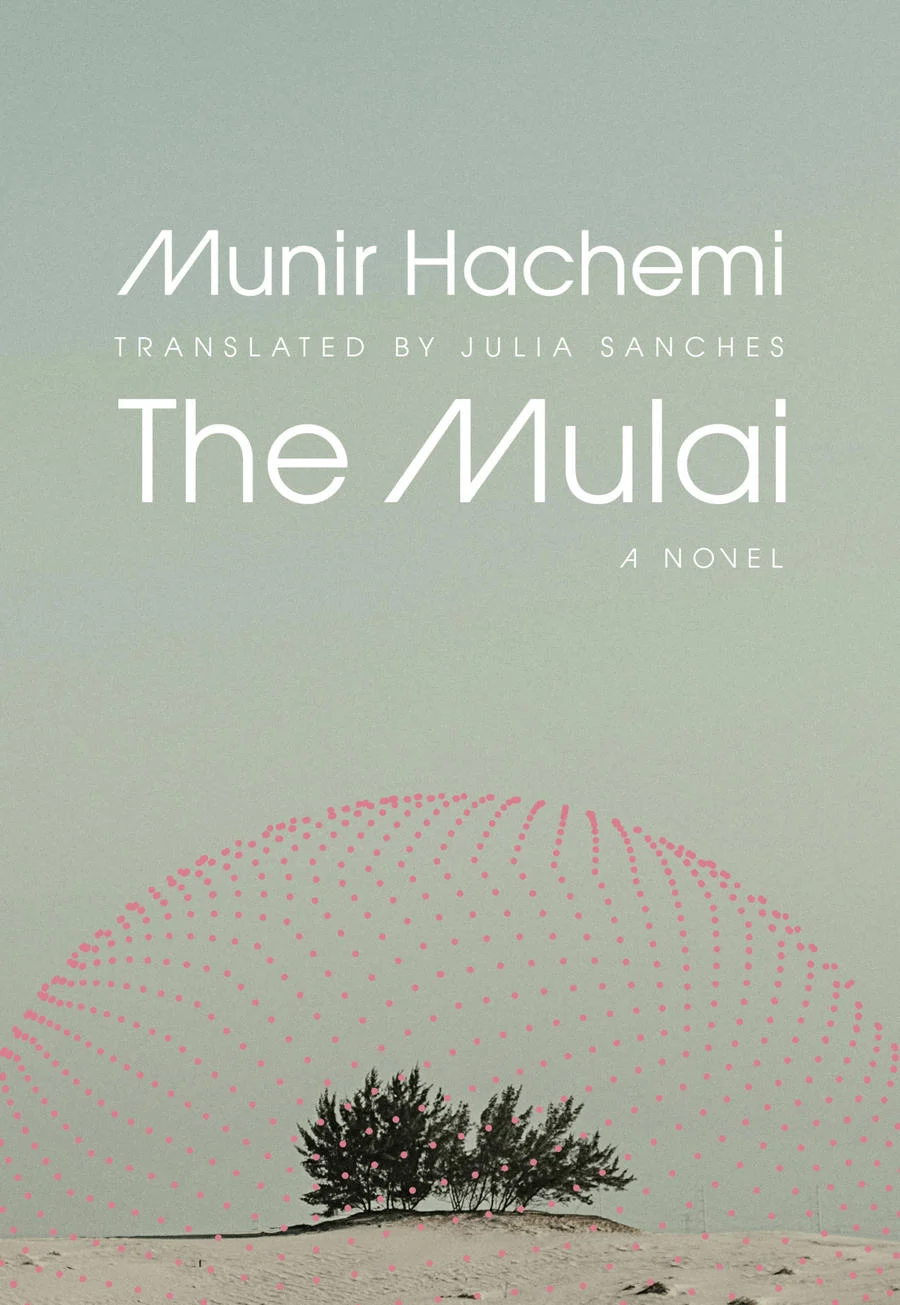
In the vast and ever-expanding landscape of speculative fiction, a singular work has emerged, challenging the very foundations of how we perceive language, culture, and identity. The Mulai, a profoundly intellectual and deeply literary work, positions itself at the nexus of anthropological and linguistic science fiction, offering readers a multi-layered journey into the complexities of translation and the fluid nature of reality itself. More than just a story, it is an immersive experience designed to provoke introspection, particularly for those willing to grapple with its intricate philosophical underpinnings.
The English edition of The Mulai is itself a testament to the novel’s central theme, being a masterful translation by Julia Sanches. Sanches’s work is not merely a linguistic transfer but an act of interpretive artistry, enriched by numerous footnotes that illuminate the subtle nuances of Spanish-language wordplay and homophony, seamlessly interwoven with footnotes integral to the original text. This structural choice immediately immerses the reader in the very act of translation, creating a meta-narrative that underscores the book’s core concerns. The back cover tantalizingly suggests that The Mulai "pairs well" with Italo Calvino’s seminal 1972 work, Invisible Cities. Indeed, astute readers are advised to engage with Calvino’s masterpiece prior to embarking on The Mulai, as it provides an invaluable lens through which to appreciate the latter’s intricate exploration of perception, narrative, and the subjective construction of reality.
Main Facts
At its heart, The Mulai employs a classic science fiction framework: the rediscovery of a lost human colony by its distant homeworld. This familiar premise, however, serves as a mere launching pad for a far more ambitious inquiry into cultural evolution and the profound divergence that can occur over generations in isolation. The narrative unfolds against a backdrop where the Mulai people, descendants of a utopian colonial project, have forged a society radically distinct from their Earth-bound ancestors. Their foundational text, the Libertarian Codex, originally intended to guide their perfect society, has been reinterpreted and reshaped into a living, ever-changing cultural bedrock.
The Premise: A Lost Colony Rediscovered
The story begins several generations after a critical event: the cessation of regular supply drops from Earth. This severance forced the Mulai colony to become truly self-reliant, leading to a unique and deeply evolved culture. When a stray, linguistically perplexing transmission from the Mulai’s planet finally reaches Earth, it sparks both intrigue and bewilderment. No record of such a colonial mission exists in contemporary Earth archives, setting the stage for an investigative expedition. A small contingent is dispatched, but it is Dr. Nahum Cordovero, an individual described as "The Archaeologist," who ultimately chooses to remain behind, driven by an insatiable curiosity to unravel the mysteries of Mulai existence. His decision to stay initiates the primary narrative arc, as he attempts to observe, understand, and document a society that challenges every pre-conceived notion of human civilization.
Key Figures in the Narrative
The narrative of The Mulai is largely mediated through the perspectives of two central figures: Dr. Nahum Cordovero and a Mulai woman named Faida.
Dr. Nahum Cordovero: While officially designated "The Archaeologist," Cordovero’s methods lean heavily into anthropology, engaging directly with a living society rather than merely excavating dusty relics. His character is complex and controversial, drawing parallels to figures like Napoleon Chagnon, known for his immersive—and ethically debated—studies of indigenous cultures. Cordovero exhibits a problematic eagerness to participate in the sexual and pharmacological rituals of the Mulai, raising questions about observer bias and the ethics of ethnographic immersion. The very text we read is filtered through his perceptions, alternating between his formal mission reports and candid, often revealing, personal journal entries. He even takes on the role of author for certain chapters ostensibly narrated by Mulai individuals, further blurring the lines of objective truth and subjective interpretation.
Faida: A central Mulai figure contemporaneous with Cordovero’s visit, Faida emerges as a fascinating "mirror" to the Earth-bound scholar. She discovers a trove of historical texts and artifacts within the Temple, igniting her own obsessive quest: to translate ancient Spanish into the rapidly evolving Mulai language. Her struggle mirrors Cordovero’s, highlighting the universal human drive to understand the past and bridge linguistic divides, even when the very nature of language resists such attempts. Faida’s journey underscores the challenges inherent in recovering a forgotten history through a linguistic medium that is fundamentally unstable and prone to perpetual transformation. Her intellectual pursuit not only provides a parallel perspective to Cordovero’s but also offers a profound insight into the Mulai’s relationship with their own history and textual heritage.
Chronology
The timeline of the Mulai colony is marked by a series of pivotal events that define its unique cultural trajectory, from its utopian genesis to its radical re-evolution.
The Genesis of the Mulai Colony
The origins of the Mulai trace back to a meticulously planned utopian project initiated by Earth-based idealists. Driven by a vision of a perfect society, free from the perceived flaws of their homeworld, these early colonists embarked on an interstellar journey, carrying with them the Libertarian Codex. This document was more than a mere set of rules; it was intended as the unassailable blueprint for a new civilization, enshrining principles of freedom, community, and rational governance. For generations, the colony maintained contact with Earth, relying on regular supply drops that provided not only material sustenance but also a psychological link to their origins. This period established the initial infrastructure—the Dome, the Temple, and the early Domelets—and ingrained a reliance on advanced, self-sustaining technologies that, over time, would become poorly understood relics. The initial colonists likely adhered strictly to the Libertarian Codex, striving to manifest the utopian ideals in their new home.
The "After Containers" Era
The definitive turning point in Mulai history, the "year zero a.C." (after containers), marks the abrupt cessation of Earth’s supply drops. This unforeseen abandonment forced the Mulai to confront true isolation and self-sufficiency, catalyzing an accelerated period of cultural divergence. It was during this tumultuous period that a Mulai woman named Flukeh undertook a momentous voyage from the controlled environment of the Dome to the mysterious Temple. This journey was not merely physical; it was a profound spiritual odyssey during which Flukeh experienced a series of revelations concerning a deity or deities known as "Dog." The Mulai language, lacking inflections for the plural, renders "Dog" as a singular, ambiguous entity, further deepening its mystique. Flukeh’s pronouncements, encapsulated in The Teachings of Flukeh (also known as the First Amendment to the Libertarian Codex), became foundational to Mulai cosmology. Her oft-quoted saying, "At times we are grateful for something that no one has done; the object of that gratitude is Dog," reflects a profound shift from human-centric gratitude to an acknowledgment of a benevolent, perhaps indifferent, cosmic force. Concurrently, the Mulai developed a belief in "ionizing radiation" as a vital force, capable of being amassed and transferred both physically and, for want of a better term, spiritually, illustrating their unique synthesis of advanced technology and animistic belief. This era solidified the Mulai’s repudiation of Anglosphere norms, establishing their unique societal structures and challenging their original utopian ideals.
The Recontact Event
Many generations elapsed since the cessation of supply drops, during which the Mulai evolved into a society virtually unrecognizable to their Earth ancestors. The catalyst for recontact arrived in the form of a stray transmission, a faint signal emanating from the distant colony world. Received Earthside, this message was characterized by its perplexing and intriguing linguistic features, a jumble of sounds and patterns that defied immediate comprehension. The very existence of the colony had been lost to Earth’s historical records, making the transmission an astonishing and disorienting discovery. In response, a small, specialized contingent was hastily assembled and dispatched to investigate. Their mission was fraught with both scientific curiosity and profound ethical considerations. Upon the initial reconnaissance, and as his colleagues prepared for their return journey to Earth, Dr. Nahum Cordovero made the momentous decision to remain behind. His motivation was multifaceted: a burning scientific curiosity, an anthropological imperative to study this radically divergent human culture, and perhaps a deeper, unspoken desire to understand the limits of human adaptation and identity. His solitary stay initiated the core narrative of the novel, setting the stage for an unprecedented cultural encounter between two branches of humanity that had, for centuries, developed in complete isolation.
Supporting Data
The depth of The Mulai lies in its intricate portrayal of Mulai society, its environment, and, most crucially, its language, all of which serve as "supporting data" for the novel’s profound philosophical inquiries.
Mulai Societal Structures and Mores
Mulai society is a deliberate and radical departure from the Anglosphere norms familiar to Earth readers. The nuclear family, a cornerstone of many Earth cultures, is explicitly repudiated. Instead, the standard relationship format is the "trinomial," a form of throuple, suggesting a redefinition of familial and romantic bonds away from dyadic exclusivity. This structure fosters a broadly collectivist ethos, although the novel cautions against imposing Earth-centric definitions onto Mulai ways of thinking, emphasizing the inherent difficulty in mapping external concepts onto their unique worldview. Perhaps most striking is the Mulai’s complete lack of body taboos concerning excretion and sexual activity. Urination, defecation, and sexual acts are performed in full public view, a stark contrast to the deeply ingrained privacy norms of most Earth cultures. This public performance of intimate acts speaks to a profound re-evaluation of modesty, individuality, and community, suggesting a society where the body is not a source of shame but a natural, integrated part of shared existence. These radical mores are not arbitrary; they are the logical, albeit extreme, outcome of a culture that has systematically dismantled and rebuilt its social fabric based on its own evolving interpretations of the Libertarian Codex and Flukeh’s teachings.
The Mulai Environment and Technology
The Mulai inhabit a meticulously engineered yet precariously balanced environment. They occupy a "habitable zone," a testament to partial terraforming efforts, where conditions are marginally hospitable. Outside this zone, temperatures plummet to an average of sixty-some degrees below zero, a lethal reminder of the planet’s inherent hostility. Within the habitable zone, the environment is a desert-like expanse characterized by four "seasons" that alternate unpredictably, lasting anywhere from hours to days. This climatic instability forces the Mulai to largely remain within the controlled confines of the Dome, a technologically advanced structure that regulates climatic conditions. However, specific occasions necessitate journeys to the Temple, another significant structure, notably for accessing fertilization technology crucial for reproductive purposes. Smaller "domelets" are scattered throughout the landscape, though not all maintain operational interior climate systems, hinting at the degradation and inconsistent maintenance of the older technologies.
Maintaining this intricate technological ecosystem are service robots known as "wolves." Intriguingly, the Mulai do not make a clear distinction between these sophisticated machines and the natural fauna of the desert, such as snakes and scorpions, which abound outside the Dome. This lack of differentiation speaks volumes about their cosmology, where technology and nature are perceived as fundamentally intertwined, perhaps as aspects of the same "Dog" or manifestations of "ionizing radiation." While these desert creatures are edible in a pinch, the Mulai exhibit a strong cultural preference for food from cans, a curious echo of their colonial past and a poignant reminder of their lost supply drops, illustrating how cultural preferences can persist even after their original context has vanished.
The Revolutionary Nature of Mulai Language
Perhaps the most revolutionary aspect of Mulai culture, and a central pillar of the novel’s intellectual edifice, is their language. Dr. Cordovero himself describes it as "frenetic, unlike any of ours. It doesn’t change from generation to generation but from one hour to the next." This linguistic fluidity defies conventional understanding, presenting an immense challenge to translation and historical preservation. For the Mulai, the mutability of language is not a source of frustration but of joy. As Cordovero observes, "It doesn’t bother the Mulai when they don’t understand what is written. To them, what’s written can always be understood. By the time a Mulai rereads a text they’ve authored, what they read is no longer what they originally wrote." This stands in stark contrast to Earth-centric linguistic philosophies, where fixed meaning and authorial intent are paramount. Cordovero poignantly notes, "In a way, the same is happening to us; it’s the fate of any language. The only difference is that, while the Mulai find joy in this process, we find nothing but despair."
This radical linguistic flexibility extends to their concept of authorship. Mulai texts are not fixed or bound; pages can be freely rearranged, either randomly or aesthetically, creating new meanings with each reordering. This momentary arrangement constitutes a form of authorship, and the "reader-writer" may affix a personal glyph to the pages, which then becomes an integral part of the evolving text. Consequently, the relationship of the Mulai to their founding documents, such as the Libertarian Codex, is inherently slippery. Oral recitations, initially transmissions of prosaic call signs and equipment instructions from the "loudhailer" (radio), have transformed into ceremonial "chants"—mere sounds devoid of their original semantic content, yet imbued with profound cultural significance. The Libertarian Codex itself, perhaps too rigid a foundation, rapidly "creolized" into a culture that finds equilibrium in a state of perpetual change. This dynamic linguistic and textual landscape forces readers to question the stability of their own cultural narratives, prompting a reflection on how many of our beliefs are based on unreliable material, taken out of context, and freighted with new meaning over generations.
Official Responses
The concept of "official responses" in The Mulai is multifaceted, encompassing Earth’s institutional reaction to the rediscovery, Dr. Cordovero’s formal reporting, and the implicit responses of the Mulai community to their newfound Earth visitor.
Earth’s Initial Reaction to the Mulai
The reception of the stray Mulai transmission on Earth must have been met with a combination of disbelief, scientific excitement, and geopolitical apprehension. The existence of a lost human colony, previously unknown, would immediately trigger a massive institutional response. Scientists would clamor to decipher the bizarre linguistic features, while historians would scramble to uncover any forgotten records of the colonial mission. Governments and international bodies would undoubtedly view the recontact with a mixture of hope for scientific advancement and concern over potential political or economic implications. The decision to send a small contingent reflects a cautious approach, balancing the imperative to investigate with the unknown risks of encountering a radically divergent human society. The official mandate for the expedition would have been clear: gather intelligence, establish communication, and assess the Mulai’s technological and cultural status, all while navigating the ethical complexities of interacting with an isolated population.
Dr. Cordovero’s "Official Report" vs. Journal
Dr. Nahum Cordovero’s role as "The Archaeologist" positions him as the primary official conduit of information from the Mulai colony back to Earth. His official reports, interspersed with his personal journal entries, reveal a stark tension between objective scientific observation and subjective, often ethically questionable, immersion. The "Napoleon Chagnon energy" attributed to him highlights a critical concern in anthropology: the observer effect and the potential for researchers to impose their own biases or even actively participate in, and thus alter, the culture they are studying. Cordovero’s eagerness to engage in Mulai rituals, including sexual and pharmacological ones, undoubtedly compromises the neutrality of his observations. His "official" findings, therefore, must be read with a degree of skepticism, as they are filtered through his personal experiences and potentially skewed interpretations. How would Earth authorities react to such reports? They might be fascinated by the exotic details, yet concerned by the lack of scientific rigor or the perceived moral ambiguities. The discrepancy between his formal, sanitized reports and his candid, often disturbed, journal entries would serve as a crucial narrative device, exposing the inherent challenges of cross-cultural understanding and the impossibility of truly objective ethnography.
The Mulai’s "Response" to Earth Recontact
The recontact event would undoubtedly have profound implications for the Mulai themselves, representing a seismic shift in their understanding of their own history and cosmology. How would they perceive Dr. Cordovero and his team? As long-lost ancestors, as alien visitors, or perhaps as manifestations of "Dog" or the "ionizing radiation" that permeates their belief system? The arrival of beings from "the homeworld," a concept likely relegated to myth or ancient texts, would challenge their established narratives and potentially trigger a societal upheaval. Faida’s parallel quest to translate ancient Spanish texts takes on added significance in this context. Her discoveries might provide the Mulai with a framework for understanding Cordovero’s arrival, or they might complicate it further by revealing uncomfortable truths about their origins. The linguistic chasm, exacerbated by the Mulai language’s extreme fluidity, would present immense challenges to mutual understanding. Any attempts at "official" communication between Cordovero and Mulai leaders would be fraught with misinterpretations, requiring immense patience and an acceptance of ambiguity. The Mulai’s "response" would not be a singular, unified one, but a complex tapestry of awe, suspicion, curiosity, and perhaps even indifference, reflecting the diverse perspectives within their dynamic society.
Implications
The Mulai transcends its science fiction premise to explore profound philosophical and literary implications that resonate far beyond the confines of its narrative.
Philosophical Implications of Language and Translation
At its core, The Mulai is a meditation on the nature of language itself and the inherent impossibility of perfect translation. The novel vividly illustrates that "to speak is to transform into words," and in that transformation, something of the original is inevitably lost. This concept is amplified in the act of translation, where the translator becomes an "impossible person," attempting to bridge an unbridgeable chasm between linguistic and cultural frameworks. The Mulai language, with its hourly mutations and fluid authorship, serves as a hyper-realized metaphor for the inherent instability of all language. It challenges the Western notion of fixed meaning, authorial intent, and historical accuracy. The reader is thus invited to confront the idea that their own understanding of the world, mediated entirely by language, is constantly shifting and inherently subjective. By engaging with these "impossibilities," the reader comes to know only themselves, and specifically, the self that is constructed and constrained by the very language they use. This meta-narrative function forces a profound re-evaluation of how we interpret texts, communicate ideas, and construct our realities.
Cultural Relativism and Self-Reflection
The adage that "all ethnography is really auto-ethnography" is a central thematic thread running through The Mulai. Just as Marco Polo, in Invisible Cities, speaks implicitly of Venice when describing other cities, so too does the study of the Mulai become a mirror reflecting the Anglosphere’s own societal constructs. The Mulai’s repudiation of nuclear families, body taboos, and linguistic fixedness challenges the reader to question the universality and inherent "rightness" of their own cultural norms. The Libertarian Codex, a "flimsy basis" for culture that rapidly creolized, serves as a potent allegory for the foundational texts of any society. The novel implicitly asks: how many of our own cherished beliefs and customs are based on material taken out of context, reinterpreted through generations, and imbued with new, perhaps unintended, meaning? This radical cultural relativism is not merely an intellectual exercise; it is an invitation to profound self-reflection, urging readers to scrutinize the arbitrary nature of their own cultural conditioning and the often-unacknowledged fluidity of their historical narratives.
The Future of Human Colonies and Identity
Beyond its philosophical musings, The Mulai offers poignant insights into the long-term prospects of human interstellar colonization and the evolution of human identity. The Mulai experience underscores the incredible resilience of human culture, capable of adapting, evolving, and thriving even in extreme isolation and under profound ideological shifts. Their journey from a planned utopia to a perpetually changing society highlights the unpredictable trajectories of cultural development when severed from its origins. The book questions what truly constitutes "humanity" when language, social structures, and even the perception of technology radically diverge. Is the Mulai’s "joy" in linguistic flux a more evolved, or simply different, form of human consciousness compared to Earth’s "despair"? The transformative power of the recontact, both for Dr. Cordovero and for the Mulai, suggests that encounters with radical otherness can profoundly reshape individual and collective identities, forcing a redefinition of what it means to be human in an expanding universe.
Literary Significance
The Mulai stands as a significant contribution to both science fiction and literary fiction, pushing the boundaries of what these genres can achieve. It masterfully blends intricate world-building with deep philosophical inquiry, appealing to readers who seek intellectual stimulation alongside compelling narrative. Its unique structure, alternating between formal reports and personal journals, and its meta-commentary on translation and authorship, mark it as a work of considerable literary ambition and innovation. By drawing explicit parallels to Italo Calvino, the novel positions itself within a tradition of experimental fiction that challenges conventional storytelling. Ultimately, The Mulai is a call to action for the reader: "Read, then, and be transformed." It promises not merely entertainment, but a profound intellectual and personal metamorphosis, leaving a lasting impact on how one perceives language, culture, and the intricate dance between reality and interpretation. It solidifies its place as a landmark work that will undoubtedly spark extensive discussion and critical analysis within academic and literary circles for years to come.