The New Constitutional Frontier: Trump’s Return to Power and the Erosion of Post-Watergate Norms
WASHINGTON, D.C. — As the United States prepares to celebrate the 250th anniversary of the Declaration of Independence this July 2026, the political landscape is dominated not by a unified celebration of democratic endurance, but by a profound re-evaluation of executive power. Tonight, President Donald Trump is scheduled to deliver a high-stakes address that observers expect will return to a familiar and contentious theme: the 2020 election.
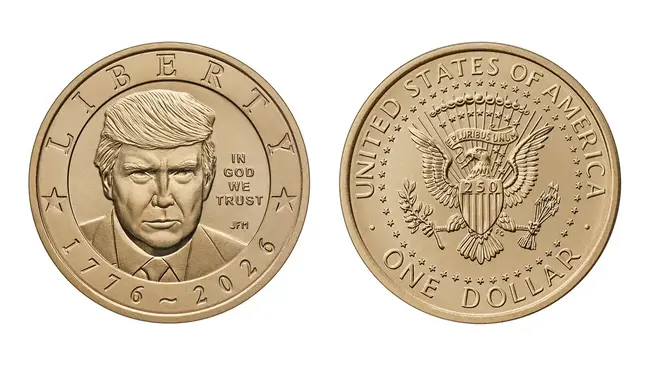
The speech comes at a time when the "guardrails" of the first Trump administration—largely consisting of career civil servants and traditionalist appointees—have been replaced by a cadre of loyalists. As the administration moves to solidify its legacy, including the unprecedented minting of currency featuring a sitting president, the nation finds itself at a crossroads between historical precedent and a new, centralized form of governance.
Main Facts: A Presidency Reimagined
The current political atmosphere is defined by a series of unprecedented moves that have sparked debate across the legal and social spectrum. Central to the current discourse is the role of Miles Taylor, the former Chief of Staff at the Department of Homeland Security (DHS) during the first Trump administration. Taylor, once known as the anonymous author of the "Resistance" op-ed in The New York Times, has issued a stark warning regarding the President’s agenda.
According to Taylor, the administration is now in possession of what he describes as a "secret book"—a manual of emergency war powers and executive authorities that was intentionally withheld from the President during his first term by national security professionals. Taylor asserts that while the first administration was characterized by internal friction and "adults in the room" who checked the President’s impulses, the 2026 iteration is staffed by individuals chosen specifically for their willingness to exercise these dormant powers.
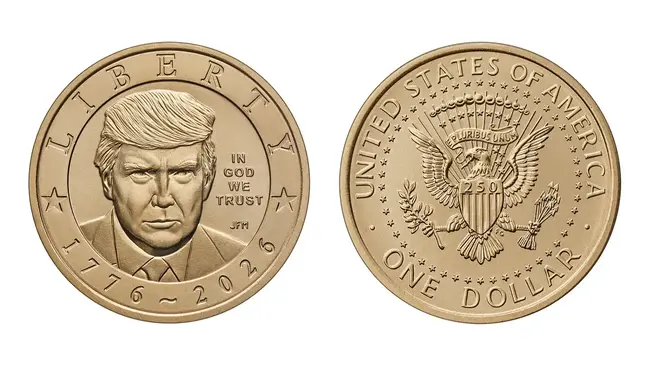
Furthermore, the administration has moved into the realm of symbolic dominance. Treasury Secretary Scott Bessent recently announced the minting of a new one-dollar coin to commemorate the Sestercentennial of the United States. In a break with over two centuries of tradition, the coin will feature the face of President Trump, making him the first living person to appear on U.S. currency. While the Treasury Department frames this as a celebration of "American values," critics view it as a move toward a cult of personality that mirrors authoritarian structures.
Chronology: The Road to the 2026 Consolidation
To understand the current state of the American executive, one must look at the timeline of events that led from the first administration to the present day:
- 2017–2021: The first Trump administration is marked by frequent turnover. Career professionals at DHS and the DOJ, according to Miles Taylor, actively manage information to prevent the use of extreme "emergency powers."
- January 6, 2021: The Capitol riot leads to the formation of a House Select Committee. The investigation draws large audiences but also reveals a deepening partisan divide in media consumption, with networks like Fox News offering counter-narratives that shield a portion of the public from the committee’s findings.
- 2021–2024: Trump maintains a shadow-political presence, continuing to litigate the 2020 election results in the court of public opinion while facing various civil and criminal challenges, including the E. Jean Carroll defamation suits.
- 2024 Election: Trump secures a second term, campaigning on a platform of "retribution" and the dismantling of the "Deep State."
- 2025: The administration begins replacing "non-partisan" civil service roles with political appointees. The Supreme Court issues several landmark rulings, including a split decision on birthright citizenship and, crucially, a ruling granting the President broad immunity for "official acts."
- July 2026: On the eve of the nation’s 250th anniversary, the administration announces the Trump $1 coin and prepares for a speech expected to once again challenge the legitimacy of the 2020 electoral process.
Supporting Data: Financial Scrutiny and Judicial Rulings
Despite the President’s populist rhetoric, data regarding the administration’s financial dealings and judicial standing presents a complex picture.
The Cost of Governance
While the President frequently highlights his decision to forgo a standard presidential salary, Government Accountability Office (GAO) reports indicate that the costs associated with his administration remain high. Weekly trips to Mar-a-Lago and the use of government resources to support private properties have cost taxpayers millions. Furthermore, scrutiny has turned toward a Qatari-gifted jet that the President reportedly intends to retain after his term—a move that ethics experts suggest could violate the Emoluments Clause, despite the current Supreme Court’s more lenient interpretations.
Judicial "Smack-downs" vs. Immunity
The President’s legal record in 2026 is a study in contrasts. On one hand, he has faced significant setbacks:
- IRS Settlement Ruling: A recent "harsh smack-down" by the courts rejected an attempt to make the Trump family immune to tax court oversight.
- Civil Litigation: The E. Jean Carroll decisions remain a significant legal and financial burden.
- Birthright Citizenship: A Supreme Court split decision recently affirmed birthright citizenship, blocking an executive attempt to end it via mandate.
However, these losses are balanced by the Supreme Court’s revolutionary stance on presidential immunity. By granting levels of immunity that break nearly all historical precedents, the Court has effectively shielded the executive from the type of criminal prosecution that ended the Nixon presidency.

Official Responses: Loyalty and Revisionism
The administration’s defenders and high-ranking officials have been vocal in their support of the current trajectory.
Treasury Secretary Scott Bessent defended the new currency, stating, "Featuring President Trump celebrates the strength of American values and the promise of a nation dedicated to preserving freedom for all." This sentiment is echoed by the President’s base, who see the coin as a rightful tribute to a leader they believe was unjustly persecuted.
Vice President J.D. Vance (or key ally, depending on the specific 2026 cabinet makeup) has taken a more provocative stance on historical parallels. Vance recently remarked that the Watergate scandal—the benchmark for presidential overreach—would be "no big deal" in the current political climate. His argument suggests that the standards of the 1970s are no longer applicable to the modern executive, and that the "Saturday Night Massacre" was a product of a different media and judicial era.
In the Department of Justice, Acting Attorney General Todd Blanche has faced intense questioning regarding the independence of his office. Unlike the Watergate era, where Attorney General Elliot Richardson resigned rather than fire a special prosecutor, the current DOJ is viewed by many as an extension of the President’s personal legal team.
Implications: The "Animal Farm" of 2026
The implications of these shifts are profound. The historical comparison to Watergate reveals a chilling trend: in 1974, a unanimous Supreme Court forced Richard Nixon to release the "smoking gun" tapes, and Nixon felt he had no choice but to obey. In 2026, the absence of such unanimity and the presence of a fractured media landscape mean that a "public right to know" has been replaced by a "public right to not know."
The current media environment, led by outlets that provide alternative programming during oversight hearings, has created a bifurcated reality. For one half of the country, the President is a victim of a corrupt establishment; for the other, he is an existential threat to the Republic.
As the nation enters its 250th year, the literary warnings of George Orwell’s Animal Farm resonate with renewed vigor. The famous Commandment—"All animals are equal, but some animals are more equal than others"—appears to be the unofficial motto of an era where the President and his family seek immunity from the laws that govern ordinary citizens.
The "guardrails" are indeed gone. With the "secret book" of executive powers now in the hands of a leader surrounded by loyalists, the speech tonight is more than just a political address; it is a signal of the new American reality. Whether the institutions of the U.S. government can survive another four years of this centralized authority remains the defining question of the Sestercentennial. As the Trump $1 coin enters circulation, it serves as a cold, metallic reminder that in the America of 2026, the face of the state has become the face of a man.