The Resurgence of the Auteur: John Malkovich, Martin McDonagh, and the High-Stakes Momentum of ‘Wild Horse Nine’
The late-summer heat of the Venice Film Festival often serves as the first crucible for the year’s most ambitious cinematic offerings. This year, however, the atmosphere at the Palazzo del Cinema shifted from mere appreciation to something approaching a frenzy with the premiere of Wild Horse Nine. Directed by the celebrated and often provocative auteur Martin McDonagh and backed by Searchlight Pictures, the film has rapidly transitioned from a whispered-about project to a full-blown awards season juggernaut.
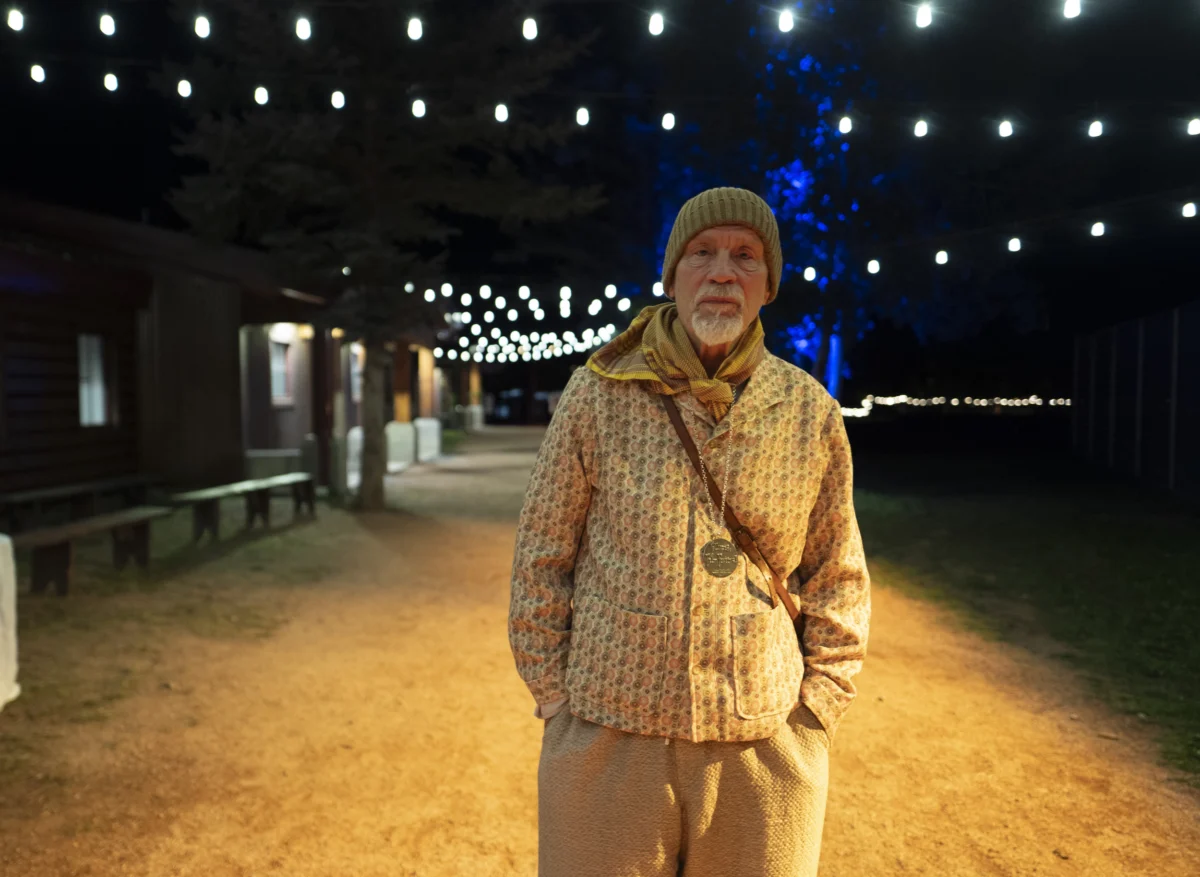
While early press screenings in the insular bubbles of Los Angeles and New York provided the initial spark, it was the sustained, thunderous applause at Venice that signaled a genuine public breakthrough. The film’s core trio—McDonagh, John Malkovich, and Sam Rockwell—were soon whisked away from the Lido to the high-altitude prestige of the Telluride Film Festival in the Colorado Rockies. It was there, amidst the rugged peaks and the intellectual fervor of the Herzog Theatre, that the narrative for the 2027 Oscars began to solidify: John Malkovich is no longer just a legendary character actor; he is the man to beat for Best Actor.
Main Facts: A Political Firebrand and a Career-Defining Performance
Wild Horse Nine is a complex, rhythmic, and bitingly funny exploration of historical trauma and political nihilism. Set against the backdrop of the 1973 Chilean coup d’état—a seismic event that saw General Augusto Pinochet rise to power with the clandestine support of the United States—the film follows Chris (Malkovich), a legendary but deeply disillusioned CIA operative. Chris is a man who has "broken the back of the American century," a character who has witnessed, and participated in, the dismantling of democracies in Chile, Argentina, and beyond.
The film’s power lies in the collision of McDonagh’s razor-sharp, "verbiage-heavy" screenplay and Malkovich’s unique ability to deliver dialogue that is simultaneously terrifying and hilarious. Supporting him is Sam Rockwell, playing Lee, a younger operative who provides a more recessive, generous counterpoint to Malkovich’s "unleashed" lead.

As the film moves from Telluride to the Toronto International Film Festival (TIFF), the industry consensus is clear: Searchlight has a hit that balances intellectual depth with visceral entertainment. The film is slated for a wide theatrical release on November 6, positioned perfectly to capture the attention of both the general public and the Academy of Motion Picture Arts and Sciences.
Chronology: From the Lido to the Rockies
The trajectory of Wild Horse Nine follows the classic "prestige path" that often leads to the Dolby Theatre in March.
- The Venice Debut: The world premiere at the 83rd Venice International Film Festival served as the litmus test. In a festival known for its discerning (and sometimes fickle) audiences, Wild Horse Nine received a standing ovation that exceeded the standard courtesy clap. Critics noted the film’s "edgy" tone, a hallmark of McDonagh, who previously directed The Banshees of Inisherin and Three Billboards Outside Ebbing, Missouri.
- The Telluride Ascent: Immediately following Venice, the production moved to the Telluride Film Festival. Telluride is unique for its lack of formal competitions, focusing instead on the "love of cinema." It was here that Malkovich was honored with a career tribute. The screenings at the Herzog Theatre were described as "electric," causing Malkovich to instantly skyrocket in the Best Actor rankings on platforms like GoldDerby.
- The Toronto Consolidation: As of early September, the film has arrived at the Toronto International Film Festival. TIFF serves as the bridge between the high-art sensibilities of Europe and the commercial realities of the North American market. The buzz in Toronto suggests that Wild Horse Nine is not just a "critic’s movie" but a potential box-office success for Searchlight.
- The November Release: The film is scheduled to hit theaters on November 6. This late-autumn release window is strategically chosen to ensure the film remains fresh in the minds of voters as the primary season for critics’ awards begins in December.
Supporting Data: The Malkovich Oscar Legacy
For many industry observers, the surge in Malkovich’s Best Actor prospects is a long-overdue recognition of one of cinema’s most idiosyncratic talents. While Malkovich has been a household name for over four decades, his relationship with the Academy has been characterized by long gaps and "Supporting Actor" designations.
- 1985: Malkovich received his first nomination for Best Supporting Actor for his role as the blind boarder, Mr. Will, in Places in the Heart.
- 1993: His second nomination, also in the Supporting category, came for his chilling portrayal of the assassin Mitch Leary in In the Line of Fire.
- 2027 (Projected): Wild Horse Nine marks the first time in over thirty years that Malkovich has been a serious contender for a Lead Actor nomination.
Data from awards-tracking sites indicates that Malkovich’s performance is being viewed as a "career-capping" achievement. His role as Chris allows him to "run the gamut" from comedy to tragedy, a feat that historically appeals to Academy voters who favor high-degree-of-difficulty performances.

Official Responses: An Interview in the Back of an SUV
In an exclusive conversation at Telluride, John Malkovich sat down with veteran film journalist Anne Thompson to discuss his collaboration with McDonagh and his perspective on a career that has spanned theater, cinema, and international stage tours.
Reflecting on how he joined the project, Malkovich noted that he had been an admirer of McDonagh’s work for years, having been offered roles in Seven Psychopaths and the play A Behanding in Spokane, both of which he had to decline due to scheduling conflicts. When the script for Wild Horse Nine arrived, he described it as a "perfect screenplay."
"I thought the thing was great," Malkovich told Thompson. "Beautiful piece of writing, just a perfect screenplay, and I couldn’t believe I got sent it. I couldn’t believe he asked me to do it."
Malkovich also addressed the dynamic between himself and his co-star, Sam Rockwell. While some critics suggested that Rockwell "receded" to allow Malkovich to shine, Malkovich viewed it as a testament to Rockwell’s skill and generosity. "Sam is an exceptionally generous actor, as generous as you could ever find," Malkovich said. "He played his part. And the part [of Lee] is slightly recessive in that sense. Chris is the older one. He’s the wild card."

The interview also touched on the film’s heavy political themes. Malkovich, who directed a stage adaptation of Don DeLillo’s Libra, spoke about the "loss of innocence" that occurred in the 1970s due to US intervention in South America. "November 22, 1963, is a trauma, as is September 11, 2001, and 1973 in Chile," he remarked. "It caused generations of pain, of nihilism, of loss of innocence, of loss of faith in a political system. Martin [McDonagh] mines that beautifully."
Implications: Cinema in a "Dumb World"
The emergence of Wild Horse Nine carries broader implications for the film industry and the current cultural climate. Malkovich’s character, Chris, is described as "unfettered" and "unleashed"—a man who says exactly what he thinks because he no longer has anything to lose. This aspect of the character has resonated deeply with audiences who feel fatigued by the constraints of modern social discourse.
In his conversation with Thompson, Malkovich was characteristically blunt about his disdain for social media and "cancel culture."
"In this culture, it’s very odd," Malkovich said. "You say this word or that word, and the anti-social media mob goes berserk. I don’t have social media. I don’t want it designated to me in the slightest. I don’t care what they say."

This attitude—a refusal to "grow a thin skin"—is reflected in the film’s narrative. Wild Horse Nine suggests that in a world where political systems have failed and truth is a commodity, the only thing left is the raw, often uncomfortable honesty of the individual.
Furthermore, the film’s success reinforces the viability of the "adult drama" in an era dominated by franchises and intellectual property. By combining a historical thriller with McDonagh’s signature dark comedy, Searchlight Pictures is betting that audiences are still hungry for original, challenging stories that don’t provide easy answers.
As Wild Horse Nine moves toward its November release, the "wave" that Malkovich described—the collision between the public and the material—shows no signs of breaking. Whether it culminates in an Oscar win remains to be seen, but the film has already succeeded in placing one of acting’s most formidable icons back at the center of the cultural conversation. For Malkovich, however, the acclaim is secondary to the work. As he noted regarding his stage show The Music Critic, which compiles the worst reviews of history’s greatest composers: "They were all trashed. They were all hated. So what? Get used to it. Grow a thick skin, go on with your life, do what you think is good."