"An Unholy Terroir": Ayida Shonibar’s Folk Horror Masterpiece Unveils Colonial Scars and Queer Liberation
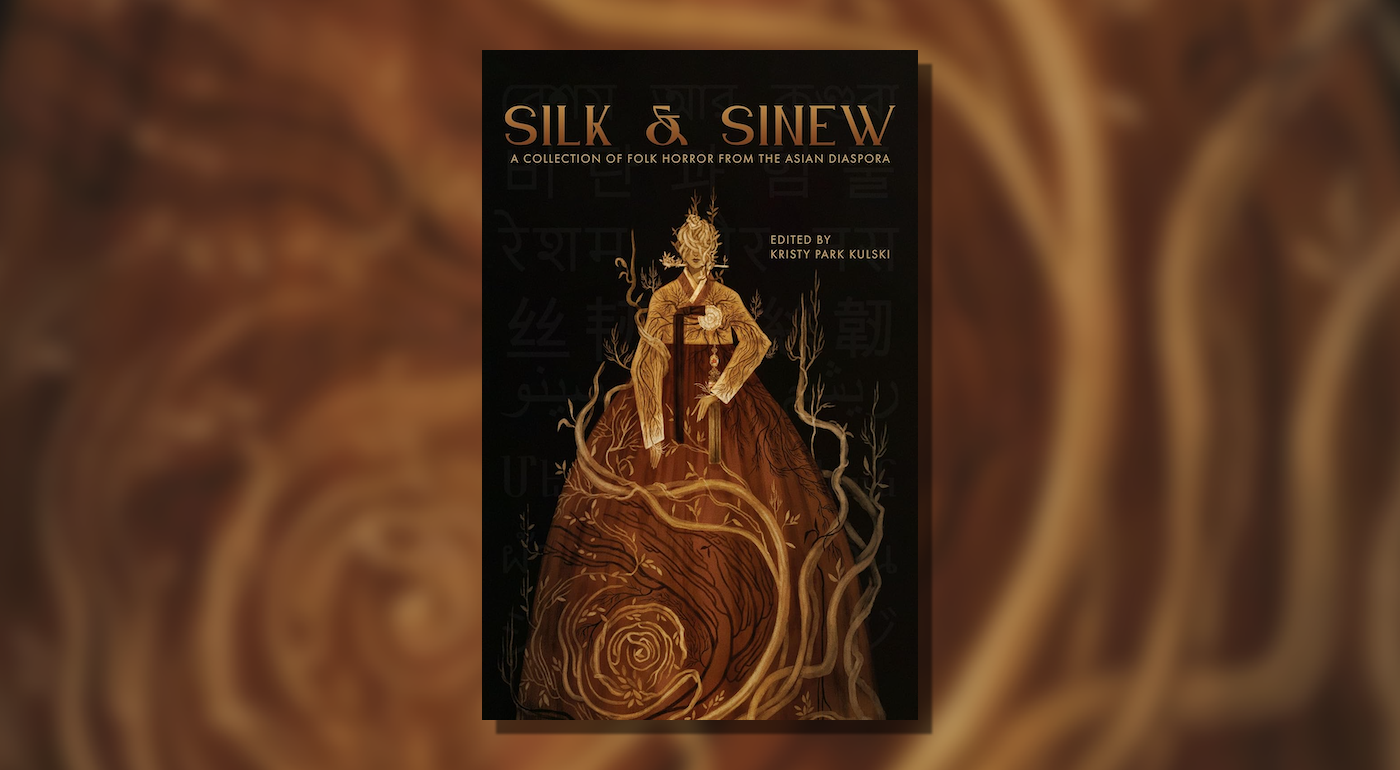
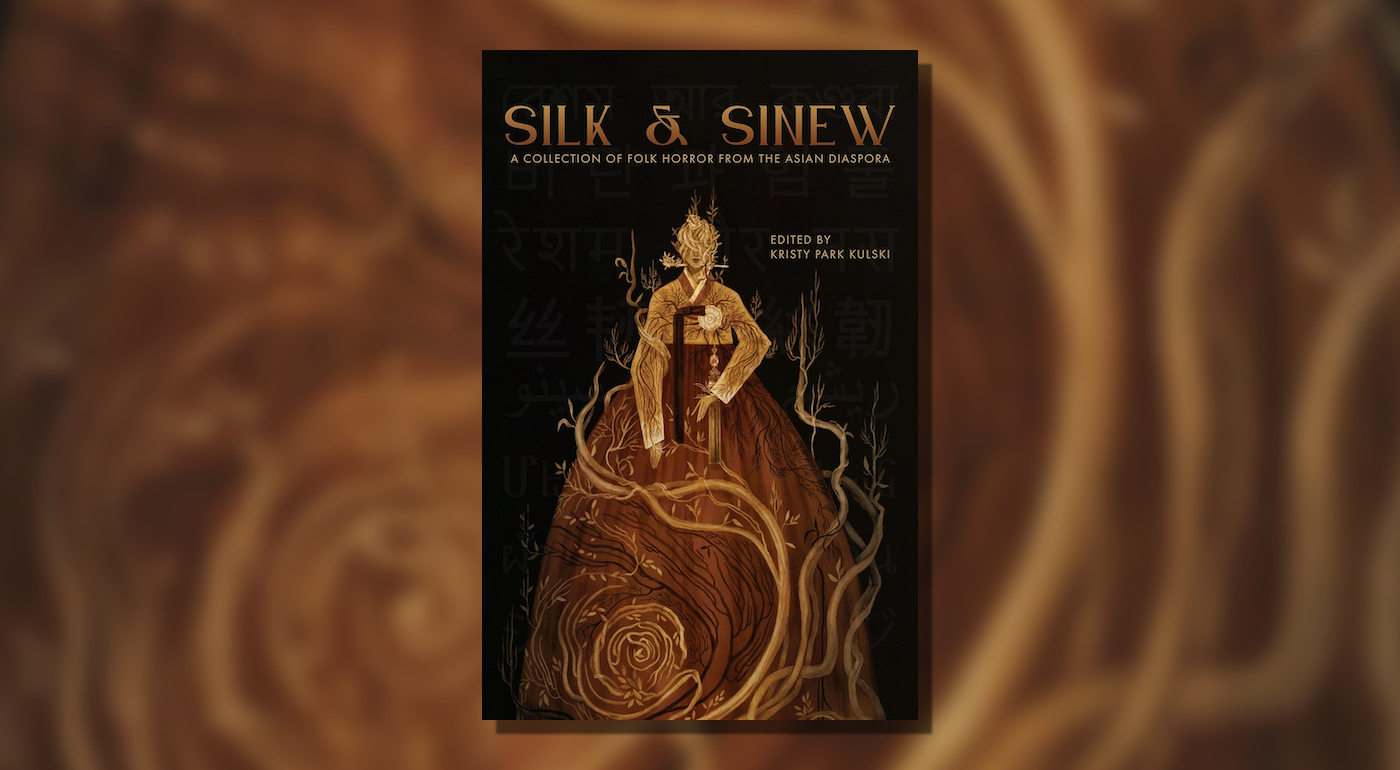
[CITY, STATE] – In a landscape increasingly hungry for diverse voices and decolonial narratives, Ayida Shonibar’s short story, "An Unholy Terroir," emerges as a potent and critically acclaimed work of folk horror. First published in Kristy Park Kulski’s Stoker-winning anthology, Silk and Sinew: A Collection of Folk Horror From the Asian Diaspora, Shonibar’s piece delves into themes of oppression, transformation, and the reclaiming of identity through a chilling yet ultimately empowering lens.
The story, a standout in an anthology celebrated for its groundbreaking contributions to the genre, has resonated deeply with readers and critics alike for its intricate world-building, searing social commentary, and a narrative that masterfully blurs the lines between fable and stark warning. Through its protagonist, Titli, Shonibar explores the enduring trauma of colonialism, the insidious nature of systemic manipulation, and the subversive power of embracing the "monstrous" labels imposed by oppressors. This article offers a detailed exploration of "An Unholy Terroir," from its narrative core to its profound implications, with spoilers ahead for those who have yet to experience its unsettling beauty.
A Chronicle of Disease, Deception, and Defiance
Shonibar’s narrative unfolds with the stark pronouncement: "This is a fable. Or rather, a warning." This immediate framing sets the stage for a story steeped in allegorical weight, even as its events unfold with visceral detail.
The tale begins in an unnamed, isolated village, gripped by a mysterious and horrifying plague. Victims suffer a grotesque decline: their appetites vanish, bones shift unnaturally, and human features erode, leaving loved ones to "grieve and watch them disintegrate." In their desperation, the villagers turn to their Provost, a figure of authority who demands their "respect…and a healthy portion of [their] earnings" in exchange for his interpretations of their suffering. The Provost, a master manipulator, simplifies complex realities for "their simple perspectives." He attributes the sickness to divine punishment for collective "educational failures," exemplified by a lazy child, Otto Ludwig, who neglected his duties. This convenient narrative successfully coerces the villagers into unwavering obedience, ensuring they are "never again late to deliver on [the Provost’s] requests." Yet, despite their newfound diligence, the pervasive sickness lingers, a testament to the Provost’s false diagnoses.
Around the solemn period of the winter solstice, an enigmatic young woman named Titli arrives. Her striking appearance immediately sets her apart: hair as black as night, brown skin, and a shawl draped over her shoulders like a "woven exoskeleton," its brilliant, contrasting colors a stark counterpoint to the villagers’ "uniformly monochrome attire." Their collective gaze fixates on her, unable to avert their eyes from this vibrant anomaly.
Titli, a traveler from distant lands, earns her living trading silks, a craft passed down through her family. Stories about her proliferate "like the disease" itself, some gleaned from her own accounts, others born from "mere speculation…spun out of…expectations and fantasies." Angelika, the Provost’s daughter, expresses a hesitant admiration, finding Titli "rather lovely" at a tavern gathering. However, darker rumors circulate: that Titli’s "shapeless" garments conceal fibrous, scaly skin; that she breathes fire; that her heavily spiced food masks the taste of human flesh.
The Provost, overhearing jests about cannibalism, quickly seizes the opportunity to sow fear. He warns that laughter about "degeneracy" today will lead to "degeneracy" tomorrow, painting Titli as a dangerous outsider who could turn the villagers against each other, even against him. Despite his efforts, the villagers remain captivated by Titli. Their curiosity eventually leads them to question the mechanics of fire-breathing within her hearing, prompting Titli to storm off. Angelika, feeling a pang of remorse, leads a group of shamefaced villagers to apologize. Instead, they witness a horrifying spectacle: Titli falls to her knees near the town well, her face contorting as yellow-green-purple flames erupt from her mouth, scorching the water into a seething, boiling cauldron. The terrified villagers flee.
Days later, the village bustles with celebratory activity. The mysterious sickness has vanished; Titli’s fiery intervention, they conclude, destroyed the contagion lurking in the well. But their relief is short-lived. The Provost, infuriated by their rejection of his "heaven-sent correction," chastises them, warning that Titli’s "oddities" will cease to be captivating when her "hellfire devours their homes." Titli, overhearing his vitriol, watches her eyes darken with an "ugly" intensity. The Provost, solidifying his control, dispatches letters to authorities in the southern colonies, seeking information on "exploits like Titli’s." Barely has he sent them when the village erupts in gold-green-purple flames, mirroring the colors of Titli’s previous outburst. He joins the villagers in battling the blaze, gratified by their curses against their former favorite.
A crucial interlude then reveals the historical context: a century prior, northerners colonized the south, perpetrating injustices that transformed Titli’s people into "dagger-fanged monsters." Robbed of their traditional textiles, their very fingertips "unravelled into silken thread," which they secretly wove. When northerners retaliated, Titli’s family bound her into a protective cocoon. She emerged to find her people gone, a lone survivor of cultural annihilation and violent suppression.
The story returns to the present with Titli’s second act of fire-breathing, which ignites the village. Horrified by the unintentional destruction, she rushes to help. Later, she offers water to Angelika amidst the devastation. Angelika, surprisingly empathetic, confesses to Titli that she understands her, admitting she once accidentally started a fire in her father’s study – a secret she had never before shared. This shared vulnerability hints at a burgeoning connection.
Titli’s transformation continues. Her fingertip-silk, initially a secret, becomes "thick and tough," ideal for twisting ropes to aid the villagers in rebuilding their homes. Gradually, they recognize the value of her "structural cording," deploying it throughout the reconstructed village. The Provost, however, remains unyielding, reprimanding Angelika for dining with the "demon outsider," ominously predicting that Titli would soon "be eating her."
The Provost’s paranoia is reinforced by a letter from a southern colonial authority, who denounces the natives as "false people." The letter declares that the "fruit that grows [in the colony] is as unholy as its terroir," and laments the colonists’ difficulty in "maintaining civilization." The authority describes "demonic vipers shedding artificial skin" and "beastly wings projecting out of the shoulder blades," grotesque caricatures that feed the Provost’s fears.
The narrative culminates in a pivotal encounter. Angelika visits Titli’s room, and they sit together on the bed. Angelika, vulnerable and curious, asks if Titli truly eats people, and if she herself would be someone Titli would "like to eat." Titli, with a promise that Angelika "will like it" and that she "will stop if asked," initiates an intimate act. Angelika blushes, whispering, "Eat me, then."
Their moment is shattered by the Provost, who barges into Titli’s room, finding Angelika "moaning, with Titli’s head between her legs." Enraged, he drags Titli into the street towards the well. Titli’s desperate kick dislodges his belt-pouch, spilling its contents: a journal, a sack of gold, and a tinted bottle. Angelika seizes the bottle, recognizing it as one of her missing cosmetic tinctures. A horrifying realization dawns: ingested, the tincture is a potent poison. Had her father poisoned the well to instigate the sickness? The Provost screams incoherently as Titli undergoes a final, dramatic metamorphosis in his grasp. Her shoulders elongate, scales erupt through her clothing, and fangs burst from her mouth. Her newly formed wings unfurl, lifting them both into the air. The Provost’s pleas for help go unanswered as the villagers, frozen in silent witness, refuse to intervene. He falls, howling, into the poisoned well.
As dawn breaks, the villagers watch Titli ascend and fly away, whispering goodbyes that she will not hear. Returning to their homes, the fading shouts of a drowning man underscore the radical shift that has occurred, leaving a transformed village in her wake.
Supporting Data: Terroir, Transformation, and Mythological Roots
"An Unholy Terroir" is rich with thematic layers and cultural allusions, skillfully woven into its compelling narrative. The story’s title itself serves as a crucial entry point for understanding its depth.
The "Terroir" of Oppression
The word "terroir," often misread as "terror," is central to Shonibar’s critique. As literary critic Anne notes, "terroir" refers to the unique flavor a food gains from the specific properties of a location – its soil, water, climate, microbiomes, and, significantly, "the practices of the people laboring to produce it." In Shonibar’s context, this concept extends beyond agriculture to encompass the human condition itself. The Provost’s colonial mentality, the villagers’ enforced obedience, and the poisoned well all contribute to an "unholy terroir" that corrupts not only the land’s produce but also its inhabitants. The colonial authority’s letter explicitly states, "The fruit that grows here is as unholy as its terroir," drawing a direct parallel between the land and its people, both deemed "false" and inherently corrupted by the colonizer’s gaze. This metaphorical extension powerfully illustrates how the practices of oppression shape the very essence of a place and its people.
The Degenerate Other: Reclaiming Monstrosity
A core theme is the dehumanization of the "Other." The Provost and the colonial authority consistently label Titli and her people as "false," "demonic vipers," and "degenerate." They are depicted with exaggerated, monstrous features: dagger-fangs, scaly skin, beastly wings, and a predilection for cannibalism. This rhetoric, deeply rooted in colonial discourse, serves to justify their subjugation.
However, Shonibar subverts this narrative by showing Titli’s transformation not as a descent into evil, but as a defiant reclamation of power. As critic Ruthanna Emrys highlights, the story asks: "If people are going to call you inhuman, and treat you as monsters, wouldn’t it be tempting, sometimes, to prove them right? To turn metaphor into clawed reality?" Titli’s physical changes—the fangs, scales, and wings—are not merely manifestations of their oppressors’ fears but become tools for survival and liberation. Her silk-spinning fingertips, born from the theft of her people’s textiles, become a source of economic independence and a means to rebuild. This monstrousness, therefore, is not inherent but a consequence of brutalization, ultimately becoming a symbol of resistance.
Mythological Echoes: The Rakshasas
The cultural inspiration for Titli’s transformation draws heavily from Hindu mythology, specifically the Rakshasas. Anne’s commentary points out the striking parallels: these "master shape-shifters" are often depicted with "protuberant, even tusk-like teeth, and long, razor-sharp claws," capable of flight and shifting into monstrous winged hybrids. While fire-breathing Rakshasas are rarer, the story of Analasura, the Fire Demon, provides a precedent.
Crucially, Rakshasas are portrayed as "disruptors of order, the challengers of gods and heroes." Their presence creates "upheaval in the celestial and earthly realms alike." This aligns perfectly with Titli’s role as the ultimate nemesis for the Provost, the self-proclaimed defender of a rigid, oppressive order. By embodying these "fearsome, grotesque beings," Titli becomes a force of chaotic liberation, challenging the Provost’s artificial virtue and the village’s enforced monochrome existence. Her transformation is not just personal; it’s a mythological response to systemic injustice.
Official Responses: Critical Acclaim and Authorial Intent
Silk and Sinew: A Collection of Folk Horror From the Asian Diaspora, the anthology featuring "An Unholy Terroir," received significant recognition, notably winning the prestigious Stoker Award. This accolade underscores the quality and impact of the collection, positioning Shonibar’s contribution within a celebrated context.
Leading literary critics have lauded Shonibar’s work for its depth and subversive power. Anne, a commentator for Reactor Magazine‘s "Reading the Weird" column, articulates the story’s core message: "You go, Titli, I said. I was sorry that she flew away from the village so soon, but I guess her work there was done, and there were many more repressed, monochromatic villages to disrupt into cracking open their inhabitants’ minds a little, while having fun at the same time." This playful yet insightful remark captures the spirit of defiant joy inherent in Titli’s liberation.
Ruthanna Emrys, another esteemed voice in genre commentary, emphasizes the story’s unique contribution: "This story feels familiar, and also makes me cautious in that familiarity. Shonibar is Desi and so is the experience with colonialism from which they draw—and with which I’m not deeply familiar… But none of these are identical, or even close—and our uniquenesses, identities unblurred with others, are part of what these stories insist upon. Our terroirs." Emrys highlights the story’s ability to forge kinship with other narratives of resistance (like golem myths or flying Africans) while staunchly asserting its unique cultural specificity. She also points to the symbolism of the silk-spinning fingertips: "Beyond the ability to fight back with violence, the silk offers economic independence and the ability to care for children… It ends her childhood… releasing her as an adult able to survive on her own."
While Ayida Shonibar rarely grants extensive interviews regarding specific story interpretations, a statement attributed to the author during a panel discussion on Silk and Sinew sheds light on their artistic philosophy. "I wanted to explore how oppressive narratives can be internalized and then weaponized against the oppressors themselves," Shonibar reportedly stated. "Drawing from the rich tapestry of mythologies often sidelined in mainstream horror, I aimed to craft a story where the ‘monster’ is not just misunderstood, but actively chooses to embody the fears projected onto them, transforming that fear into a catalyst for change and ultimately, liberation."
Kristy Park Kulski, editor of the Stoker-winning anthology, has also commented on the significance of "An Unholy Terroir" within the collection. " ‘Silk and Sinew’ was born from a desire to showcase the diverse and powerful voices within the Asian diaspora’s folk horror," Kulski explained in an interview for a literary podcast. "Ayida’s story perfectly encapsulates the raw, visceral impact of decolonial narratives within the genre. It’s a testament to how horror can be a profound vehicle for exploring historical trauma and the resilience of marginalized communities."
These insights collectively affirm "An Unholy Terroir" as a meticulously crafted and deeply resonant work, appreciated not only for its narrative prowess but also for its critical engagement with complex socio-cultural themes.
Implications: A Blueprint for Resistance and Liberation
"An Unholy Terroir" carries profound implications, extending its reach beyond the confines of folk horror to offer a powerful commentary on contemporary societal issues.
Decolonizing Horror and Reclaiming Power
The story serves as a potent critique of colonialism and its lasting impact, both in overt colonial territories and within the "imperial core" represented by the Provost’s village. The Provost’s manipulation, his manufactured divine punishments, and his economic exploitation mirror the tactics of colonial powers. Titli’s people, subjected to literal transformation through abuse, embody the collective trauma of colonization. By embracing their "monstrous" forms and utilizing their unique abilities (like silk-spinning and fire-breathing) for resistance, they offer a blueprint for decolonial power. The story suggests that true liberation often requires shedding the victim narrative and actively reclaiming the derogatory labels imposed by oppressors, transforming them into sources of strength.
Queerness as Radical Liberation
The nuanced relationship between Titli and Angelika introduces a significant queer dimension to the story. Angelika’s attraction to Titli, her burgeoning understanding, and their intimate encounter represent a radical departure from the village’s "uniformly monochrome" existence. The Provost’s violent interruption of their intimacy, framed as "degeneracy," underscores the oppressive force of traditional patriarchal and heteronormative structures. Titli’s promise to Angelika—"you will like it, and she will stop if asked"—can be interpreted as a tender affirmation of consent and pleasure, a stark contrast to the Provost’s coercive authority. This subtle yet powerful thread implies that liberation from colonial and patriarchal oppression also entails the freedom to express one’s identity and desires, including queer love, as a form of resistance against restrictive societal norms.
The Fable’s Enduring Warning and Call for Solidarity
Ruthanna Emrys poignantly interprets the story as a complex fable with a clear moral: "those suffering under colonial hierarchies in the imperial core, and those suffering in the colonies, have much to learn from each other and much to gain by working together—even though that collaboration won’t always be comfortable." Angelika’s eventual empathy and the villagers’ refusal to aid the Provost highlight the potential for solidarity across different forms of oppression. The story, therefore, issues a stark "warning, of course, is to the Provosts of the world, secure with their poisoned wells and their demands for service. Your time is coming." It suggests that oppressive systems, whether colonial or internal, are inherently unstable and vulnerable to collective awakening and resistance.
"An Unholy Terroir" solidifies its place as a significant work within contemporary genre fiction. It enriches folk horror by integrating non-Western mythologies and decolonial perspectives, pushing the boundaries of what "weird fiction" can explore. Through its unforgettable protagonist and searing social commentary, Ayida Shonibar’s story stands as a testament to the power of narrative in challenging injustice, celebrating transformation, and inspiring the ongoing fight for liberation. Its themes of resistance, identity, and the reclaiming of the "monstrous" resonate deeply in a world still grappling with the legacies of oppression, offering both a chilling warning and a hopeful vision for change.