The Rise of the "Invisible" Unicorn: How Even Realities is Redefining Smart Glasses
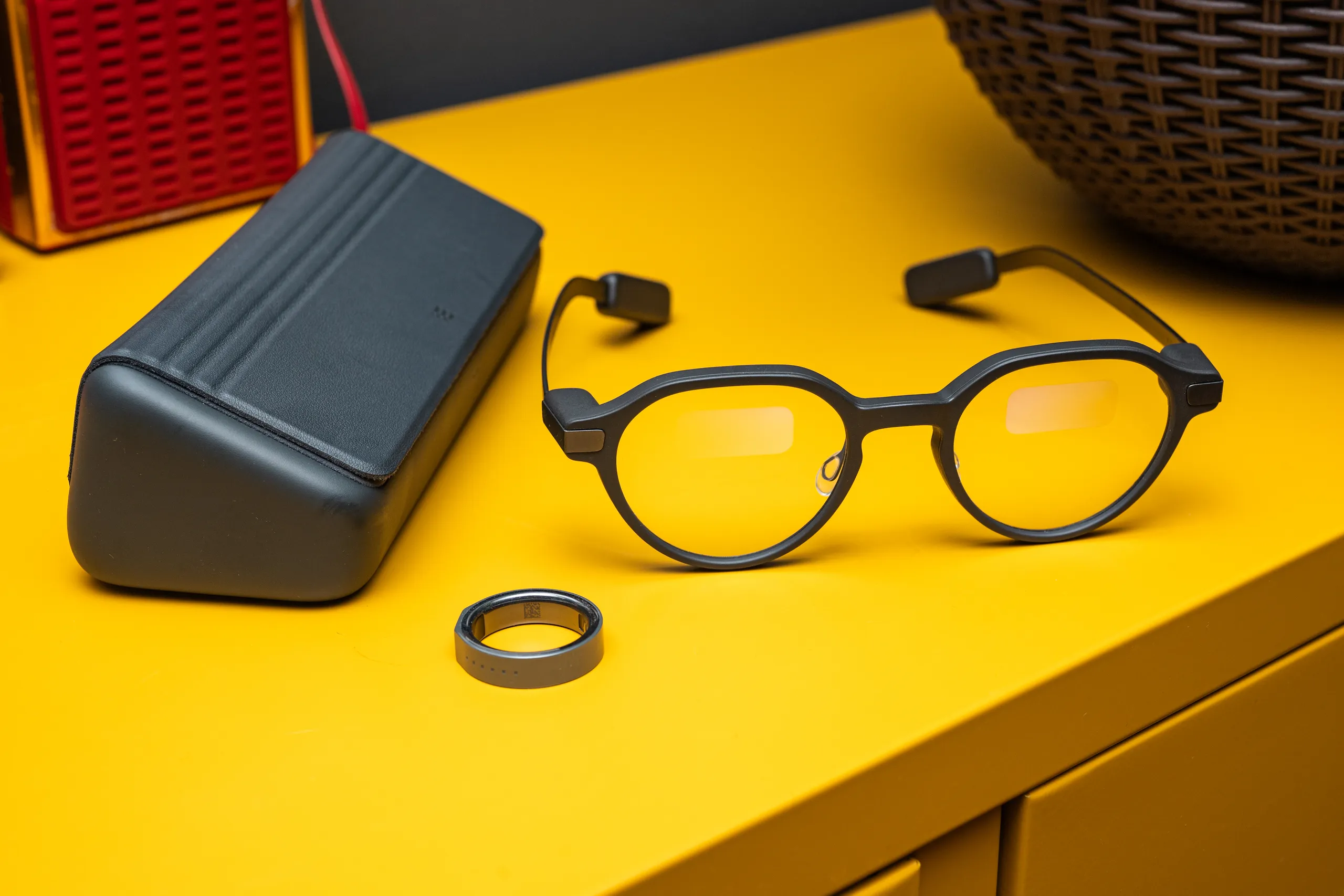
The smart glasses industry, long dominated by the "camera-first" philosophies of Silicon Valley giants, has witnessed a seismic shift in its competitive landscape. Even Realities, a Shenzhen-based startup founded by former Apple engineers, has officially reached unicorn status after securing $150 million in a funding round that values the company at $1 billion. This milestone does more than just inject capital into a growing firm; it signals a pivot in consumer and investor appetite toward a more discreet, privacy-centric approach to wearable augmented reality (AR).
While Meta, Snap, Samsung, and Google have largely focused on glasses that capture the world through integrated lenses, Even Realities is betting on a "display-first, camera-free" model. By removing the social friction of a front-facing camera and focusing on heads-up information delivery, the company is carving out a high-end niche that appeals to professionals and privacy-conscious users alike.
Main Facts: A $1 Billion Bet on Camera-Free AR
The recent $150 million funding round was led by Chinese tech powerhouses Meituan and Tencent, with continued support from HSG (formerly Sequoia China). This influx of capital arrives at a critical juncture for the intelligent eyewear market, which is currently experiencing a period of hyper-growth.
Even Realities’ flagship product, the Even G2, represents a departure from the "action-camera-on-your-face" trend popularized by the Meta Ray-Ban collaboration. Instead of recording video or taking photos, the G2 focuses on a sophisticated heads-up display (HUD) integrated directly into the lenses. The device provides users with real-time notifications, navigation prompts, AI-driven translation, and teleprompter capabilities—all without the visible hardware cues that typically signal a "recording" device.
Key highlights of the company’s current standing include:

- Valuation: $1 billion (Unicorn status).
- Funding: $150 million led by Meituan and Tencent.
- Core Product: Even G2 smart glasses ($599 starting price).
- Control Mechanism: The Even app and the optional R1 smart ring for gesture-based navigation.
- Global Reach: Active sales in the U.S., Europe, South Korea, Japan, and the Middle East.
Chronology: From Apple Pedigree to Global Expansion
The trajectory of Even Realities is a masterclass in rapid scaling and focused product development. To understand its current $1 billion valuation, one must look at the condensed timeline of its evolution:
2023: The Foundation
Even Realities was founded in Shenzhen by a group of former Apple engineers. Drawing on their experience in high-end consumer electronics and precision engineering, the founders sought to solve the "wearability" problem that had plagued AR glasses for a decade. Their goal was to create smart glasses that were indistinguishable from premium traditional eyewear.
2024: The Proof of Concept (G1)
The company launched its first-generation product, the G1. While many startups struggle to find an initial audience, Even Realities surpassed its internal target of 10,000 units. This early success proved there was a market for a "display-only" wearable. During this period, the company operated with a lean team of approximately 30 to 40 employees.
2025 – Early 2026: Rapid Scaling
As the intelligent eyewear market began to heat up globally, Even Realities scaled its operations aggressively. The workforce grew tenfold, reaching between 300 and 400 employees. The company focused on refining its proprietary "Holistic Adaptive Optics" (HAO) and expanding its distribution networks into the United States and Europe.
July 2026: The Unicorn Round
The announcement of the $150 million funding round led by Tencent and Meituan cemented the company’s status as a major player. With half of its user base now located in the U.S., the company has transitioned from a regional hardware startup to a global contender in the AR space.

Supporting Data: The Professional Demographic and Market Growth
The success of Even Realities is backed by broader market trends and specific user demographics that suggest a shift in how AR is being consumed.
The Booming Intelligent Eyewear Market
According to data from Counterpoint Research, the global intelligent eyewear market grew by a staggering 83% year-over-year in Q1 2026. This growth is driven by a transition from "toy-like" gadgets to functional productivity tools. While Meta’s more affordable, camera-equipped glasses have captured the mass market, Even Realities is capturing the high-value professional segment.
User Demographics and Pricing
Even Realities has found a "sweet spot" with a specific demographic:
- User Profile: Primarily male professionals aged 30 to 50.
- Executive Adoption: Approximately one-third of surveyed users identify as executives.
- Geographic Focus: The U.S. is the company’s fastest-growing market, accounting for over 50% of total users.
The pricing strategy reflects this premium positioning. While the G2 starts at $599, the addition of prescription lenses and the R1 smart ring often pushes the average order value toward $1,000. This places the device in the same category as high-end smartphones or luxury Swiss watches—devices bought for both utility and status.
Technical Specifications: The G2 Advantage
| Feature | Specification | Impact |
|---|---|---|
| Optics | Holistic Adaptive Optics (HAO) | Merges waveguide and prescription into one seamless lens. |
| Battery Life | Up to 2 days (with case) | Enables true daily wear without "range anxiety." |
| Weight/Design | Near-traditional frame weight | Reduces physical fatigue and social stigma. |
| Prescription | -12.00 to +12.00 diopters | Accessible to the vast majority of corrective lens wearers. |
Official Responses: Privacy as a Product Feature
In the wake of the funding announcement, Even Realities’ leadership has been vocal about why they chose to omit the camera—a move that many industry analysts initially viewed as a handicap.

CEO Will Wang has emphasized that smart glasses are the most personal computing devices ever created. "Because these devices sit on your face, privacy cannot be an afterthought; it must be part of the hardware DNA," Wang stated. He argues that the absence of a camera reduces "social friction," allowing users to wear the glasses in sensitive environments like boardrooms, doctors’ offices, and private dinners without making others feel monitored.
To further bolster its privacy credentials, the company has implemented several software-level safeguards:
- Audio Processing: The real-time translation and "Conversate" AI features transcribe audio into text locally or via encrypted channels. The company maintains that it does not store raw audio recordings.
- Data Standards: Even Realities has built its infrastructure to comply with the world’s strictest privacy regulations, including the European GDPR, ensuring that user data remains encrypted and under the user’s control.
The company’s "Display-First" philosophy is not just a technical choice; it is a response to the "glasshole" era of a decade ago, where the presence of a camera on Google Glass led to widespread social rejection.
Implications: Can Even Realities Maintain Its Edge?
The $1 billion valuation of Even Realities poses a significant question for the industry: Is the "camera-free" path the true way to mainstream AR adoption?
Challenging the Meta Hegemony
Meta (formerly Facebook) has seen success with its Ray-Ban Meta glasses by focusing on content creation—letting users livestream or take photos hands-free. However, Even Realities is betting that there is a larger, more lucrative market of people who don’t want to be "creators" but do want to be "informed." By focusing on productivity—teleprompters for public speaking, live translation for international business, and subtle notification management—Even Realities is positioning the G2 as a tool for the "knowledge worker."

The AI Integration Frontier
The true test for Even Realities will be the evolution of its AI capabilities. The "Conversate" feature, which provides real-time conversation prompts and summaries, is a potential "killer app" for sales teams and executives. If the AI can provide meaningful, context-aware assistance without the need for a camera to "see" the world, it could invalidate the argument that AR requires visual sensors to be useful.
Potential Headwinds
Despite the successful funding round, significant challenges remain:
- Consumer Habituation: Convincing people to wear glasses—especially those who do not already require prescriptions—remains a hurdle.
- The "Utility Gap": While notifications and translations are useful, are they worth a $600-$1,000 investment for the average consumer? Even Realities must continue to expand its "Conversate" AI to provide value that a smartwatch or phone cannot.
- Big Tech Competition: If Apple or Google decides to release a "Pro" version of smart glasses without cameras, Even Realities will face competitors with significantly deeper pockets and integrated ecosystems.
Conclusion
Even Realities has proven that there is a billion-dollar appetite for AR hardware that respects social boundaries. By focusing on high-end optics and professional utility rather than social media capture, they have successfully differentiated themselves in a crowded field. As they use their new $150 million war chest to expand their AI features and global footprint, the rest of the tech world—Meta included—will be watching closely to see if the future of AR is, indeed, camera-free.