The Self-Published Fantasy Blog-Off (SPFBO) Narrows Field: Three More Titles Depart in the Sixth Fall
The literary world of self-published fantasy is abuzz as the eleventh annual Self-Published Fantasy Blog-Off (SPFBO) competition progresses into its penultimate round of initial cuts. In what is being termed the "Sixth Fall," three more books have been removed from contention, bringing the contest closer to identifying its coveted semi-finalists. This rigorous culling process underscores the intense competition and the high standards upheld by the SPFBO judging panels, bringing us ever closer to discovering the next breakout voice in independent fantasy.
The SPFBO: A Crucible for Indie Talent
Launched by acclaimed author Mark Lawrence, the SPFBO competition has grown into a cornerstone event for the self-published fantasy community. Its primary objective is to shine a spotlight on the vast and diverse talent within the indie publishing sphere, providing a platform for authors who might otherwise struggle to gain visibility. Each year, hundreds of entries are meticulously reviewed by a panel of dedicated fantasy bloggers and reviewers, culminating in a single champion whose work stands out amongst a sea of creativity.
The competition unfolds in several demanding phases. Initially, a massive pool of submissions is divided among various judging blogs. Each blog then undertakes the arduous task of reading, evaluating, and ultimately selecting a small number of titles to advance. The current stage involves these blogs systematically cutting books from their respective pools, moving towards their chosen semi-finalists, who will then compete against the selections from other blogs. This structured, multi-tiered approach ensures that only the most compelling and polished works navigate the gauntlet to the final rounds.
The Rigorous Judging Process: A Commitment to Fair Evaluation
The judging process for SPFBO is deliberately structured to provide comprehensive and unbiased evaluations. Judges emphasize that books are not read in any particular order, nor are cuts made from "worst to best." Instead, the panel works through the submissions in manageable batches, offering considered feedback on each title before making the difficult decision to advance or cut. This methodology acknowledges the inherent subjectivity of literary taste while striving for a consistent and fair assessment.
"Reading is subjective. What didn’t click for us might be exactly your kind of story," the judging panel consistently reminds readers and authors. This statement is not merely a disclaimer but a foundational principle of the SPFBO, highlighting the belief that every book holds potential appeal for the right audience. Authors are encouraged to view the feedback not as a definitive judgment of their work’s merit, but as a specific critique from one group of readers.
The judging panel, a diverse collective of fifteen experienced fantasy enthusiasts including Adawia Asad, Eva Geraghty, Evelyn Grimald “E.G.” Stone, Julia Kitvaria Sarene, Karen Lucia, Kerry Smith, Kit Caelsto, Maureen Neuman, Robert Max Freeman, Sara Rosevear, Sherry Cammer, Stacey Markle, Tianna Twyman, and Yaniv Rosenfeld Cohen, brings a wide array of preferences and critical perspectives to the table. Their collective insights form the basis of the detailed critiques provided for each book.
A heartfelt appreciation is extended to all authors who enter the competition. "Putting your work forward for a competition takes real courage, and we appreciate each and every one of you for it," states the organizing team. This acknowledgement underscores the emotional investment and bravery required for authors to subject their creations to such scrutiny, reinforcing the supportive ethos of the SPFBO community.
Sixth Fall Unveiled: Three More Books Depart the Competition
With only one more cut post remaining before the highly anticipated semi-finalist announcements, the stakes are undeniably higher. The latest round sees three more titles concluding their SPFBO journey: Leave No Dragon Stone Unturned by Alexa Grave, The Crimson Court by Brendan Noble, and Remnant by K. R. Solberg and C. R. Jacobson. While these books did not advance, the judges provided valuable insights into their strengths and areas for potential refinement.
Leave No Dragon Stone Unturned by Alexa Grave: A Tale of Tech-Magic and Lingering Romance
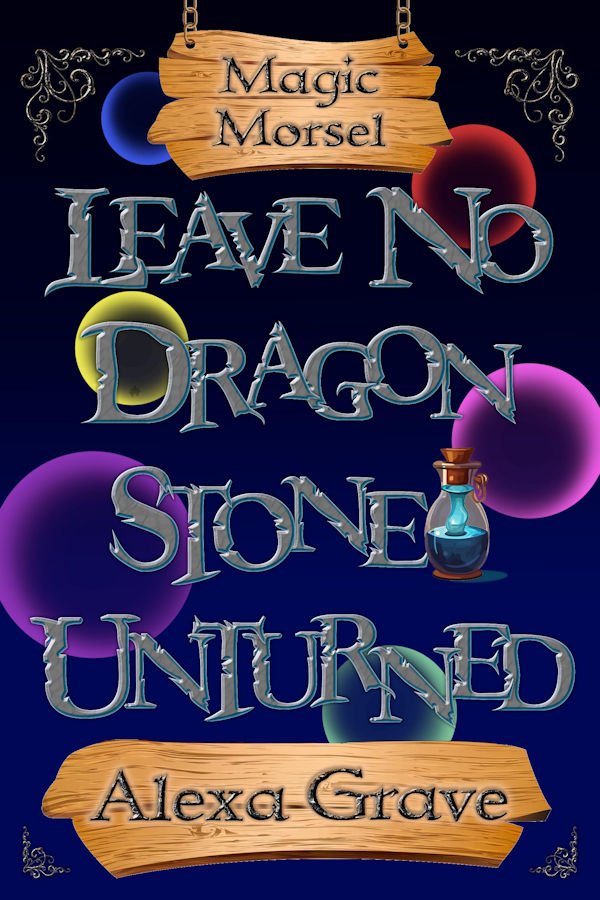
Alexa Grave’s Leave No Dragon Stone Unturned presents an urban fantasy narrative centered on Lila, a half-elf tech mage who manages the Magic Morsel, a neutral ground for various magically inclined beings in the Triopolis area. Grieving her grandmother, Lila strives to maintain the establishment’s impeccable record of peace. Her world is upended when Ash, a charismatic half-elf, enters with a mysterious item, leading Lila into a perilous quest to recover a stolen artifact within the wild magic-infused Ruins.

Supporting Data: Judge Observations
The initial premise of Leave No Dragon Stone Unturned resonated positively with many judges. The blend of technology and magic was lauded as inventive and fresh, and Lila was found to be a likeable and self-assured protagonist. Reviewers appreciated the breezy pacing, quirky humor, and the overall sense of fun and lightness that characterized the early chapters. Several judges expressed genuine curiosity about the world Grave had crafted, suggesting a strong foundation for an engaging urban fantasy.
However, a significant point of contention emerged regarding the pervasive focus on the protagonist’s libido and romantic tension. Judge Kerry articulated this concern clearly: "My problem was almost every other page was Lila thinking how hot her client was, how her libido was off the charts and how much she’d love to have sex with him." Specific instances, such as a friend packing "sexy underwear" for a trip to dangerous ruins and Lila’s internal monologue about a "wet T-shirt and no bra" accentuating her curves, were cited as distracting elements. While acknowledging that "many, many readers who love this type of romantic, spice filled romance," Kerry noted it was a personal barrier to enjoying the book fully.
Julia echoed this sentiment, describing the book as "exactly what it says on the tin: a quick, fun, light urban fantasy that doesn’t take itself too seriously." She praised Lila’s relationships with her staff and the inventive tech-magic ideas. However, she also highlighted the constant "mental cataloguing her underwear drawer or reminding herself that sleeping with Ash would be unwise," noting that "the sexual tension is persistent and front and centre." Julia further observed that the plot had "holes you could drive a canister of petrol through" and that some character choices lacked scrutiny, though she conceded these might be shrug-offable given the book’s light-hearted aims.
Implications:
The reception of Leave No Dragon Stone Unturned offers a clear illustration of how genre expectations can heavily influence a book’s reception. For readers seeking "romantasy"—fantasy blended with prominent romantic and often spicy elements—Grave’s novel likely delivers precisely what they seek. For those expecting a more traditional urban fantasy with romance as a subplot rather than a central driving force, the persistent romantic focus proved to be a significant detractor. The book is characterized as "comfort food fantasy," suggesting it caters to a specific palate that prioritizes entertainment and light-hearted escapism over intricate plotting or deep character exploration.
The Crimson Court by Brendan Noble: Ambition Meets the Editor’s Pen
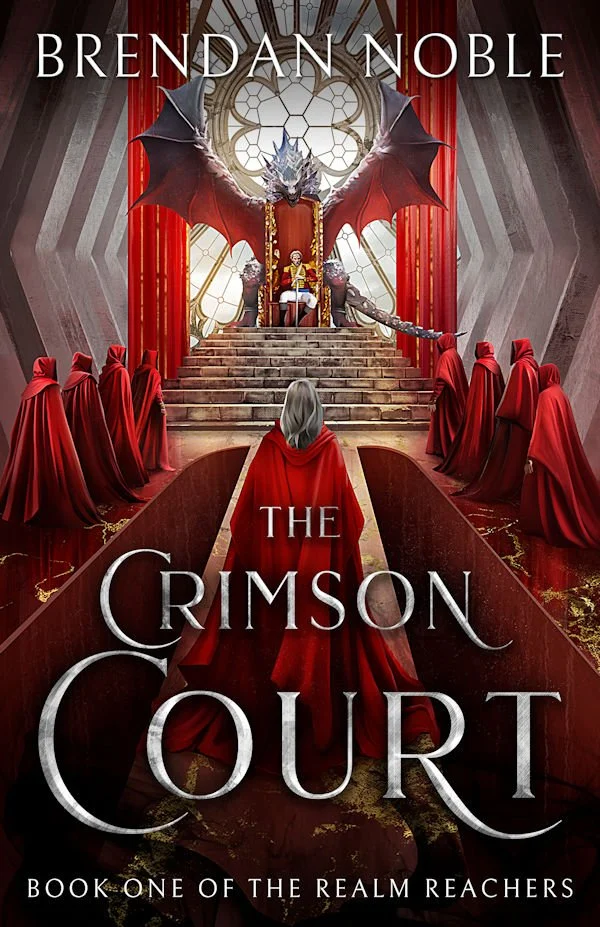
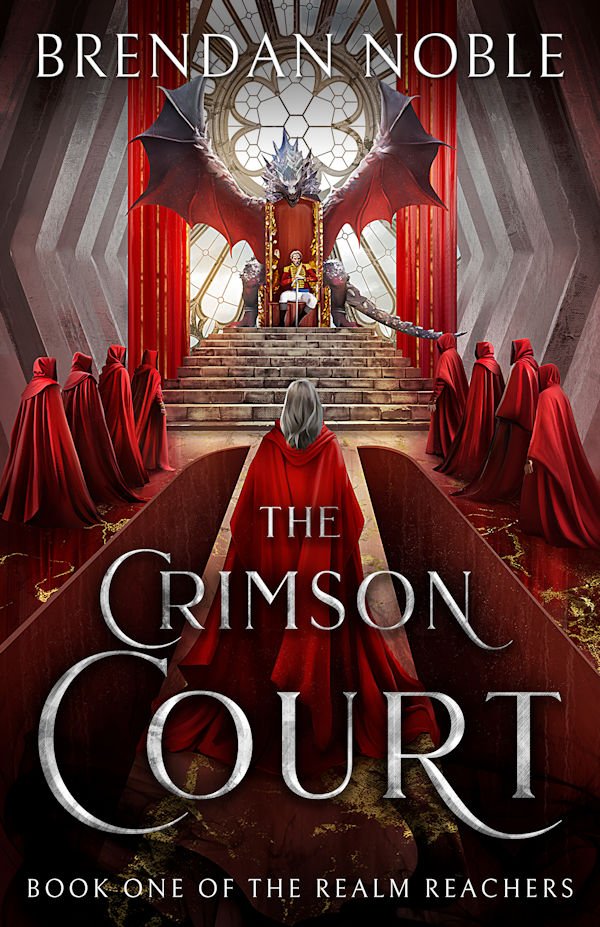
Brendan Noble’s The Crimson Court introduces Kasia Niezik, the determined matriarch of a fallen house, sworn to avenge her father’s assassination by the enigmatic Crimson Court. These near-immortal foes wield ancient spirits, but Kasia is a "Reacher" from the realm of Death—a power they dread. Her quest takes her to the capital, where she seeks allies among spirit hunters, princesses, and thieves, navigating a treacherous landscape where hidden agendas and daggers behind smiles are the norm.
Supporting Data: Judge Observations
The judges were initially captivated by The Crimson Court‘s ambitious worldbuilding. The Russian and Siberian-inspired setting, the concept of a magical plague, intricate political scheming, and an inventive magic system built around "Reachers" drawing power from fifteen distinct realms were universally praised. Several judges expressed significant excitement in the early chapters, some even identifying it as potential competition material.
However, the book’s substantial length, exceeding 700 pages, began to pose challenges. The pacing, which held strong for the first half, gradually faltered, leading to a perception of long-windedness and a loss of narrative grip. Judge Julia noted, "The Crimson Court has a lot going for it: an inventive gaslamp world with an interesting magic system built around spirits, an engaging setup, and a genuinely inclusive cast handled with a light and normalizing touch that felt refreshing." She specifically lauded the inclusion of a side character using they/them pronouns and another with a mechanical leg, noting the world’s "quietly LGBTQIA+ normative" feel without overt declaration.
Despite these strengths, the characters emerged as the most consistent weak point. Judges found them somewhat "flat," their motivations "stated rather than felt," and their emotional responses often thin on the page. Julia elaborated, "They tend toward the readable and role-defined, with motivations relatively easy to map early on, conflicts and loyalties that form quickly, and emotional beats written for immediate impact rather than slow build." While she finished the book, she admitted to drifting, suggesting the audiobook format aided her persistence more than the page alone would have. Stacey Markle, who had previously read the audiobook, offered a more positive overall assessment, praising the immersive world and the eventual convergence of multiple POVs, though she too acknowledged that the book "could have used some trimming."
Implications:
The Crimson Court serves as a poignant example of a book with immense potential and compelling foundational elements that could benefit from tighter execution. The ambition in its worldbuilding and thematic scope is undeniable, but the narrative suffered from issues common in lengthy self-published works: pacing inconsistencies and underdeveloped character arcs that failed to fully capitalize on the rich backdrop. The judges’ feedback collectively points to the critical role of rigorous editing in honing an expansive story, ensuring that even the most inventive concepts are supported by equally compelling character journeys and a disciplined narrative flow.
Remnant by K. R. Solberg and C. R. Jacobson: A Promising Start Lost in Complexity
Remnant by K. R. Solberg and C. R. Jacobson begins with a dramatic hook: the shocking death of an immortal, propelling a master of shadows into a manhunt. Jon Therman, a former slave and sunrock smuggler, desires only an unnoticed life, but when an immortal threatens his children, he retaliates. Concurrently, his daughter, Ella, defies her smuggler peers to rescue a friend from ritual sacrifice, while jaded spy Shane zem’Arta searches for his missing commander. These converging storylines pit smugglers, rogues, and lords against a powerful cult of immortals, forcing fragile factions to consider unity against a burgeoning war.
Supporting Data: Judge Observations
The opening chapter of Remnant, with its immediate and dramatic premise of an immortal’s death, initially captivated several judges. However, this goodwill proved short-lived. From the second chapter onward, the narrative introduced an overwhelming number of characters without granting them sufficient depth or presence to register meaningfully with readers. As one judge succinctly put it, the characters "never became more than names crossing the page," making it difficult to establish emotional investment or track their individual arcs.
The prose itself became a consistent sticking point. Judges frequently described it as wordy and difficult to follow, characterized by a tendency to describe events in a "flat, sequential way rather than with any narrative drive." The dialogue was noted for leaning "toward the theatrical without earning it," often feeling artificial rather than authentic. Furthermore, the worldbuilding, despite its inherent complexities, never quite cohered into a clear or easily navigable framework, leaving readers disoriented.
The collective experience of the judging team highlighted a significant challenge in Remnant: none of the judges managed to finish the book. Enthusiasm, even in the early chapters beyond the initial hook, proved elusive.
Implications:
Remnant‘s journey through SPFBO underscores the critical importance of narrative clarity, character focus, and refined prose, particularly in epic fantasy. While the genre often thrives on expansive worlds and large casts, a lack of careful management can quickly overwhelm readers. The feedback suggests that even a compelling initial premise can be undermined by an overly complex character roster, convoluted worldbuilding, and prose that fails to engage. For dedicated epic fantasy readers with a high tolerance for slow builds and extensive casts, Remnant might offer elements to appreciate, but for the broader SPFBO judging panel, these elements ultimately hindered engagement.
The Path Forward: Anticipation Builds for the Semi-Finalists
With the "Sixth Fall" complete, the SPFBO competition moves into its final preliminary cut. Just one more announcement, featuring two remaining books, stands between the current stage and the highly anticipated unveiling of the four semi-finalists. The tension is palpable as the fantasy community awaits to see which titles will advance to the next, even more rigorous, stage of evaluation.
"Good luck to all the authors, and happy reading!" concludes the judging panel, extending their well wishes to every participant. Readers eager to explore the breadth of self-published fantasy can keep up with round one of the contest and view the entire list of 300 books on the official SPFBO website.
The Enduring Spirit of SPFBO: Championing Self-Published Authors
The SPFBO competition is more than just a contest; it is a vital ecosystem for self-published fantasy. It provides invaluable exposure, constructive feedback, and a sense of community for authors navigating the often-challenging landscape of independent publishing. For readers, it serves as a curated guide, helping them discover hidden gems and diversify their reading lists beyond traditional publishing channels.
The detailed reviews, even for books that do not advance, offer authors crucial insights into reader perception and potential areas for development. This commitment to feedback, combined with the sheer dedication of the judging panel, reinforces SPFBO’s role as a powerful advocate for quality and innovation in self-published fantasy. As the competition progresses, the entire community looks forward to celebrating the talent and tenacity that define this unique literary event.
Editorial Notes and Acknowledgments
This year’s dedicated panel of judges includes Adawia Asad, Eva Geraghty, Evelyn Grimald “E.G.” Stone, Julia Kitvaria Sarene, Karen Lucia, Kerry Smith, Kit Caelsto, Maureen Neuman, Robert Max Freeman, Sara Rosevear, Sherry Cammer, Stacey Markle, Tianna Twyman, and Yaniv Rosenfeld Cohen. More information about their individual preferences and reviewing styles can be found on the SPFBO website.
Any queries regarding the competition or this post should be directed to the editor, Jennie Ivins, via DM on Bluesky or Threads.
Featured image by congerdesign.