The State of the Graphic Arts: Industry Shifts, Labor Disputes, and the Return of Controversial Figures
August 14, 2026 — The second week of August 2026 has proven to be a pivotal moment for the international comics community. Against the atmospheric backdrop of an eclipse in the United Kingdom, the industry has grappled with a dense convergence of celebratory milestones and deep-seated ethical dilemmas. From the 80th annual Reuben Awards to the resurgence of contentious editorial decisions and the creeping influence of artificial intelligence, the current landscape reflects a medium in the midst of a profound transformation.
This report synthesizes the week’s primary developments, analyzing the friction between corporate interests and creative labor, the evolving distribution landscape, and the critical reception of new works.
Main Facts: A Week of High-Stakes Transitions
The primary headlines of the week center on the National Cartoonists Society’s (NCS) recognition of excellence, a looming labor crisis for one of the world’s premier independent festivals, and a controversial publishing announcement that has reignited debates regarding accountability in the "Me Too" era.
- Reuben Awards Milestones: Mark Tatulli was named Outstanding Cartoonist of the Year for 2025 at the 80th annual Reuben Awards.
- SPX Labor Controversy: The Small Press Expo (SPX) executive committee issued a formal statement explaining its inability to join a nationwide boycott of the Montgomery County Conference Center, citing contractual obligations that threaten the festival’s survival.
- The Return of Warren Ellis: Image Comics announced a new project with writer Warren Ellis, titled Ghost Drive Station, despite a 2021 pledge to cease collaboration until the author made significant amends regarding allegations of sexual impropriety.
- AI Integration and Market Saturation: Reports from Forbes indicate a cooling in Webtoon’s user growth, even as the platform doubles down on AI-driven translation tools. Simultaneously, high-profile creators like J. Michael Straczynski are facing backlash for using Large Language Models (LLMs) to analyze classic horror literature.
Chronology of Events: August 7 – August 14, 2026
The week began with a focus on legacy and ended with a focus on the industry’s future distribution models.
- August 7-9: The National Cartoonists Society convened for its 80th anniversary. The weekend was defined by a celebration of traditional newspaper strips and modern webcomics, culminating in Mark Tatulli’s win. Tatulli, known for the syndicated strip Lio, was recognized for his sustained excellence and innovation in the silent-comedy format.
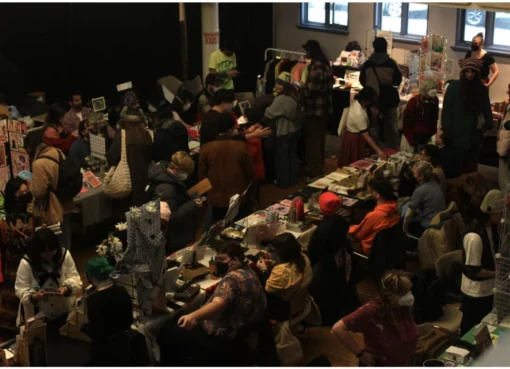
- August 10: Tensions rose in the independent scene as the Small Press Expo addressed the Marriott labor dispute. The committee revealed that the venue’s new management contract lacks collective bargaining protections, placing the festival in a precarious ethical position.
- August 11-12: A flurry of critical reviews and interviews hit the wires. Tillie Walden discussed her transition into her thirties and her desire to be viewed as an established artist rather than a "prodigy." Meanwhile, reports surfaced regarding the slowing growth of the vertical-scroll market, suggesting a possible plateau for the "Webtoon era."
- August 13: Image Comics issued its press release for Ghost Drive Station. The announcement immediately triggered a social media firestorm, as advocacy groups pointed to the lack of progress in the restorative justice process promised by Ellis in 2020.
- August 14: Industry analysts, including Rob Salkowitz, published post-mortems on the Diamond Comic Distributors bankruptcy, marking this as the official start of the "Distribution Experiment" era.
Supporting Data: Critical Reception and Creative Output
The diversity of this week’s output demonstrates a medium that is expanding its thematic reach even as it faces economic headwinds.
Independent and Small Press Highlights
The Comics Journal and AIPT provided deep dives into several significant releases. Zach Rabiroff’s review of Tony Millionaire’s The Oddball’s Odyssey explored the blurred lines between Millionaire’s public persona and his "unfiltered id," questioning whether the artist’s work is a "studied work of fiction" or a "big joke about death."
In the realm of historical preservation, William Schwartz highlighted the release of The Complete Charles Dana Gibson, Vol. 1. The collection, published by Living the Line, was praised for its "magnificent" use of white space and the seamless integration of characters into turn-of-the-century environments, proving that classic illustration techniques remain a benchmark for modern clarity.
Mainstream and Licensed Properties
The "Big Two" and major licensed publishers continue to lean into high-concept crossovers and nostalgia:
- Star Wars: Charles Soule and Will Sliney’s The Fall of Kylo Ren #1 was noted for its precise placement within the franchise’s complex continuity.
- Star Trek: Christopher Cantwell and Dennis Menheere’s debut on the Star Trek title was hailed for its "exhilarating start," signaling a revitalized direction for the property.
- Godzilla: Kyle Baker’s Godzilla’s Monsterpiece Theatre was highlighted as a standout for its "balanced spectacle," blending high-art aesthetics with kaiju destruction.
International and Translated Works
The week also saw significant attention paid to international voices. Minetarō Mochizuki’s adaptation of Chiisakobe was lauded for its indelible illustration, while the translation of On Their Frontlines: The Lives of Japanese War Brides by Marina Lisa Komiya offered a poignant civilian-focused look at post-war history.
Official Responses and Ethical Stances
The most significant friction of the week arose from institutional responses to labor and social accountability.
The SPX and Marriott Conflict
In a detailed statement, the SPX executive committee addressed the boycott of the Montgomery County Conference Center. The venue recently entered a management contract with Marriott that excludes labor-friendly clauses. SPX officials stated:
"Due to its own contract with the venue, SPX is unable to partake in the boycott. Cancelling our agreements would result in fees that would mean the festival has to be permanently closed."
This highlights the "trap" many non-profit arts organizations find themselves in when their ethical values clash with the "take-it-or-leave-it" nature of corporate hospitality contracts.
Image Comics and the Warren Ellis Controversy
The announcement of Ghost Drive Station represents a significant reversal for Image Comics. In 2021, the publisher stated it would not work with Ellis until he had "made amends to the satisfaction of all involved." However, the collective SoManyOfUs, representing the women and non-binary individuals who came forward with allegations against Ellis, noted as recently as January 2023 that Ellis had "taken none of the steps we hoped he would." Image’s latest PR material makes no mention of the previous commitment, suggesting a shift toward a "business as usual" approach that has polarized the readership.
The AI Debate: Straczynski and Webtoon
The integration of AI continues to be a flashpoint. While Webtoon frames its AI translation program as a tool for "global growth," critics argue it undermines the nuanced work of human translators. More provocatively, J. Michael Straczynski’s experiment—feeding Harlan Ellison’s I Have No Mouth and I Must Scream into an LLM—was met with derision by advocates for creator rights. The move was described by some as feeding a masterpiece into a "plagiarism machine," a particularly ironic fate for a story about a sentient, malevolent supercomputer.
Implications: A Diversified Distro Landscape and the "Prodigy" Trap
The events of this week suggest several long-term trends that will shape the industry through the late 2020s.
The End of the Diamond Era
The settlement regarding held inventory following Diamond Comic Distributors’ bankruptcy marks the end of the "Direct Market" as a monolithic entity. Analysts suggest the industry is now entering a "diversified distribution landscape." This decentralization may offer more stability for publishers, as the failure of a single distributor no longer threatens the entire supply chain. However, it also places a higher administrative burden on small retailers who must now manage multiple accounts to stock their shelves.
The Evolution of the Creator
Tillie Walden’s interview regarding her 30th birthday touches on a systemic issue in comics: the "young artist" label. Walden noted that the term often made her feel "sectioned off" and "a little despised." As a generation of creators who began their careers as teenagers in the 2010s reaches maturity, the industry must learn to treat them as established peers rather than fleeting sensations. This shift is essential for the long-term health of the medium’s professional class.
Graphic Medicine and Academic Integration
The week’s longreads, particularly Ryan Montoya’s piece on "Graphic Medicine" in Solrad, point to an expanding role for comics in professional training. By using the medium to convey the "lived experiences" of patients to medical students, the industry is finding utility beyond entertainment, potentially securing new avenues for funding and institutional support.
Conclusion
As the eclipse passed over the UK, the comics industry found itself in a similar state of "eerie moments"—transitioning between the shadows of past controversies and the bright, if uncertain, light of a technologically driven future. The coming months will determine if the "Distribution Experiment" succeeds and whether the push for corporate accountability can survive the economic pressures of a changing market.