The Twilight of the Arena: Deep Type Games Announces Final Major Updates for Hellsplit: Arena
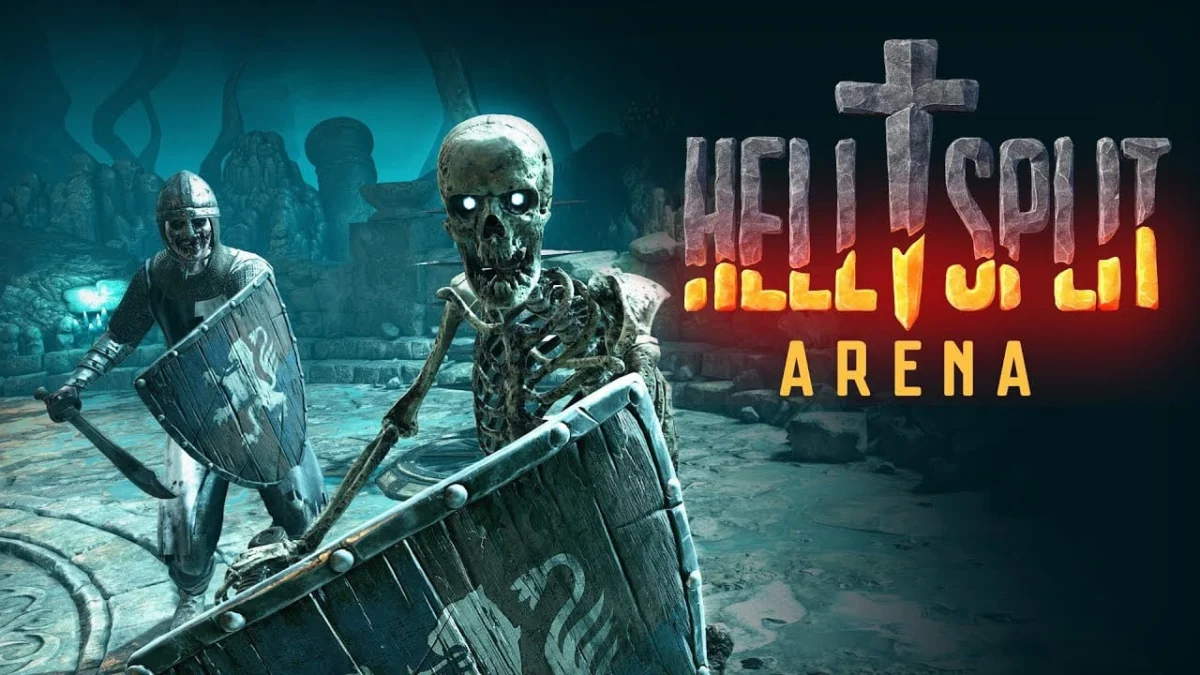
The virtual reality landscape is one defined by rapid evolution and technical upheaval. Since its debut in 2019, Hellsplit: Arena has stood as a monolith of physics-based, visceral combat, carving out a dedicated following among enthusiasts of the "grimdark" fantasy aesthetic. However, as the industry pivots toward more complex RPG structures and standalone hardware, developer Deep Type Games has signaled that the journey for its flagship title is nearing its conclusion.
In a series of candid communications, the studio revealed that while Hellsplit: Arena is entering its sunset phase, it will do so with a significant final flourish: the introduction of a long-requested sandbox mode for all platforms and the arrival of mod support for Meta Quest users. This transition marks not just the end of a development cycle, but a pivot for a studio navigating the treacherous waters of the modern indie gaming economy.
Main Facts: The Final Roadmap for Hellsplit: Arena
The upcoming Update 1.3 represents the "swan song" for Hellsplit: Arena. Deep Type Games has outlined a strategy designed to preserve the game’s legacy while providing players with the tools to sustain the community long after active development ceases.
Sandbox Mode and Steam Achievements
The centerpiece of the forthcoming update is the Sandbox Mode. Since the game’s inception, the community has requested a space to experiment with the game’s complex physics engine without the constraints of the campaign or wave-based arena logic. This mode will allow players to spawn enemies, manipulate environmental variables, and test weapons in a controlled setting. Furthermore, Steam players will finally see the integration of formal Achievements, providing a new layer of meta-progression for completionists.
Meta Quest Mod Support
Perhaps the most significant technical hurdle the team has overcome is bringing mod support to the Meta Quest version of the game. While PCVR players have enjoyed a robust modding scene for years, the closed architecture of the Quest has previously limited users to the base game content. Update 1.3 aims to bridge this gap, allowing Quest users to access community-created weapons, skins, and maps, significantly extending the game’s replayability on standalone hardware.
The "Legacy" Branch Strategy
To protect the existing ecosystem of mods on PC, Deep Type Games is implementing a "Legacy" branch on Steam. This branch will remain locked to the current stable build (1.24.1). By doing so, the developers ensure that the structural changes introduced in Update 1.3 do not "break" years of community work. Players who rely on specific, un-updated mods can choose to remain on the Legacy branch, while those seeking the new Sandbox features can move forward to the new version.
Chronology: From 2019 Success to 2025 Realities
Understanding the current state of Hellsplit: Arena requires a look back at its trajectory through the "Golden Age" of VR physics combat.
- September 2019: Hellsplit: Arena launches on Steam. It is immediately compared to titles like Blade & Sorcery, but praised for its superior "horror" atmosphere and the tactile weight of its undead combatants.
- 2020–2022: The game receives consistent updates, refining its gore systems and weapon handling. It becomes a staple for VR content creators due to its cinematic "brutality."
- March 2025: After a long and difficult development period, the game is successfully ported to Meta Quest. This was a significant technical achievement, as the game’s high-fidelity physics were notoriously taxing on mobile processors.
- Mid-2025: The community notices a sharp decline in communication from Deep Type Games. Speculation begins to mount that the game has been abandoned in favor of newer projects.
- December 2025: Deep Type Games breaks its silence on Discord, confirming that the majority of the team has moved on to new titles, leaving a "skeleton crew" of two developers to finalize the Arena roadmap.
- Present: The studio officially details the "Labyrinth" project and the "Cute & Dead" spin-off, providing context for the shift in resources.
Supporting Data: The Economics of Niche VR Development
The decision to wind down Hellsplit: Arena is not merely a creative one; it is a response to the harsh economic realities of the VR market. Deep Type Games provided rare insight into the studio’s internal struggles, noting that a single "hardcore" niche title is rarely enough to sustain a growing studio.
The Niche Audience Trap
While Hellsplit: Arena boasts a "Very Positive" rating on Steam and a respectable following on the Meta Store, it remains a "hardcore" experience. In the VR world, "hardcore" often translates to a high barrier to entry due to motion intensity and complex mechanics. Data suggests that while these games have high engagement, their "ceiling" for total sales is significantly lower than more accessible, stylized titles.
Resource Allocation
In their official statement, the studio revealed that they currently have only two developers dedicated to Arena. This is a stark contrast to the team size required to maintain a modern live-service or frequently updated title. By shifting the bulk of their staff to Hellsplit: Labyrinth (slated for 2027) and Cute & Dead, the studio is attempting to diversify its portfolio.
Technical Debt and Aging Architecture
One of the primary reasons cited for the cessation of updates is "aging architecture." Hellsplit: Arena was built on a framework that is now over five years old. In VR terms, five years is an eternity. Newer SDKs (Software Development Kits) for the Meta Quest 3 and upcoming PCVR hardware offer optimizations that simply cannot be retrofitted into the original Arena engine without a total ground-up rebuild.
Official Responses: Addressing the "Radio Silence"
Deep Type Games took an unusually transparent approach in addressing their community’s concerns regarding their recent lack of updates. Their statement highlights the psychological and financial pressures of indie development.
"The real reason for our silence is much simpler: for a long time, we simply had nothing meaningful to share," the studio admitted. They went on to explain that the past year was defined by "a great deal of uncertainty about [the studio’s] future."
The studio emphasized that unlike "Triple-A" entities, they do not have the luxury of mass layoffs to balance the books. Instead, they must be surgical with their resource management. "The truth is that we simply didn’t have the resources to deliver all the ambitious ideas we originally envisioned for the game," they stated, effectively apologizing for features that were discussed in early roadmaps but will never see the light of day.
This level of honesty is rare in an industry where "corporate speak" often masks internal turmoil. By admitting that Hellsplit: Arena reached its technical and financial limit, Deep Type Games is attempting to build a bridge of trust with their audience ahead of their next major release.
Implications: What This Means for the Future of the Franchise
The transition of Hellsplit: Arena into a "completed" state has several implications for the VR industry and the studio’s future.
The Pivot to "Hellsplit: Labyrinth"
By moving toward Hellsplit: Labyrinth, Deep Type Games is evolving the "Arena" concept into a "Dark Fantasy Action RPG." This suggests a move away from static wave-based combat toward a more structured, narrative, or procedural experience (roguelike elements). This shift addresses the primary criticism of Arena: that while the combat was excellent, the game lacked a compelling "loop" beyond the violence itself.
The "Cute & Dead" Experiment
The delay of Cute & Dead to Fall 2025 suggests that the studio is still struggling with its production pipeline. However, this project represents an attempt to capture a broader, more casual audience. Moving away from the hyper-realistic gore of Hellsplit toward a 1990s-inspired "Zombies Ate My Neighbors" aesthetic is a strategic move to find a more "mainstream" revenue stream that can fund the studio’s more ambitious, hardcore projects.
The Legacy of Physics-Based Combat
Hellsplit: Arena will be remembered as one of the titles that pushed the boundaries of what was possible with melee combat in VR. Its departure from active development marks the end of an era of experimentation. As the studio moves toward Labyrinth, the lessons learned in Arena regarding weight, friction, and "tactile" feedback will likely form the foundation of their future work.
In conclusion, while the news of Hellsplit: Arena’s impending "end of life" is bittersweet for its community, the promised 1.3 update serves as a respectful parting gift. By providing a sandbox mode and Quest mod support, Deep Type Games is effectively handing the keys to the kingdom over to the players, ensuring that the screams of the undead will continue to echo in the arena for years to come, even if the developers themselves have moved on to new horizons.