The Unseen Realm: A Professor’s Coffee Shop Revelation on Metaphysics and the Human Spirit
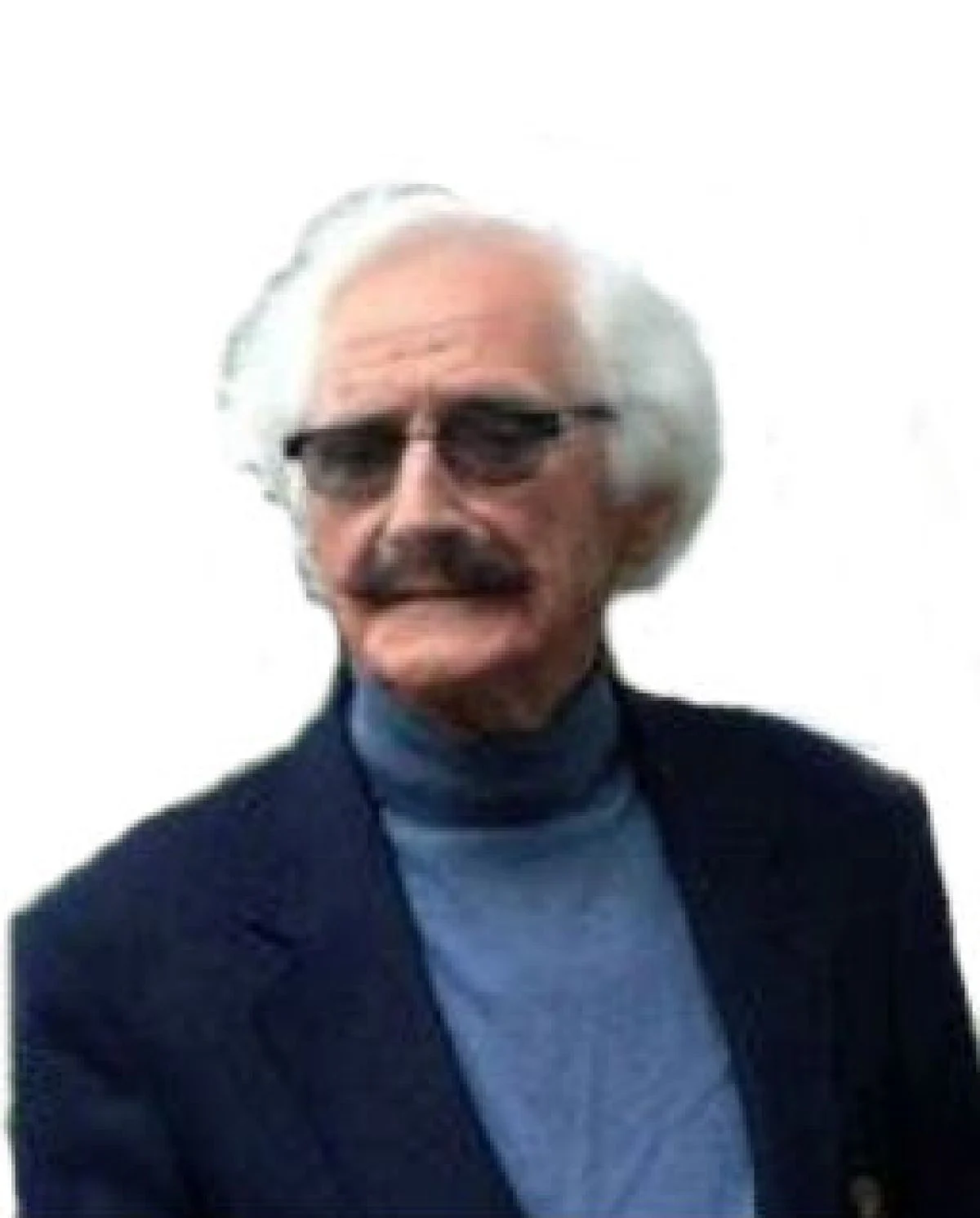
[City, State] – [Date] – In a seemingly ordinary encounter at a local coffee shop, a retired university professor of philosophy and psychology found himself at the center of a profound discussion, sparked by the very questions that have perplexed humanity for millennia. While waiting for his car to be serviced, the professor, whose identity remains anonymous to protect the privacy of the students, engaged in a conversation that delved into the nature of purpose, the complexities of human behavior, and the often-overlooked realm of metaphysical awareness. The exchange, which began with casual inquiries, ultimately illuminated the enduring relevance of abstract thought in an increasingly tangible world.
The Search for Purpose: A Universal Quandary
The genesis of the conversation, as the professor recounts, was the perennial question of purpose – a concept that resonates deeply with individuals and, historically, with entire nations. He acknowledged the difficult truth that the pursuit of purpose has, throughout history, been intertwined with conflict and suffering. "Nations, as well as individuals, have been fighting and killing each other off throughout history," he stated, reflecting on the persistent lack of "benevolent and spiritually tolerant attitudes between individuals and nations." This stark observation underscores the ongoing challenge in fostering understanding and empathy on a global scale.
Despite these somber realities, the professor pointed to the burgeoning presence of charitable organizations as a beacon of hope and a testament to the enduring human capacity for compassion. He specifically highlighted "Doctors Without Borders," an organization whose medical professionals bravely venture into dangerous and conflict-ridden zones. These individuals, he emphasized, are driven by an "altruistic need to act," risking their lives and careers out of a profound sense of empathy and a desire to alleviate the suffering of others. Their work, he argued, exemplifies the "greatest of all moral persuasions," an internal force often described as the human spirit. This dedication to serving humanity, even at immense personal risk, serves as a powerful counterpoint to the historical narrative of conflict.
Unveiling Metaphysics: Beyond the Senses
The conversation then pivoted to a concept that proved less familiar to the young students: metaphysics. The professor explained that only one of the two students had a grasp of its meaning, which he defined as "a level of awareness in human consciousness that goes beyond the world of appearances; beyond the workings of the five senses." This definition immediately sets metaphysics apart from empirical observation and the tangible realities we typically perceive.
Metaphysical awareness, according to the professor, is characterized by a "silent dialogue" of continuous questioning. This internal exploration is fueled by our innate human questing imagination, prompting us to delve into the "how and why of the psychological complexity of one’s self." This profound internal inquiry, he suggested, is driven by a psychological force long identified as "spirit" – the "human spirit." This concept posits that our inner lives, our thoughts, feelings, and intuitions, are not merely random occurrences but are connected to a deeper, more abstract dimension of existence.
Aristotle’s Legacy: The Birth of a Concept
The professor then traced the conceptual origins of metaphysics to the ancient Greek scientist and philosopher, Aristotle. It was Aristotle who, he explained, coined the term to describe the abstract nature of this mental activity. The prefix "meta" signifies "beyond" or "after," thus introducing the concept of the mind as a distinct level of awareness encompassing thoughts, ideas, feelings, hunches, and ruminations. These are all manifestations of an intuitive range of consciousness, often perceived as inspirational and serving the forces of spirit, which are, in turn, instigated by what could be termed the "soul."
This historical context positions metaphysics not as a modern philosophical construct but as a concept rooted in classical thought, attempting to categorize and understand the intangible aspects of human experience. Aristotle’s contribution was to provide a linguistic and conceptual framework for discussing phenomena that lie outside the purview of the physical world.
The Duality of Consciousness: Mind as a Partnership
The professor articulated a prevailing view of human consciousness as a duality, comprising two interconnected yet distinct aspects. On one hand, there is the "outwardly directed rational and sensory brain," responsible for processing information from the external world through our five senses and logical reasoning. On the other hand, there is the "inwardly directed intuitive and spiritual brain," which governs our hunches, insights, and deeper emotional and spiritual perceptions.
Together, these two facets form a "mental partnership we call mind." This perspective suggests that our understanding of reality and our decision-making processes are not solely governed by logic and sensory input but are also significantly influenced by our intuition and inner spiritual landscape. This holistic view of the mind emphasizes the integration of both rational and intuitive faculties for a complete human experience.
The Unacknowledged Inner Landscape
The professor’s attempt to gauge the students’ engagement with this idea of the mind’s duality proved telling. When he posed the question, "if they ever pondered the unique nature of their own personalities," he was met with "a couple of blank looks." This reaction, though perhaps disheartening for the professor, serves as a poignant illustration of a potential disconnect between academic discourse and the everyday lived experiences of many individuals, particularly younger generations who may be more immersed in the tangible and immediate.
The students’ lack of immediate recognition of the "unique nature of their own personalities" might suggest a superficial engagement with introspection, or perhaps a difficulty in articulating abstract self-awareness. It highlights the challenge of translating philosophical concepts into relatable personal experiences.
A Neuroscientist’s Enduring Enigma
As the coffee grew cold and the time for departure neared, the professor offered a final thought, drawing upon the wisdom of a prominent figure in neuroscience. He referenced the late Wilder Penfield, a renowned Canadian neuroscientist and brain surgeon. Penfield, in his groundbreaking work, struggled to fully define the essence of "mind," ultimately describing it as a "non-temporal, non-spatial entity."
This description, the professor concluded, perfectly encapsulates the metaphysical nature of the mind. By characterizing it as existing outside the constraints of time and space, Penfield’s definition aligns with the philosophical understanding of metaphysics as that which transcends the physical and observable. It suggests that the mind, in its most profound sense, operates on a plane beyond our immediate sensory grasp, a realm that continues to inspire curiosity and inquiry.
Implications for Modern Discourse
The professor’s impromptu lecture, delivered in the casual setting of a coffee shop, raises significant questions about the current state of intellectual engagement and the place of abstract thought in contemporary society. In an era dominated by readily digestible information and empirical evidence, the concepts of purpose, the human spirit, and metaphysical awareness may seem abstract or even irrelevant to some.
However, the enduring human quest for meaning, the existence of profound acts of altruism, and the persistent questions surrounding consciousness itself, all point to the continued relevance of these deeper inquiries. The encounter underscores the importance of fostering an environment where such discussions can flourish, not just within academic institutions but in everyday life. It suggests a need to bridge the gap between intellectual exploration and personal reflection, encouraging individuals to look beyond the immediate and tangible to explore the rich and complex landscape of their inner selves and the universe beyond. The professor’s coffee shop revelation serves as a gentle reminder that the most profound journeys often begin with a simple conversation and a willingness to ponder the unseen.